
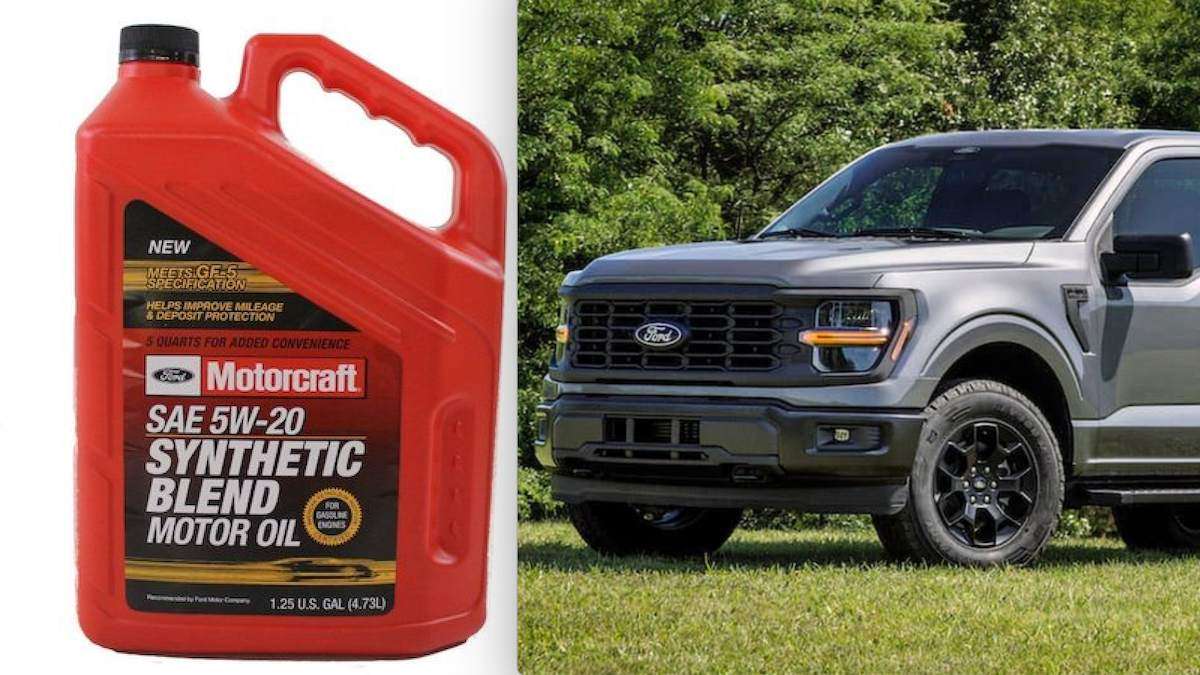

Stop overpaying for "standard" advice. Is your Ford dealer's oil recommendation actually protecting your engine, or just saving them money?
Imagine that you have just driven your shiny new 2025 Ford F-150 Lariat off the lot, and you are determined to keep that 3.5-liter EcoBoost engine running like a Swiss watch for the next decade. You head to the dealership for your first service, expecting a lecture on the virtues of premium protection, only to be told that a basic "blend" is all your high-tech, twin-turbocharged powerhouse needs. This conflicting advice leaves many owners wondering if they are compromising their engine's longevity just to save a few bucks at the service desk.
In a recent post shared in a Facebook community of Ford truck enthusiasts, Gregor Philp highlighted a growing conflict between dealership recommendations and what’s actually best for engine longevity. Philp, who recently took delivery of a 2025 Ford F-150 Lariat equipped with the 3.5L EcoBoost, sparked a massive debate after questioning why his dealer insisted on a synthetic blend when every seasoned owner points toward full synthetic.
He says,
“I called my Ford dealer today to ask about an oil change, and they said they recommend I use a synthetic blend, which is what Ford recommends. I have a 2025 F-150 Lariat with a 3.5 EcoBoost. I see here that most people say they use full synthetic oil. I always thought that a full synthetic was best for a 3.5 EcoBoost. Now, I’m curious why Ford claims to use a semi-synthetic?”
Why The Factory Recommendation Might Not Be Enough
As a senior reporter with three decades in the automotive trenches, I have seen engine technologies evolve from simple blocks to the complex, forced-induction marvels found in the latest Ford trucks. The 3.5-liter EcoBoost is a masterpiece of engineering, but it also demands respect, particularly when it comes to lubrication. When a 2025 Ford F-150 owner like Gregor is told by a dealership to stick with a synthetic blend, it triggers a red flag for anyone who understands the heat and pressure modern turbos generate.
Experts at Willowbrook Ford acknowledge this tension, noting that while a synthetic blend is a mix of conventional and synthetic oils, "fully synthetic oil is motor oil that has undergone a chemically engineered process that has fewer impurities and a stronger base than conventional oil". This distinction is vital because the twin turbos in your F-150 rely on that oil not just for lubrication, but for cooling the bearings that spin at over 100,000 RPM.
In my years of reporting on Ford's powertrain shifts, I have often highlighted how manufacturer recommendations sometimes prioritize "Cost of Ownership" metrics over absolute engine longevity. In a previous report, I discussed how the pursuit of better fuel economy and lower maintenance costs can lead to recommendations that are "fine" for the warranty period but potentially risky for the long-haul owner. I have found that "5,000-mile oil changes are my professional recommendation for anyone planning to keep their truck past the 100k-mile mark", a sentiment that clashes with the 10,000-mile intervals often suggested by the Intelligent Oil-Life Monitor.
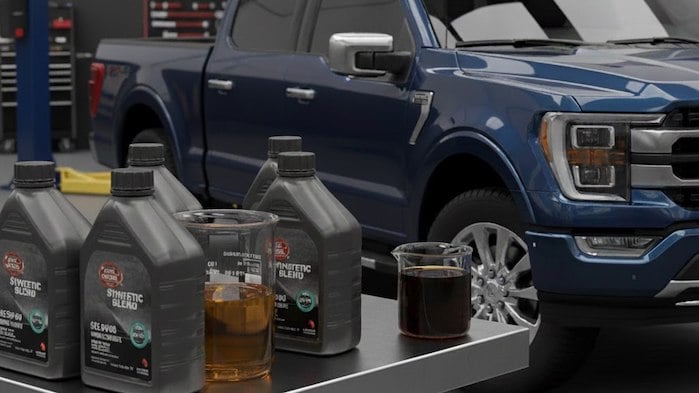
The technical reality of the 3.5-liter EcoBoost involves extreme heat cycles and the potential for carbon buildup on intake valves due to its direct-injection design. Outside technical sources point out that these engines are particularly susceptible to oil-related issues if the lubricant breaks down under stress.
Specifically, the NHTSA has documented cases where "the 3.5L EcoBoost engine may exhibit excessive oil consumption with no visible oil leaks" (NHTSA TSB 20-2423), often linked to PCV system struggles or valve cover issues. Using a synthetic blend, which has a lower resistance to thermal breakdown than full synthetic, can accelerate the formation of "sludge" or deposits that clog the tiny oil screens protecting those expensive turbochargers.
In my investigations into Ford's EcoBoost line, I have consistently warned readers that "oil life is not a cool thing to play with when you have small turbos and tight tolerances." My research into previous model years revealed that "the problem with the EcoBoost is that Ford designed the engine to ingest oil... directly into the turbocharger that leads to the intercooler," creating a "slurry" of fuel and moisture. By choosing a high-quality full synthetic oil, you are providing a much stronger chemical barrier against this contamination. Full synthetic oils maintain their viscosity better across temperature extremes, ensuring that on a freezing January morning or a blistering July afternoon, your engine has the protection it needs the moment you turn the key.
Key Takeaways for F-150 Owners
- Full Synthetic is Superior: It offers better heat resistance and fewer impurities than a blend.
- Turbo Protection: Twin-turbos generate immense heat; full synthetic resists "cooking" (coking) in the turbo bearings.
- Intervals Matter: Don't wait for the truck to tell you it's time at 10,000 miles. Change it every 5,000 miles to be safe.
- Warranty Compliance: As long as the oil meets Ford’s WSS-M2C961-A1 specification, using full synthetic oil will not void your warranty.
What F-150 3.5L EcoBoost Owners Are Saying
The debate over the best oil for the F-150 3.5 EcoBoost is a hot topic on community forums. Here is what real-world owners are reporting:
One owner emphasized the importance of high-quality protection, stating, "I use full synthetic in all my vehicles... synthetic will withstand the heat of the turbos better, leading to longer lasting of the expensive parts." (Reddit)
Another driver shared their specific regimen: "Mobil 1 full synthetic with a Motorcraft filter every 5k Miles." (Reddit)
A long-term owner noted that skipping the "by the book" advice served them well: "Yeah, I use full synthetic 100% but don't go by the book, it says 10k interval, so I like 5k." (Reddit)
Don’t Settle: Go With the Best
When you are dealing with a high-performance machine like the 2025 Ford F-150 3.5L EcoBoost, "good enough" should never be the standard. While Ford recommends a synthetic blend to keep the advertised cost of ownership low, my 30 years of experience tells me that the peace of mind and protection offered by full synthetic oil is the best investment you can make. It keeps your engine cleaner, protects your turbos from thermal stress, and ensures that your truck remains the reliable tool you need for years to come.
How About You? What oil would you use in your new F-150, and how often do you plan on changing it? Click the red link below to write your comment and join the community in sharing experiences.
Next Up: Is the 2025 Ford F-150 5.0L V8 more reliable than the 3.5L EcoBoost? We dive deep into the legendary V8 versus the twin-turbo V6 debate to see which powertrain really holds up better over 200,000 miles of hard work. Read the full comparison here.
Denis Flierl is a Senior Reporter at Torque News with over 30 years of hands-on experience in the automotive industry. Having served as a professional test driver and industry consultant for major automakers such as Chevrolet, Ford, Toyota, Honda, and Tesla, Denis provides a "boots-on-the-ground" perspective that goes beyond standard reporting. Since joining Torque News in 2012, he has specialized in cutting through market noise to deliver data-backed analysis and real-world owner stories. His work focuses on navigating the transition to EVs and the shifting automotive market.
Have a tip or question for Denis? > Engage with him directly on LinkedIn for industry analysis, or follow his latest updates on X @DenisFlierl and @WorldsCoolestRides. You can also find his latest car features on Facebook and Instagram.
Photo credit: Denis Flierl
Set Torque News as Preferred Source on Google
Follow us today...







Comments
Ahhh, good ol' ecoboost...
Permalink
Ahhh, good ol' ecoboost...
Ok..Ford Ecoboost F150…
Permalink
Ok..Ford Ecoboost F150....First Problem is "Factory Weak Timing Chain Components"...These Will Break Down After Factory Warranty Expires...My Suggestion..Full Synthetic Oil Changes At 5,000 Mile And Extended Warranty Coverages Through Endurance Insurance....Or....Trade In For 5.0 Ford F150....
I own a 2020 F350 powered by…
Permalink
I own a 2020 F350 powered by a 7.3L naturally aspirated engine. I have - since day 1 - used full synthetic. If Ford clocks oil life at 10,000 miles, I am sure to change oil and filter at 5k. There are two reasons for my choices. One, I have used full synthetic oil for the past 60, or so, years. I understand the difference in chemistry, full synthetic; synthetic vs non-synthetic. Part of that understanding is knowing that full synthetic becomes increasingly acidic starting at its half-life. So, if it’s supposed to last through 10k miles, I change at half-life; ie, 5k miles. The 2nd reason I change at 5k is that is about the effective limit if most popular filters. The idea of excessively acidic oil pouring through a dead filter is more unappealing than staying with a simple protocol of changing oil and filter every 5k.
Let's get back to basics…
Permalink
Let's get back to basics here. First, why on earth are you driving an ecoboost vehicle?
I purchased a 2025 F-150…
Permalink
I purchased a 2025 F-150 Lariat 3.5 last Spring. Had a 2014 XLT 3.5 prior. I have used Mobil 1 full synthetic with a top quality filter at 5K miles for years. Same with my other vehicles. Why skimp on costs for the small difference. Makes no sense.