
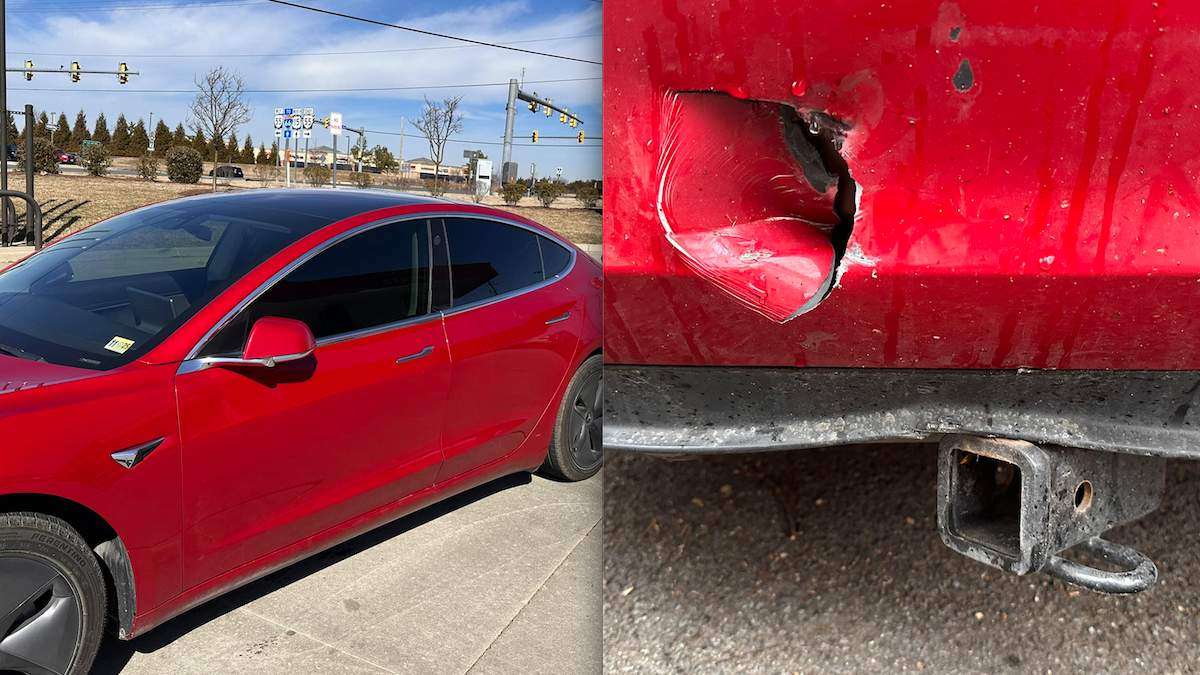

Imagine being rear-ended, declared innocent, and still having to open your wallet because your insurance provider (GEICO) decides that cheap aftermarket parts are "good enough" for your high-tech electric Tesla Model 3.
It is the scenario every Tesla owner dreads: You are stopped in traffic, minding your own business, when suddenly you hear and feel a crunch. You’ve been rear-ended. You aren’t at fault. You assume the at-fault driver’s insurance, or your own comprehensive coverage, will make you whole. But for one Tesla Model 3 owner in Virginia, the crash was just the beginning of a bureaucratic nightmare involving GEICO, rigid state laws, and the strict requirements of Tesla-approved repairs.
Here is the story of J. Anders Thueson, whose recent experience highlights a growing conflict between the electric vehicle giant's repair standards and the cost-cutting measures of major insurance carriers.
The "Not-At-Fault" Nightmare
J. Anders recently shared his frustration on the Tesla Model 3 and Model Y Owners Club Facebook page. His 2019 Tesla Model 3 was rear-ended in an accident where he was determined to be not at fault. Like any responsible owner, he sought to have his vehicle repaired at a facility that knows the car best: a Tesla-approved collision center.
However, Thueson quickly found himself caught in a financial "Catch-22" between the body shop’s requirements and GEICO’s refusal to pay for them.
“I was recently rear-ended in my 2019 Tesla Model 3 (not at fault). After 10 days of repeated phone calls to multiple GEICO claims adjusters, I finally got approval to take my vehicle to a Tesla-approved repair center,” Thueson wrote.
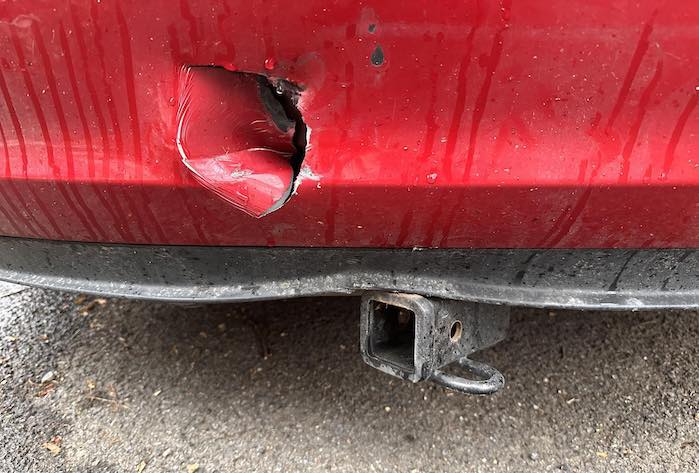
“The estimator explained that, as an official Tesla-certified shop, they are required to use only genuine Tesla OEM parts; they cannot install aftermarket parts. However, GEICO informed me that under Virginia law, they are only obligated to cover the cost of aftermarket parts (when available).”
This is the crux of the issue. Tesla-certified shops are contractually and technically bound to use Original Equipment Manufacturer (OEM) parts to maintain the vehicle's safety rating and warranty. They often cannot install a third-party bumper or sensor bracket, even if they wanted to. GEICO, however, cited state law to cap its payout at the price of cheaper, aftermarket alternatives.
The $663.84 Insult
Because of this discrepancy, Thueson was forced to pay the difference out of pocket to get his car back.
He says, “In my case, this left a $663.84 difference that the body shop charged directly to me. I had to pay it up front, or they wouldn’t release my car. As the innocent victim in this accident, it’s extremely frustrating to be stuck with these extra costs.”
For many owners, this feels like a scam. If you are not at fault, "making you whole" should mean returning the car to its pre-accident condition, which, for a Tesla, implies a car built with Tesla parts, not a patchwork of third-party components that may or may not interface correctly with the car's complex Autopilot sensors.
Insurance Regs Have Not Kept Pace
Thueson’s situation is not unique to him, nor is it unique to GEICO. It is a symptom of insurance regulations that have not kept pace with the complexity of modern EVs.
Under Virginia insurance law (and similar laws in many other states), insurers are generally permitted to write estimates based on "Like Kind and Quality" (LKQ) parts, essentially, aftermarket or used parts, to keep premiums down. The law typically states that if an aftermarket part is available and fits, the insurer owes only the cost of that part. If the owner (or the shop) insists on a brand-new OEM part, the owner must pay the difference.
The problem? Tesla Certified Collision Centers are strictly forbidden from using aftermarket structural parts.
Tesla’s repair guidelines are explicit: “Tesla does not allow the use of any used, recycled, alternative, aftermarket, or third-party replacement parts... The use of [these] parts might compromise vehicle integrity and occupant safety.”
It put this owner in an impossible bind. The insurance company is following the letter of the state law, but the repair shop is following the manufacturer's strict safety mandates. The owner is left holding the bill.
Wait, There's More
As if the parts dispute wasn't enough, Thueson is facing further delays regarding the car's electronics. The impact reportedly damaged the vehicle's MultiMediaCard (MMC) computer module, a critical component for the Model 3's operation.
“Now, they’re requiring me to take the car back to Tesla Service for a separate inspection of a failed MMC computer module (damaged by the impact) before they’ll determine if the collision caused it.”
This skepticism from GEICO likely stems from a historical issue. Tesla did issue a recall for eMMC failures in older Model S and Model X vehicles (built before 2018) due to wear and tear. However, Thueson owns a 2019 Model 3, a vehicle not typically associated with that specific wear-out failure, making it highly plausible that the crash, not age, caused the failure.
By forcing a separate inspection, the insurer further delays the claim, leaving the owner without their vehicle for weeks.
What Can Tesla Owners Do?
If you find yourself in Thueson’s shoes, you have limited but important options.
1. The "Diminished Value" Claim. This is the most potent weapon in a not-at-fault accident. Your car now has an accident history report (CarFax), which inherently lowers its resale value. You can file a Diminished Value Claim against the at-fault driver’s insurance.
How it works: You hire an independent appraiser to calculate how much value your car lost due to the accident.
The Math: If your Model 3 lost $3,000 in resale value because of the crash history, and you successfully claim that amount, it can more than cover the $663.84 you paid for OEM parts.
2. Check Your Policy for an OEM Endorsement. Some insurers offer an "OEM Parts" rider or endorsement for a few extra dollars a month. If you drive a Tesla, this is virtually mandatory. It contractually forces the insurer to pay for new OEM parts, bypassing the state’s "aftermarket" allowances.
3. The "Safety Systems" Argument. If the disputed part involves sensors (like a bumper with parking sensors or camera mounts), you can argue that aftermarket parts may interfere with Tesla’s Advanced Driver Assistance Systems (ADAS). Provide the insurer with Tesla’s official position statement on aftermarket parts. Sometimes, safety liability fears will force an adjuster to override the default policy.
4. File a Complaint. Thueson mentioned exploring a class-action lawsuit. While that is a long road, filing a complaint with the Virginia Bureau of Insurance (or your state's equivalent) creates an official record. If enough owners complain about a specific insurer denying necessary repairs for EVs, regulators may be forced to act.
The Wrap Up: J. Anders Thueson’s experience is a warning to all Tesla owners: Being "not at fault" does not guarantee you won't pay. As vehicles become more like computers on wheels, the gap between what manufacturers require for safety and what insurers are willing to pay is widening.
Until insurance laws are updated to reflect the reality of modern EV repair, owners must be vigilant. Check your policy, understand your rights regarding diminished value, and be prepared to fight for the parts your car was built with.
It's Your Turn: Have you faced a similar battle with GEICO or another insurer regarding Tesla repairs? Let us know in the comments below.
With over 30 years of industry experience, Denis Flierl brings an insider’s perspective to Torque News, where he has been a Senior Reporter since 2012. Before picking up the pen, Denis consulted for the automotive industry's biggest brands and honed his skills as a test driver. He cuts through the noise to deliver the latest auto news, compelling owner stories, and the expert analysis necessary to navigate today's changing automotive market.
Have a tip or question? Follow me on X @DenisFlierl and @WorldsCoolestRides, or connect with me on Facebook, Instagram, and LinkedIn.
Photo credit: Denis Flierl via J. Anders Thueson
Set Torque News as Preferred Source on Google
Follow us today...



Comments
I'm adamant about OEM parts…
Permalink
I'm adamant about OEM parts. I even get OEM windshields. Yes, you can request that.
Yes, do not forget to make a…
Permalink
Yes, do not forget to make a diminished value claim with the at-fault party's insurance company. Your car has lost 10%-20% of its pre-accident fair market value despite it being a minor repair. tesladiminishedvalue.com specializes in these types of appraisals.