
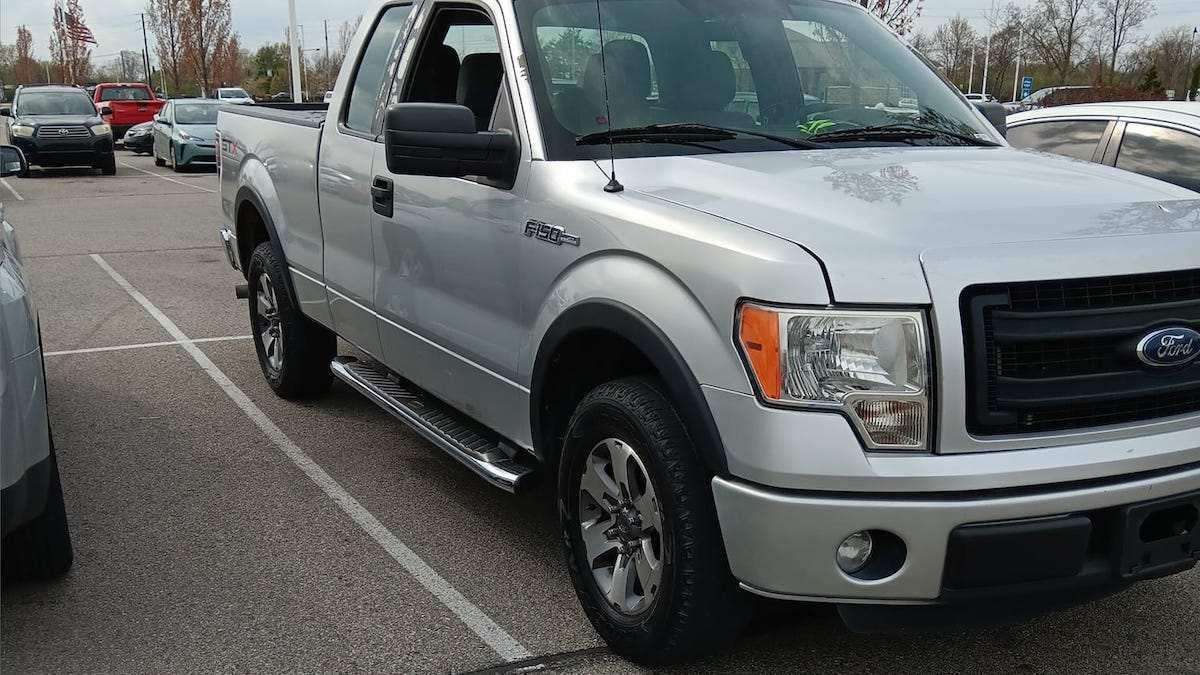

While the internet mocked this Indiana Ford F-150 owner's 'clueless' question, my 30 years in the industry told me he’s the only one actually saving his truck from a massive repair bill.
While investigating the latest maintenance hurdles facing the F-150 community, I discovered a viral Facebook post where Adam Picker sparked a firestorm of debate by asking the one question most drivers are too embarrassed to pull the trigger on: “Looking to change the AIR in my tires, where do I get the best air at?”
From My View: Why Adam Isn't Actually Crazy
When I first saw that post on the Ford F-150 5.0 Owners Facebook page, I saw the usual "internet tough guys" lining up to make fun of Adam. But as someone who has spent three decades in the automotive industry, I didn't join in the laughter. I realized Adam was touching on a critical technical truth that most Ford owners ignore until it costs them a set of $1,200 tires or a "Christmas tree" of warning lights on the dash.
Who is this article for? It is for every truck owner who thinks air is just air. How does this affect you? It involves the chemical composition of what you pump into your rubber. Why does it matter? Because "gas station air" is often contaminated with moisture that eats your sensors from the inside out.
I’ve seen plenty of "bulletproof" reputations crumble, and as I detailed in my report on how reliability scores for these specific model years took a hit, the smallest maintenance oversights often lead to the biggest headaches.
The Invisible Enemy: Moisture and Your TPMS
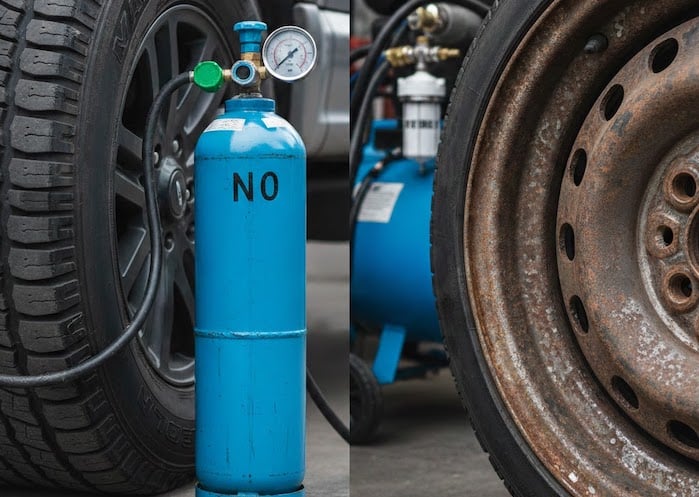
The "best air" isn't a brand name; it is about purity. Most gas station compressors are poorly maintained and lack water separators. When you fill your tires there, you are injecting a mist of water into your wheels. This moisture is the primary reason for Tire Pressure Monitoring System (TPMS) failure.
In my research on Ford issues, I found a verified RepairPal report that shows a malfunctioning TPMS sensor is often caused by internal corrosion, leading to incorrect readings and leaving you unaware of dangerous underinflation.
I remember writing about a similar betrayal of trust: an owner faced serious buyer’s remorse after just one year, showing that small mechanical gremlins quickly become a financial liability.
My Take:
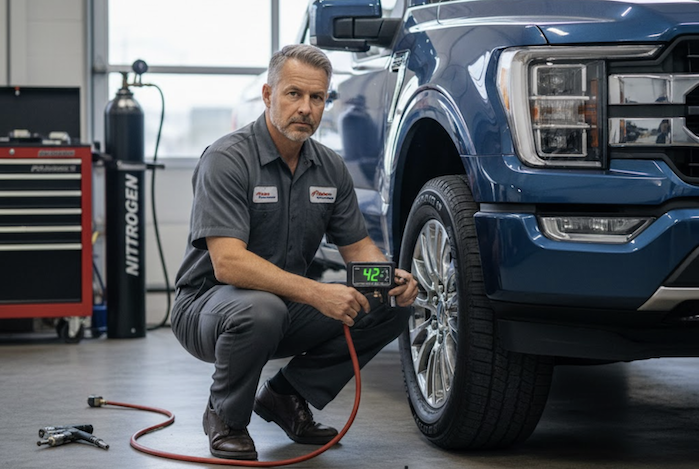
Is nitrogen the "best air"? Technically, yes. Nitrogen is an inert gas with larger molecules than oxygen, so it migrates through tire rubber 25% more slowly. More importantly, nitrogen is dry. By removing oxygen and moisture, you eliminate the oxidation that rots your tire’s inner liner and corrodes your aluminum valve stems.
According to a technical guide from Williamson Cadillac, nitrogen molecules are less prone to temperature fluctuations, which provides better pressure stability and longevity. For a heavy truck like the F-150, that stability is the difference between 18 MPG and 15 MPG.
I've covered every iteration of the F-Series, and I've seen how owners who never doubted the brand until a "known issue" turned their truck into a mechanical disaster often wish they had paid more attention to the basics.
Community Technical Feedback
The community isn't just worried about air; they are worried about the cascading failures that result from ignoring the warning signs. One user on Reddit noted the severity of the situation, stating, "Replace radiator or end up replacing tranny like me... had a small leak. Unnoticed. Then boom tranny went out on highway," which highlights how an "unnoticed" leak, even an air leak, can spiral out of control.
Another owner highlighted the vulnerability of the modern design, saying, "The radiator on these models has an isolated portion for cooling automatic transmission fluid... if it's not cooling it, bad things happen," as discussed in a Reddit thread on cooling system failures.
Key Takeaways for My Readers
- Avoid Gas Station Air: Unless it’s an emergency, avoid the "wet" air from poorly maintained public pumps.
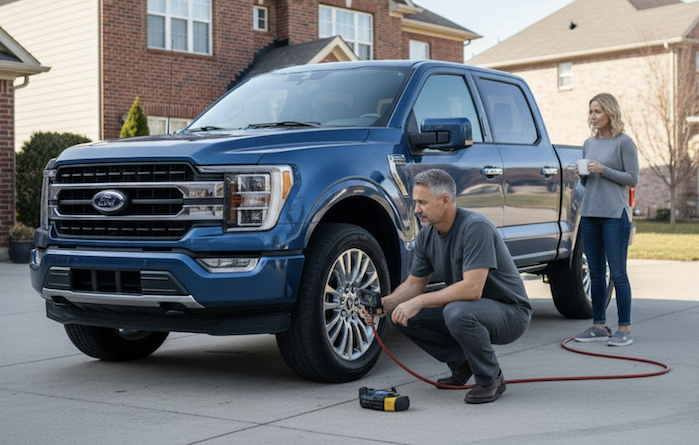
- Invest in a Portable Compressor: A high-quality portable unit costs less than a single TPMS sensor replacement.
- Consider Nitrogen: If you live in a climate with extreme temperature swings (like here in Parker, Colorado), nitrogen will stop that annoying "Low Tire" light from popping up every October.
- Check Your Valve Caps: Use plastic caps. Metal ones can seize onto the stem due to the very corrosion Adam was worried about.
The Industry Secret Ford Won't Tell You
The real secret is that Ford’s TPMS sensors are sensitive to pressure with a resolution finer than most handheld gauges show. I’ve seen cases where F-150 owners were exhausted battling the dealership over "faulty" sensors that were actually just reacting to poor air quality and moisture.
I recently investigated a similar case where an owner was 100% right about cold-start habits, and the same logic applies here: your truck is a rolling supercomputer that requires precision to stay on the road.
Who Has the Last Laugh?
Adam Picker’s question might have been the butt of a thousand jokes, but in the 2026 automotive news cycle, he is the one who will have the last laugh when his sensors outlast everyone else's. My advice is simple: treat your tires with the same respect you treat your engine, and don't let "cheap air" become an expensive mistake.
I Want To Hear From You
I have seen it all in my 30 years of reporting, from engines that wouldn't quit to tires that shouldn't have passed inspection, but I want to hear from the people behind the wheel. Have you ever experienced a "phantom" tire-pressure light or a TPMS failure that the dealership couldn't explain, or do you think the nitrogen versus compressed-air debate is just a lot of hot air?
Tell us your story! Please leave a comment in the red “Add new comment” link below and let’s get the conversation started.
About The Author
Denis Flierl is a 14-year Senior Reporter at Torque News and a member of the Rocky Mountain Automotive Press (RMAP) with 30+ years of industry experience. Based in Parker, Colorado, Denis leverages the Rockies' high-altitude terrain as a rigorous testing ground to provide "boots-on-the-ground" analysis for readers across the Rocky Mountain region, California EV corridors, the Northeast, Texas truck markets, and Midwest agricultural zones.
A former professional test driver and consultant for Ford, GM, Ram, Toyota, and Tesla, he delivers data-backed insights on reliability and market shifts. Denis cuts through the noise to provide national audiences with the real-world reporting today’s landscape demands.
Connect with Denis: Find him on LinkedIn, X @DenisFlierl, @WorldsCoolestRides, Facebook, and Instagram.
Photo credit: Denis Flierl via Adam Picker
Set Torque News as Preferred Source on Google
Follow us today...






Comments
This story is that nicely…
Permalink
This story is that nicely set up, that I suspect it with at least some help of AI.
This " pigheaded Dutch selfdeclared tyrepressure specialist " his planning to write an article about the false Nitrogen-filling arguments.
Sensors are a closed system, so water wont ruin them.
And water coming in by filling with humid air, is perfectly nutral.
At sea rimms corode at the outside, by the salted water, but the part inside the tirechamber is perfectly untouched.
And Nitrogen keeps pressure lower ( 5.25 psi max at 75 degrC/167 degrF , but temperature of gascompound in tire stays a bit lower,so also tire-material, wich is main goal of tiremakers.
So I would lije mailcontact with Dennis, who " wrote " this article
You dont need to place my comment, yust react by mail for fuether discussion.