
The 2025 Ram Rebel Technical Reality Check
The 2025 Ram Rebel enters the market with a sophisticated 3.0L Hurricane Twin-Turbo engine and a factory-tuned suspension designed to bridge the gap between daily commuting and trail-blazing. However, a recent high-profile "self-recovery" incident in the Georgia backcountry has highlighted a critical performance bottleneck: the stock LT275/70R18E OWL All-Terrain tires. While these E-rated, 10-ply tires provide exceptional durability for towing and gravel, their tread density often fails to "self-clean" in high-viscosity environments like Georgia clay.
This report investigates the technical intersection of the Rebel’s high-torque output and its factory rubber, offering an expert analysis of why even a $70,000+ off-road rig can become a "highway princess" if the driver doesn't respect the physics of traction. Drawing on firsthand owner experience and 30 years of automotive reporting, I break down the "Who, How, and Why" of this recovery story to provide actionable recommendations for new 2025 Ram 1500 owners.
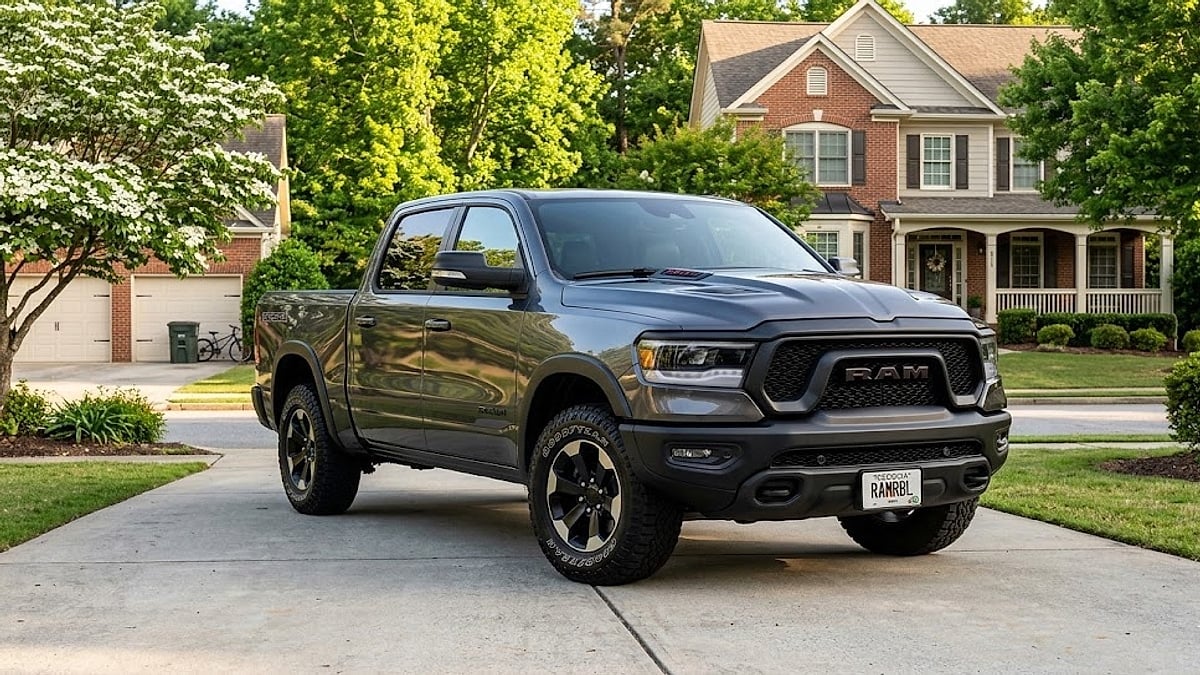
When you drop significant money on a 2025 Ram Rebel, you aren't just buying a pickup; you're buying a promise that your truck can handle more than a rain-slicked suburban street. I have spent 30 years tracking how manufacturers balance off-road marketing with real-world capability, and the 2025 refresh is a fascinating case study. The new 3.0L Hurricane engine offers 420 horsepower and 469 lb-ft of torque, which is plenty of muscle to "roast the rears all the way to 70km/h on a damp day," as noted in recent testing by CarSales. But as one Georgia owner recently found out, all that high-tech torque is useless if your stock LT275/70R18E tires turn into chocolate-covered donuts.
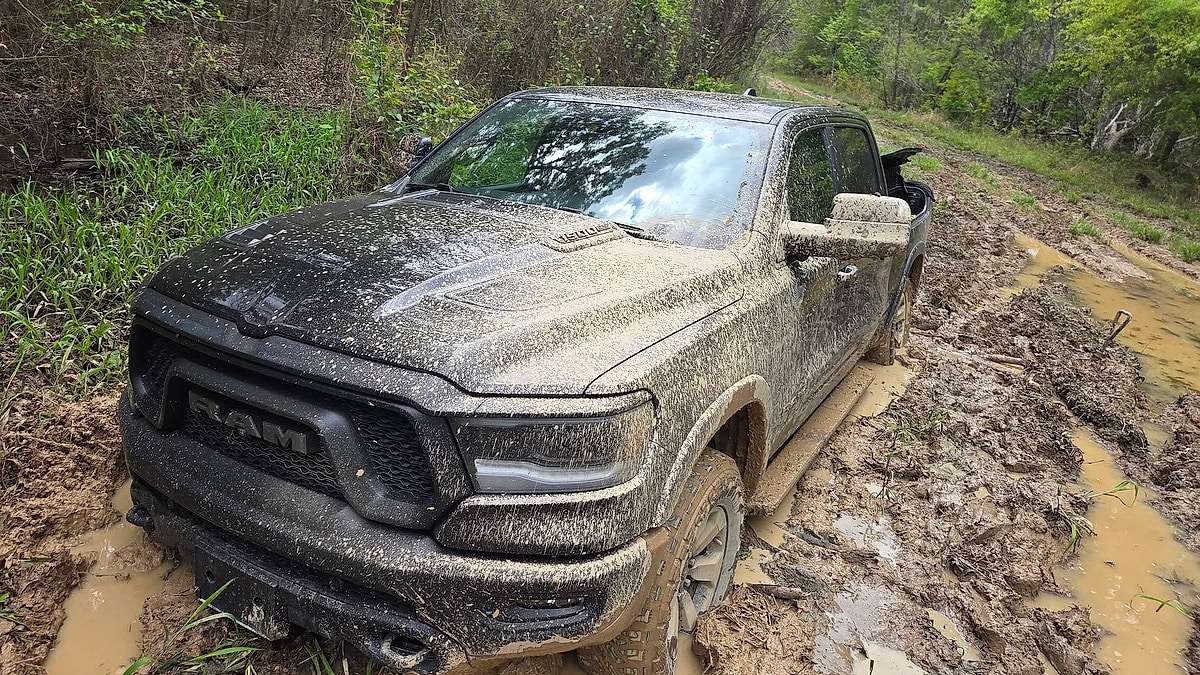
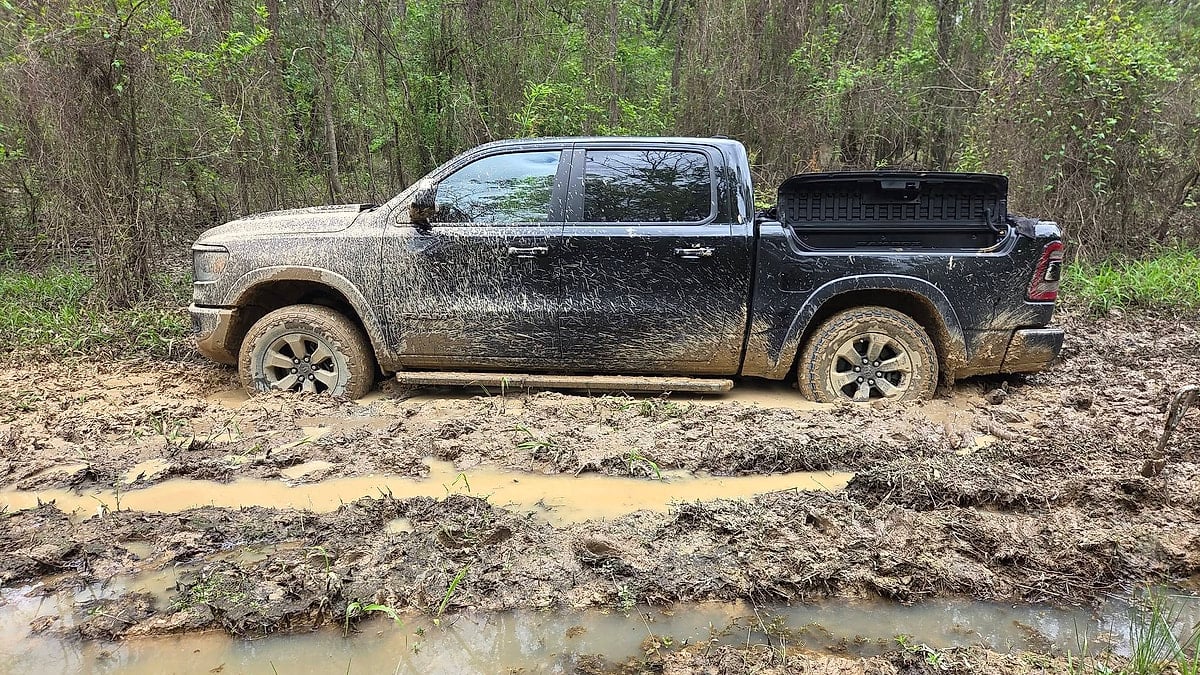
I’ve seen this play out a thousand times: a proud new owner takes their "trail-ready" rig into the muck, only to realize the "All-Terrain" badge on the sidewall doesn't mean "All-Mud." Steven Hughes, a Rebel owner from Georgia, recently shared his gritty reality on the Ram Rebel Group Facebook page. He wasn't just out for a Sunday drive; he was putting the Rebel to work.
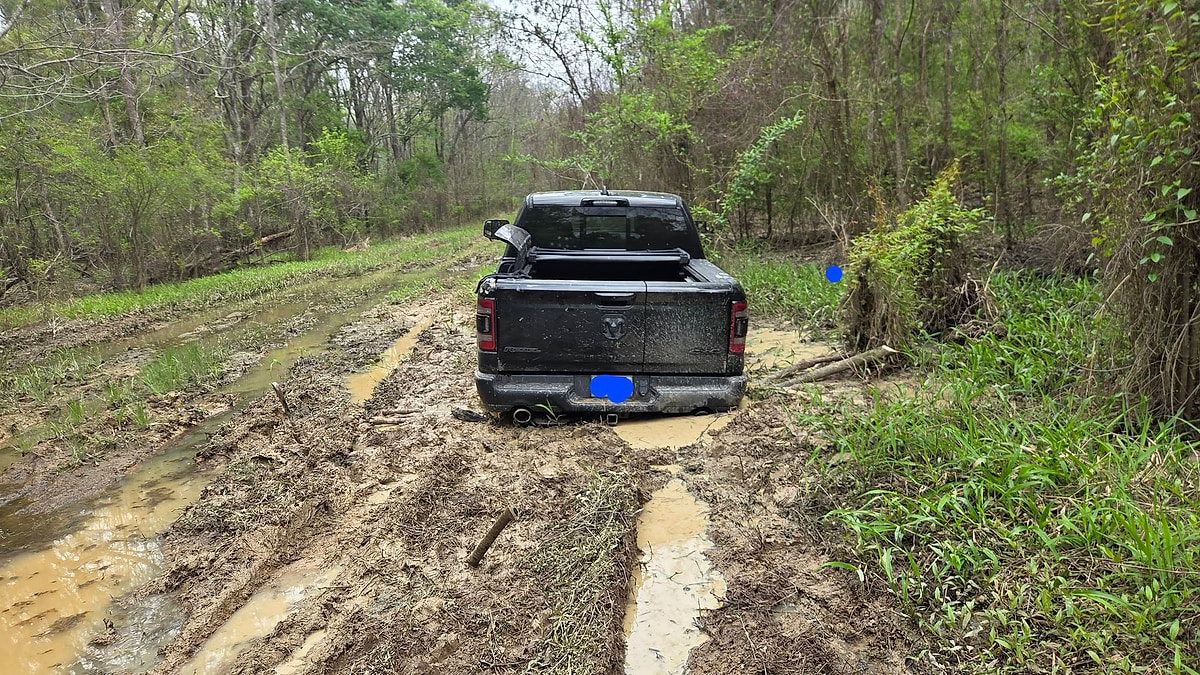
“Get out and do Rebel things! My 2025 Ram Rebel is no highway princess. I was deep off the trail and deep in the Georgia mud. I was very STUCK! I eventually got out of this mess on my own, with lots of cut-down trees. Why buy a Rebel for the street?”
From My View
To understand how a truck with this much pedigree gets buried, we have to look at the Who, How, and Why.
Who: Steven Hughes, a driver who refuses to let his 2025 Rebel become a "highway princess." He represents the core Rebel demographic owners who expect their vehicle to survive the Georgia backcountry.
How: The truck became high-centered after the LT275/70R18E tires lost all traction. These tires are roughly 33.2 inches in diameter and feature a 10-ply "E" load rating. While great for puncture resistance, the tread blocks are spaced for fuel economy and road quietness, not for shedding thick, red Georgia clay. Once the tread voids were filled with mud, they became slick.
Why: Even with the Rebel’s standard one-inch lift and Bilstein dampers, the "Self-Recovery" became necessary because the truck reached its physical "traction ceiling." As I've noted in previous Torque News reports, the 2025 Ram 1500's new powertrain is impressive, but "axing the V8 hasn't slowed the Ram 1500 down" in terms of power delivery; it just means you have more torque to spin tires that can't grab hold of anything. You can read more about my deep dive into the 2025 Ram's performance in my Torque News 2025 Ram 1500 analysis here.
This video provides a practical demonstration of the 2025 Rebel's power-to-traction challenges in deep mud, visually confirming the "traction ceiling" of the stock tires discussed in this report.
My Take
The 2025 Rebel’s Hurricane engine is a masterpiece of engineering, but it creates a specific challenge in the mud. Unlike the old Hemi, which had a predictable linear power curve, the twin-turbos on the 3.0L engine "piled on speed quickly," according to testers at Car and Driver. When you're stuck in a Georgia rut, that sudden surge of boost can actually be your enemy. If you aren't careful with the throttle, you'll spin those LT275/70R18E tires so fast they’ll dig a hole to the frame.
I’ve often warned my readers that the most expensive part of an off-road truck isn't the engine, it's the four patches of rubber touching the ground. In fact, many owners are finding that the factory setup is a compromise. As I discussed in my recent report on truck reliability, "The reliability of a specific vehicle may vary depending on its maintenance and driving history," and that includes how you equip it for your specific region.
What You Need To Know
Before your next trail run, keep these technical points in mind:
- Tire Specifics: The LT275/70R18E is a "Load Range E" tire. This means it has a 10-ply rating, making it incredibly stiff and resistant to rock punctures, but it also makes it harder to "air down" for better traction in mud compared to a C-rated tire.
- The Mud Factor: Georgia red clay is notorious for its "suction" effect. All-terrain (AT) tires generally lack the wide "void ratio" found in Mud-Terrain (MT) tires, which is required to eject mud via centrifugal force.
- Self-Recovery Ingenuity: Using "cut-down trees" (logging) is a classic survival tactic. By placing wood under the tires, Steven created a high-friction surface for the clogged treads to grab onto.
- Weight Matters: The 2025 Rebel is a heavy rig. When it sinks, it stays sunk. The factory Bilstein shocks are tuned for "soaking up thaw-battered gravel roads," as AUTOXTERIOR pointed out, but they can't lift you out of a suction trap.
Field Observations from Owner Communities
I’m not the only one seeing this trend. The community is vocal about the limitations of "stock" equipment at the pavement's end.
In a recent technical discussion on r/ram_trucks, one owner highlighted the trade-off of the factory setup, stating, "I don't love the duratracs. They just felt sloppy on the road. I swapped mine out very quickly," which you can read in the full discussion here.
Another owner in the r/f150 community (discussing similar 18-inch stock setups) noted the weight penalty of moving to a more aggressive tire: "My stock tires were 275/65R18 and when I put on 275/70R18s the new tires were close to 20 lbs heavier each tire," found in this Reddit thread. This weight increase can affect the 2025 Rebel's suspension tuning and fuel economy, which is why Ram ships them with the more "moderate" LT275/70R18E.
Key Takeaways for 2025 Rebel Owners
- Know Your Sidewall: If your truck has the LT275/70R18E spec, it is a fantastic high-durability tire for gravel and light trails, but it is not a dedicated mud tire.
- Respect the Clay: If you live in a region with heavy clay (like Georgia or the Carolinas), consider an immediate upgrade to a hybrid-terrain or mud-terrain tire if you plan on frequent off-roading.
- Self-Recovery Gear: Steven got lucky with his "cut-down trees," but I recommend every Rebel owner carry a set of traction boards and a shovel. The Hurricane engine’s torque is best utilized when you have a solid surface to push against.
- Reality Check: Always trust first-hand experience over the brochure. Manufacturers build trucks for the "average" user; "Rebel things" often require above-average equipment.
The Next Question: Is Your Rubber the Weakest Link?
Given the technical limitations of the LT275/70R18E tires in high-viscosity terrain, the logical next step for owners is determining whether to prioritize fuel economy or off-road "self-cleaning" capability. While the factory 10-ply rating offers excellent puncture resistance, its narrow void ratio effectively caps the Hurricane engine's 469 lb-ft of torque at the pavement's edge. This raises a critical follow-up for any 2025 Rebel owner: Should you invest in a dedicated Mud-Terrain (MT) swap, or can a Hybrid-Terrain tire provide enough void space for Georgia clay without sacrificing the on-road refinement and MPG targets Ram engineered into this new powertrain?
Which Tire Upgrades Solve the Georgia Clay Problem?
Since the factory LT275/70R18E tires hit a "traction ceiling" in high-viscosity mud, the next logical step for a 2025 Rebel owner is identifying which specific tire geometries actually work without ruining the Hurricane engine's fuel efficiency. To satisfy the technical demands of the Georgia backcountry, you need to look for Hybrid-Terrain (R/T) or Mud-Terrain (M/T) options that feature "stone ejectors" and a wider void ratio—the mathematical space between tread blocks that allows centrifugal force to sling mud out rather than letting it pack in. Transitioning to a tire with more aggressive shoulder scoops will allow the Rebel’s 469 lb-ft of torque to bite into the sub-surface rather than spinning atop a "chocolate donut," though owners should be prepared for a 1-2 mpg trade-off and a slight increase in road hum due to the decreased contact patch on asphalt.
Designed For the Street
The 2025 Ram Rebel is a beast of a machine, and Steven Hughes’ story is a testament to the truck's spirit and the driver's grit. It isn't a "highway princess" by design, but its stock tires are definitely optimized for the street. After 30 years in this business, I can tell you that the best truck in the world is only as good as the rubber it’s wearing. Steven’s self-recovery is a win for the community, but it’s also a warning: if you’re going deep into the Georgia mud, bring more than just a stock spec sheet.
Tell Us What You Think: Have you ever pushed your stock tires to the breaking point? Would you stick with the factory LT275/70R18E rubber for the fuel savings, or is an upgrade the first thing on your list? Leave a comment in the red "Add new comment" link below, and let’s get the conversation started!
About The Author
Denis Flierl is a 14-year Senior Reporter at Torque News and a member of the Rocky Mountain Automotive Press (RMAP) with 30+ years of industry experience. Based in Parker, Colorado, Denis leverages the Rockies' high-altitude terrain as a rigorous testing ground to provide "boots-on-the-ground" analysis for readers across the Rocky Mountain region, California EV corridors, the Northeast, Texas truck markets, and Midwest agricultural zones. A former professional test driver and consultant for Ford, GM, Ram, Toyota, and Tesla, he delivers data-backed insights on reliability and market shifts. Denis cuts through the noise to provide national audiences with the real-world reporting today’s landscape demands. Connect with Denis: Find him on LinkedIn, X @DenisFlierl, @WorldsCoolestRides, Facebook, and Instagram.
Photo credit: Denis Flierl via Steven Hughes
Set Torque News as Preferred Source on Google
Follow us today...