
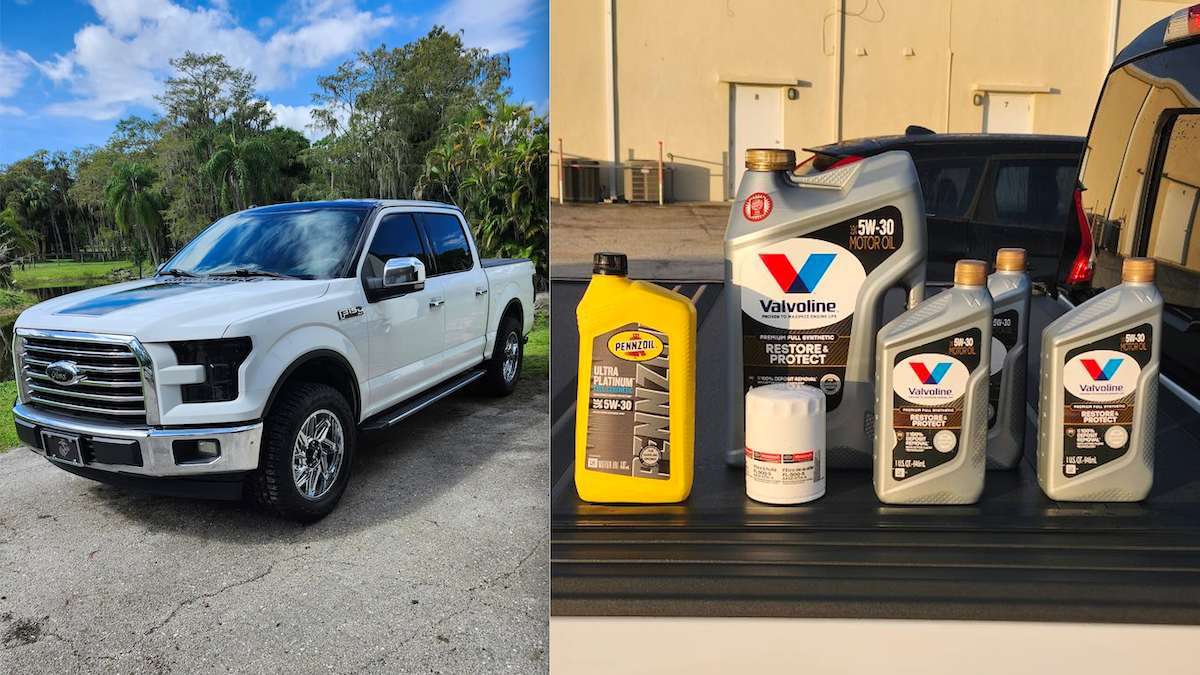

This Ford F-150 owner challenges the internet with his controversial maintenance strategy, but further analysis reveals why his oil switch might be the least of his worries.
Key Takeaways:
- The Brand Switch Risk: Switching to high-detergent oils like Valvoline Restore & Protect at 140,000 miles can sometimes dislodge sludge that is actually helping seal old gaskets.
- The Real Danger: While focusing on oil brands, owners often overlook the 6R80 transmission lead frame and water pump failures, which are the real killers of the 2015-2017 Ford F-150s.
Gerry Billington lit a fire on the Ford F-150 Owners Facebook page with a post challenging the group’s maintenance dogmas. As a Senior Reporter for Torque News with 30 years of automotive experience, I track these owner discussions to identify emerging trends. I found this quote during my research into 5.0L high-mileage reliability, and it perfectly illustrates the tension between "if it ain't broke, don't fix it" and proactive maintenance.
Which Oil Is Best? Debate
I have seen thousands of truck owners debate oil brands, but few do it with the swagger of Gerry Billington. On the Ford F-150 Owners Facebook page, Gerry says, “So I always use Penzoil Ultra Platinum sometimes Mobil 1, but I'm gonna try this stuff some of you keep raving about, 140k 2017 XLT bought it brand new.”
Gerry is referring to the recent surge in popularity of oils like Valvoline Restore & Protect, which claim to remove piston deposits. At 140,000 miles, his 2017 Ford F-150 XLT is entering a phase of life I call the "preservation stage." His history with Pennzoil Ultra Platinum is excellent. It is a top-tier fluid known for low volatility.
However, switching chemistries this late in the game carries risks. In my experience, the Ford F-150 5.0L V8 high mileage maintenance routine should be boring, not experimental. I recently covered a similar topic in my report: "They Said I Was Crazy For Changing My Ford F-150's Oil Every 10K Miles Since It Was New, But They Were Wrong. It Has 217K Miles and is Still Going Strong." That owner succeeded through consistency. If Gerry switches to a highly aggressive cleaning oil now, he risks dislodging carbon deposits that might be sealing his valve stem seals, potentially triggering the dreaded blue smoke.
"Fix It Before It Breaks"
Gerry’s confidence stems from his proactive approach to mechanical failures. He says, “I'm all over it, fix shi* before it breaks, lead frame went bad at 105k, water pump at 115k, that's pretty much all that's gone wrong.”
Here, Gerry earns serious points with me.
The Ford F-150 6-speed transmission lead frame failure symptoms are terrifying; the truck can downshift into first gear at highway speeds without warning. By acknowledging this failure at 105k, Gerry survived one of the most dangerous defects of the 12th and 13th-generation F-Series.
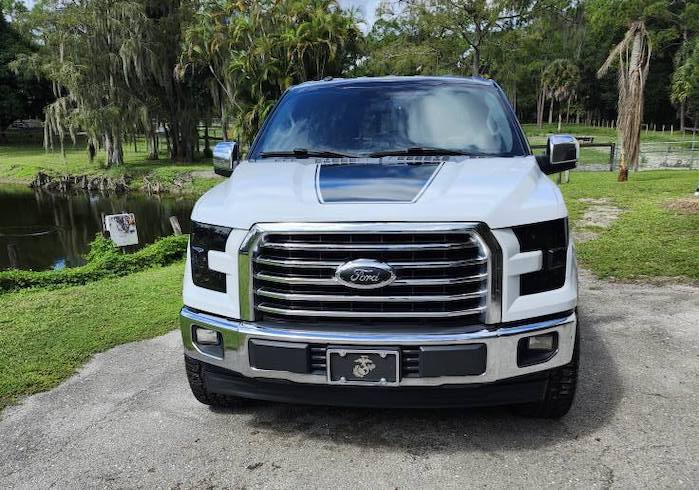
The water pump failure at 115k is also textbook for the Coyote V8. Unlike the internal water pumps on older Duratec engines that ruin the oil, the 5.0L pump is external. However, when it fails, it can spray coolant onto the drive belt, causing it to slip and killing the alternator. Gerry was smart to address these, but his claim that he fixes things before they break contradicts his own timeline; he fixed them only after they went bad. A true preventative measure would be replacing the coolant Y-pipe, a notorious leak point, before it cracks this winter.
Cutting Through the Noise
Gerry ends his post with a challenge: “can't wait to hear some of you talk shi*.”
He is inviting the critics, so I will offer a professional critique. While he focuses on oil brands and pumps, he ignores the Ford F-150 5.0L Coyote engine's oil consumption problems. The 2017 era 5.0L is generally reliable, but as they age, the plasma transfer wire arc (PTWA) cylinder liners can glaze, leading to oil consumption.
I wrote extensively about this in "My 2020 Ford F-150 5.0L Engine Replaced 10K Miles Ago Is Eating Oil". While Gerry has an older block, the principle remains: high-mileage Coyotes consume oil. If he extends his drain intervals because he trusts "premium" oil too much, he could run the sump low. That starves the VCT solenoids, causing the infamous "Cam Phaser Rattle."
The 10-Speed Transmission Issue
Gerry should also count his blessings regarding his transmission. He has the 6R80 6-speed. If he had a newer truck with the 10-speed, his maintenance strategy would be entirely different. As detailed in my report, Is the 2025 Ford F-150 10-Speed Transmission Finally Fixed? Owners Say No, the newer units suffer from CDF drum failures that no amount of fluid changes can prevent.
My advice to Gerry? Stick with the 6-speed. Using the best synthetic oil for high-mileage Ford trucks, paired with a solid transmission, makes his 2017 a keeper.
What F-150 Owners Are Saying
I scoured YouTube, Reddit, and Quora to see if Gerry’s experience is unique. The community is divided on the "change brands at high mileage" debate.
On Oil Switching: A user named MechanicMatt on Reddit warned about switching to high-detergent oils late in life: "Be careful switching to those 'restore' oils after 100k. I’ve seen it clear out sludge that was essentially holding the rear main seal together. Leaks started 500 miles later."
On The Lead Frame: On a YouTube video regarding F-150 transmission issues, user FordLife_88 commented: "My lead frame went at 98k miles. Ford extended the warranty on some, but not all. If you haven't done it by 100k, you're driving on borrowed time. Best $800 I ever spent was replacing it preemptively."
On 5.0L Reliability: A Quora user discussing the 2017 5.0L noted: "The engine is bulletproof if you watch the coolant Y-pipe. The O-rings flatten out, and it leaks unnoticed until you overheat. That’s the real killer, not the oil brand."
In The End, Gerry Billington is right to be proud of his truck. Reaching 140,000 miles with only a lead frame and water pump failure is a testament to the durability of the 2017 F-150. However, his bravado about "fixing sh*t before it breaks" needs to extend beyond just reacting to failures. The Ford F-150 10-speed transmission shifting issues may not plague him, but timing chain stretch and coolant leaks are the next hurdles. My advice: Stop experimenting with "raving" new oil products. Stick to what got you to 140k, and save your money for the inevitable suspension rebuild.
It's Your Turn: Would you switch oil brands on a high-mileage engine, or is consistency key? Let us know in the comments below.
Next Up: If you are thinking of upgrading your truck, be careful. Read my report on why a 2019 F-150 owner won't buy another Ford due to severe buyer's remorse before you trade in your reliable 2017.
With over 30 years of industry experience, Denis Flierl brings an insider’s perspective to Torque News, where he has been a Senior Reporter since 2012. Before picking up the pen, Denis consulted for the automotive industry's biggest brands and honed his skills as a test driver. He cuts through the noise to deliver the latest auto news, compelling owner stories, and the expert analysis necessary to navigate today's changing automotive market.
Have a tip or question? Follow me on X @DenisFlierl and @WorldsCoolestRides, or connect with me on Facebook, Instagram, and LinkedIn.
Photo credit: Denis Flierl via Gerry Billington
Set Torque News as Preferred Source on Google
Follow us today...







Comments
That’s because they are…
Permalink
That’s because they are dumping almost all of their EVs as they were causing billions of dollars in losses .They finally figured it out , the vast majority of American DO NOT WANT EVS .The End 🤣🤣🤣🤣