
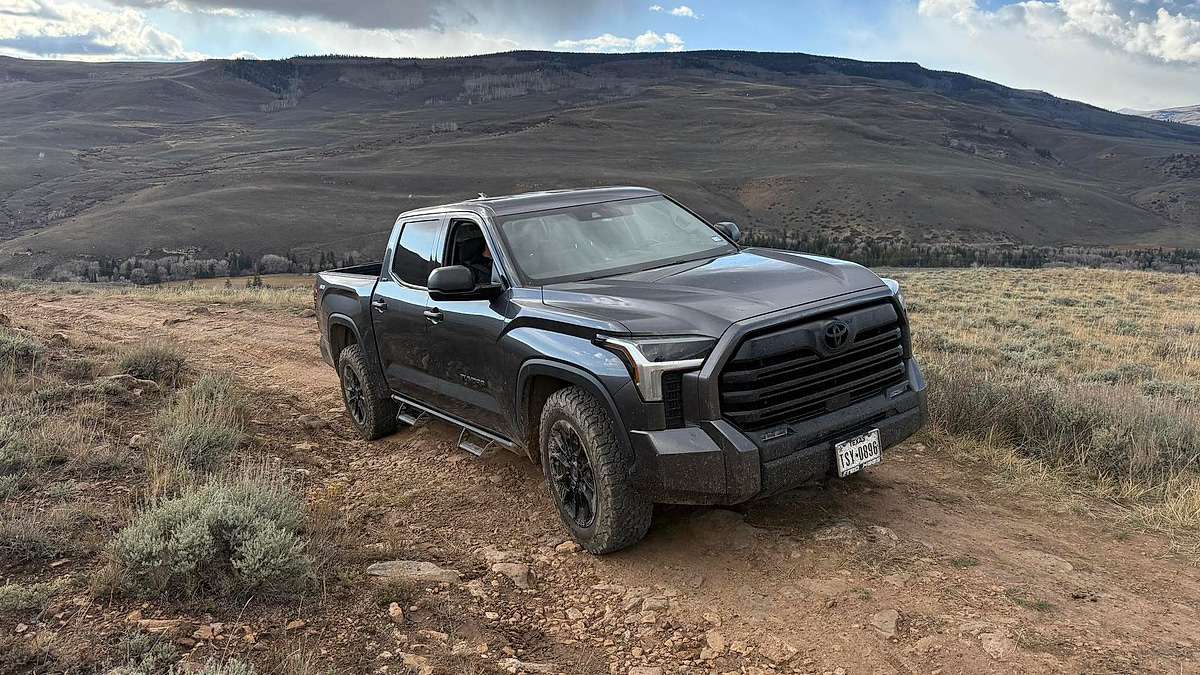

The automotive world is currently witnessing a historic reliability paradox. As we navigate 2026, the "bulletproof" reputation of the Toyota Tundra is facing its most significant challenge yet. This report investigates the harrowing experience of Travis Clay, a Texas truck owner who fled the known engine failures of the 2020 Ford F-150 only to be ensnared by the ongoing 2023–2024 Toyota V35A engine recall. My investigation reveals that while Ford’s issues in 2023 were often isolated to specific production batches, Toyota’s struggle with machining debris has created a massive logistics backlog, leaving owners "nervous" and stranded in a repair purgatory.
I have spent over 30 years in the trenches of the automotive industry, and I’ve seen manufacturers rise and fall on the strength of their powertrains. But what is happening right now in Holiday, Texas, is something I’ve never seen. Travis Clay recently shared a story on the 2023-2026 Toyota Tundra Owners Facebook group that should serve as a massive red flag for every truck buyer in America. Travis didn't just have a "bad" truck; he had a 2020 Ford F-150 that required two entirely new engines within a 90-day window back in 2023. He did what any rational person would do: he sold it and bought what we all thought was the "safe bet," a Toyota Tundra.
Now, Travis is living a nightmare. He recently posted:
“How’s the Tundra engine swap gone for y’all? I got “the” engine recall letter a few months ago for my 2023 Toyota Tundra. I’m still waiting for the follow-up one to come get it. Kinda makes me nervous. I had to replace two NEW engines (within 90 days) on my 2020 Ford F150 back in 2023, and I immediately sold it after the 2nd engine. I bought the Toyota Tundra, and now I’m going through the same thing.”
It’s no surprise this is hitting hard in Holiday; the Gulf Coast region has the highest density of Tundra owners in the country, and for many of these folks, the 'Texas Edition' Tundra isn't just a trim level, it’s a badge of expected reliability that is now being put to the ultimate test.
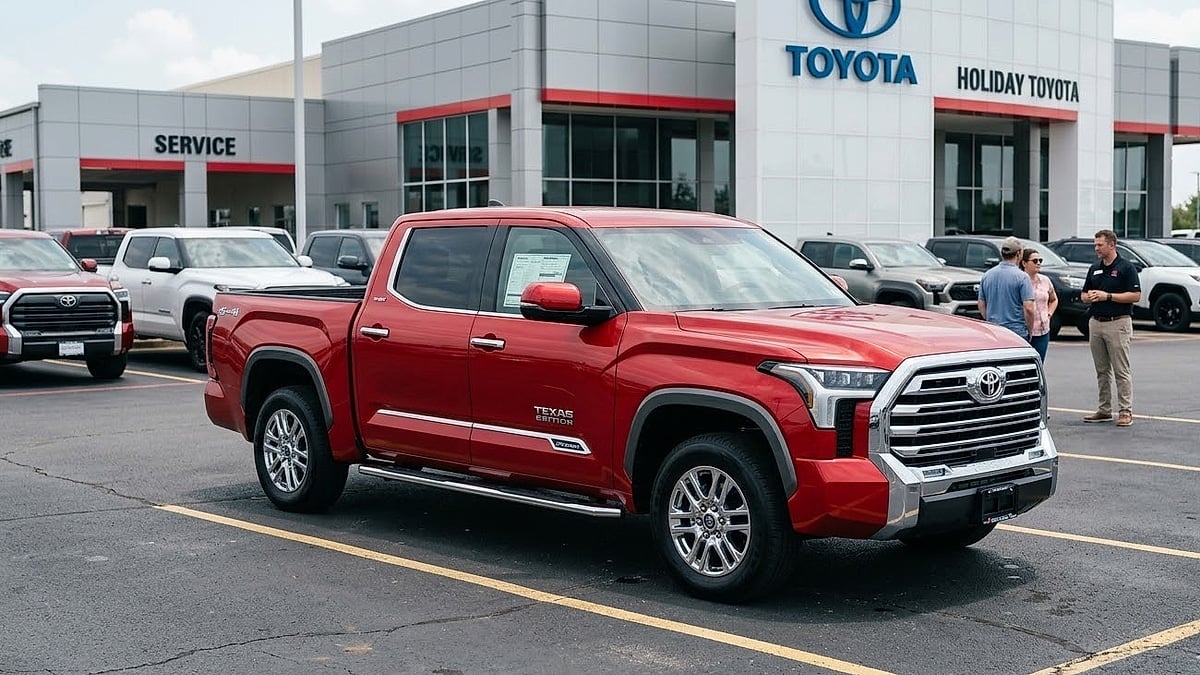
From My View: The "Who, How, and Why" of the Reliability Crisis
To understand who is affected, you have to look past the marketing. This isn't just about "entry-level" buyers; it's about the loyalists who spend $60,000 to $80,000 on a pickup. How did this happen? It comes down to a fundamental shift in manufacturing. As I’ve observed in my recent reporting, the V35A engine debris issue continues to surface in 2024 and 2025 models reaching the 40k–60k mile threshold, proving this is a known mechanical variable, not an outlier. You can read my full analysis on how new crate logistics are signaling a process win for some owners.
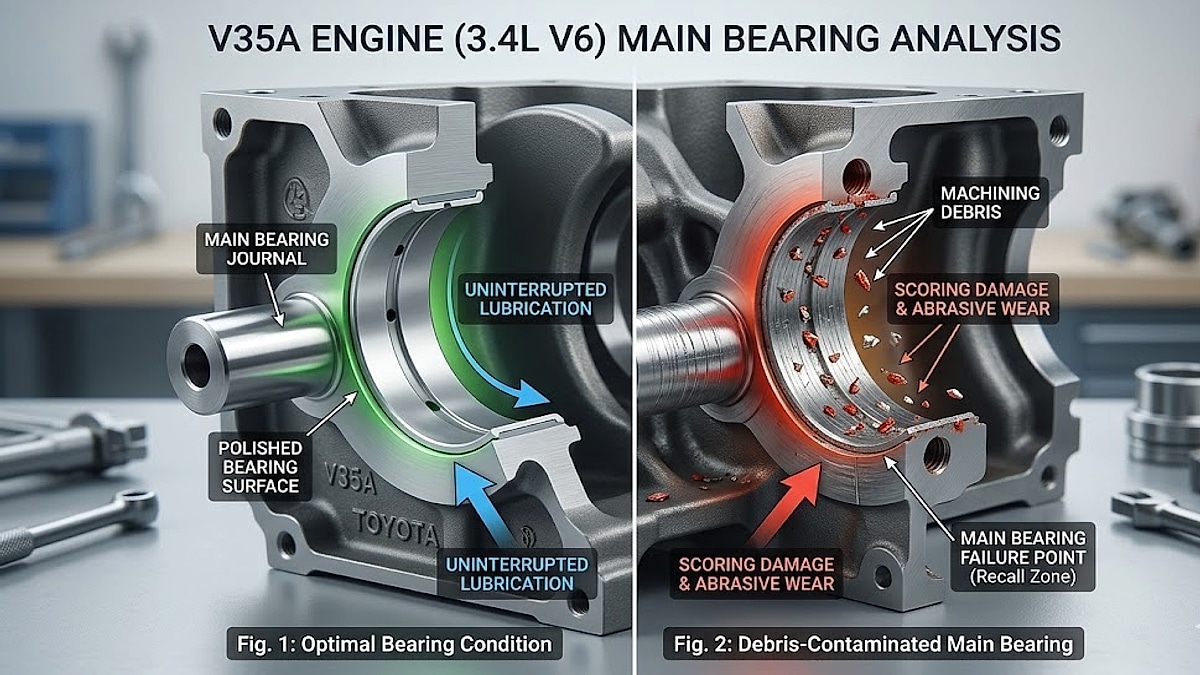
Why is this happening? According to official NHTSA filings, certain machining debris may not have been cleared from the engine during production, which can lead to engine knocking, rough running, or a total loss of motive power at high speeds. This is a terrifying prospect for someone like Travis, who already suffered through two Ford failures. According to a report by Car and Driver, this same problem continues to plague the brand that built its reputation on reliability, affecting approximately 127,000 vehicles in the latest expansion of the recall.
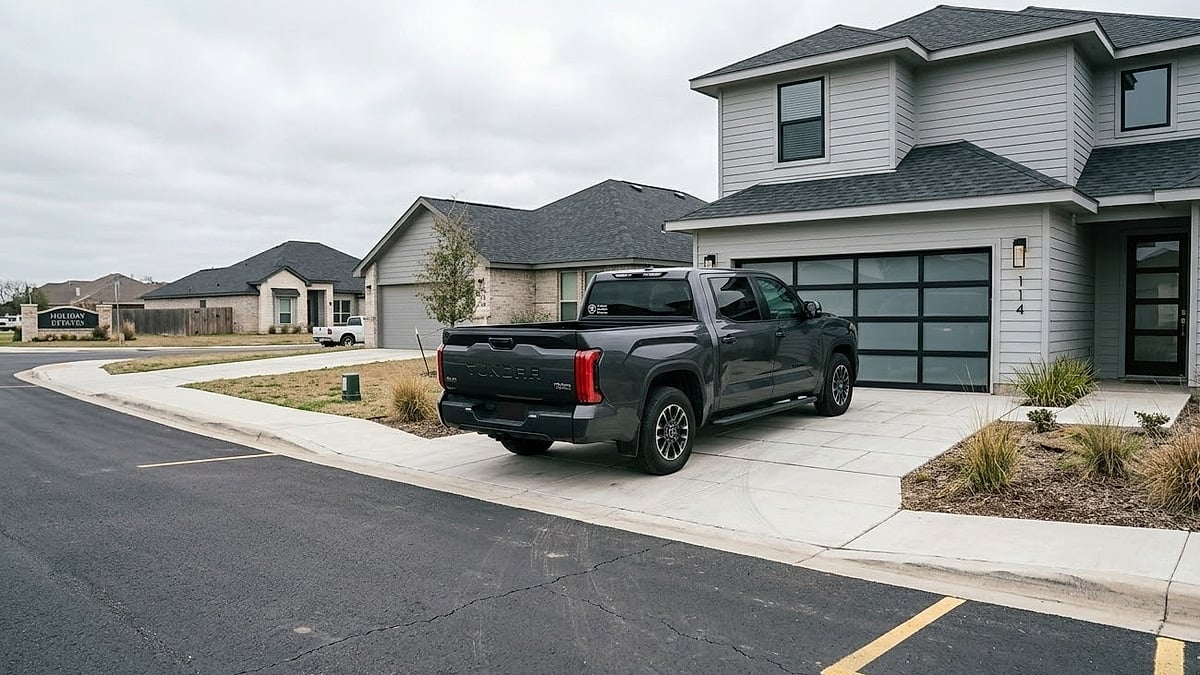
My Take
I’ve had readers ask me for years if they should stick with the domestic "Big Three" or move to Toyota for longevity. In 2026, that answer is no longer simple. While Ford has struggled with electronics and 10-speed transmission gremlins, Travis’s case of two engine failures in 90 days is an extreme example of a quality-control lapse. However, Toyota’s "debris" issue is systemic.
In my previous coverage, I highlighted a 2024 Tundra owner whose truck has been at the dealer for two months with a dead engine and no part estimate, while recalls get priority. His story reveals severe repair delays and Toyota's refusal to offer a fair buyout, raising critical concerns for Tundra owners. I’ve said it before, and I’ll say it again: this should be settled with Toyota Corporate because a dealership rebuild is often a "labor nightmare prone to human error" compared to a factory-fresh long block.
The NHTSA Safety Recall Report 24V-381 confirms that for this repair, your dealer will need several days to receive the engine, and the wait times I'm seeing in the field are stretching into months.
What You Need To Know
- The Debris Factor: The V35A 3.4L twin-turbo V6 failure is caused by metal shavings contaminating the main bearings. This is not a "software fix"—it requires a physical heart transplant for the truck.
- The Wait Time: As of March 2026, Toyota has moved to "Long Block" crate engines to speed up repairs, but the sheer volume of 100,000+ units means regional engine banks are often depleted.
- The Risk Window: If your Tundra was built between November 2021 and February 2023, you are in the primary "danger zone," though 2024 models are now showing similar symptoms.
- The Ford Comparison: Ford’s 2020 3.5L EcoBoost issues were often related to cam phasers, which, while annoying, rarely resulted in the "catastrophic seized engine" scenario we are seeing with the Tundra's main bearings.
Field Observations from Owner Communities
The sentiment on the ground is shifting from "loyalty" to "litigation." In a recent technical discussion on r/ToyotaTundra, one owner highlighted the vulnerability of the new design, mentioning, "I had my engine replaced at 76k miles... Toyota hasn't fixed the issue, they just bought themselves some time and then passed the problem onto us," which you can read in the full discussion here.
Another owner in the community expressed the shared anxiety that Travis is feeling, noting, "The neat part is that the bearing is almost, like within a mm, the same size as the 5.7L's. It's almost as if the engineering design flaw is something much deeper and insidious," as found in this Reddit thread.
Key Takeaways for My Readers
- Don't ignore the Letter: If you received the "interim" recall notice, your truck is a ticking time bomb. Monitor your oil for metallic glitter during every change.
- Demand a Long Block: Do not let a dealership "rebuild" your bottom end. My experience shows that factory-assembled long blocks have a much higher success rate than dealer-rebuilt engines.
- Document Everything: Like Travis, you may find yourself needing to sell or seek a buyback. Keep every service record and communication with Toyota North America.
- Check Your Build Date: Not all Tundras are affected, but if your VIN falls within the NHTSA 24V-381 or 25V-767 range, you must be proactive.
Is Reliability Dead?
I’ve lived through the era of the "million-mile" Tundra with the old 5.7L V8. Transitioning to the twin-turbo V6 was always going to be a hurdle, but the machining debris issue is a self-inflicted wound by Toyota. While Ford has its own skeletons, the fact that an owner can jump from a Ford disaster into a Toyota catastrophe suggests that "brand loyalty" should be replaced by "batch verification."
I am actively investigating why some 2025 and 2026 models, which were supposedly "cleared" of this issue, are still appearing in my inbox with bearing failures. I will keep you updated as more data from the Texas region comes in.
Tell Us What You Think
Travis Clay is "nervous," and frankly, I don't blame him. He did everything right and still ended up in the shop. If you were in his shoes, would you wait for the third engine, or is it time to look at a different brand entirely?
How About You? Have you received your "follow-up" recall letter, or are you still sitting in "logistics purgatory"? Leave a comment using the red "Add new comment" link below, and let’s get a conversation started.
About The Author
Denis Flierl is a 14-year Senior Reporter at Torque News and a member of the Rocky Mountain Automotive Press (RMAP) with 30+ years of industry experience. Based in Parker, Colorado, Denis leverages the Rockies' high-altitude terrain as a rigorous testing ground to provide "boots-on-the-ground" analysis for readers across the Rocky Mountain region, California EV corridors, the Northeast, Texas truck markets, and Midwest agricultural zones. A former professional test driver and consultant for Ford, GM, Ram, Toyota, and Tesla, he delivers data-backed insights on reliability and market shifts. Denis cuts through the noise to provide national audiences with the real-world reporting today’s landscape demands. Connect with Denis: Find him on LinkedIn, X @DenisFlierl, @WorldsCoolestRides, Facebook, and Instagram.
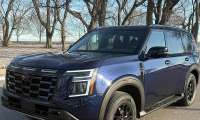
Photo credit: Denis Flierl via Travis Clay
Set Torque News as Preferred Source on Google
Follow us today...




Comments
I read your article and the…
Permalink
I read your article and the issues with the new tundra are why i went from toyota to ford when i needed a truck. Im quite suprised the gentleman in the article didnt do some research as he would of stumbled upon the major issue with the v35a tundra. I do think it is a larger issue than just metal shavings. The engine design itself perhaps?
I would love to trade my 04…
Permalink
In reply to I read your article and the… by Joshua mchugh (not verified)
I would love to trade my 04 tundra for a newer one but I would not touch one of those twin turbo time bombs for what they are asking for them. Starting to look at Nissan now.
Loyal Toyota guy. All we…
Permalink
Loyal Toyota guy. All we have in the family. I will keep my 5.7 Tundra and 4.0 4runner forever. The new stuff is absolute junk. It's shocking to me how people dont do the research. A very quick search online and you'll see the new Tundra engine has nothing but issues and to stay away from it. Toyota needs to go back to a big v8 and move on from this experiment before they lose all their loyal customers. Which is what Toyota was built on. Reliability.