
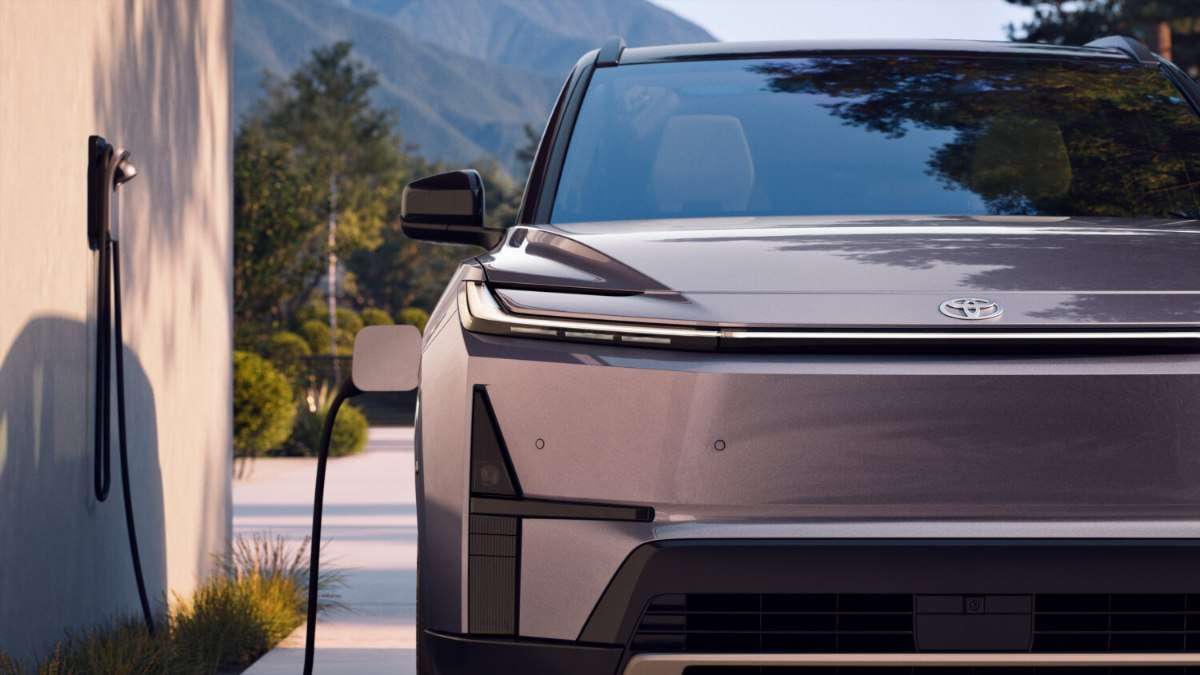

The all-new, all-electric 2027 Toyota Highlander will begin arriving at dealers in a matter of months, and already, reactions from stunned owners and fans of the model are following a familiar pattern. The stages of grief.
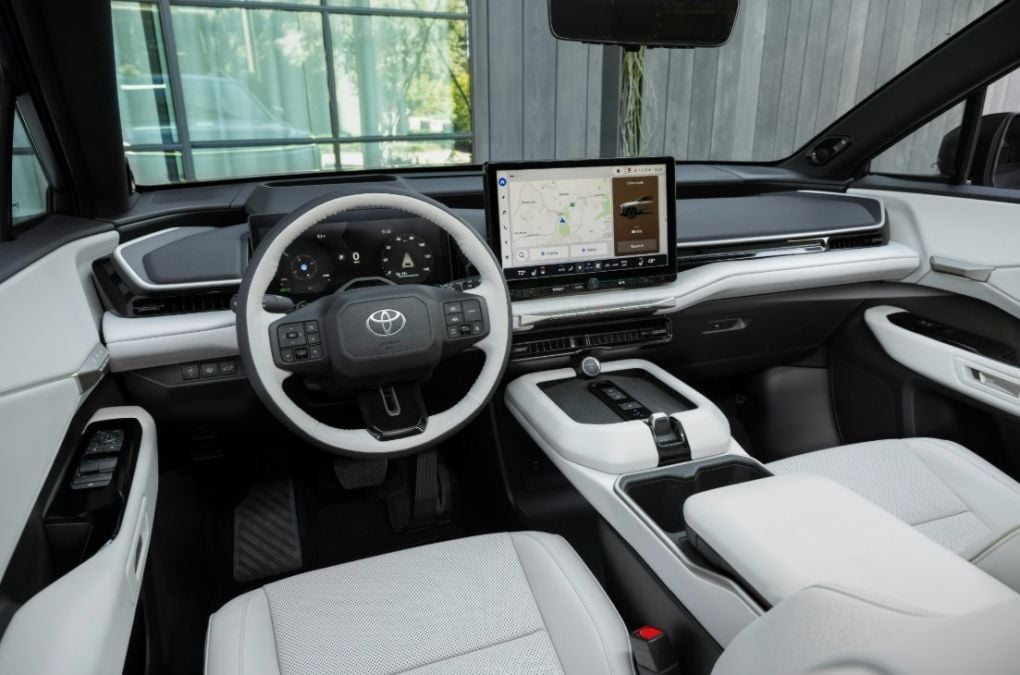
When the teaser thumbnail image and short info blurb of the 2027 Toyota Highlander EV were reported earlier this week, most of the comments under our story were straight-up disbelief that Toyota would eliminate hybrid and conventional powertrains and make the popular Highlander a battery-electric vehicle (BEV). Under the initial posts early this week, members expressed their disbelief this way:
Frank W - “Not true.”
Wojciech Bogucki - “You do realize that it can be offered as a BEV but also a hybrid?”
Julia A. - “Surely they'll continue offering HEV and gas models.”
Many similar comments followed along these lines. Amazingly, even after Toyota released its full specs and model trims for the new Highlander, some Toyota Highlander owners are still unable to grasp what has happened.
Randy H. - “My local dealer said the Grand Highlander will stay a hybrid and will not be fully electric.”
Daniel S. - “Hopefully they will realize their mistake and bring back at least the hybrid in a couple of years.”
The stages of grief are well documented and, for most people, follow a very repeatable pattern. First denial, then anger, followed by bargaining, depression, and acceptance. As of today, the morning after the 9:30 pm announcement by Toyota that the Highlander will be electric-only, the large group of Highlander owners and fans is now entering the anger stage. Here are some of the comments from members who are now expressing their unhappiness with this move:
Yuriy V. - “HeXX Noooooo!”
Bob P. - “Flat out no.”
Erik M. - “I think Toyota lost this segment now, I’m not interested.”
Bob G. - “I’ll not have a BEV in my garage.”
Chris B. - “Nope. Pass.”
Many owners point out that the Highlander has hybrid competition, primarily from the Hyundai Santa Fe. Kia also has an attractive hybrid product line.
In fairness, there are outliers to the group’s general opinion. Some owners have expressed happiness that the Highlander is going all-electric. A few have even said it was a move they have waited for. Josue C. Said, “If it’s priced right, it will be an amazing option. I would be interested.” Mary G. was the most enthusiastic. She said in a comment, “Thank you for sharing! I’m so excited. I keep telling the dealership I won’t trade my hybrid until they have a fully electric version.” Interestingly, Mary has never posted in the Highlander group before this very comment. Hmm.
Reactions to new EVs often ruffle feathers. When Ford co-opted the Mustang name for its Mach-E, many lifelong Ford fans were furious. Of course, the Mach-E outsells the gas-powered, rear-drive Mustang coupe by many multiples today. The electric version is also able to smoke the gasser in stoplight sprints. What is different about the Highlander moving to a BEV powertrain is that the classic version will be sunsetted, and it will be replaced in the lineup by the massively successful Grand Highlander. I am not privy to any insider information from Toyota, but if the Grand Highlander’s smashing success was not part of the equation when Toyota opted to move the Highlander to a BEV, I’d be shocked.
One small fly in the optimism ointment is that Hyundai and Kia already make and try to sell a three-row all-electric SUV very much like the Highlander will be. They are the Ioniq 9 and the EV9. Both are selling horribly by any measure. The EV9’s January deliveries were half of last year’s. The hybrid Highlander outsold both the Kia and Hyundai 3-Row EV by about 3X in January. The total gas and hybrid Highlander line outsold them by roughly 5 to 1.
“Who Asked For This?”
One comment we’ve seen repeatedly under many new 2027 Highlander BEV stories is “Who asked for this?” That is a good question. There are a few owners who are interested in a BEV Highlander represented in the groups, but they are outliers, and none of them I could find were Top Contributors to the group.
My Conclusions As a Long-Time Highlander Owner and Tester of Vehicles For Two Decades
The new Highlander represents a bold step forward. Unlike the hybrid Highlander, which goes all the way back to the first generation, Toyota does not have a large EV following in the U.S. market. Also, the U.S. market for EVs has just collapsed. It’s been five months now since EV tax subsidies were eliminated, and deliveries are terrible. Roughly 94% of Americans don’t buy a new EV when they shop. Why would Toyota launch a new BEV into such a climate? Momentum. The decision to create this vehicle was made long before the EV mandates were repealed and the massive federal tax subsidies were eliminated. Ford had a three-row EV coming and canceled it. Toyota may have been farther along, and the financial situation warranted the launch.
Toyota is also quietly marching toward electric vehicles. My memory of the last chat I had with a Toyota employee was something like “Toyota plans to have ten EVs in America by 2030.” That is right around the corner in automotive years. After starting strong on EVs, Toyota stepped back to let the technology and supply chain mature. Now it has, and Toyota likely has some insights as to what will be the norm in five years. Time will tell.
What’s your reaction now that you know the beloved Highlander is moving to an electric-only platform? Tell us your thoughts in the comments below.
John Goreham is the Vice President of the New England Motor Press Association and an expert vehicle tester. John completed an engineering program with a focus on electric vehicles, followed by two decades of work in high-tech, biopharma, and the automotive supply chain before becoming a news contributor. He is a member of the Society of Automotive Engineers (SAE int). In addition to his fourteen years of work at Torque News, John has published thousands of articles and reviews at American news outlets. He is known for offering unfiltered opinions on vehicle topics. You can connect with John on LinkedIn and follow his work on his personal X channel or on our X channel. John employs grammar and punctuation software when proofreading, and he sometimes uses image generation tools.
Set Torque News as Preferred Source on Google
Follow us today...


Comments
We've had 4 Highlanders over…
Permalink
We've had 4 Highlanders over the years. Still have 2 of them. Looks like it will be the last Highlander we buy with 2027 going all electric. Grand Highlander size we don't need or want. I think it's a mistake on Toyota's part. They will have a gap in their product line.