
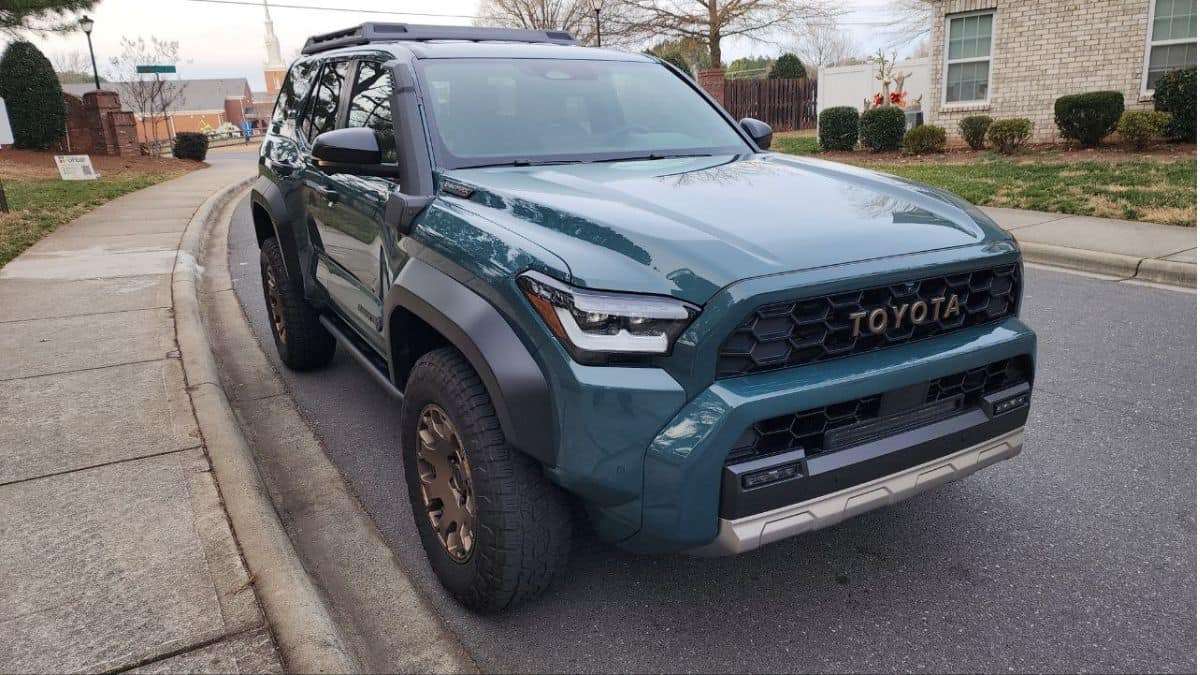

If you’ve been hunting for an honest, in-depth 2025 Toyota 4Runner Hybrid Trailhunter review, one grounded in real-world experience instead of marketing hype, you’ll want to read this start to finish. Toyota boldly redesigned the 4Runner for 2025, moving it onto a new platform shared with the Tacoma and Land Cruiser, and introduced hybrid power for the first time in the model’s history. The Trailhunter trim aims to be the ultimate factory off-road, overland ready SUV, offering capable hardware straight from the dealer without requiring aftermarket upgrades.
But after spending a full week living with this vehicle, what really stood out to me were the nuances: the good, the great, and the unexpected frustrations.
In the midst of an otherwise enjoyable week, I had a flat tire - not once, not twice, but again - recalling my recent experience with the 2026 Mazda CX-70, which also left me stranded mid-review. If you haven’t read that story, it’s worth a look.
This review will walk you through everything from exterior design and interior function, to hybrid powertrain behavior, real-world MPG, pricing context, competition, everyday driving impressions, and how this Trailhunter sits in the evolving performance SUV landscape.
There I Was Again With a Flat
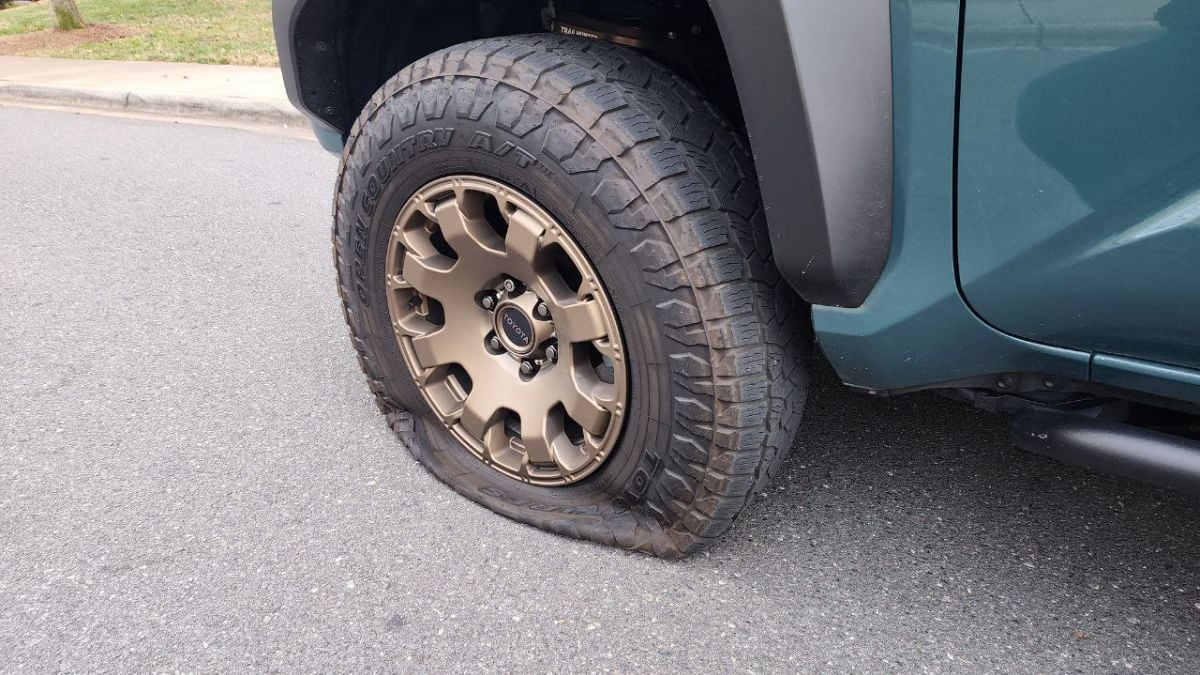
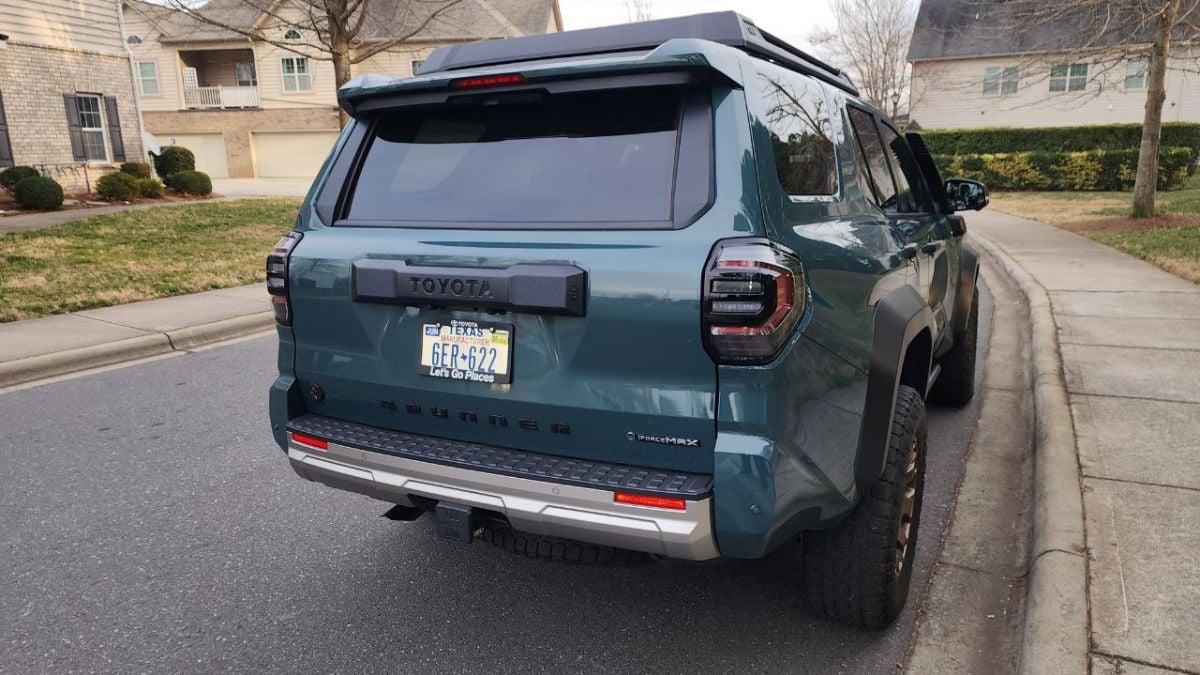
Let’s address the elephant in the road. During a photo shoot in an affluent neighborhood, the 4Runner Hybrid Trailhunter let out that dreaded pop-hiss that every SUV lover hopes to never hear. Front driver’s side tire shot flat in an instant, wide open on a perfectly good piece of asphalt. Yes, just like with the CX-70, I had to call the company that provided the test vehicle and admit yet another flat tire experience.
Strangely enough, this is where Toyota’s support shined. Their roadside assistance program, covering up to 25,000 miles, responded in under 20 minutes, replaced the tire efficiently, and handled the situation with professionalism. This kind of support matters to owners and reviewers alike, because flat tires aren’t just an inconvenience, they’re a real-world cost and liability that few press fleets prepare you for.
That incident aside, the Trailhunter left me with plenty of positive impressions - and a few thoughtful reservations - about Toyota’s latest 4Runner chapter.
What's New for 2025 and Why It Matters
The 2025 4Runner represents one of Toyota’s most meaningful redesigns in decades. The model shifted from the old frame and 4.0-liter V6 architecture, replacing it with a modular platform shared with the Tacoma pickup and Land Cruiser SUV. This was a critical move toward modernization, allowing Toyota to upgrade suspension, electronics, hybrid integration, and towing without patching the old design.
The Trailhunter trim builds on that new foundation with a clear mission: offer out-of-the-box off-road and overland credentials without forcing buyers to drop thousands of dollars on aftermarket parts before hitting the trails.
The result is an SUV that feels more complete at delivery than any 4Runner before it, and it lends context to why people search for key insights like these Cadillac-style features and what makes the Trailhunter special.
Exterior: Subtle Off-Road Bravado and Functional Toughness
From the moment you approach the Trailhunter, you can see Toyota’s intent: this isn’t a cosmetic trim with stickers and badging. This is a purpose-built SUV.
The exterior features chunky all-terrain tires mounted on robust wheels, ARB-sourced roof rack hardware, and sculpted fender flares that feel intentional rather than aftermarket add-ons. There’s a snorkel intake that visually tells you this machine is prepared for deep water crossings, and steel skid plates that protect the underbody essentials, not just “trail look” plastic covers.
The front fascia is more aggressive, offering improved approach angles, and recovery points are real steel, not painted trim bits. Toyota’s integration of Old Man Emu suspension components with external reservoirs shows genuine capability, not truncated off-road planning.
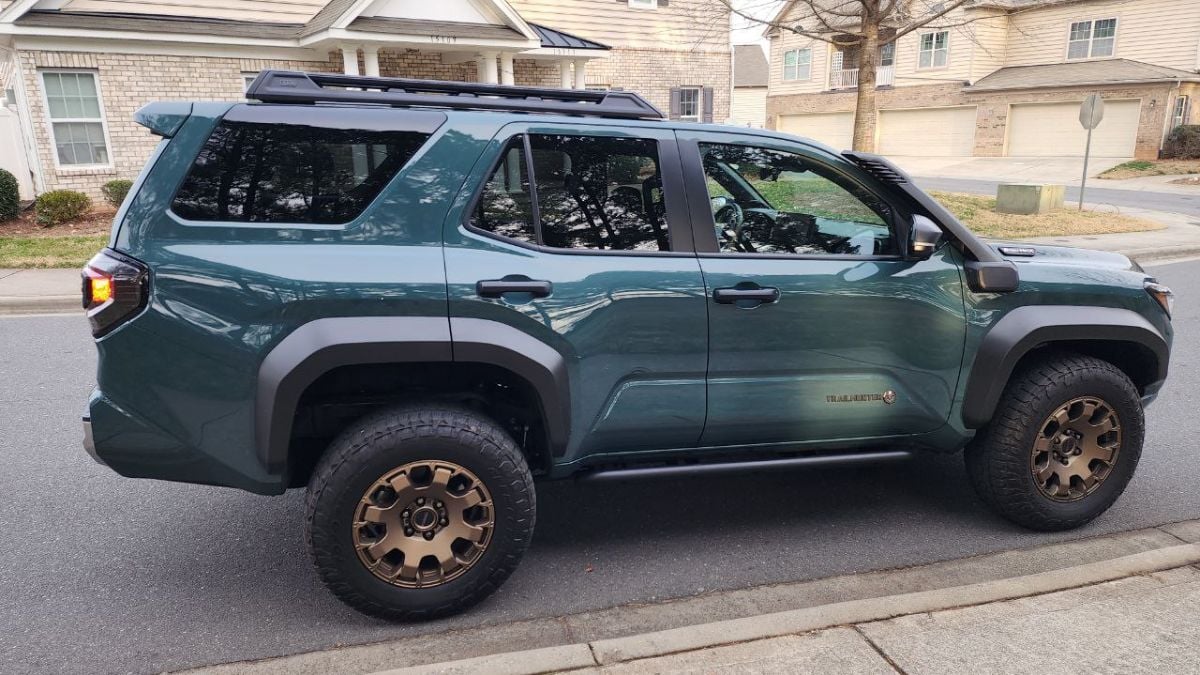
This exterior personality does not try to be a luxury crossover. Instead, it screams function first, and that’s exactly what many serious buyers are searching for when they look up comparisons like the broader landscape of rugged SUVs, including debates like Toyota Land Cruiser vs Toyota 4Runner for explorers.
Interior: Practical, Durable, and Designed to Be Used
Toyota’s interior theme for Trailhunter goes beyond mere aesthetics. Functionality is the priority.
Seats are generous and comfortable, wrapped in materials that shrug off dirt and moisture rather than show it. Everything inside feels durable and glove-friendly - from HVAC dials to the gear selector - and that’s a deliberate choice for someone likely heading to remote places rather than urban malls.
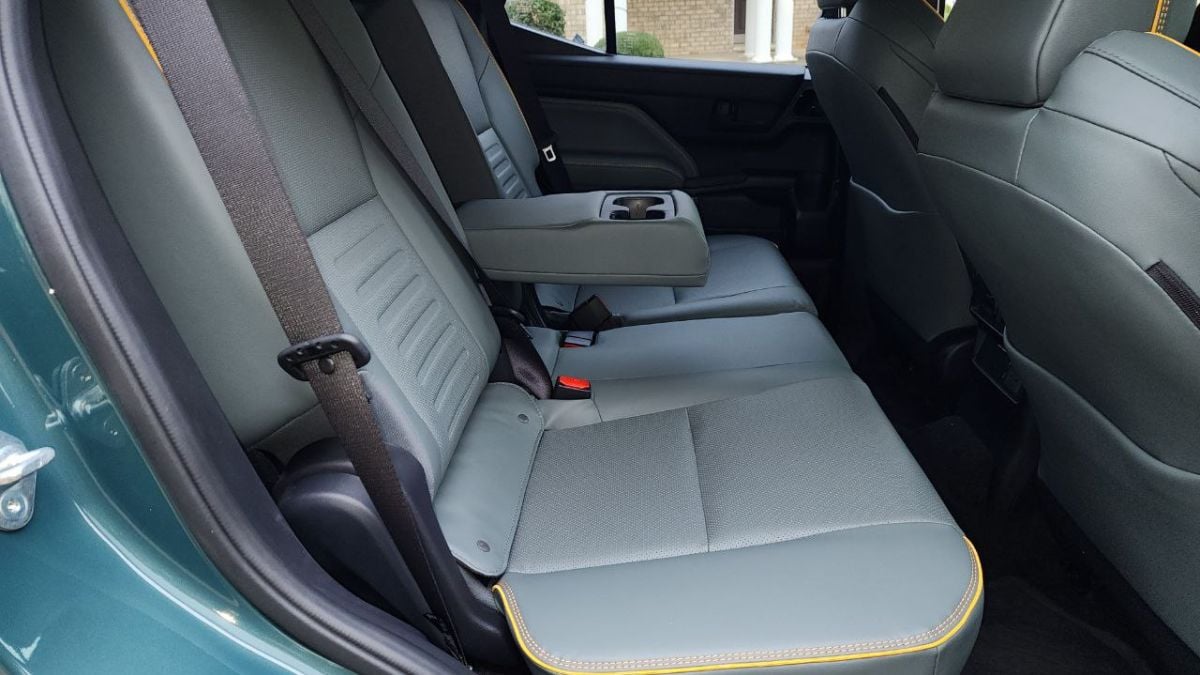
Second-row seating is spacious enough for adults, but taller passengers might wish for a hair more legroom compared to some competitors. Behind the second row, cargo space is good but not cavernous, especially since the hybrid battery pack eats into some rear volume.

Still, the overall feeling is of utility and thoughtfulness, not cheapness or cheap plastic. And as we see increasingly in off-road communities, this is a real selling point, because many buyers don’t want to spend their first weekend tearing apart their new SUV to add durability.
Infotainment: Seamless Connectivity With Everyday Reliability
Toyota equipped the Trailhunter with a large, intuitive touchscreen running the latest multimedia suite. Wireless Apple CarPlay and Android Auto are standard, and you’ll find plenty of USB-C ports for power and device connectivity.
The system is responsive with clear graphics and easy menus, avoiding the clumsy lag that plagued older Toyota infotainment interfaces. There’s a practical navigation system with trailhead mapping support, though if you’re deep in the backcountry, offline maps or third-party apps remain essential.

For everyday use, the touchscreen and voice controls are both reliable and easy to live with: no gimmicks, just solid performance.
Power and Transmission: Hybrid Torque You Can Feel
The Trailhunter makes use of Toyota’s i-Force Max hybrid powertrain, which pairs a turbocharged 2.4-liter four-cylinder with an electric motor and an eight-speed automatic transmission. Together, this system delivers plenty of torque at low revs, which is exactly where you need it - on trail approaches, rocky climbs, or highway merging.
Acceleration feels composed and smooth despite the Trailhunter’s heavy duty tires and rugged setup. Launch control isn’t a headline feature here, but the SUV’s 0-60 performance feels competitive for a vehicle this size and weight class.
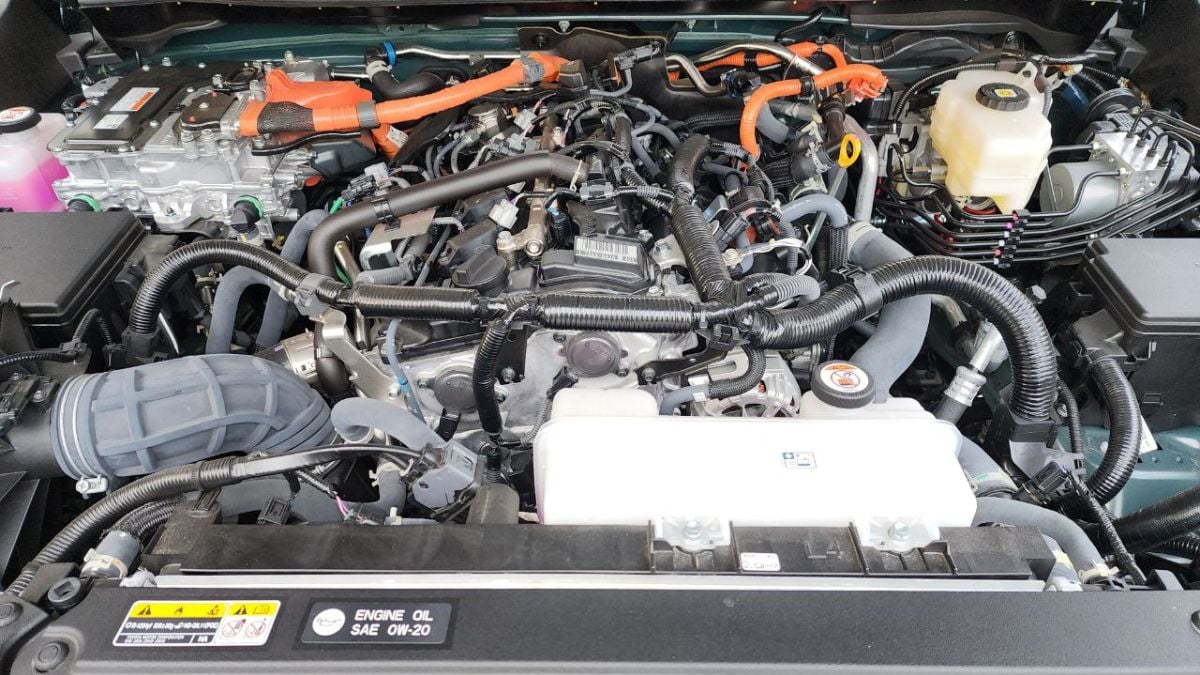
Where the hybrid really pays off is in torque delivery. The electric assist fills gaps in low-RPM power that conventional engines struggle with. It elevates throttle modulation and low-speed control, both on pavement and dirt.
MPG: Real-World Economy on a Heavy-Duty SUV
Official hybrid fuel economy for the Trailhunter hovers in the low 20s combined, and that’s exactly what I experienced in a mix of commuting, highway cruising, and towing runs. To be more precies, it's 23 combined, 23 in the city and 24 MPG on highways. You know, it’s not going to shatter economy benchmarks, but for a heavy, hybridized off-road SUV, this is strong performance.
In everyday use you can count on roughly mid-20 MPG figures if you’re smart with throttle inputs. On longer highway runs with gentle speeds, the hybrid helps keep average economy respectable.
That’s a real selling point for buyers who want both capability and reasonable running costs.
Ride and Handling: Firm but Composed
On pavement, the Trailhunter feels purposeful, not soft. The suspension is tuned for heavy luggage, gear, and trail abuse before luxury SUV comfort. That means you’ll feel bumps and rough pavement transitions more distinctly than in a plush crossover, but you’ll also appreciate the composure it maintains over washboard gravel roads and rutted fire trails.
On twisty backroads the body roll is noticeable simply because of the tall stance and big tires, but the suspension setup keeps everything stable without unsettling the driver.
Off-road, the Trailhunter is confident, predictable, and composed. Traction is abundant in multiple modes, and the torque vectoring from the hybrid system really helps make technical trail sections more manageable.
Pricing Context and Competitors
When equipped similarly, the Trailhunter sits near the top of the mid-size SUV price class. It is priced close to trims like TRD Pro and competitors such as the Jeep Wrangler Rubicon and Land Rover Defender variants.
The value proposition here depends on what you prioritize. If you want factory-built capability right off the lot - hardware that doesn’t require immediate aftermarket spending - Trailhunter delivers more than its price tag suggests. If you prefer luxury refinement or headline horsepower, you might find that in other trims or brands.
And yet, that reason alone has sparked many buyers to reconsider ownership decisions within a short period - read more about those trends in why some people are trading their Toyota 4Runner sooner than expected.
Off-Road Technology, Drive Modes, and Trail Assistance Systems
Beyond the Trailhunter’s rugged suspension, hardware, and hybrid torque delivery, Toyota equips this trim with a suite of off-road drive modes and assistance technologies tailored for varied trail conditions. Trailhunter includes selectable drive modes such as Mud & Sand, Rock, and Gravel, each calibrated to optimize throttle response, traction control intervention, and brake modulation. These systems work in concert with the hybrid powertrain to modulate power between the front and rear axles, helping mitigate wheel spin and maintain momentum over challenging terrain. While traditional body-on-frame SUVs often rely solely on mechanical traction aids, Toyota’s integration with electronic systems enhances confidence when drivers encounter rapidly changing conditions, like sudden slick surfaces after rain or loose gravel corners on forest roads.
Complementing the drive modes are supportive features like hill start assist and multi-terrain monitor, which use strategically placed cameras and sensors to give drivers a better sense of what lies ahead or below obstacles. This is especially important when tackling steep inclines with blind crest lines or descending off-camber terrain where precise wheel placement matters. For first-time Trailhunter owners or those transitioning from more street-oriented SUVs, these technologies ease the learning curve, making technical trails more approachable without fully relying on aftermarket electronic add-ons. These systems may not replace the intuition of an experienced off-road driver, but they significantly reduce guesswork and enhance the vehicle’s capability envelope.
Towing Capacity, Trailer Technology, and Payload Considerations
The 2025 Toyota 4Runner Hybrid Trailhunter isn’t just about rock crawls and remote campsites. Toyota has calibrated this SUV to serve as a capable towing machine, which expands its appeal to owners who want a one-vehicle solution for recreation and daily use. While the exact towing capacity varies modestly with equipment and configuration, the hybrid powertrain’s robust torque output ensures strong pull without lugging the engine. Hybrid torque performance is often smoother than conventional turbocharged engines, reducing the common “lug curve” and keeping trailers steady at both low and highway speeds. Coupled with an eight-speed automatic gearbox that manages gear selection efficiently, the result is a towing experience that feels both confident and composed.
Beyond raw towing numbers, Toyota equips the Trailhunter with helpful trailer sway control, integrated brake controllers, and rear view camera systems designed to assist with hitching and maneuvering. These features matter because they influence real-world usability far more than a spec sheet number ever will. For weekend warriors pulling camp trailers or boats, these systems alleviate the stress that comes with heavier payloads, especially in windy conditions or on tight backroad turns. Payload - the combined weight of passengers, gear, and tongue weight - remains a careful balancing act with the hybrid battery pack. Owners should plan their gear list thoughtfully, especially when adding rooftop tents, gear boxes, and other heavier off-road accessories, to avoid compromising towing stability.
Service, Warranty, and Long-Term Ownership Costs
Shortly after Toyota introduced the hybrid 4Runner lineup, a key question for many buyers wasn’t just how the SUV performs, but how ownership costs and service experiences stack up over time. Unlike many hybrid SUVs that carry significant premiums, Toyota’s hybrid systems are backed by a manufacturer with a long track record of durability. Toyota’s hybrid components - including the battery and electric motors - typically come with generous warranties, and the company’s expansive dealership network makes servicing easier in both urban and rural areas. This network strength becomes especially comforting for buyers intending to explore distant trailheads or tow frequently, because regular maintenance and sudden issues are more likely to be addressed swiftly.
However, hybrid systems introduce unique long-term cost considerations compared to conventional gas engines. These include hybrid fluid service intervals, battery health checks, and, down the road, potential battery replacement costs. Owners transitioning from traditional 4Runners need to weigh these factors against the Trailhunter’s torque delivery benefits and fuel economy gains. Additionally, insurance premiums can sometimes be higher for hybrid SUVs due to more expensive components, a point worth investigating through your provider before purchase. Balancing these long-term costs against expected fuel savings and reduced wear on conventional powertrain components (like clutches and torque converters) will give a more complete picture of true ownership economics beyond initial sticker price.
Final Verdict: A Rugged Hybrid With Real-World Personality
The 2025 Toyota 4Runner Hybrid Trailhunter is an SUV built for people who actually use their vehicles for exploration, adventure, and real-world ruggedness. Toyota’s engineering, hybrid torque delivery, and thoughtful hardware integration show a deep understanding of what serious buyers want.
Is it perfect? No. That flat tire in an affluent neighborhood reminded me that even the best SUVs aren’t immune to everyday hazards. But Toyota’s responsive roadside assistance, thoughtful design, and functional capabilities make the Trailhunter an SUV worth considering if you want practical off-road prowess without waiting for years of aftermarket tinkering.
If you’re still on the fence or comparing options, think about what matters most to you: factory built capability, hybrid torque performance, thoughtful interior design, and real support when the unexpected happens.
- If you had to choose between the 2025 Toyota 4Runner Trailhunter and a rugged competitor like the Jeep Wrangler Rubicon or Land Rover Defender, which SUV would you pick and why?
- Have you ever had real-world roadside experiences, like flat tires or breakdowns, in an SUV you trusted? How did the support service compare to Toyota’s roadside assistance?
Please, share your experiences and opinions in the comments. I’d love to hear what matters most to you when choosing a serious adventure SUV.
Armen Hareyan is the founder and Editor-in-Chief of Torque News. He founded TorqueNews.com in 2010, which since then has been publishing expert news and analysis about the automotive industry. He can be reached at Torque News Twitter, Linkedin, and Youtube. He has more than a decade of expertise in the automotive industry with a special interest in Tesla and electric vehicles.
Set Torque News as Preferred Source on Google
Follow us today...






Comments
Cars used to come with…
Permalink
Cars used to come with spares and jacks and the wrench to change it yourself in a few minutes. Things have done downhill if you have to call someone and wait potentially a couple hours or more depending where you're at. While I've only had a few flats in my life I would not want to own a vehicle without a spare tire being standard equipment as I live in an area where it's going to take them at least an hour or two to arrive at my location. I'll be fixed and back in the road in 30 minutes or less if I have a spare.
This 4Runner had everything…
Permalink
In reply to Cars used to come with… by Bob (not verified)
This 4Runner had everything you said, and I could do it myself. But I was very tired, my daughter was with m,e and I just wanted to have the flat tire replaced quickly. And since Toyota had an excellent Roadside Assistance through AAA I decided to use it.
Have a P500 Defender, as…
Permalink
Have a P500 Defender, as greatly prefer the onroad ride, handling and confidence in having non enthisiast family members drive it off road - no drama. This and the fact that three of us are over 6'3", and the 4Runner and GX will not accommodate. 5th Land Rover and have a built-up 2004 GX
I was hoping that your…
Permalink
So much for DIY
I was hoping that your review was going to cover how great the included equipment is with this SUV for changing a tire, but instead the praise from the title comes from their ability to send someone out to change it for you
Why not learn to change your…
Permalink
Why not learn to change your own tire? You could have been back on the road before the Toyota roadside got there!
This is the problem are people buying Vehicles and not having the intelligence or mechanical know how to fix as something as easy as a flat tire.
If you can't fix your own flat tire then you should not be driving a car and definitely should not be writing as a vehicle except! You got that much of a flat it's because YOU the driver are not paying attention and just run over stuff!
Again should not be writing as a vehicle expert!
"Why not learn to change…
Permalink
In reply to Why not learn to change your… by Tomclay (not verified)
"Why not learn to change your own tire?"
This may be lost on someone with such a clear lack of self-awareness, but this forcefully authoritive assumption of what happened belies both poor reading comprehension (the author clearly stated why they called roadside assistance) as well as a quick, miserable pessimism. Best of luck to you man--- it sounds like you have a problem that neither AAA (nor anyone else with the ability to change a flat fire) would be able to fix.