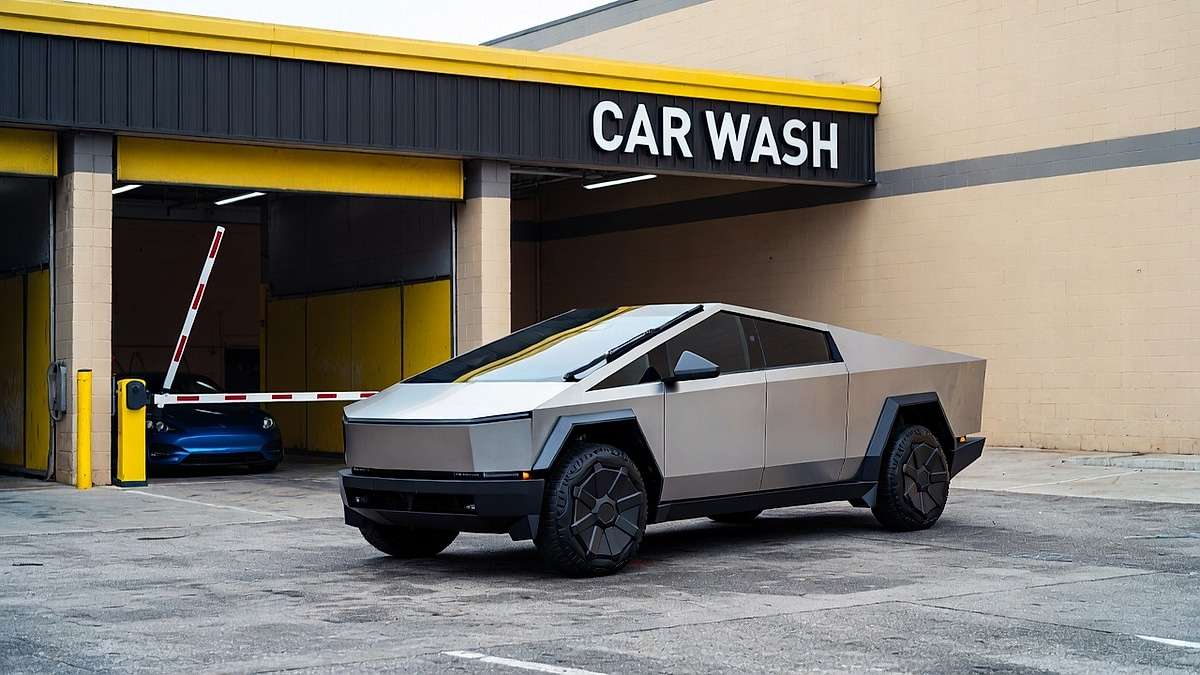

You spend north of $80,000 on a truck. You pull up to a car wash ready to sign up for a convenient monthly plan, hand over your card, and the attendant waves you off. Denied. Not because your credit is bad. Not because your account has a problem. Because of your truck. That is exactly what is happening to Tesla Cybertruck owners in Texas, California, Florida, and beyond, and the story has layers that every Cybertruck owner needs to hear before they hit that next car wash lane. We have been covering the Cybertruck car wash saga here at Torque News for a while now, and if you want to see the full picture of how Cybertruck owners are navigating these ongoing challenges with their trucks, there is more to this story than meets the eye. Let us also not forget that some Cybertruck owners have experienced screen failures and mysterious electrical problems after a simple car wash, which adds another dimension to why car wash operators are increasingly nervous about servicing this truck.
So what exactly is going on? Tek Dash, a member of the Tesla Cybertruck open group on Facebook, laid it out plainly. He wrote, "I was trying to sign up for a car wash monthly plan in DFW area and I got denied for the Cybertruck Dimensions." Short, simple, and maddening. You buy one of the most talked-about vehicles in America and you cannot even get a monthly wash subscription. Tek is not alone. Another Facebook group member, Kevin Lee, jumped in with his own experience, writing, "Same happened to me in California." And it does not stop there. Daniel Dill added that "At least 2 chains in the North Florida area ban CTs from their stores." Three different states. Three different owners. One common problem.
Why Are Car Wash Chains Refusing the Cybertruck, and Is It Really About Size?
Here is the thing that makes this situation genuinely confusing. The Cybertruck is not some uniquely gigantic vehicle that has never been seen before. On paper, the numbers tell a surprisingly tame story. The Cybertruck measures approximately 231.7 inches in length and 79.8 inches in width without mirrors, while a typical Ford F-150 SuperCrew with a 5.5-foot bed comes in at approximately 231.9 inches in length and 79.9 inches in width without mirrors. Yes, you read that right. They are virtually the same size. F-150s go through automatic car washes every single day without a second thought. So when a car wash operator cites dimensions as the reason for denial, it raises an immediate and legitimate question. Is this really about dimensions, or is something else driving these decisions?
The answer, as with most things in the automotive world, is more complicated than a single talking point. Yes, some conveyor-based systems have strict weight limits, and the Cybertruck's curb weight of around 6,600 to 6,700 pounds is significantly heavier than a standard F-150 at around 4,100 to 4,700 pounds depending on configuration. Automated conveyors have engineering tolerances, and operators worry about what happens when a vehicle this heavy sits on a belt system designed for lighter trucks. There is also the stainless steel angle. The Cybertruck's raw, ultra-hard stainless steel panels, which Tesla calls HFS or Hard Freaking Stainless, are composed of extremely rigid geometry. When automated brushes or rollers make contact with those flat, sharp-edged panels, there is real potential for brush damage, scratched equipment, or the truck itself catching on machinery in ways that traditionally shaped vehicles simply do not. Those sharp edges are no small concern either, given that we have reported here on Cybertruck owners sustaining serious injuries from the truck's stainless steel edges, with some requiring stitches.
Then there is the liability factor. As reported by the Daily Dot, some car washes have posted actual signage reading "Tesla CyberTrucks Not Allowed" with the explanation that "Tesla Warranty does not cover Car Wash damage." That sign tells you a lot about how the industry is thinking. Car wash operators are not in the business of becoming the reason an owner loses their $80,000 truck warranty. And since Tesla's own owner manual specifically states that failure to put the Cybertruck in Car Wash Mode may result in damage that is not covered by warranty, operators are calculating their exposure and making a business decision. Refusing service is cheaper than being blamed.
Tesla's Own Warning Makes This Worse for Owners
Let us talk about what Tesla actually says, because this part matters enormously. Tesla's official guidance states clearly that if you must take the Cybertruck through an automatic car wash, you need to activate Car Wash Mode first. This mode, accessible through Controls on the center display, closes all windows, locks the charge port, disables the windshield wipers, disables Sentry Mode, and deactivates walk-away door locking. If you are using a conveyor-style wash, you also need to enable Free Roll, which puts the vehicle in neutral and prevents the parking brake from engaging while someone is not in the driver's seat. Fail to do all of this, and you are on your own if something goes wrong.
Here is the problem though. As we have covered in depth at Torque News, multiple Cybertruck owners have had their trucks go completely dark at the car wash even when following protocols, with one owner reporting his truck became entirely unresponsive, with the screen going black and the doors refusing to open after a high-pressure rinse. Tesla Support's response in that case was essentially to point the owner to page 198 of the owner manual. Another owner went viral after his screen went blank following a day at the beach, and the truck took five hours to reboot instead of the expected two minutes. That is the kind of story that travels fast among car wash operators.
Even touching on this from the owner's perspective, one owner worried about road salt buildup went to a Facebook group asking if anyone in the Toronto area had washed their Cybertruck, adding he was afraid of bricking his vehicle. That fear of bricking a Cybertruck in a car wash has become a real and documented concern in the Cybertruck community, and it has clearly spread to the operators serving that community.
How the Car Wash Industry Sees the Cybertruck Subscription Problem
Monthly unlimited car wash plans are a huge revenue driver for the car wash industry. Major chains build entire business models around recurring subscription revenue, and their conveyor systems are sized and engineered for a particular envelope of vehicle dimensions and weights. When you look at the fine print of many of these memberships, you will notice language that says memberships are "not valid for vehicles that cannot fit on the conveyor or ride through the tunnel." That is intentionally broad language, and it gives operators the flexibility to make calls on unusual vehicles.
The Cybertruck, with its angular geometry, weight class approaching Class 2B medium-duty territory, and the documented potential for software-related incidents in wet environments, sits in a gray zone that many operators are simply unwilling to enter. They are not wrong to be cautious. One bad incident with a bricked Cybertruck on their conveyor creates a liability headache far larger than losing a monthly subscription customer. We have also seen how one Cybertruck owner reported that a car wash operator flat-out refused service citing warranty voiding concerns and potential liability, telling the owner they did not want to be responsible for any damage. That operator was not entirely wrong.
What Cybertruck Owners in DFW and Beyond Should Do Right Now
So what is the actual solution here for Tek Dash and the thousands of other Cybertruck owners who want a clean truck without a drama spiral every time? Here is a practical roadmap.
First, seek out touchless automatic car washes specifically. Touchless systems use high-pressure water and detergent jets with no physical brushes or rollers making contact with the vehicle. Many owners report zero problems with touchless washes when Car Wash Mode is properly activated. The stainless steel exterior holds up well to water-based cleaning, and the absence of mechanical contact removes the equipment damage concern for operators. Before visiting any new location, simply call ahead and confirm they accept the Cybertruck and have a touchless system.
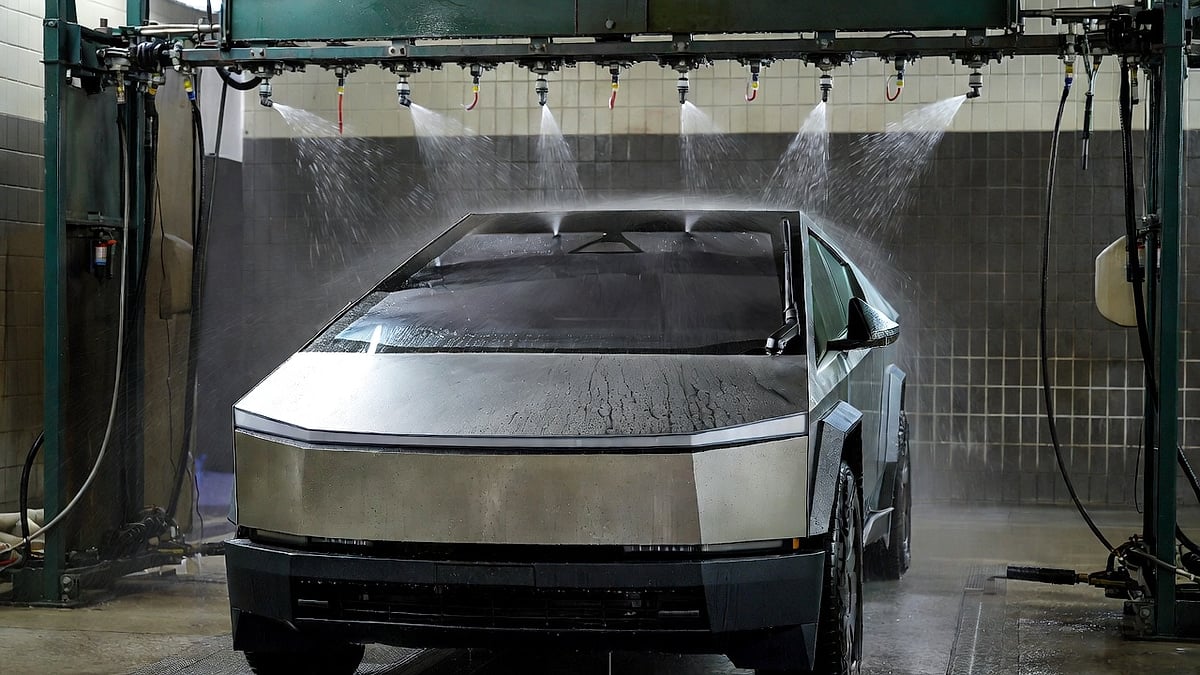
Second, always activate Car Wash Mode before you even enter the facility. Go to Controls on the touchscreen, activate Car Wash Mode, and if using a conveyor, enable Free Roll. Do this every single time. Do not assume. As we covered at earlier even owners who thought they were following the protocol ran into trouble when they skipped steps or assumed the truck would handle things automatically.
Third, for operators specifically banning you based on weight or conveyor compatibility, the honest truth is you may need to find a different location. In the DFW metroplex, with hundreds of car wash locations, there are touchless options available that will work. It takes an extra five minutes of research but saves the headache of showing up and getting turned away.
Fourth, if you are a fan of the monthly subscription model and the convenience it provides, consider a hand-wash detailing service that offers monthly packages. Many mobile detailers and small detail shops in the DFW area offer monthly plans for premium vehicles, and they will know exactly how to handle a stainless steel exterior safely without risking any of the software or physical damage concerns that automated systems create.
What This Tells Us About Buying an Unconventional Vehicle
This whole situation really is a case study in what happens when you buy a vehicle that sits at the edges of industry assumptions. The car wash industry built its infrastructure around vehicles with paint, traditional dimensions, and conventional weight classes. The Cybertruck is none of those things. It is genuinely different, and different requires adaptation, both by the owner and by the industries that serve vehicle owners. As we have also noted in our in-depth look at whether the Cybertruck can survive a simple automated car wash based on real owner reports, many owners do wash their trucks successfully in automated systems, but the results are not uniform and outcomes depend heavily on the specific equipment and the owner's preparation.
The Cybertruck is a genuinely polarizing machine. We have covered its one-year ownership experiences where some owners love nearly everything about it, and we have also covered the real-world operational quirks that make daily ownership more demanding than a standard truck. The car wash denial story falls squarely in that second category.
There is also a broader lesson here about reading the fine print before you buy. Tesla is upfront in the owner manual that automatic car washes carry risk and that damage from car washes is not covered under warranty. That is a significant operating reality for a truck in a price range where owners naturally expect a high level of everyday convenience. If you are considering a Cybertruck purchase and live in an area where a quick touchless automatic wash is not readily accessible, that is worth factoring into your ownership calculus before you sign the paperwork.
The Moral of This Story Goes Beyond the Car Wash
Here is the life lesson buried in this car wash story, and it applies well beyond trucks and soap. When we choose something that stands apart from the crowd, we take on the responsibility of understanding its unique requirements. The Cybertruck is a remarkable machine in many ways, and its owners are pioneers of a kind. But pioneering means figuring things out that others have not yet solved. The car wash problem is solvable. It just requires more awareness than rolling up to whatever wash is closest. Being informed before you arrive at the gate, whether that is a car wash, a dealership, or a major purchase decision in your life, protects you from unnecessary frustration and saves you time, money, and stress. The best decision makers are not the ones who react. They are the ones who prepare.
If you are a Cybertruck owner in the DFW area, in California, or in North Florida, have you been denied at a car wash, and did the operator give you a specific reason beyond general size concerns? And for owners who have found reliable touchless car washes that handle the Cybertruck without issue, which locations or chains have worked best for you? Share your personal experience in the comments section below.
About The Author
Armen Hareyan is the founder and Editor-in-Chief of Torque News and an automotive journalist with over 15 years of experience writing car reviews and industry news. Now based in the Charlotte region (Indian Land, SC, he founded Torque News in 2010, which since then has been publishing expert news and analysis about the automotive industry. He can be reached at Torque News on X, Linkedin, Facebook, and Youtube. Armen holds three Masters Degrees, including an MBA, and has become one of the known voices in the industry, specializing in the landscape of electric vehicles and real-world stories of actual car owners. Armen focuses on providing readers with transparent, data-backed analysis bridging the gap of complex engineering and car buyer practicality. Armen frequently participates in automotive events throughout the United States, national and local car reveals and personally test-drives new vehicles every week. Armen has also been published as an automotive expert in publications like the Transit Tomorrow, discussing how will autonomous vehicles reshape the supply chain, and emerging technologies in vehicle maintenance.
Set Torque News as Preferred Source on Google
Follow us today...