
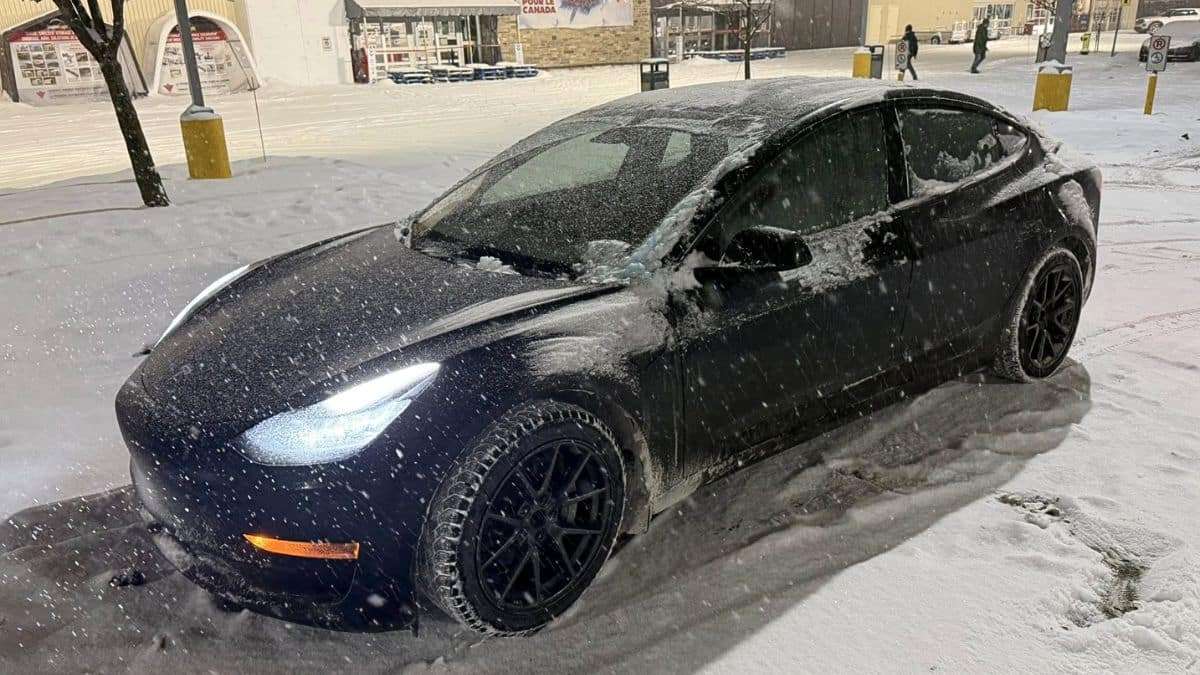

A Florida Tesla owner just did something a lot of EV-curious drivers talk about but rarely try. He left the sunshine state, rented a high-mileage 2022 Tesla Model 3 Standard Range RWD, and drove straight into brutal Canadian winter conditions to see how a Tesla handles real winter weather.
Jordan Kruzhilin shared his experience this afternoon in the Tesla High Mileage Club public Facebook group. And his report reads like a real-world case study in Tesla winter range loss, cold weather EV performance, and battery degradation at high mileage.
Here is what Jordan wrote:
"Hey everyone, just wanted to share a quick experience from my trip up to Canada this week.
I’m from Florida and drive a 2020 Model Y Long Range (57k miles, around 18% degradation). Love the thing — it’s been great all over south eastern U.S. But I’ve never had the chance to see how a Tesla handles real winter weather, so I rented a 2022 Model 3 Standard RWD with about 130k miles for the trip. Temps were brutal — between -18°F and 5°F — and it snowed pretty much every day.
The good stuff:
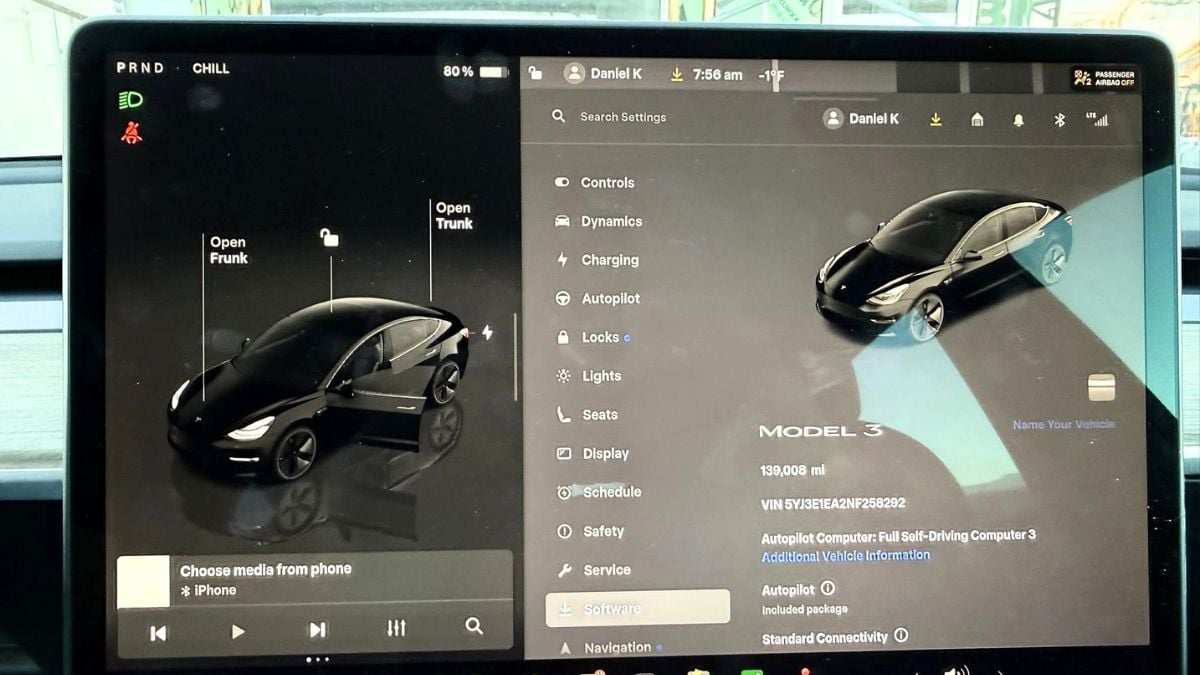
• I was seriously impressed with how well this car held up. For 130k rental miles, the interior, suspension, and steering all still felt tight. Battery degradation was only around 7.5%, which honestly shocked me in a good way.
• Even being RWD, it was a beast in the snow. The weight of the battery and solid winter tires gave it tons of traction — it just kept going no matter what I threw at it.
The not-so-fun part:
• The cold absolutely kills range. I was getting roughly 70–80 miles per charge at around 500 Wh/mi. You can’t really skip using the heat because the windows fog up, and the battery keeps warming itself anyway.
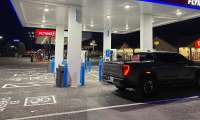
• I was plugging in everywhere — hotels, job sites, superchargers. The worst was waiting an hour for a supercharger in -18°F… you can’t run the heat that whole time without burning 10–15% of your battery. That part definitely gave me range anxiety.
Overall though, I came away even more impressed. These cars are tough. They drive amazing even in very bad weather — you just have to plan your charging carefully when it gets that cold. Still love Tesla more than ever."
Twenty-six group members responded, and what followed is actually more important than the post itself. Because it turned into a masterclass on how Teslas perform in subzero temperatures.
Tesla in Extreme Cold: The Range Reality Nobody Should Ignore
Let’s address the big headline first: 70–80 miles per charge at around 500 Wh/mi.
For readers searching “Tesla range in winter” or “Tesla Model 3 cold weather range loss,” this is the number that matters.
A Standard Range RWD Model 3 is rated by the EPA at roughly 272 miles when new. Getting 70–80 miles per charge in temperatures between -18°F and 5°F represents a dramatic reduction. That’s not marketing fluff. That’s physics.
Lithium-ion batteries do not like extreme cold. According to the U.S. Department of Energy, EV range can drop by 20% to 40% in freezing conditions due to battery chemistry and cabin heating demands. At -18°F, you are beyond “normal winter.” You are in what I would call operational stress testing.
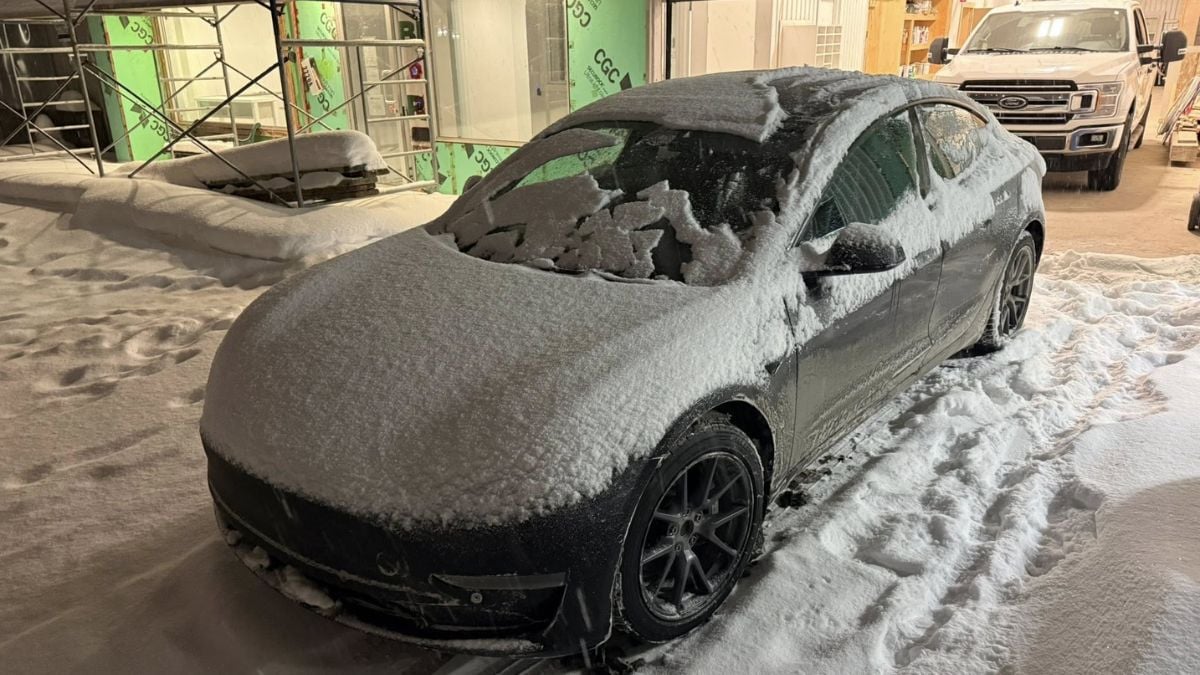
Jordan reported about 500 Wh/mi. In moderate weather, many Model 3 drivers see 230–280 Wh/mi. That means energy consumption nearly doubled.
From my 15 years covering the auto industry, here is my take: this is not a Tesla problem. This is an EV reality. The difference is that Tesla owners are often more transparent about sharing data, which makes these discussions more visible.
But here is the key nuance: while range dropped significantly, the car still functioned reliably. It did not strand him. It did not fail mechanically. It required planning.
That distinction matters.
Heat Pump, Preconditioning, and “Always Be Connected”
One of the most valuable parts of this thread was the technical discussion around preconditioning and Tesla’s heat pump system.
Justin asked whether Jordan preheated the battery 15 to 20 minutes before departure. Jordan replied that the 2022 Model 3 had a heat pump and that he preheated for about 30 minutes. However, he couldn’t leave it plugged in overnight, meaning the energy came from the battery itself.
This is crucial.
Tesla introduced heat pumps starting in late 2020 production for Model 3 and Model Y. Heat pumps are far more efficient than resistive heating systems, especially in cold weather. Henry, another group member, noted that his 2020 model without a heat pump suffered significantly more winter range loss compared to his 2023 Model Y Performance.
Joe added another practical insight that many new EV owners overlook: if you cannot remain plugged in, charge to 80% before long parking sessions so the high-voltage battery does not cold-soak at a low state of charge.
That advice aligns with Tesla’s own cold weather best practices outlined in the owner’s manual.
In my experience reviewing EVs from Tesla, Hyundai, Ford, and GM, the owners who struggle most in winter are those who treat an EV like a gas car. You cannot. You must adapt your behavior slightly.
Preconditioning while plugged into the grid is a game changer. It shifts the energy load away from the battery. That difference alone can mean dozens of extra miles.
This is why the phrase “Tesla winter driving tips” is one of the most searched EV terms every year around November.
By the way, look at my opinion video on this subject from the Torque News Youtube channel, in which I explain why this is not a Tesla problem and why winter driving in a Tesla is absolutely manageable.
Snow Performance: Why RWD Tesla Surprised a Florida Driver
The most fascinating part of Jordan’s experience may not be range. It may be traction.
A rear-wheel-drive Model 3 in snow sounds risky on paper. But he described it as “a beast in the snow.”
Why?
Two reasons:
- The battery pack creates a very low center of gravity.
- The vehicle weight is evenly distributed.
Add proper winter tires, which Al correctly emphasized, and traction improves dramatically. Many Southern drivers underestimate winter tires. They are not optional in real winter conditions. They transform the car.
Over the years I have driven EVs in snow, including Tesla models and competitors, and I consistently find them stable and confidence-inspiring. Instant torque can be controlled precisely by traction systems. The weight helps with grip.
What hurts EVs in winter is not stability. It is energy consumption.
That is a major distinction potential buyers need to understand.
High Mileage Battery Degradation: The Quiet Good News
Jordan rented a 2022 Model 3 with about 130,000 miles and reported only around 7.5% battery degradation.
For readers searching “Tesla battery degradation after 100,000 miles,” this is a meaningful data point.
While it is anecdotal, it aligns with broader third-party data analyses showing that most Tesla battery packs lose roughly 5% to 10% capacity in the first 100,000 miles, with degradation tapering afterward.
As an automotive journalist who has covered Tesla since the early Model S days, I can say this: battery longevity has consistently exceeded early industry skepticism.
That does not mean failures never happen. They do. But statistically, high-mileage Teslas holding up structurally and electrically is becoming more common than critics predicted a decade ago.
The Honest Bottom Line for Tesla Owners and EV Shoppers
Here is my balanced opinion.
If you live in Florida and take one trip to Canada in -18°F weather, you will feel range anxiety. Jordan did. That is normal.
If you live in New England or Ontario and understand “mindful charging,” as Zachary put it, you adapt. You plan. You plug in whenever possible. You precondition strategically.
Would a gasoline car have completed the trip faster? Yes. Ame even acknowledged that her similar trip took longer than it would in a gas vehicle.
But here is the bigger question: does the inconvenience outweigh the benefits of EV ownership the other 90% of the year?
For many Tesla owners, the answer is clearly no.
What Jordan’s experience proves is that Tesla in extreme winter weather is viable, but not carefree. It requires planning. It requires winter tires. It requires understanding how battery thermal management works.
That is not a flaw. It is a characteristic.
And if you are considering buying a Tesla Model 3 or Model Y and live in a cold climate, you need to factor in:
- Winter range reduction
- Access to overnight charging
- Heat pump availability
- Charging infrastructure density
- Driving habits in subzero temperatures
This story matters because it is not theoretical. It is a Florida driver stress-testing a high-mileage Tesla in brutal cold. And the result was not disaster. It was education.
Now I want to hear from you.
Have you driven your Tesla or EV in subzero temperatures, and what kind of winter range loss did you experience?
And if you live in a warm climate, would a story like this make you hesitate before taking your EV on a true winter road trip?
Armen Hareyan is the founder and Editor-in-Chief of Torque News. He founded TorqueNews.com in 2010, which since then has been publishing expert news and analysis about the automotive industry. He can be reached at Torque News Twitter, Linkedin, and Youtube. He has more than a decade of expertise in the automotive industry with a special interest in Tesla and electric vehicles.
Images by JordanDaniel Kruzhilin from the above-mention public Facebook group discussion.
Set Torque News as Preferred Source on Google
Follow us today...





Comments
Now here’s my take after 15…
Permalink
Now here’s my take after 15 years of covering the auto industry and testing vehicles in all kinds of conditions.
First, this is not a Tesla problem. This is a physics problem. Lithium ion batteries lose efficiency in extreme cold. Cabin heating consumes serious energy. At minus 18 degrees, you are stress testing any EV. What impressed me most is not the range drop. It’s that a 130,000 mile rental Model 3 still felt tight and only showed about 7.5 percent degradation. That says something about long term battery durability.
Second, winter driving in a…
Permalink
Second, winter driving in a Tesla is absolutely manageable. But you must adapt. Preconditioning matters. Staying plugged in matters. Winter tires matter. If you treat an EV like a gas car in subzero weather, you will be frustrated. If you understand how thermal management works, you can plan around it. For drivers in cold states or Canada, this isn’t new. For someone from Florida, this was eye opening.
HAHA, brrr -18 to 5°, are u…
Permalink
HAHA, brrr -18 to 5°, are u kidding, u call this winter, visit Saskatchewan where its on average -20 or colder & try and run a EV if u don't have a garage. U better have a # for ur tow truck driver. Ridiculous caling it a Brutal Winter when u live in Florida. I'm not sitting for an hr in the cold waiting for a battery to charge. STUPID