
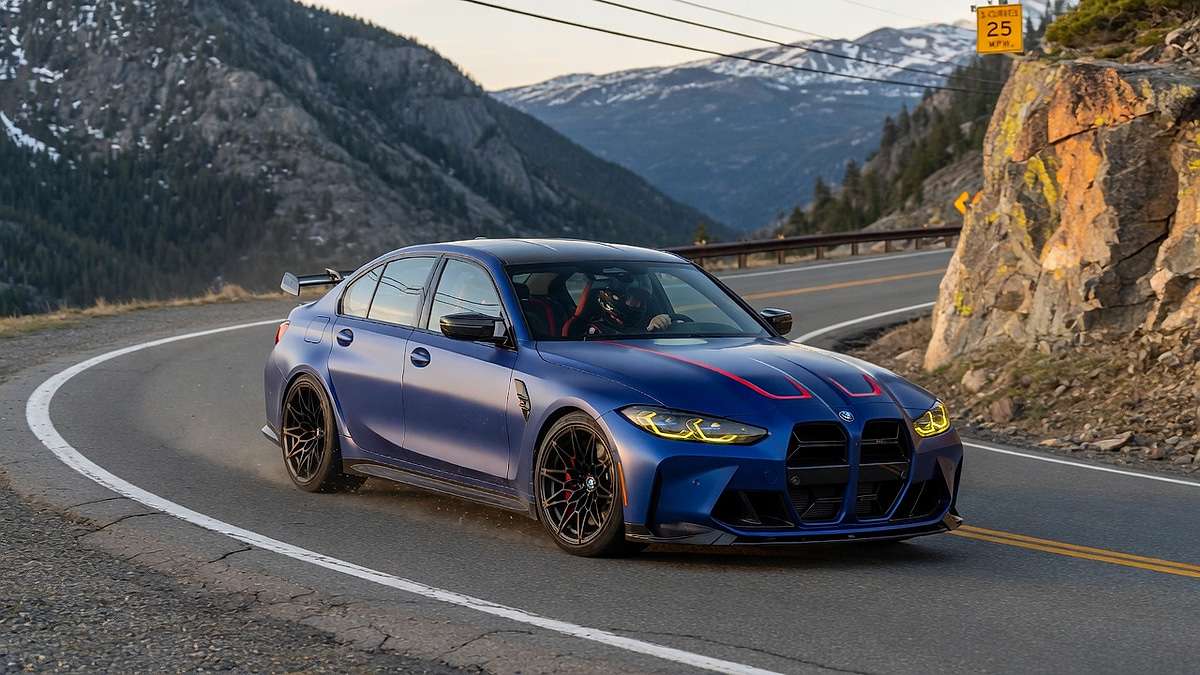

The extra months aren't simply about building more M3s. They reveal how BMW is juggling a factory transformation, a new generation of EVs, and what could be the final chapter for the traditional manual M3. At TorqueNews, we have been tracking this shift closely. We noted early on that something big was quietly happening around the BMW M3 that most enthusiasts had not fully processed yet, and we also documented how BMW had already teased a four-motor electric M3 sports sedan capable of over 800 horsepower, a sign of just how dramatically the brand's performance identity is being renegotiated.
On the surface, this looks like a simple production extension. BMW is keeping the current M3 alive a bit longer, stretching output into late summer 2027, according to BMW Blog. But the deeper story is not about dates on a production calendar. It is about what BMW is trying to balance behind the scenes as the brand moves into one of its biggest transitions in decades.
And if you care about performance sedans, manual transmissions, or even the future of BMW's identity, this isn't a minor update. It's a signal.
BMW M3 production extended to 2027: what it actually means
The headline sounds straightforward: more M3 production, longer lifecycle.
But BMW doesn't extend high-performance production runs like this casually. When a model like the M3 gets additional breathing room, it usually points to something happening in parallel that is not ready yet, whether that's a next-generation platform, factory retooling, or a broader product transition strategy. That kind of reluctance to let go of a proven formula has a long history with this car. It is worth remembering the eight reasons why the E92 generation will forever be considered the definitive classic BMW M3, including its legendary V8 engine that BMW itself has never brought back, even as successor generations broke new performance records.
According to BMW Blog, the extension stretches US production into late summer 2027, effectively giving the current generation more runway before the next phase of M3 arrives. BMW Blog reports that the G84, the next gasoline-powered M3, does not arrive until summer 2028, which means there will be roughly an 18-month window with no new combustion M3 at all.
So the real question becomes: why does BMW need that extra runway?
BMW M3 and the Neue Klasse transition: the bigger story
Here's where the story stops being about one car and starts being about the entire company.
BMW is in the middle of transitioning toward its Neue Klasse architecture, a major shift that will define the next generation of both combustion and electric vehicles. That kind of transition doesn't just involve designing new cars. It requires rethinking factories, supply chains, electronics, software systems, and production sequencing. The scale of that platform shift is hard to overstate. As Torque News has reported, the upcoming BMW iX3 built on the Neue Klasse platform is reportedly capable of over 500 miles of range on a single charge, a performance benchmark that fundamentally changes what buyers expect from a BMW going forward.
And that's where the M3 extension suddenly makes sense.
BMW isn't just building more M3s.
It's managing a carefully timed overlap between the current internal combustion performance era, the next-generation 3 Series family, and a rapidly expanding EV-focused product pipeline.
When all of those timelines collide, something has to stretch. In this case, it's the M3 production cycle.
Why BMW performance sedans are in a transition phase
For decades, the M3 has been a clean, simple equation: inline-six power, rear-biased performance, and driver-focused engineering. When BMW took the risk of dropping the V8 and returning to a turbocharged inline-six for the current generation, it paid off handsomely, as our senior reporter Denis Flierl noted when covering how BMW's decision to take risks on the M3 and M4 earned the brand significant industry recognition at a time when most rivals were playing it safe.
But today's reality is more complicated.
BMW M is now operating in a world where performance has to be split across traditional internal combustion engines, hybridization strategies, and fully electric performance platforms.
That creates a product planning challenge most enthusiasts never see.
Because while fans are focused on horsepower numbers and transmission choices, BMW is balancing something more structural: how to keep its performance identity consistent while the underlying technology changes completely.
The production extension suggests BMW is still smoothing that transition.
Is this the last "traditional" BMW M3 generation?
This is where the emotional weight of the story really starts to build.
The current M3 generation, especially in manual form, represents something increasingly rare in the automotive world. It is one of the last remaining high-performance sedans where a manual transmission is still part of the conversation, not a historical footnote. This is not a new concern. We talked about this possibility years ago when BMW M CEO Frank van Meel warned that the manual gearbox may not survive long, and that from a technical standpoint the future does not look bright for it, a warning that now appears to be coming true with the current generation.
And once BMW moves fully into its next architecture phase, that formula may not return in the same way again.
So when production gets extended, enthusiasts should not just see "more availability."
They should also see a widening window of time for what could be the final evolution of a familiar M3 philosophy.
That's not speculation about the future. It's reading the direction of the industry.
Factory strategy: why production timing matters more than it looks
There's another layer here that often gets overlooked in mainstream coverage.
Production extensions are not just marketing decisions. They are manufacturing signals.
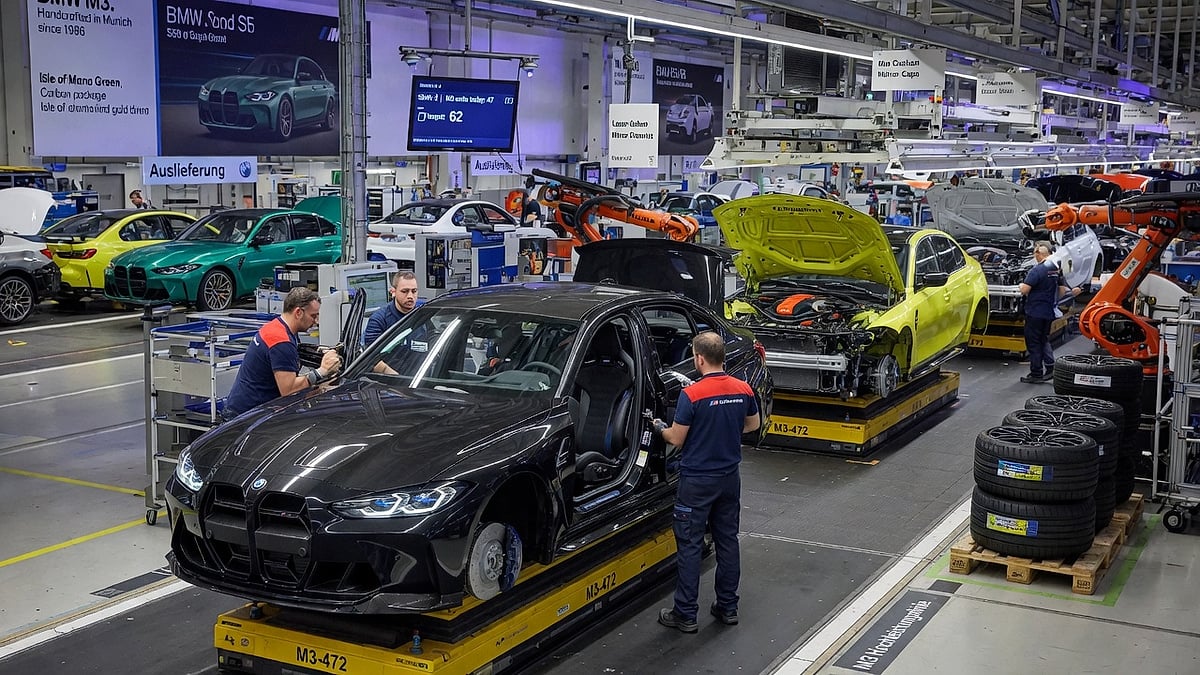
When BMW adjusts timing like this, it can indicate that plant retooling schedules are still in progress, supply chain alignment is still being finalized, or new platforms are not yet ready to fully replace outgoing production lines. That manufacturing reality has already been visible at BMW's Munich plant, which has confirmed it will transition exclusively to EVs by the end of 2027, meaning the next M3 will not be built there at all. For buyers who appreciate what that Munich factory has meant to M car heritage over the decades, this shift is significant in ways that go well beyond a simple production calendar change.
In other words, this isn't just about "making more cars."
It's about making sure the next system is ready before the old one is fully phased out.
And in a transition as large as Neue Klasse, timing becomes everything.
What BMW M3 buyers should actually pay attention to
For buyers, this story isn't about corporate strategy in the abstract. It's about availability, future pricing pressure, and long-term value. The cultural stakes of that buying decision have already become clear at Torque News, where we reported on a BMW M3 owner who said a 15-minute test drive in a Tesla Model 3 was enough to make him seriously consider trading in his M car, a story that illustrates how quickly the definition of "performance" is shifting for even the most devoted driving enthusiasts.
When production windows stretch like this, three things typically happen: buyers get more time to enter the current generation, final-model-year demand often strengthens, and the transition model gains more historical significance over time.
That last point is especially important.
Because in performance car history, "transition-era" models often become the most talked-about versions years later, not necessarily because they are the fastest, but because they represent the last expression of a certain engineering philosophy. That pattern is already well established in the M3's own history. We covered it in detail when examining the four reasons why BMW M3 E46 owners hold on to their cars with such conviction, a generation that is now celebrated as a pure driving benchmark precisely because it was the last naturally aspirated M3 before forced induction arrived.
The current M3 may be entering that same category.
The real story behind the BMW M3 extension
So what does this all really mean?
It doesn't mean BMW is struggling.
And it doesn't mean the next M3 is delayed in a dramatic way.
What it does suggest is something more subtle, and arguably more important: BMW is carefully managing one of the most complex transitions in modern performance car history, where internal combustion, hybrid systems, and EV platforms all overlap in the same brand identity. That complexity is also playing out in the broader market, as we reported when the BMW iX3 swept the 2026 World Car Awards, taking wins in multiple categories and validating BMW's electric platform strategy in front of the entire industry, a result that only adds urgency to the transition happening inside BMW M right now.
The M3 production extension is simply the visible edge of that transformation.
And like most visible edges in the auto industry, it hints at a much larger structure underneath.
BMW may have just bought itself more time to build the current M3.
But the more interesting question is what BMW is buying time for.
Because once that next generation arrives, the definition of an M3 may shift in ways that enthusiasts are only beginning to process today. The BMW i4 M50, which our senior reporter John Goreham reviewed and noted reminded us of M3 sedans tested on track in the past while delivering it all through electric motors, may well be the closest preview we have of what an electric M3 will actually feel like to drive.
What do you think is driving this production extension more, factory transition complexity or strategic demand management for the current M3?
And do you see this as the beginning of the end for the traditional M3 formula, or just another evolution in its long history?
About The Author
Armen Hareyan is the founder and Editor-in-Chief of Torque News and an automotive journalist with over 15 years of experience writing car reviews and industry news. Now based in the Charlotte region (Indian Land, SC, he founded Torque News in 2010, which since then has been publishing expert news and analysis about the automotive industry. He can be reached at Torque News on X, Linkedin, Facebook, and Youtube. Armen holds three Masters Degrees, including an MBA, and has become one of the known voices in the industry, specializing in the landscape of electric vehicles and real-world stories of actual car owners. Armen focuses on providing readers with transparent, data-backed analysis bridging the gap of complex engineering and car buyer practicality. Armen frequently participates in automotive events throughout the United States, national and local car reveals and personally test-drives new vehicles every week. Armen has also been published as an automotive expert in publications like the Transit Tomorrow, discussing how will autonomous vehicles reshape the supply chain, and emerging technologies in vehicle maintenance.
Set Torque News as Preferred Source on Google
Follow us today...







Comments
I'm biased but I believe to…
Permalink
I'm biased but I believe to my core that the last great M3 was the E46.
G8x is the greatest car of…
Permalink
G8x is the greatest car of all time. Name me a better car over all. Tech, tunning support, building engines, track, parts, take your kids to school, daily drive car, 0 to 60. It has big turbos, hybrid turbos. Name me a car that can beat a g80 at all of that without missing some.
Its also by far and away the…
Permalink
Its also by far and away the ugliest BMW produced. I have no idea what the sales numbers are but I suspect they haven’t sold anything like the numbers required to justify the costs/tooling.