
A trip to the local dealer should be nothing more than a straightforward process. You go in, take a car out for a spin, and determine if the vehicle will work well for you. For one potential BMW buyer however, what was intended as a very normal test drive became much more serious and raised serious questions about dealership safety standards and the condition of vehicles handed to customers. Here's how Damon Cristo put it in the "Apex Automotor" Facebook group:
“A franchise BMW dealer sends you and your family (wife and young kids) to test drive a vehicle alone on the same route you just took with the salesperson in another vehicle. It’s the same model but different suspension.
You enter the same straight highway on the ramp you just took 15 minutes ago in the same rainy conditions at the same speed, but this time you immediately hydroplane across three lanes. You're caught off guard but when the vehicle regains traction, you thankfully save it from going into the median (certainly not regretting going out for those wet HPDE sessions now). Meanwhile, your wife is understandably in full blown code brown mode in the passenger seat.
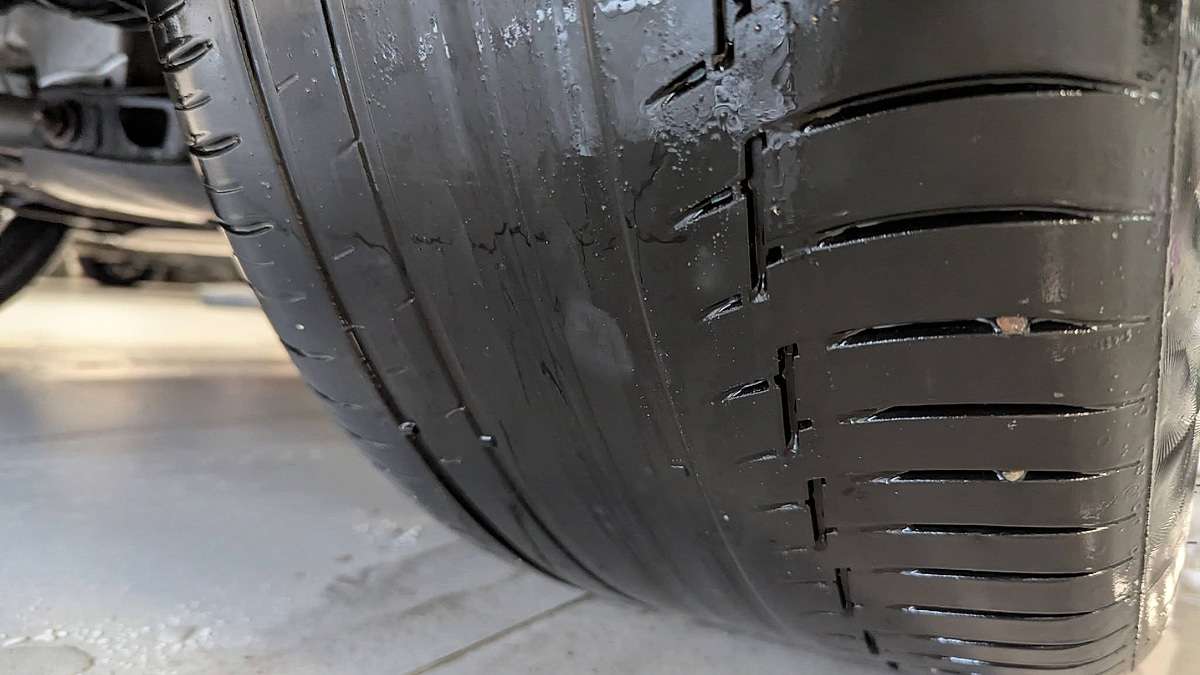
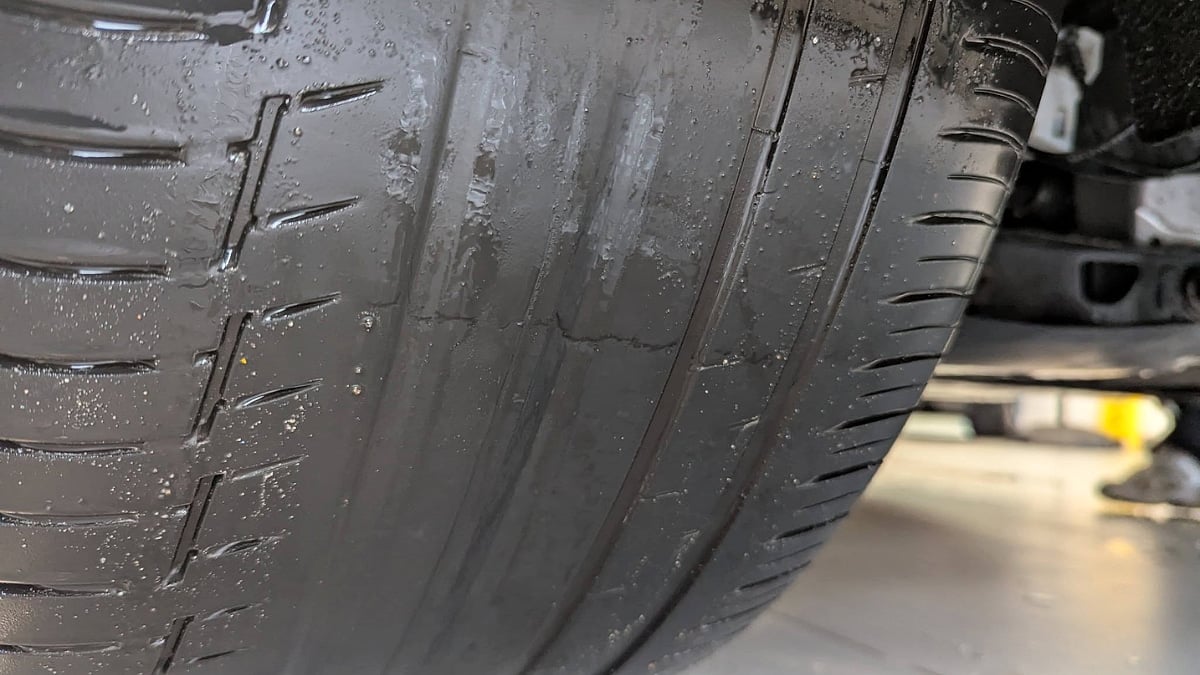
You exit the highway and return to the dealer to inspect and discover this is the condition of the rear tires. Are you upset? Just chalk it up to stuff happening? What are your next steps?
When I brought the situation to the salesperson, he said ‘sorry about that’ and proceeded to continue to try to sell us the vehicle. We had him print the deal and left.
I initially assigned a lot of blame to myself for not checking the tires first, but the more I put myself in the shoes of the average customer and not an enthusiast, the more I think this is the dealer's responsibility.
I'm home now and I can't shake the thought of how close we were to at best totaling their car and at worst a life changing event for my family or another innocent motorist. My wife pointed out that had she or most average drivers been behind the wheel, we would have ended up in the concrete barrier. Or even as it was, had a vehicle been to our left at that time, it could have been catastrophic for either party.
To be clear, I don't feel entitled to or want anything from the dealer. I'm just concerned with how this could happen in the first place. It seems like a major gap in the process to allow a family to test drive a vehicle in the rain, on the highway, and with bald rear tires.
What say ye? Am I lost in the sauce here? Expecting too much? Or the opposite and I'm not upset enough?”
The Responsibility Question
The most important part of Damon's story isn't so much the hydroplaning (although the fact he was able to lose control at all is certainly interesting), but rather how "controlled" every other aspect of his experience were. He drove the same route under similar weather conditions at the same speed in the same make/model vehicle. The only significant variable would appear to be the state of the vehicle itself.
Hydroplaning isn't random because generally speaking it occurs as a result of the lack of sufficient tread to push water off the tire, thereby allowing the tire to ride across the surface of the water rather than grip the roadway. This particular situation appears to be an extreme example where the marginal safety zone created by tread depth had essentially disappeared as a result of wear on the rear tires.
In addition to raising questions about responsibility related to BMW, Damon's response creates a larger issue extending well beyond BMW: Who is ultimately responsible for insuring that a test drive vehicle is "safe" prior to turning it over to a consumer?
Most buyers assume that any vehicle presented by a dealership, especially a franchise dealer, has already been inspected to meet basic safety standards. That assumption becomes even more critical when the dealership encourages highway driving in adverse conditions. Yet situations like this suggest that assumption doesn’t always hold up in the real world.
Expectations Meet Reality at the Dealership Level
Dealerships tend to be the first point of contact for car-buyers. This first-time exposure not only showcases a vehicle but provides an opportunity to establish the overall ownership experience. The minute a buyer enters a dealer's showroom on a car-lot, there is implied expectations regarding both the appearance and safety of the vehicles being displayed.
But as we’ve also seen in other coverage across Torque News, a BMW M3 owner strongly reconsidered ownership after driving another car. Buyers are looking beyond pure performance as well as their desired brand image. Buyers are now assessing all aspects of the total experience including cost of ownership, consistency, as well as how confident they feel about the quality of the product prior to signing anything.
That's why when an error such as tire condition becomes apparent, it can seem like a small error but it creates doubt about the trust established by that initial visit. This also wasn’t really a small error either because the way that tread looks, I think we can confidently concur that it's a safety hazard. Once that trust is broken down though regardless, then one can only assume that potential buyers will question many things beyond that single test drive as well as that individual dealership.
BMW’s Reputation Goes Beyond Just Tires
The reason this continues to be in people's minds is not just the fact that there was a close call, it's also what it shows after the adrenaline wears off. Worn tires may appear to be minor issues, but it will ultimately lead people to ask other questions about how well all of a vehicle's components are inspected prior to delivery.
This is exactly where the story becomes familiar. For decades, BMW has been known for building its reputation based on high-quality driving dynamics and precision. Lately however, owners are starting to have more and more discussions regarding what owning one means beyond that initial impression.
I’ve covered many of these types of stories here at Torque News via actual experiences with owning their BMW. One owner who experienced an engine failure on his BMW X5 at approximately 42,000 miles along with a difficult time attempting to get assistance through warranty claims it became a nightmare just to have one.
It doesn't take long for the focus to shift from how the car performs to whether or not it can last for the long haul in terms of reliability and dependability. Each of these events don't stand alone to define the entire brand, but when they're piled upon top of each other, they become part of what potential buyers use to build their perception of BMW as a whole.
What Other Drivers Are Saying About It
Some commenters were quick to point out that this situation should never have happened in the first place.
Mike Golding noted, “Those tires should have been replaced before the car was offered for sale.”
It’s a straightforward take but one that highlights a basic expectation. Vehicles being shown to customers should meet a minimum safety standard without exception.
Others focused more on dealership process. Andrew Sabinson added, “The salesperson should have at least looked the car over first. At our dealership, we don't even let people test drive our cars until they've been shopped but I know that's not how all places operate.”
That comment introduces an important nuance that not all dealerships operate the same way. Some have strict inspection processes before test drives while others may rely more heavily on general inventory turnover practices.
Then there’s the perspective that pushes the issue even further. Bill Mitchell said, “Any car offered for sale at a BMW dealership with tires that worn is cause for BMW pulling their franchise. I’d go directly to the sales manager and make him aware of this situation. The next customer might not be so fortunate.”
His comment reflects a level of concern that goes beyond inconvenience and into accountability. If something like this slips through, it raises the question of what other details might also be overlooked.
How BMW’s Identity Is Being Reexamined
In addition to being related to individual experiences, these types of stories may also reflect an evolving identity of the BMW community as well. While we do see separate occurrences occurring at times, with more owners and enthusiasts looking at how BMW has changed from past models to current models, they too are now considering what BMW means today.
The comparison to the original models feeling more "intuitive" than newer, bigger cars and questioning whether or not manufacturers really answered the question of where they want their designs to go next is a consistent dialogue about what BMW represents today versus what it represented previously.
For many, BMW was known to be simple, focused on the driver, and honest mechanically. While BMW still delivers on the performance aspect today, it's becoming increasingly more complicated with more technology, more weight, and in some instances, more factors that can negatively impact long term satisfaction of your purchase when buying and owning a vehicle.
When one dealership experience such as Damon's is lacking, it does not occur independently, as it adds to a larger story line which owners are currently contemplating. It also further supports that the ownership experience occurs long prior to leaving the dealer lot.
A Broader Perspective
So what really sets this apart from simply being about the tires is the speed at which these types of situations can develop once your tires lose some level of grip. In dry conditions, there's a lot of room for mistakes at high speeds. When you add rain into the equation though, even the slightest loss in tread depth will cut down dramatically on how well a tire can move water off the tire. Plus, once a tire has lost its ability to push enough water away, then it doesn't matter how good of a driver you are anyway as there is little to no margin for error.
Technically speaking, this is one reason why tread depth isn't an option but is a minimum standard. While modern stability control systems along with traction aid features can help greatly in keeping vehicles stable while driving in various weather conditions, they cannot work when a tire can't keep a grip on the road. And once you begin to hydroplane, your vehicle is no longer operating under the parameters that those stability control/traction aid systems were engineered to handle.
While most dealerships rely on their brand name and history of good service to build consumer trust, that trust comes from consistently focusing on the little things that impact safety. A condition such as tire wear and tear may appear insignificant during a walk around inspection, but if a certain event happens while traveling at a significant rate of speed, what was considered minor will become the single determining factor of whether the incident develops into something completely unmanageable.
Key Takeaways
- Always do a quick visual check of tires before a test drive, especially in wet conditions.
- Don’t assume dealership vehicles have been recently inspected in detail.
- If something feels off during a drive, trust that instinct and return immediately.
- Speak up if you notice a safety issue. That's both for yourself and the next driver.
What Would You Do in This Situation?
If you were in this position, would you hold the dealership fully responsible? Or would you feel some responsibility to check the car before driving it?
And have you ever experienced something during a test drive that made you question a dealership’s standards?
I'd love to hear your thoughts in our comments below.
About The Author
Aram Krajekian is a young automotive journalist bringing a fresh and analytical perspective to the evolving automotive landscape by reporting on real-world ownership experiences and providing industry analysis. Based in North Carolina, he covers electric vehicles, trucks, and broader automotive trends with a focus on contributing a balanced evaluation. His reporting cuts through brand bias to provide readers with grounded insight into how vehicles perform for everyday drivers beyond marketing narratives.
Aram can be reached on X and LinkedIn for ongoing automotive coverage.
Image Credits
The “Apex Automotor” Facebook group.
Set Torque News as Preferred Source on Google
Follow us today...