
By: Humphrey Bwayo
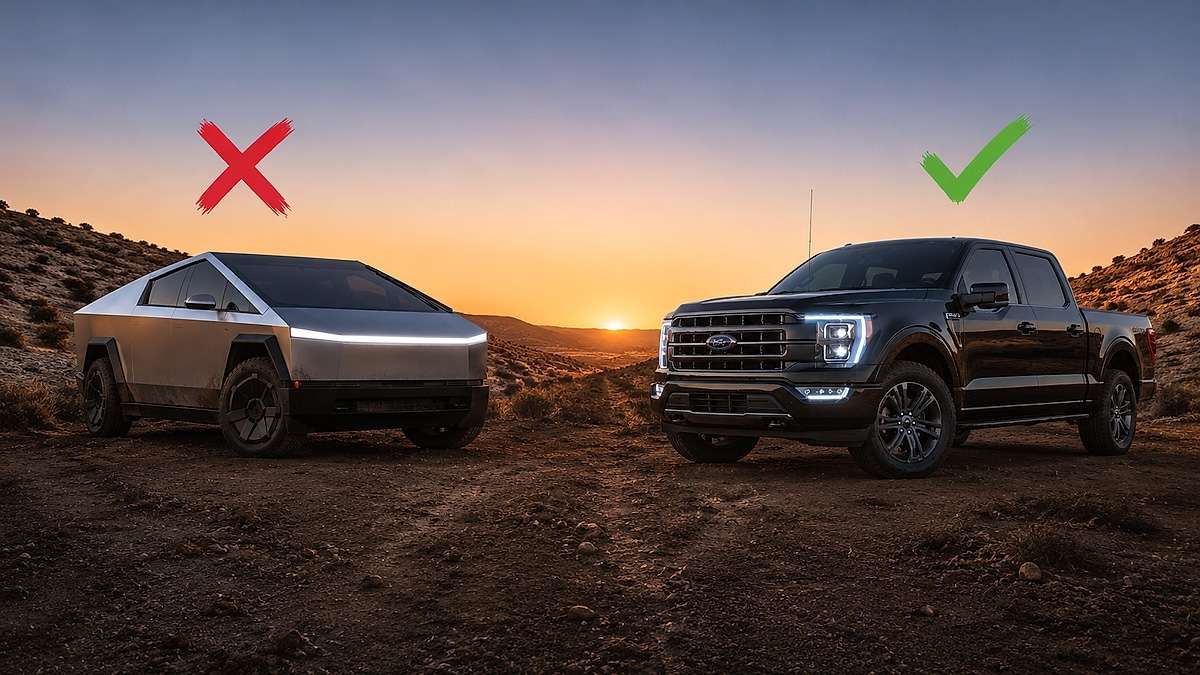
A Tesla Cybertruck reservation holder recently canceled his order in favor of a 2023 Ford F-150 PowerBoost XLT instead. His decision reflects a broader shift in the automotive market, where practicality is beginning to outweigh manufacturer hype.
This story brings to the forefront the dilemma most car buyers face when entering the automotive market today. Due to concerns about charging infrastructure and repair costs, many buyers now see hybrids as the smarter middle ground between EVs and conventional gas-powered vehicles.
This isn’t just a “Tesla” thing, and Americans aren’t necessarily growing less interested in buying electric cars, but the rapid growth rate of EVs has slowed down in America. Even though statistics prove that the adoption of EVs has increased, the current crop of buyers in the market are more cautious.
Recently, a former Tesla Cybertruck reservation holder shared his experience on a F-150 PowerBoost Subreddit. He wrote the following:
“I stressed out about this decision for a few weeks while the Cybertruck was on order. I've had a few Teslas and love my Model Y. I cancelled my order this morning for this 2023 F150 Powerboost XLT with ProPower 7.2kW, FX4 and Tow Pkg @ 29k miles. I'll be adding Openpilot to it (long time user and contributor).”
He went on to explain that, despite the polarization and politics surrounding the Tesla Cybertruck, it still felt like a technically favorable option; however, what changed his decision was, first, the price points between the 2023 F150 Powerboost XLT and the Cybertruck.
2023 Ford F-150 PowerBoost XLT Hybrid Versus Tesla Cybertruck
The Tesla Cybertruck Premium AWD trim has an MSRP of $79,990, while the 2023 Ford F-150 PowerBoost XLT costs about $40,000 on the used-car market. For example, some listings show the 2023 XLT Hybrid SuperCrew models priced between $37,900 and $39,900. This particular buyer’s trim had 29,000 miles and came with ProPower 7.2kW, FX4, and Tow Package.
Additionally, the 2023 Ford F-150 PowerBoost XLT hybrid offers a significantly higher driving range than the Cybertruck. It achieves an EPA-estimated 24 MPG combined with a range of 529 miles. If equipped with the 36-gallon extended-range fuel tank, the F-150 hybrid can travel over 700 miles before refueling, according to owner reports.
“However, $43k vs $80k with 100 mile range between charges, and Superchargers costing nearly the same as fuel did the decision for me.” The former Cybertruck reservation holder disclosed.
Hybrids Are Now a Better Option
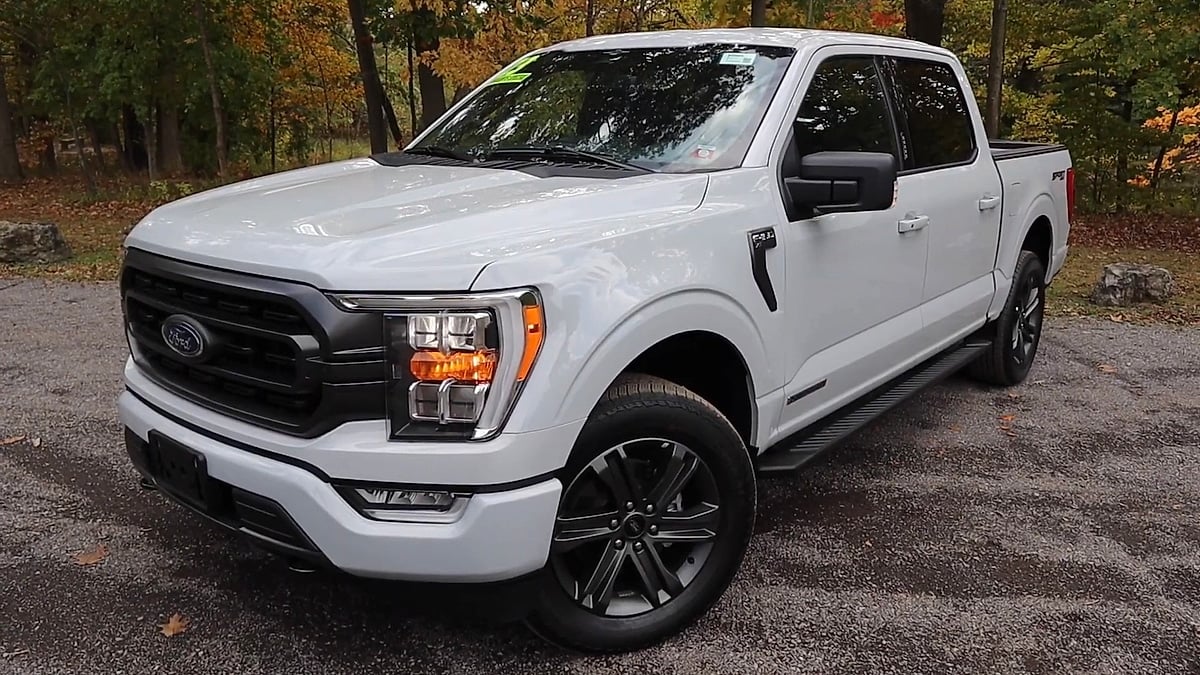
The buyer noted that what really broke the deal for him was that the Superchargers cost nearly as much as fuel, giving the F-150 Hybrid an advantage. He also noted that he would be using the truck for a travel trailer, which makes the F-150 an even more attractive choice. While the Cybertruck offers some high-tech features like steer-by-wire, the F-150 XLT Hybrid the buyer chose comes with the Pro Power Onboard 7.2kW system that allows the truck to function as a mobile generator for camping.
The buyer's decision to back out of the Cybertruck deal reflects a nationwide trend as EV sales growth cools. According to a recent Pew Research Center study, one-third of Americans say they would somewhat seriously consider buying an electric vehicle, a 4% increase from last year but a decline from 42% in 2022. Pew research says "the electric vehicle market in the U.S. continues to expand, albeit at a slower pace than earlier in the decade."
Based on the study's data, 53% of Americans said they are unlikely to seriously consider getting an electric vehicle. When it comes to Hybrids, the study noted that 45% of Americans are more interested in purchasing a hybrid vehicle than an EV.
This makes a lot of sense now because, according to Consumer Reports, hybrids are currently ranked as the most reliable powertrain type, outperforming both battery-electric vehicles and conventional gas-powered vehicles.
Car Manufacturers Are Also Holding Back on EV Production
Automakers are also responding to the shift in car buyer choices by increasing their focus on hybrid lineups, treating them as a bridge technology for car buyers seeking better efficiency, but not ready to commit to a fully electric vehicle.
For instance, automakers like Honda America, Ford, and Toyota are pivoting from pure electric vehicles to hybrids in North America. Honda delayed new U.S. EV models until at least 2027 after facing billions in development losses. Similarly, Ford incurred a $19.5 billion charge to scale back its EV strategy.
This hybrid pivot responds to subsidy volatility, the 2025 expiration of the $7,500 US tax credit, and slowing mainstream adoption. Car manufacturers are now leveraging profitable hybrid technology as a financial bridge to fund long-term research and development while meeting the immediate car buyer demand for affordable vehicles.
Still, this doesn’t mean Americans don’t want electric vehicles; many car buyers are not yet ready to go fully electric because of range anxiety, high upfront costs, reliability concerns, and infrastructure gaps. If anything, the former Tesla Cybertruck reservation holder stated in the Reddit post that he has owned a few Teslas before and even currently owns a Model Y.
He also noted towards the end of his post that he was looking forward to the new Ford and Ram EVs with onboard gas generators, which will offer 700+ miles of range once they are available.
“You made tirle right decision. I'd like a little more EV in my PowerBoost but a new iteration is coming.” A commenter on the post agreed with the poster's sentiments and looked forward to longer-range electric vehicles.
Hybrid Truck Buyer’s Checklist
Many Ford F-150 PowerBoost owners agreed with the story’s sentiments, and, based on the conclusions drawn from their responses, as well as those of journalists and industry professionals from other sources, here are a few things car buyers need to consider when getting a hybrid vehicle in the U.S.
- If you are buying a used hybrid vehicle like the one the F-150 PowerBoost owner got, get one with low mileage.
- Get a full premium warranty; hybrid car repairs are quite expensive compared to gas-powered alternatives.
- If you are looking at the used-car market, ensure the battery has been tested. Hybrid batteries typically last between 100,000 and 200,000 miles.
- A full hybrid is better than a mild hybrid if you are looking for higher fuel savings. The mild hybrid comes with a small battery that only assists the engine during start-stop.
- Only buy a Plug-in hybrid if you have the convenience of charging from home. If never plugged in, they get worse fuel efficiency than a standard hybrid due to the extra weight of the batteries.
This checklist is based on real data and first-hand information from owners, community reporting, and industry experts. It is a helpful resource for new buyers looking to dive into a vehicle segment, serving as a guide to help them avoid pitfalls like those of another Ford F-150 owner, who found himself in the muddiest section of the pit after a lease purchase.
What Can We Learn From The F-150 XLT PowerBoost Owner Story
From the sentiments of the former Tesla Cybertruck reservation holder, it’s evident that he is pro EV. However, his decision, even after initially reserving the Cybertruck, shows how buyers are shifting from EV hype towards real-world practicality.
Despite loving his Tesla Model Y and appreciating the Cybertruck’s technology, he canceled the order for a 2023 Ford F-150 PowerBoost hybrid because it simply made more financial and practical sense. At $43,000 versus $80,000 for the Cybertruck, the Hybrid Ford offered better towing capability, longer range, onboard power, and lower long-distance travel costs.
His concerns about charging costs, towing limitations, and Cybertruck resale value mirror a broader market trend: many car buyers still want electrification, but increasingly see hybrids as the smarter middle ground between traditional trucks and fully electric vehicles.
What is your opinion on EVs vs hybrid? If you were to buy a new vehicle would you prefer an EV or a hybrid vehicle?
About the Author
Humphrey Bwayo is an automotive journalist and enthusiast storyteller with a strong focus on the Japanese cars, performance vehicles, and the emerging automotive trends. Over the years, his work has appeared in major automotive publications including Autoevolution, SlashGear, HotCars, and The Drive, where he has built a reputation for blending technical insight with engaging, enthusiast-driven storytelling. Humphrey can be followed on Facebook and LinkedIn.
Set Torque News as Preferred Source on Google
Follow us today...