
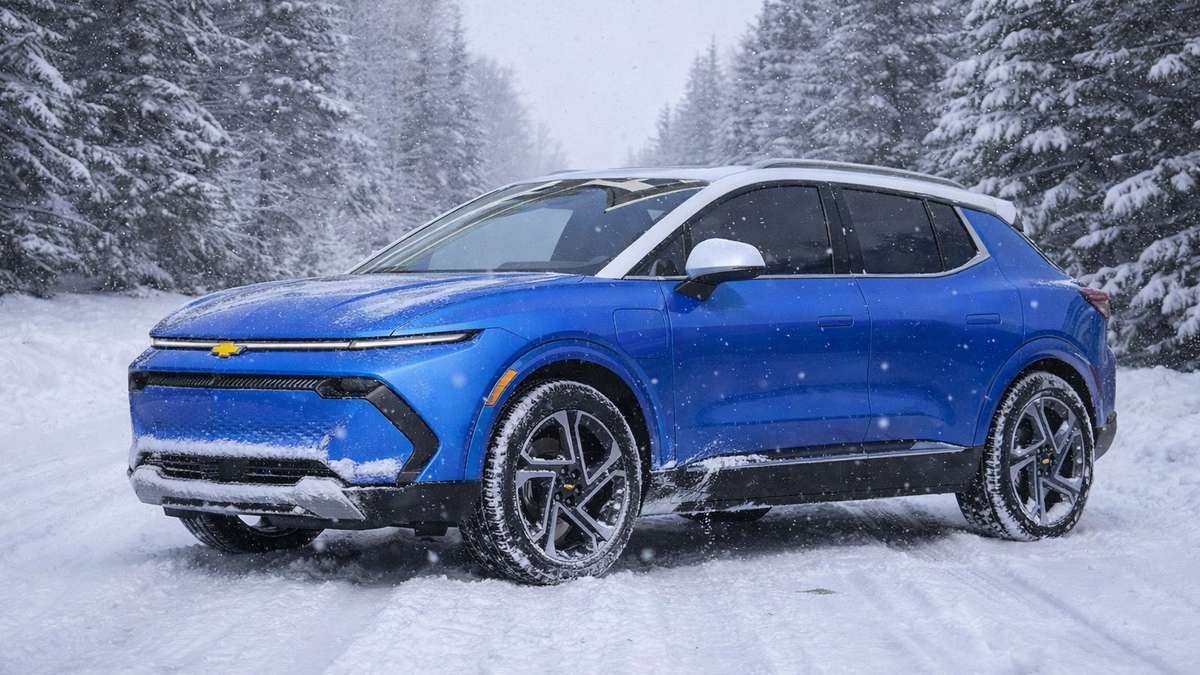

EV owners will tell you that their cars are better than gas powered in almost every way. The one complaint that we consistently see is that EV range suffers in cold weather. To be clear, all cars (gas and electric) suffer range loss in the winter due to increased rolling resistance, thicker fluids in the drivetrain, dense cold air increases aerodynamic drag, and energy used to heat the car. It can feel more dramatic in EVs because they make energy use visible in miles and percentages where the loss in gas powered cars is hidden behind frequent refueling.
How bad is the cold weather range loss in EVs and is it even worth discussing? We combed through long social media posts to get a feel. One that we looked at was on the Facebook Chevy Equinox EV group page where InspiringElk5014 posted:
“I’ve owned a Chevy Equinox EV for three months where it’s been 10-25 degrees and I’m only getting 102 miles of range, This is only one third of what GM advertised
Yes it has been cold. It’s been fluctuating between 10 and 25 degrees in Michigan.
I have owned a Chevy equinox EV LT for three months.
Is this electric-mileage acceptable?
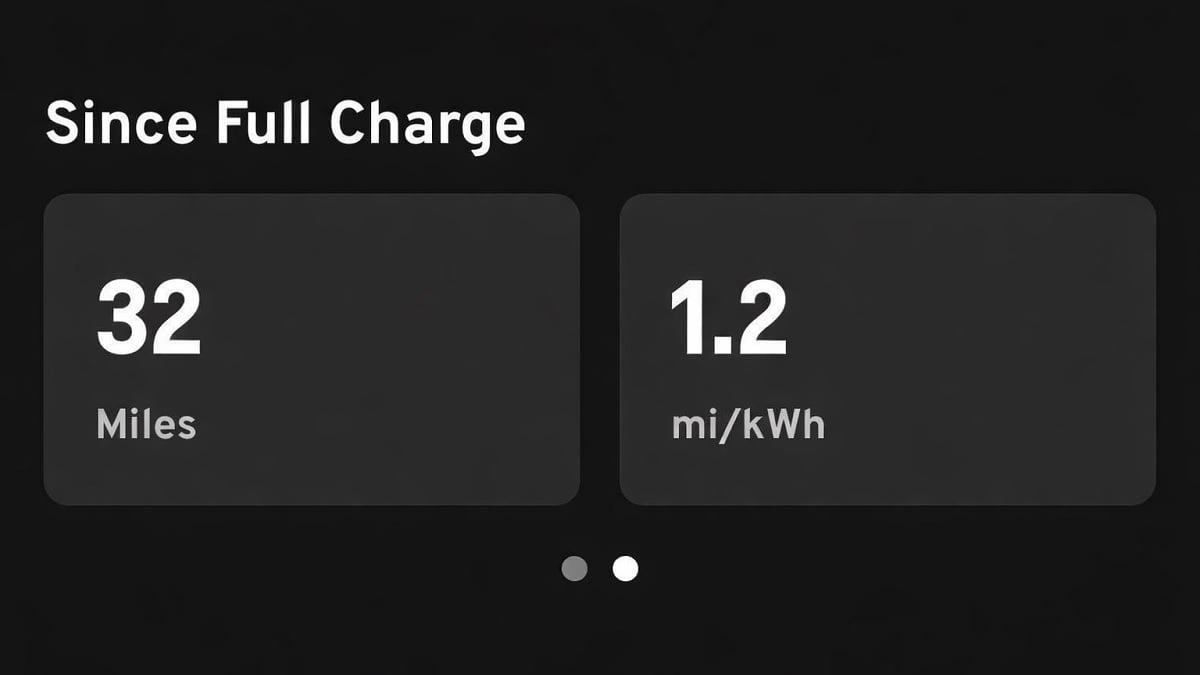
I’m getting 1.2mi/kWh.
The battery size of the car is 85 kWh
The math is 1.2 mi/kWh x 85 kWh = 102 miles.
They advertised it running over 300 miles all over the places, while its actual mileage is only 1/3 of that!”
There was a long flurry of responses starting with this from Tanner Bretches:
“Are you preconditioning the car off of shore power? Is this on the turn pike heading into a head wind?
I've driven in negative temps on the interstate and it does around 1.6 - 1.9 mi/kWh”
Terral Artis advised:
“Slow down while driving. I only get 1.2 if it's below 20 degrees F and driving 75 mph with the heater on 74. I drive 120 miles per day. No issues if I charge to 90 percent first when really cold.”
Brad Grier added his observation from driving EVs for years in Nebraska:
“I've been driving Chevy EVs (first a Bolt and now an EQEV) for years in Nebraska. My winter mi/kWh has never been remotely that low but then I precondition and make sure the tires are properly inflated, etc. My average on the EQEV since June of 2024 is 3.6 mi/kWh. That's better than the lifetime average on my Bolt. I assume that's because of the heat pump.”
What is the Chevy Equinox EV Winter Range?
So what is the range of the Chevy Equinox EV in winter conditions? After looking at numerous test, we found that one done by “EV Monitoring” to be the most realistic.
They performed a subzero range test of a 2025 Chevy Equinox EV LT all-wheel drive-in extreme Midwest winter conditions. The test begins at minus six degrees Fahrenheit, later dropping as low as minus twelve. The battery was charged to 100% and preconditioned for about ten minutes, simulating a real road trip departure from a hotel or public charger.
The Chevy Equinox EV Configuration Chosen for the Winter Range Test
EV Monitoring chose the all-wheel drive LT trim because it offers a rated range of 309 miles, an 85-kilowatt hour battery, and dual motors that significantly improve performance in winter confidence. The AWD system reduces the zero to sixty time from eight seconds to about 5.8 seconds. The tested vehicle had a single $2,000 option package with heated seats, a heated steering wheel, and a full safety suite including a 360-degree camera. The total price comes in just under forty thousand dollars.
Driving Method
The range test was conducted at a steady 75 miles per hour, which EV Monitoring considers more realistic than the 70 mile per hour tests often used elsewhere. Climate control is set to 72 degrees, with heated seats on medium. Wind conditions included a headwind on the outbound leg and a tailwind on the return, using a loop route to balance the effects. Efficiency and range updates are recorded every ten percent of battery usage.
Early Results and Cabin Heating Impact
At 25% battery usage, the car had traveled only about 35 miles, averaging roughly 1.4 miles per kilowatt hour. EV Monitoring noted that the cabin heating system appeared less efficient than others they had tested, forcing higher fan speeds to prevent window fogging. This additional energy draw clearly impacted efficiency. Despite this, highway comfort and cabin quietness are highlighted as strong points, with the Equinox feeling quieter than many gas and electric vehicles.
Midpoint Observations and Range Estimation
At around 50% battery remaining, the vehicle had traveled just under 70 miles and efficiency improved slightly to about 1.5 miles per kilowatt hour as the route turned into a tailwind. EV Monitoring pointed out that the miles remaining estimate is wildly optimistic, while the battery percentage provides a much more reliable planning tool. Google Maps range predictions appeared more accurate than the vehicle’s own range estimate, likely because navigation accounts for weather and driving conditions.
Low Battery Behavior and Turtle Mode
As the battery dropped to around 12%, the vehicle began issuing reduced acceleration warnings, with turtle mode indicators appearing around 11%. This happens earlier than expected compared to other EVs, which usually limit power closer to 5% to 8%. Despite the warnings, the vehicle is still capable of maintaining moderate speeds, though EV Monitoring exited the highway due to traffic and safety concerns rather than complete power loss.
Final Range Result
The test ended at roughly 145 miles driven, with efficiency peaking around 1.7 miles per kilowatt hour thanks to the tailwind. EV Monitoring concluded that a realistic cold weather range for the 2025 Chevy Equinox EV AWD LT in subzero conditions is between 145 and 150 miles. This is far below the advertised rating but reflects the severity of the weather and sustained highway speed.
Bottom Line
This range test shows how dramatically extreme cold and cabin heating can reduce EV range, even in a well-equipped, modern vehicle like the Chevy Equinox EV. While the car excels in comfort, quietness, and winter traction, its subzero highway range is less than half of its EPA rating. The results provide valuable real-world data for winter road trip planning and highlight why temperature, speed, and heating demand matter far more than advertised numbers when conditions turn harsh.
The Chevy Equinox EV
The Chevy Equinox EV is a fun and practical all-electric compact SUV that brings everyday usability to electric driving. It launched in 2023 as part of Chevrolet’s push to expand its EV lineup, offering a comfortable interior, easy handling, and solid technology for daily life. What sets it apart from many other EVs is its value oriented pricing, available all-wheel drive, and a familiar SUV shape that appeals to people moving from gas vehicles to electric. Pricing typically starts around forty thousand dollars, with well-equipped versions landing closer to the mid forty thousand range. It is sold as a five passenger SUV, giving buyers a roomy ride with a familiar hatchback cargo area instead of a sedan or coupe body style.
What Do You Think?
What kind of winter range are you actually seeing in your EV, and how cold does it get where you live?
Did you expect this level of winter range loss when you bought an EV, or was it a surprise?
Chris Johnston is the author of SAE’s comprehensive book on electric vehicles, "The Arrival of The Electric Car." His coverage on Torque News focuses on electric vehicles. Chris has decades of product management experience in telematics, mobile computing, and wireless communications. Chris has a B.S. in electrical engineering from Purdue University and an MBA. He lives in Seattle. When not working, Chris enjoys restoring classic wooden boats, open water swimming, cycling and flying (as a private pilot). You can connect with Chris on LinkedIn and follow his work on X at ChrisJohnstonEV.
Photo credit: Provided by author
Set Torque News as Preferred Source on Google
Follow us today...




Comments
I have a Kia EV6, EPA rated…
Permalink
I have a Kia EV6, EPA rated for 310 miles. In the ohio cold, around 20F I get about 2.6-2.8 mi/kWh which gets me a bit over 200 miles of range. I keep the cabin at 68F or less with heated seat on low (I'm in a winter coat after all). That's on the highway to/from work.
I have a 2024 Honda Prologue…
Permalink
I have a 2024 Honda Prologue, which internally is an Equinox with an external Honda badge. I live in Wisconsin.
During the cold spells it is not unusual to get 1.4 to 1.7 m/kW when the battery is cold. If I'm taking longer trips (> 60 miles) I will manually precondition the battery - the mileage will get worse for 20-30 minutes then improve because the battery is up to temperature.
On even longer trips where DC fast charging is required I make sure to either (A) route using in-car Google Maps so that the car automatically preconditions, or make sure to manually precondition 30 minutes before the fast charger. When I do that, I will get 2.4 to 2.7 m/kW when driving 60 MPH, and 2.1 to 2.5 m/kW at 70 MPH interstate highway speeds. I try not to drive faster than 70 MPH since the added drag during cold weather both reduces mileage and adds more time charging than is saved driving faster.
One last thing - heating the cabin drains the battery as well. A necessary evil but it does make a difference. I suspect the GM screens are similar to Honda screens, so you can view what percentage of battery is being used for cabin heating, actual driving, and remote preconditioning (using remote start).
Hi Dean: Thanks for reading…
Permalink
In reply to I have a 2024 Honda Prologue… by Dean Hoover (not verified)
Hi Dean:
Thanks for reading our article and for your thoughtful comments. If it’s possible for folks living in cold climates, preconditioning seems to be the key to better range.
Chris
I purchased an Equinox EV on…
Permalink
I purchased an Equinox EV on December 31st of last year. I have heated seats and steering wheel and do not have all-wheel drive. I averaged 3.5 miles per kilowatt hour for the entire year. I live near Salt Lake City, Utah. The lows last year did not quite hit 10°. The low for winter temperatures averaged about 20 to 30°. I drive my Equinox mostly on the freeway, 80 round trip each day and drove 17,000 miles last year. There is some traffic in the morning, so I drop down to 60 mph or less quite often, but I also hit 75 mph for a good stretch. There is minimal traffic in the evening and I consistently go at 75 miles per hour with a headwind. It is common for my morning commute to get one mile per kilowatt hour more than my evening commute. We are at high altitude (4500 feet) so the wind resistance is less than it is at sea level.
I set the interior temperature to 70° in the winter, warmer in the summer. I never precondition the battery. The worst I saw the range last year in the coldest part of January was about 2.9 miles per kilowatt hour for a round trip in the teens for temperature, with both trips in the dark. I'm quite happy with the range of my Equinox EV, though we do not have extreme cold temperatures.
We have a 2024 Blazer EV and…
Permalink
We have a 2024 Blazer EV and live in central Pennsylvania. During the cold winter months, we don't rely on the estimated mileage predictions. Usually it is off by %20
We own a '21 VW ID4. Yes,…
Permalink
We own a '21 VW ID4. Yes, winter temps in Ohio mean less range, but in 4+ years we have never seen such low kwh/miles as this article presents. We see 3.2-3.4 in the summer months and 2.6-2.8 winter. The ID4 has steering wheel and seat heaters that come on automatically at low temps. There's no need to keep the cabin temps set high.
I have a 86kWh ID.7 Tourer…
Permalink
I have a 86kWh ID.7 Tourer and it has a range of about 300 miles at about 5c (41f), the Chevy Equinox is a brick so guessing its cd values are very low.
I usually drive around with the heating set to 20c (68f) and utilise the heated seats extensively as they use a fraction of the energy, it also has a heat pump.
I would expect to be seeing a mileage of about 250 if the temps were well below 0c, but this is an exception in Southern England.
So the example given in this article is most defiantly worst case, heating on full blast, extremely cold, massive SUV driving style? so all add up to eating through lots of watts.
I guess it still works out cheaper, maybe $0.07 a mile?