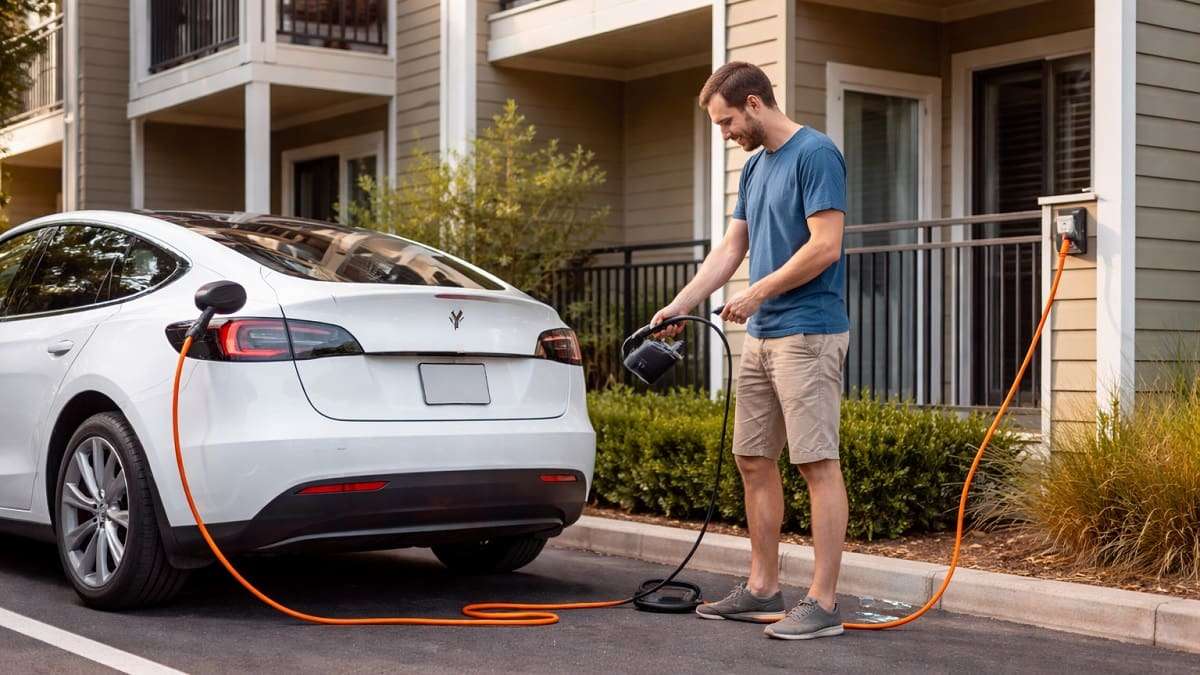

Living with an electric vehicle in an apartment or condo is absolutely possible, but it requires planning, flexibility, and a willingness to adapt habits. The experience can range from mildly inconvenient to genuinely challenging depending on local infrastructure. For some drivers, the effort is worth it. The decision ultimately comes down to how much work an owner is willing to take on for the benefits of driving electric.
For years, social media has been chock full of threads about apartment and condo dwellers who own EVs. The good news is that the angst has diminished over the years. Here’s a recent post on the r/electricvehicles subreddit where brucecooner posted:
“Are there many EV owners making it work with apartment life?”
Nissan LEAF owner Acrobatic_Invite3099 responded
“We have two EVs. Have lived in an apartment for the last four years. When we moved, we purposely chose an area with ample cheap charging. It has worked great for us, and is still cheaper than gas.”
eileen404 posted a reminder about ownership savings:
"Also, the oil changes and tune ups are way cheaper…”
Primary-Shoe-3702
"I'm fortunate that our building has a parking garage with fixed spots. So I was able to put up a charger at my spot."
SoftwareProBono advised about using charging apps:
"Spend some time on Plugshare and find all the options around his apartment/school/work/places he goes to already. If there aren't chargers extremely close, or at a place he already spends time, it will be difficult."
EaglesPDX shared their story of apartment living with an EV:
"I made it work for two years without L2 home charging with a Tesla. As with many EV's having access to Tesla chargers and the increasing coverage of non-Tesla chargers, it should work fine. However, it depends on your area. A 100-mile daily commute, would require charging every two to three days.
The best way to test is to Turo the same or similar range and charging speed EV that has Tesla chargers access and see how works.
I never minded charging for 30 minutes every couple days.”
Planning Ahead When Choosing Where to Live
For EV owners who rent, choosing the right apartment or condo can make a huge difference. Properties with built in EV charging eliminates most of the stress. If charging is not available, it helps to ask property managers whether installations are planned. In some cases, offering to pay for electricity at an existing outlet can open doors, as long as permission is requested first and expectations are clear and best if put into writing before the lease is signed.
Essential Charging Accessories
A mobile charging kit and a heavy-duty extension cord are must have items for apartment dwelling EV owners. A high quality, thick gauge extension cord can make the difference between being stranded and getting enough charge to reach a safer location. Even slow overnight charging from a standard outlet can add meaningful range over time. These tools provide flexibility when dedicated chargers are unavailable.
Adapters and Charging Compatibility
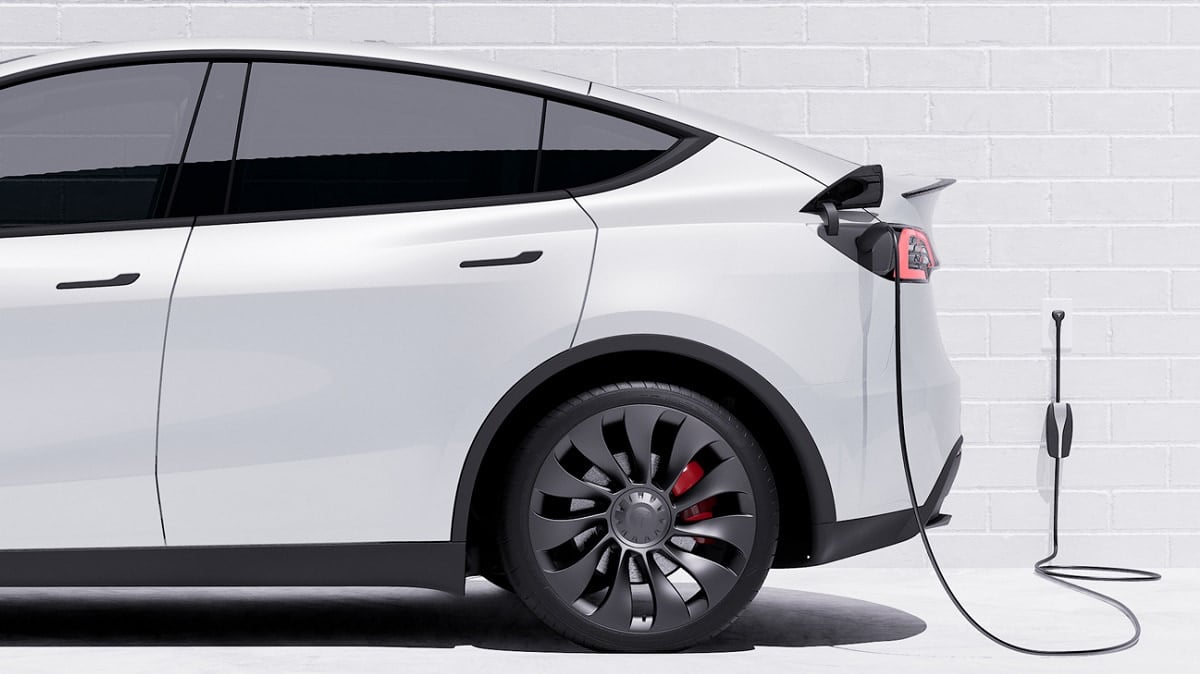
Access to more charging networks requires the right adapters. CCS compatibility allows use of many fast third-party chargers, while a CCS adapter and a J1772 adapter open up Level 2 stations at malls, workplaces, and public lots. A charging lock is also important to prevent accidental or intentional unplugging while charging in shared spaces.
Charging Apps That Make Life Easier
Charging apps are essential for apartment EV living. PlugShare helps locate chargers and shows user photos and comments, while network specific apps like ChargePoint or EVgo confirm availability and operational status. Route planning apps help estimate range and charging needs for longer trips. Having accounts set up in advance saves time and frustration when a charger is needed unexpectedly.
Smart Charging Practices
Charging strategy matters when access is limited. Fast charging from low states of charge is quick, while topping off near full takes much longer. Charging to extremely high levels at busy fast chargers can slow everyone down and create tension. In crowded areas, charging to a reasonable level and then switching to slower nearby chargers is often more efficient and more considerate.
Reducing Battery Drain
Conserving energy becomes critical without easy charging access. Features like Sentry Mode, cabin overheat protection, and standby systems can drain significant battery while parked. Turning these off extends usable range between charges. For example, if you drive a Tesla Model Y and your apartment parking situation is safe, set your car to turn off Sentry Mode when home. Treating the vehicle more like a traditional car, rather than a constantly active device, can significantly reduce energy loss.
Driving Habits That Extend Range
Gentler driving goes a long way. Using the Tesla chill mode, accelerating smoothly, and keeping highway speeds moderate improves efficiency. Maintaining proper tire pressure is especially important for cars parked outdoors, where temperature changes affect inflation. Monitoring the energy display helps drivers spot habits that waste energy and adjust in real time.
Climate Control and Efficiency
Heating uses more energy than many drivers expect, even with heat pumps. Seat heaters and steering wheel heaters are far more efficient than blasting cabin heat. Air conditioning tends to have less impact, but careful use still helps preserve range. Small adjustments add up when charging opportunities are scarce.
Outdoor Parking and Maintenance
Parking outside exposes vehicles to weather, bird droppings, and environmental damage. Paint protection and ceramic coatings can help preserve the exterior. Touchless car washes reduce the risk of scratches, while waterless wash methods offer an at home option without hoses. These steps are optional but useful for owners who care about long term appearance.
The Tesla Model Y
The Tesla Model Y is one of the most popular electric vehicles on the road, and it is easy to see why. It was launched in 2020 and quickly became a favorite thanks to its strong range, quick acceleration, roomy interior, and access to Tesla’s extensive Supercharger network. What sets it apart from many other EVs is its efficiency, simple software driven design, and frequent over the air updates that improve the car over time. Pricing typically starts around the mid $40,000 range before incentives, depending on trim and options. The Model Y is sold as a compact crossover SUV, offering a practical balance of cargo space, passenger comfort, and everyday usability.
What Do You Think?
If you live in an apartment or condo, what would be the hardest part about owning an EV?
How much inconvenience is acceptable to you in exchange for driving electric?
Chris Johnston is the author of SAE’s comprehensive book on electric vehicles, "The Arrival of The Electric Car." His coverage on Torque News focuses on electric vehicles. Chris has decades of product management experience in telematics, mobile computing, and wireless communications. Chris has a B.S. in electrical engineering from Purdue University and an MBA. He lives in Seattle. When not working, Chris enjoys restoring classic wooden boats, open water swimming, cycling and flying (as a private pilot). You can connect with Chris on LinkedIn and follow his work on X at ChrisJohnstonEV.
Photo credit: Provided by author, Tesla media kit
Set Torque News as Preferred Source on Google
Follow us today...