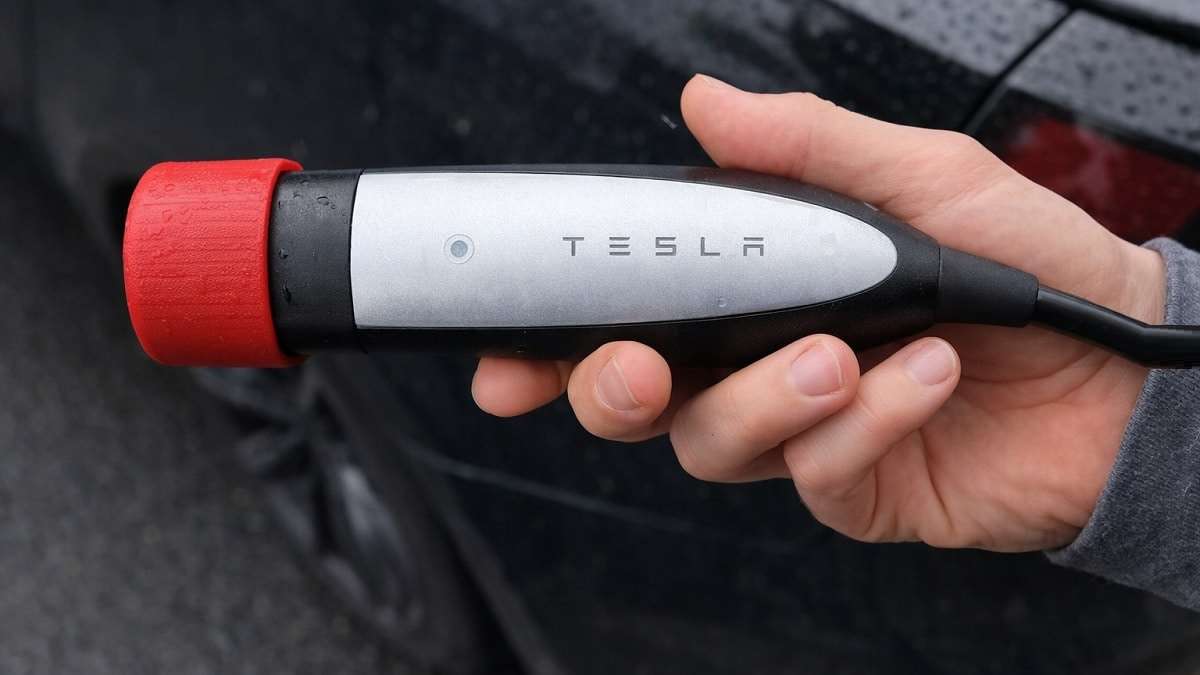

One of the best things about owing an EV is their near-zero maintenance needs. However, there is one thing that owners often overlook and that’s their charging system. For maximum operational life, the charge plug should remain clean and free of scratches and dents. Without added protection, it can be difficult to keep the charge plugs in pristine condition because they are made of dense plastic that can dent or scratch if dropped or dragged across concrete.
If you use Level 2 charging at home, another critical component of the charging system is the 220 VAC wall receptacle if the charger isn’t permanently installed. To reduce a potential fire hazard, it’s critical to install a NEMA 14-50 outlet which is designed to handle the load of charging an EV as opposed to a standard outlet used for appliance like cloths dryers which don’t have the same electrical demand.
Fortunately we are seeing a greater awareness of charging system maintenance on social media. The following post on the Facebook Tesla Model Y group page is a good example. Andrew Frink posted about protecting his Tesla charger plug:
“I didn’t want the end of my mobile charger to get beat up so I found this nifty model for a cover to 3D print. I edited the design to add in some magnets so I can stick it to the trunk speaker while charging. I also added some cute heart shaped vent holes. It’s printed in glow in the dark PLA.”
Chris Wright commented about the plug protector that he found:
“I bought one with a tether on Amazon for $9 a while back.”
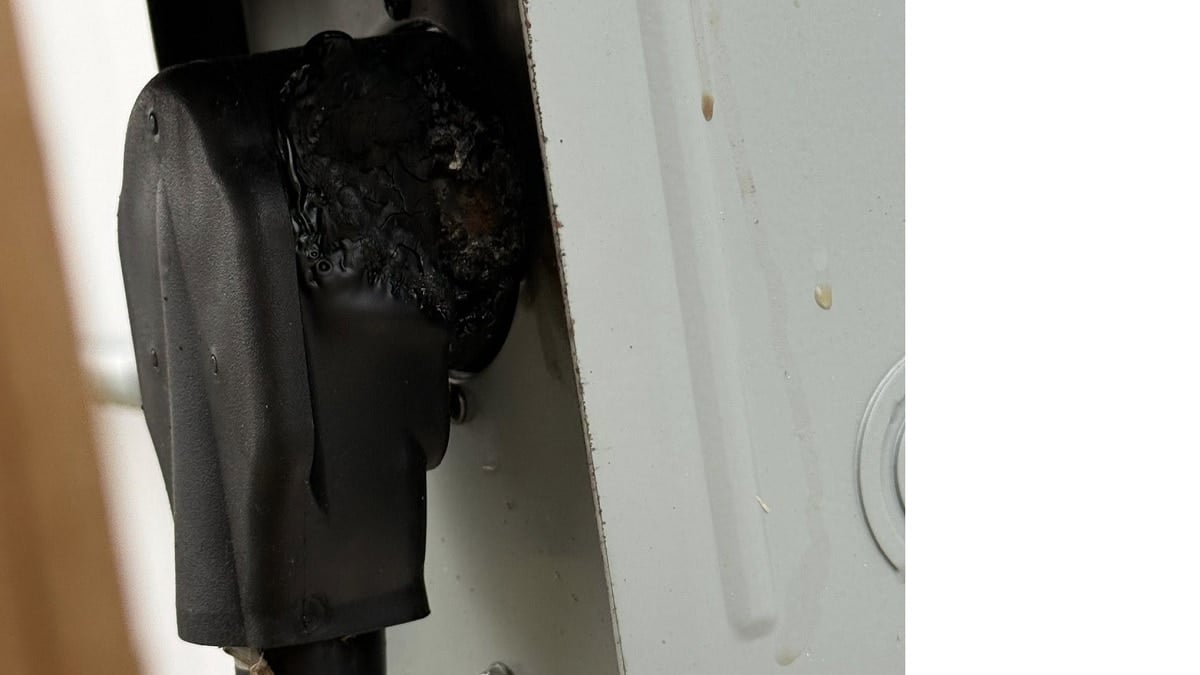
Over on the Chevy Silverado EV Facebook group page, Brandon Franklin posted about what can go wrong with a mobile charger plugged into a substandard 220 VAC outlet:
“After almost two years using this charger, my 240 VAC outlet melted. I now have to replace the outlet and the charger.
The certified EV installer inspected the outlet and confirmed that the person who installed my last outlet did not install an EV rated outlet. Instead, they installed an RV outlet, so they replaced the outlet. With labor it was $300. I plan send the repair bill and my charger replacement bill to the contractor who installed this and requested a refund or pay my bill. Thank god my house is a container home so luckily the fire didn’t spread…”
Understanding the NEMA 14-50 Outlet and Why It Matters for EV Charging
The NEMA 14-50 is a very common outlet used for electric vehicle charging. It has two hot wires, a neutral, and a ground, and it is rated for 50 amps. Many EV owners install one at home because it seems like a simple solution. Problems start when EV homeowners shop by price and choose a cheap $10 receptacle instead of a higher quality option, assuming the amp rating alone tells the full story.
Why Cheap Receptacles Are a Real Fire Risk
Low cost NEMA 14-50 receptacles are far more dangerous than many people realize. These outlets are widely documented to overheat and melt, with countless examples available online. At first glance it is easy to blame poor installation or loose connections, but even properly installed units can fail. Real world experience shows overheating can occur even at 30 amps, well below the stated 50-amp rating, triggering temperature warnings and shutdowns on chargers with built in safety sensors.
Continuous Load Limits and EV Charger Behavior
Electric vehicle charging is a continuous load, which changes the workload entirely. Even though a receptacle may say 50 amps on the face, continuous charging should never exceed 40 amps. Some EV chargers can draw 40 or even 50 amps, and many users still plug them into standard outlets despite manufacturer guidance recommending hardwiring at those levels. Using a plug at these loads dramatically increases the risk of overheating and fire.
Choosing the Right Receptacle and Installing It Correctly
High quality EV rated receptacles cost more, often around $50, but they are designed to handle sustained current safely. These outlets are labeled for EV use and are built for continuous 40-amp loads. Proper installation is critical, including torquing terminals to the correct specification using a torque screwdriver. The required torque is higher than most people expect and cannot be guessed by feel.
Wiring, Conductor Choice, and Heat Management
Correct wire size and type matter just as much as the outlet itself. EV charging on a NEMA 14-50 requires 4-gauge conductors. Bundled SOOW cord should not be used because it traps heat. Individual THHN conductors are preferred because they dissipate heat more effectively. Stripping the wire to the exact length shown on the receptacle also ensures a solid and safe connection.
Outdoor Installations and Preferred Hardware
Outdoor installations require weatherproof enclosures to protect the outlet from moisture. Some weatherproof boxes work well but use screw terminals that are harder to torque accurately. Many installers prefer premium brands like LIDER because they are easier to torque correctly and are among the highest rated options available. The added cost buys peace of mind and long-term safety.
Using Extension Cords with a Tesla Mobile Connector
Tesla officially warns against using extension cords with the Mobile Connector, and that warning exists for good reasons. Standard household extension cords are not designed to handle sustained current and can overheat or catch fire. Some heavy-duty outdoor extension cords rated for the correct amperage can be used cautiously for short term needs, provided they are properly rated, designed for outdoor use, and limited to the standard 12 amp load of a 120 volt outlet.
Real World Experience with Heavy Duty Extension Cords
High quality outdoor extension cords built with thick conductors and durable insulation can perform safely when used within their ratings. Real world use in hot environments has shown that properly rated cords can remain cool during extended charging sessions. Visual indicators like lighted plugs also help confirm power flow and proper operation during use.
Bottom Line
Safe EV charging depends on far more than what an outlet label claims. Cheap receptacles, improper installation, incorrect wiring, and ignoring continuous load limits all create serious fire risks. Investing in EV rated hardware, installing it correctly, and respecting manufacturer guidance dramatically reduces those risks. The cost difference is small compared to the potential damage, and choosing the safer path can quite literally protect a home.
The Tesla Model Y
The Tesla Model Y is a compact electric crossover that has become one of the most popular EVs in the world thanks to its strong mix of range, performance, and technology. It was launched in early 2020 and stands out for its access to Tesla’s Supercharger network, simple interior design, frequent over the air software updates, and excellent efficiency for its size. Pricing typically starts in the low to mid $40,000 range before incentives, depending on trim and options. The Model Y is sold in a single crossover body style with rear wheel drive and all-wheel drive variants. To charge a Tesla Model Y on a Level 1 household outlet, charging can take roughly two to three days from empty to full, while a Level 2 charger can recharge it overnight, usually in about eight to ten hours.
What Do You Think?
Do you do anything to protect your Tesla Model Y charging plug from drops, dirt, or concrete damage?
Were you aware there is a difference between EV rated and RV rated 14-50 outlets?
Chris Johnston is the author of SAE’s comprehensive book on electric vehicles, "The Arrival of The Electric Car." His coverage on Torque News focuses on electric vehicles. Chris has decades of product management experience in telematics, mobile computing, and wireless communications. Chris has a B.S. in electrical engineering from Purdue University and an MBA. He lives in Seattle. When not working, Chris enjoys restoring classic wooden boats, open water swimming, cycling and flying (as a private pilot). You can connect with Chris on LinkedIn and follow his work on X at ChrisJohnstonEV.
Photo credit: Provided by author, Brandon Franklin (with permission)
Set Torque News as Preferred Source on Google
Follow us today...