
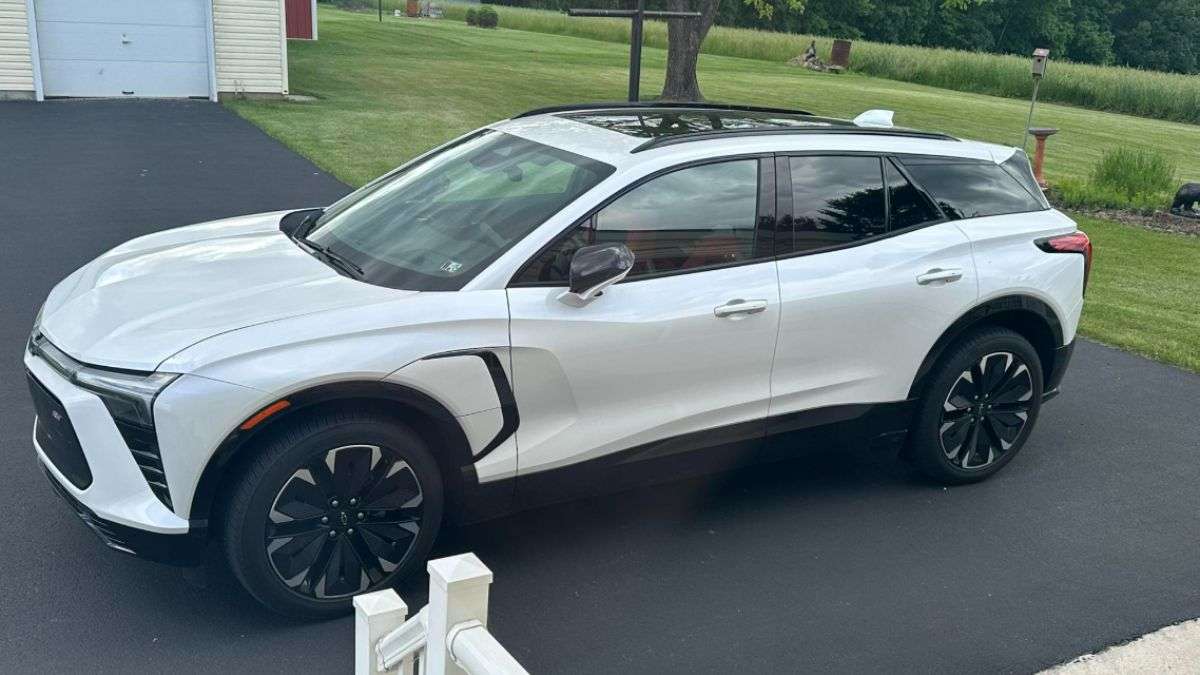

Some glitches make headlines because they happen on the freeway, but others stick with you even when they strike in your own driveway. And that’s what took place in Tony Rosenzweig's case, who was caught off guard by a sudden auto-park incident in his 2024 Chevy Blazer EV RS RWD, a vehicle that had been flawless for nearly 9,000 miles. This unexpected event wasn’t just strange, but it was unsettling and might hint at something much bigger lurking beneath the surface for Blazer EV owners.
Tony shared the experience on Facebook in the "Chevy Blazer EV Group," writing: "We have a ‘24 RS RWD and have been trouble free for the best part of 9k miles. But today we had an issue where we were driving slowly in a driveway forward towards the side of a house, when the vehicle suddenly shifted itself into park. We were still several feet away and even if it did detect a collision it should not have shifted to park. Anyone else experienced anything similar? It was a bit startling and I hope to not have it happen again, especially in a situation where someone could rear end us."
When Safety Features Act Too Soon
Modern EVs are loaded with automated safety systems, from forward collision mitigation to automatic emergency braking all built with the best of intentions. But what happens when one of those systems decides to intervene with no obvious threat? That’s the gray area Tony’s story touches on, and he’s far from alone.
In fact, the Chevrolet Blazer EV lineup has been the subject of both praise and scrutiny since its launch. Chevrolet heavily banked on the success of this model as part of its electrified future, rolling out multiple trims including the RS and the high-performance SS variant. And while the performance and styling have impressed many, software-related quirks have remained an ongoing theme.
In Tony’s case, the car abruptly shifting into park could point to an overly sensitive sensor or a software bug interpreting a phantom collision. The implications are serious. If a car can decide to throw itself into park while slowly moving forward, what’s stopping it from doing the same at a traffic light, in bumper-to-bumper traffic, or even worse, going 80 MPH on the freeway?
He's Not the Only One
Several other owners chimed in on Tony’s post revealing they’ve seen similar behavior. Corey Chard was quick to validate the concern: "This happened to mine too, 2025 RS. There is an open recall but I haven’t received anything from GM regarding it yet."
This comment changes the scenario. We now go from a single strange incident to a pattern. If there’s a recall in place and many haven't been notified, that opens the door to risk, confusion, and a major trust issue between consumers and the brand.
Keith Muehl added more context: "There is a recall to check the parking brake harness. Ours is in today to check it." That lines up with some of the technical service bulletins GM has released regarding the Blazer EV. While it’s unclear whether the harness directly caused Tony’s experience, it does suggest GM is aware that the vehicle's electronic brake systems could have issues under certain conditions.
Fix It or Forget It?
For some owners, the experience was enough to start thinking long-term. Anthony W. Herbert shared: "Mine did that and I disabled all the parking stuff until there’s a fix or my lease is up. Whichever comes first, but probably will be the lease to something else I’m sure."
That dry humor hits a deeper nerve. When you lease a vehicle, you're essentially borrowing trust in the brand. If that trust gets rattled early, the likelihood of a repeat customer drops fast. In a competitive EV market where owners are already comparing the RS with the higher-trim SS variant, this kind of uncertainty can influence someone to switch to a different model or even jump ship to a completely different brand.
Not everyone thinks the system is a complete flaw though. Rishabh Kohli chimed in with a different take: "I won’t turn off the automatic braking feature. It has saved my dad multiple times from hitting another vehicle. I would suggest everyone to clean the outside cameras everyday."
That comment opens up another layer of the conversation about maintenance. Automated systems rely on clean and calibrated sensors. If a camera or radar module is dirty or partially obstructed, it can cause false readings. But should such a scenario result in a full-on shift into park?
The debate then becomes less about whether automation is good or bad and more about how precise and predictable that automation should be. Systems that intervene when they shouldn’t might be just as dangerous as those that fail when they should act.
Blazer EV Owners Face a Pattern
Tony’s story is far from the only example of the Blazer EV catching owners off guard with unprompted behavior. Earlier this year, a Blazer EV owner shared how their dealer couldn’t even rotate the tires without a software unlock. This could point towards a deeper issue: the Blazer EV might be relying too heavily on digital layers that aren’t always synchronized or tested thoroughly.
And for those looking at the Blazer EV as a family vehicle or second EV, the concern grows. One owner wrote about purchasing a Chevy Blazer EV SS after their wife loved the first one so much, a story that underlines the vehicle’s appeal when things go right. But that confidence can fade quickly if the car starts doing things on its own, especially something as risky as shifting into park while moving.
So I believe Tony’s story is important because it highlights how subtle the danger was but could have turned catastrophic. We often talk about EV reliability in terms of range, battery degradation, or charging network issues. But this? This is something more intimate. It taps into the quiet moments of trust we place in our vehicles, like slowly pulling into your own driveway. And when something goes wrong there, it makes you question everything else.
The Broader GM Picture
What’s also fascinating is that this isn’t a total failure or an obvious manufacturing defect. It’s a micro-glitch in a macro-system, and that makes it harder to diagnose, harder to reproduce, and harder to feel safe with. And I'm not just saying that to spread fear, but it is based on a truth. GM has rolled out a recall, which means that they know something is wrong.
And as someone who follows this space closely, I can’t help but see a pattern forming with newer GM vehicles. From EVs to Silverados that just don't seem to stop having engine issues, there's a pattern on the rise. These cars have incredible hardware, strong design language, and a lot of appeal, but they’re suffering from what feels like growing pains in this new car era. And sadly, when those pains affect the basic driving experience, they can erode trust faster than any bad review ever could.
Key Takeaways
- Don’t ignore the little things. If your vehicle ever does something unexpected, even at low speeds, document it and report it. These small moments could be part of a bigger issue GM needs to address.
- Check for open recalls frequently. Don’t wait for a letter. If your Blazer EV is acting strange, visit NHTSA’s website or contact your dealer to ask about known recalls.
- Be mindful of your sensors. While it’s true that dirty cameras and radars can cause issues, they shouldn’t be the sole reason your car performs dramatic action like shifting into park. Still, it’s worth keeping them clean just to rule it out.
- Software can be the weakest link. Even the best-built EVs are only as good as the code that controls them. If your dealership can’t explain a feature or behavior clearly, push for more information or escalate to GM directly.
- Automation isn’t always smarter. These systems are supposed to help us, but when they overcorrect, they can introduce new safety concerns. A healthy dose of skepticism is warranted, especially when they start making critical decisions unprompted.
Time For Your Opinion
Has your EV ever done something unexpected like braking or parking on its own?
And if you own a Blazer EV, do you trust its automated features, or have you had to disable some to feel safer?
Don't hesitate to share your experiences in the comments below, especially if it’s something you think GM should hear about.
Aram Krajekian is a young automotive journalist bringing a fresh perspective to his coverage of the evolving automotive landscape. Follow Aram on X and LinkedIn for daily news coverage about cars.
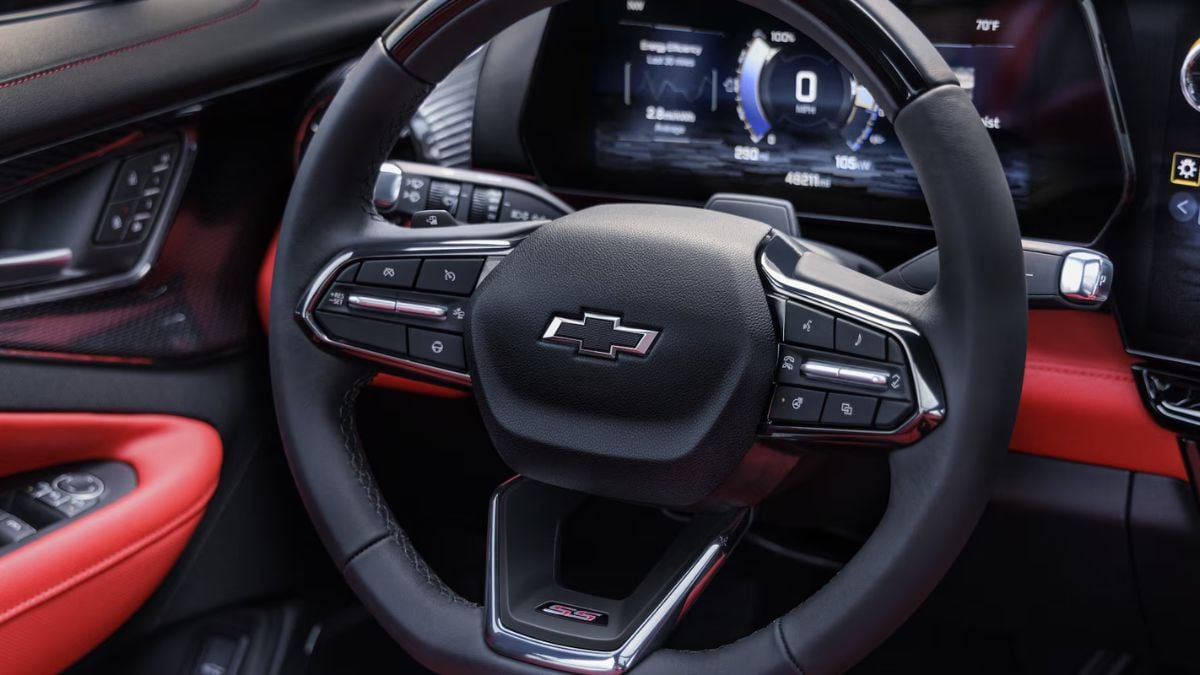
Image Sources: The “Chevy Blazer EV Group” public Facebook group and Chevrolet’s gallery, respectively.
Set Torque News as Preferred Source on Google
Follow us today...


Comments
This article has been…
Permalink
This article has been EXTREMELY helpful. I bought a new 2024 Chevy Blazer EV RS in June of 2024. Almost right away, when backing up, it would throw a parking brake. I had taken it in and was told they couldn’t recreate it. My husband and son ended up shutting off all the rear collision sensors and it stopped. Then later my husband was driving in traffic over 50 MPH on the Interstate and the parking brake locked up. I honestly thought he must have been tailgating and didn’t take it as seriously as I should have. He was very upset and relieved that there wasn’t a semi or another car behind him. Then, shortly after that, I was exiting on a ramp going around the same speed and the crash sensors on the dash went off at the same time my body was lurching forward as the park brake engaged for no reason. The car skidded to halt, burning rubber smell and my confusion of trying to make the car go forward with the gas pedal only to realize the parking brake had to be shut off. It was a horrible experience. Last week, I was just going into a parking spot and it happened again. There is no rhyme or reason. There is no fix, the “warranty won’t cover a rental car unless there is a fix on the car” per Heath at the dealership I bought the car from. So currently, I am stuck with a vehicle that is unfit for the road and no fix in sight. I had back surgery in April, which makes me even more concerned about being injured. I am disappointed at the lack of help and support with the situation from the Dealer and from Chevy. This car should not be on the road at this point. I truly hope no one is injured or killed.