
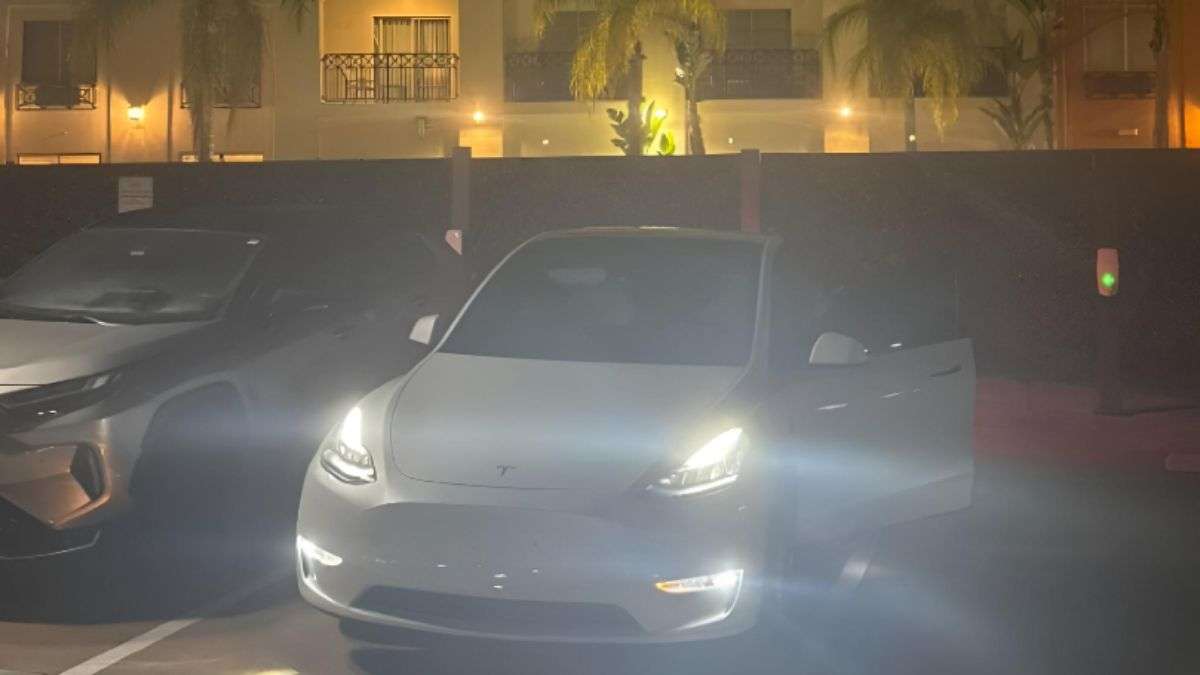

There’s a certain allure to the idea of electric vehicle ownership. The quiet rides, tech-forward design, and the promise of saving big on fuel. But when that promise runs headfirst into real-world logistics, especially for business owners constantly on the road without access to home charging, that reality can feel a bit more complicated. That’s exactly what happened to one Tesla Model Y owner who found himself facing a massive Supercharging bill in just his first two weeks. Dom Aspeslagh recently shared his experience in the "Tesla Owners of Phoenix" Facebook group, and his post struck a chord with many owners. Here’s how he put it:
"Tesla’s are cool cars, but the range of these things SUCK! And I’ve spent over $700 in 2 weeks of ownership on super charges alone. Unreal. I’d say gas is far more worth it. I’m sure a home charger would help, but that’s not an option for me. I’m typically on the road towing for my jetski rental business (33mi each way to the lake.) I tow there and back and it’s already due for another charge. Suggested miles are typically off unless I go below the speed limit. And sitting at superchargers is not ideal."
Dom’s story is more than just a one-off complaint, as it highlights a growing conversation around how EVs fit into certain lifestyles, particularly those without home charging. What we see here isn’t a failure of the vehicle, but a misalignment between use case and charging strategy. When your entire workflow depends on repeat trips and tight turnaround times, it turns into operational downtime and rising costs.

The Cost of Supercharging Without Home Access
Supercharging rates vary, but in states like Arizona and California, it’s not uncommon to see high prices per kilowatt-hour. For a Tesla towing heavy gear in hot weather, where battery conditioning and drag could also cut into range, that cost adds up fast.
One commenter, Vlad Alt, broke it down mathematically:
"It's simple math. If you didn't compare before buying, that's on you. We're on our 2nd house and 2nd home charger. Until we got it installed the cost/kw was high and the blended cost for the year was .17/kw. At home, I charge off-peak @ .09/kw. My cost per gallon equivalent came to $1.49/gl. Now with 97% charging at home it's down to $.82/gl. Since you don't have a home charger, paying maybe $.45/kw, your gas equivalent is about $4.04/gl."
Vlad’s point is important: home charging is what unlocks the real savings of EV ownership. Without it, Supercharging can approach or even exceed the cost of gasoline per mile. This isn’t necessarily a flaw of the car. It’s a reminder that EVs are best experienced when they’re plugged into a home-based infrastructure.
Another member, Steve Donaldson, offered a broader view of EV suitability:
"Don’t blame the vehicle, look at what you are using an EV to accomplish. I drive 80–90 miles a day. Home charging is amazing. Charge your car every day. ABC."
Steve’s comment underscores a key point that EVs thrive under consistent and predictable routines. Charging every night at home makes ownership seamless. But remove that element and add in towing and long drives, then things change quickly. Dom’s business demands may explain why his experience deviated so sharply.
A third commenter, Summit Point, zeroed in on the data:
"Assuming CA rate of $0.50 per kWh. $700 equated to 1400kWh. At an average of 3 miles/kWh —> 4200 miles in 2 weeks, 2 miles/kWh —> 2800 miles in 2 weeks, 1 mile/kWh —> 1400 miles in 2 weeks compensated for towing. If you drive less than 700 miles a week, something is not adding up."
Summit’s analysis points out how crucial efficiency is when calculating real-world costs. With towing involved, energy consumption often drops below 2 miles per kWh, especially in hot climates. As seen in reports of range concerns despite efficient driving, some EV owners find that range performance can be unpredictable depending on conditions and driving style.
A Triple Hit to Efficiency
Dom’s use case of towing a jet ski in the Arizona heat is essentially the worst-case scenario for EV efficiency. Aerodynamic drag, heat-related battery cooling, and added weight all work against him. In situations like this, a vehicle’s advertised range can feel like a distant promise.
That said, this isn’t unique to Tesla. Most EVs will show similar losses under heavy demand. As noted in a surprising story of early battery degradation on a low-mileage Model Y, pushing the battery hard can accelerate wear or exaggerate range losses.
EVs excel in routine, stop-and-go city environments. But when you apply them to more commercial-style usage, the weaknesses show. Dom’s story reveals a gray area in Tesla’s range claims and infrastructure promise. Yes, the Supercharger network is expansive, but without a home base, the economics shift dramatically.
Still, it’s worth remembering that many EV owners have positive, long-term experiences. Take for example this Model 3 that reached 200,000 miles on its original battery. The key? Smart charging habits, light usage, and predictable conditions. Those who drive under more demanding conditions may see different results.
EVs Still Make Sense
Even with Dom’s story in mind, the takeaway isn’t that EVs are a bad investment. It's rather that expectations should be set with nuance. Your cost per mile will plummet if you’re charging at home overnight. But if you’re relying on Superchargers and pushing your vehicle every day, you may be disappointed. But that doesn’t mean EVs are flawed, because it just shows that there’s still a learning curve for many new owners stepping into this space.
That’s why many new owners, even those who were skeptical, now share how switching to a Tesla became their best automotive decision yet. With the right setup, EV ownership can be transformative.
That's why the issue here may not just be about range or charging costs, it might be a case of system shock. Spending $700 in two weeks is a lot, and while towing certainly drives up costs, I think it's possible that Dom’s driving style, charging location pricing, and efficiency losses created the perfect storm. It’s worth looking closer: could the reported amount be a misunderstanding of kilowatt-hour billing or charging idle fees? Or perhaps did the mix of towing, hot weather, and no home base really did rack up that kind of cost?
Either way, this isn’t about blaming Tesla or the owner. It’s about showing how critical home charging is, and how a mismatch in expectations can change the EV story entirely. When everything aligns, EVs are phenomenal. But when the math doesn’t add up, it’s usually because a crucial piece of the equation is missing.
Key Takeaways for EV Shoppers and Owners
- Home charging is the foundation of EV savings: Without it, public charging can cost as much or more than gas.
- Know your driving profile: High-mileage, towing-heavy, or commercial-style use cases will skew efficiency metrics and increase operating costs.
- Check your electricity rate: Peak vs. off-peak pricing can drastically shift your cost-per-mile calculation.
- Range loss under load is normal: EVs lose significant range when towing or driving in extreme conditions. Plan accordingly.
- Positive EV experiences rely on setup: As seen in long-term success stories, well-matched infrastructure and habits can make all the difference.
Let’s Hear From You
What do you think of owning an EV with no home charging? Could you make do without it?
And for those using their Teslas for business or towing, what lessons would you share with new owners?
Your voices lend a helping hand to many, so don't hesitate to share your thoughts in our comments below.
Aram Krajekian is a young automotive journalist bringing a fresh perspective to his coverage of the evolving automotive landscape. Follow Aram on X and LinkedIn for daily news coverage about cars.
Image Sources: The “Tesla Owners of Phoenix” public Facebook group and Tesla’s gallery, respectively.
Set Torque News as Preferred Source on Google
Follow us today...



Comments
I charge at home. I live in…
Permalink
I charge at home. I live in the Pacific Northwest. Gas prices here are among the highest in the nation, around $4.50 a gallon. My electric rate is among the lowest in the nation, at $.075 kWh. My utility gets power from hydro. I typically spend about $30 a month to drive my Model 3. I bought it in September 2022 and have 62,604 miles on it, so I’m driving a lot of miles, relatively. I tell people I’m driving around all I want or need for a buck a day. I don’t think most of them believe me.
Ahh poor baby. He can spend …
Permalink
Ahh poor baby. He can spend $700 on superchargers but can't afford a 240v dryer outlet to charge his car....I have Tesla Power and charge my model 3, 7 days a week for $25 a month. It is just common sense.