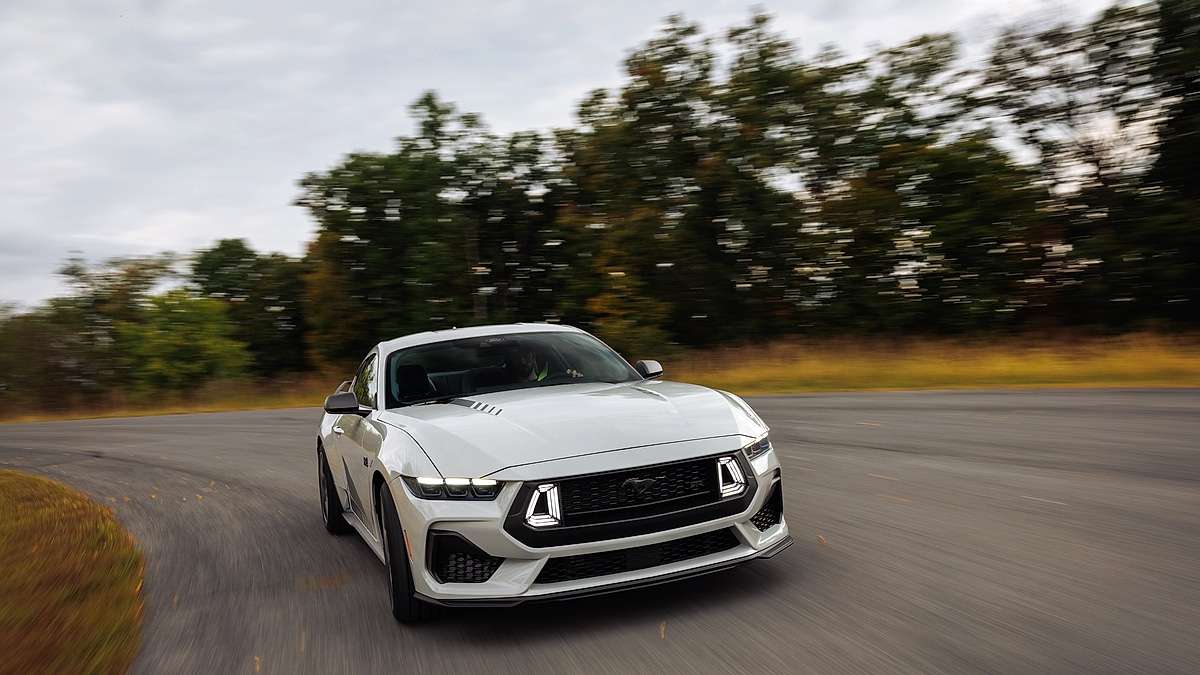

“It makes me wonder if AI is doing the writing after the data is output.” That was the line that turned a bruising road test into a much larger argument. Vaughn Gittin Jr., through comments highlighted by The Autopian, did not simply dispute a negative review of the 800-horsepower Mustang RTR Spec 3. He challenged the legitimacy of the criticism itself after Car and Driver found the car slower than a stock Mustang GT in key tests, worse on the skidpad, and longer in braking, despite an as-tested price of $109,808. Once that happened, the conversation stopped being about one review and became a referendum on tuner economics, sponsorship politics, warranty logic, and the widening gap between what a builder says a car is for and what a six-figure buyer expects it to do.
The most uncomfortable part of the Car and Driver test was not the headline, though “Looks like a champion but won’t finish first” certainly landed. It was the mechanical confession buried in the middle of the story. Scherr wrote that there is no upgraded clutch. Why not. “It’s a warranty issue.” RTR matches the Ford factory warranty, and because Ford Performance does not offer an alternative clutch, RTR does not either. That is a remarkable admission in a car making 800 horsepower. Scherr did not have to editorialize much after that. She simply laid out the facts and then dropped the line that will live longer than most spec sheets, that the stock clutch may “perfume the parking lot with the expensive scent of failure.”
That raises the sharpest question in the whole affair. How far can a manufacturer or quasi-manufacturer lean on warranty compliance before it becomes a shell game? RTR is not some guy with a toolbox and an eBay account. This is a branded, dealer-facing, high-dollar package sold on the promise of engineering, polish, and legitimacy. If the company knows the stock clutch is the price of preserving the warranty badge, and knows the extra power can overwhelm the hardware, then the warranty stops looking like protection and starts looking like camouflage.
Why the $110,000 Ford Mustang RTR Spec 3 Is Facing Backlash
- RTR charged nearly $110,000 for a Mustang that lost to a stock GT in the tests that matter most.
- The stock clutch is the clearest weak point in the whole package, and RTR’s warranty explanation only makes that harder to defend.
- The Nitto tire choice undermined the car’s ability to put down its 800 horsepower, whatever the marketing promised.
- Vaughn Gittin Jr.’s AI comment distracted from the actual problem, which was the car’s disappointing performance.
- The bigger takeaway is that tuner brands cannot charge OEM money and still ask buyers to excuse obvious compromises.
No public material here proves RTR set out to sell a knowingly compromised product, and that distinction matters. Still, the consumer question is unavoidable. If a builder sells 800 horsepower with a clutch, it cannot fully stand behind it under hard use. What exactly is the buyer paying the markup for? The signature on the dash, or the engineering under it.
The tires make the story messier, not cleaner. Gittin defended the choice directly, saying the Spec 3 was “one set of tires away from completely changing the headline” and arguing that the Nittos were chosen because they are good in the rain, progressive at the limit, and do not require replacement after “a few donuts.” That is a coherent argument if the product brief is a smoky, sideways street toy. It is a much harder sell when the window sticker is deep into six-figure territory, and the car is being marketed with race-ready theater. Car and Driver found those same Nitto tires “drift-friendly” but a “bear to hook up in a straight line,” which is a polite way of saying the car’s shoes were not equal to its engine.
That is where the sponsorship question enters, and it does not enter quietly. In the Reddit thread and The Autopian comments, enthusiasts repeatedly floated the same theory, that RTR’s long association with Nitto shaped the tire decision more than the needs of the car itself. One commenter put it bluntly, “Nitto is a long-time sponsor of Vaughn Gittin Jr.” Another argued RTR had “shot themselves in the foot for a sponsor.” That is still a community inference, not a documented admission from RTR, and it should be treated that way. But it is not hard to see why the suspicion took hold. When a company puts 800 horsepower through a tire package, the main review outlet says it cannot deploy the power; people are going to ask whether the engineering brief was written in the shop or in the partnership deck.
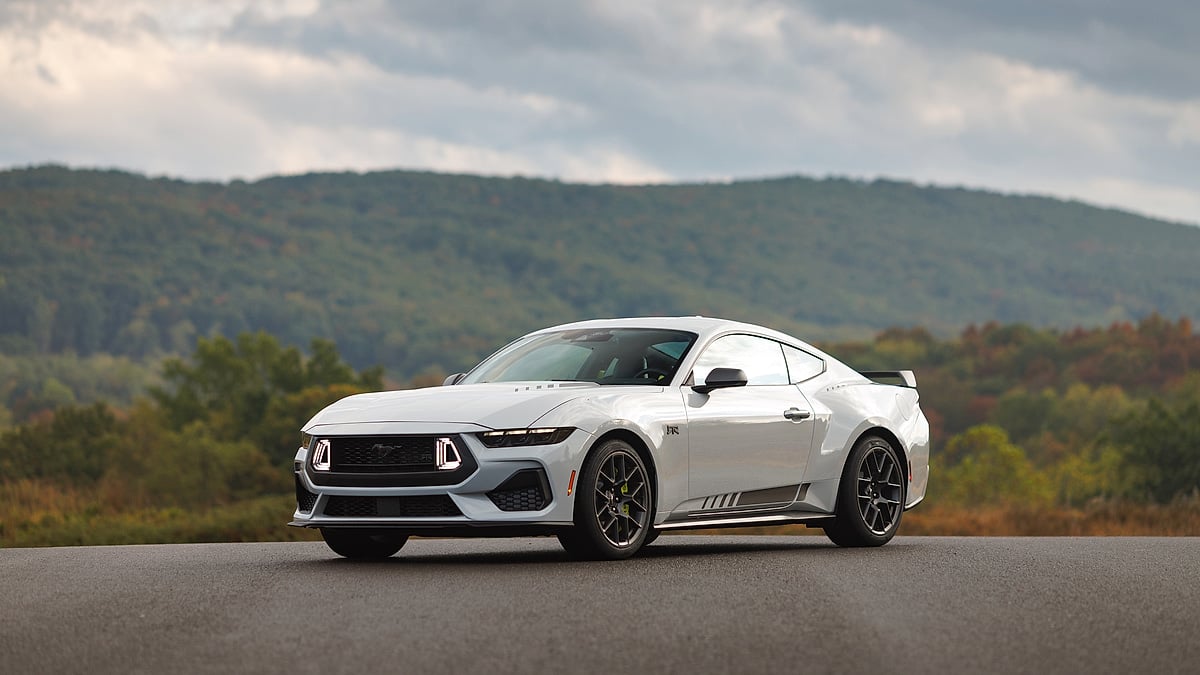
There is an even more awkward wrinkle in the enthusiast chatter. Reddit commenters noted that the pricier Spec 5 reportedly uses Michelin Pilot Sport 4S tires, which, if accurate, would suggest RTR knows perfectly well what a more serious performance tire looks like on a higher trim. That point still deserves independent verification before anyone treats it as an established fact. But even as a rumor from the customer base, it has force. It hints at a familiar performance-car logic, where the cheaper version carries the compromised parts, the dearer version gets the grown-up footwear, and the buyer in the middle is left financing the brand story. If RTR wants to put this issue to bed, the cleanest way would be simple. Explain the tire strategy trim by trim, in plain English, and say whether sponsorship had any role at all.
Then there is the AI jab itself, which managed to miss its target and illuminate something else. Gittin’s side wanted to argue that the review was too focused on numbers and not focused enough on the feeling of the car. Fine. There is a respectable case to be made for that. Great cars have always outrun their data sheets in the memory, if not on the stopwatch. But the rhetorical own-goal was obvious. Scherr’s review had texture. She gave the car “James Dean appeal,” said it would “turn tire at the hint of a lawless thought,” and concluded that its rebel charm did not make up for being “more bark than (tire) bite.” The corporate response, by contrast, leaned on phrases like “building vehicles that create a connection the moment you get behind the wheel” and “the kind of connection that makes you take the long way home.” One voice sounded like a person who had been in the car. The other sounded like a mission statement looking for a podium.
That contrast helps explain why the AI line boomeranged. The issue was never whether an editor or writer used software. The issue was the authenticity of language. In the comments, readers noticed it immediately. Some shrugged off the jab as clumsy frustration. Others read it as an insult to a journalist’s craft. One commenter made the more pointed observation that if you are unhappy with the review, the proper answer is to fix the car, re-test it, and let the numbers move. Another said the line hurt RTR’s case because it turned attention away from the product and toward the defensiveness of the response. That is exactly what happened. The moment RTR turned the argument from tires and clutch to the author’s humanity, it lost control of the frame.
Beneath all of this sits a bigger industry story. The old tuner formula does not command the same automatic respect it did when factory performance cars were softer, heavier, and easier to outgun with a blower, wheels, and swagger. One of the most perceptive comments in the Reddit thread noted that Saleen and Roush had once outperformed the stock cars because the stock cars left so much room on the table, but that Ford has now improved the Mustang to the point where it is harder for an aftermarket package to make a genuinely better machine.
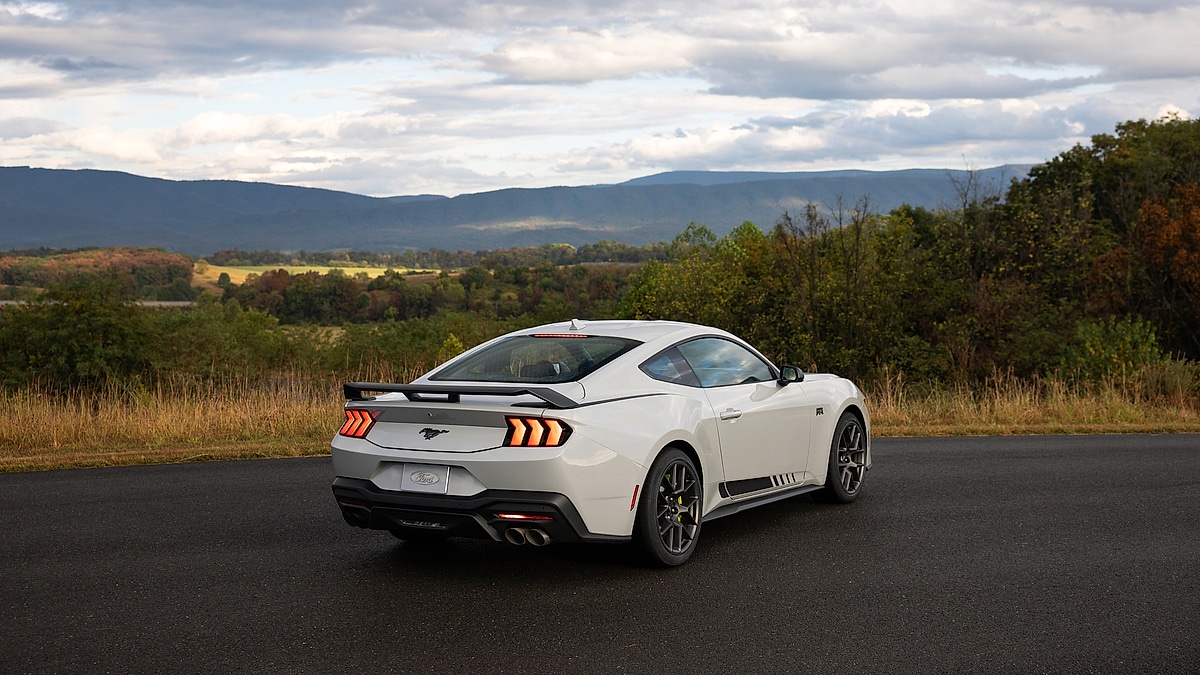
Another commenter boiled the whole business model down to “an overpriced body kit and a supercharger.” That may be too harsh for every tuner on the market, but it points to something real. OEM engineers have eaten a lot of the tuner world’s lunch. They have the calibration budgets, the proving grounds, the simulation tools, the supplier leverage, and, crucially, the mandate to make all the pieces work together.
The final irony is that Gittin was right about one thing, just not the thing he meant. This car was never really about the review. It was about the story RTR wanted to sell around the review. Community. attitude. signatures. drift pedigree. The long way home. But at this price, stories are not enough. A six-figure Mustang has to do the boring adult things, too. It has to put the power down. It has to stop. It has to survive its own bravado. When the headline says AI and the fine print says stock clutch, the smart buyer knows where to look.
Image Sources: Ford Media Center
About The Author
Noah Washington is an automotive journalist based in Atlanta, Georgia, covering sports cars, luxury vehicles, and performance culture. His reporting focuses on explaining the engineering, design philosophy, and real-world ownership experience behind modern vehicles.
Noah has been immersed in the automotive world since his early teens, attending industry events and following the enthusiast communities that shape how cars are built and driven today. His work blends industry insight with enthusiastic storytelling, helping readers understand not just what a car is, but why it matters.
Noah is also a member of the Southeast Automotive Media Association (SAMA), a professional organization for automotive journalists and industry media in the Southeast.
His coverage regularly explores sports cars, luxury vehicles, and performance-driven segments of the automotive industry, including the evolving culture surrounding Formula Drift and enthusiast builds.
Read more of Noah's work on his author profile page.
You can also follow Noah here:
Set Torque News as Preferred Source on Google
Follow us today...