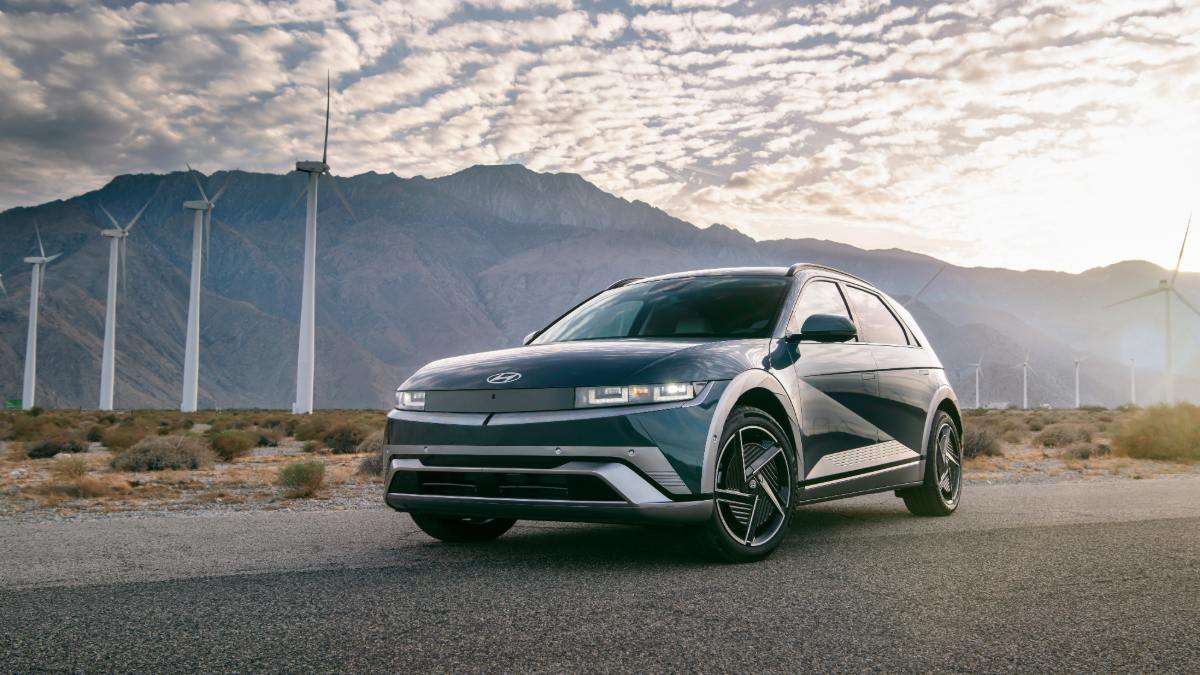

The electric vehicle landscape has been shaped significantly by promotional programs designed to ease the transition from gasoline to electric power.
Among the most impactful of these initiatives have been the free charging partnerships between automakers and charging networks, which have allowed early adopters to experience long-distance electric travel without the financial burden of charging costs.
As these programs reach their conclusion, experienced EV drivers are embarking on final journeys to maximize their remaining benefits while documenting the current state of America's charging infrastructure.
Susan Clizbe's "end of the free EA" road trip represents a milestone that thousands of Hyundai Ioniq owners will soon face as their complimentary Electrify America charging periods expire. Her journey through challenging terrain and sparse charging networks provides valuable insights into both the progress made in EV infrastructure development and the ongoing challenges that require careful planning and strategic thinking. Her experience navigating the notorious West Virginia charging desert offers a real-world perspective on the current limitations and capabilities of America's charging network.
“I’m off on my big “end of the free EA” road trip. I’m hoping this is the only one I’ll have to pay for, and I already knew that, coming through the West Virginia charging desert. I actually could have stopped at two travel plazas on the turnpike last night, but it was very late, and I had just enough to get to this Love’s in Kentucky. I should have stopped! (I pulled in here after two stern warnings from the car and 8 miles left on the GOM)
It’s another very nice Love’s dog run, lots of food choices right here, got high 230s on nice new ChargePoint equipment, and the layout and signage - especially the way the indicated handicapped and no icing or you’ll get towed - is excellent, except that it’s pull-in.”
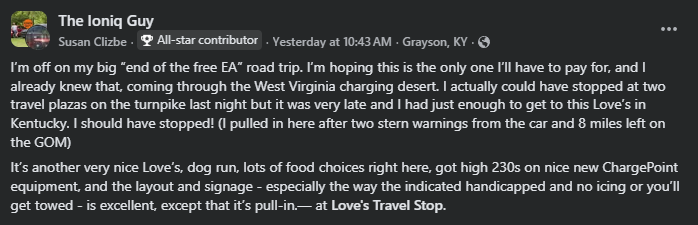
Clizbe's detailed account reveals the complex decision-making process that defines successful EV road trips. Her acknowledgment of passing available charging opportunities due to late-night travel demonstrates how factors beyond simple range calculations influence charging decisions.
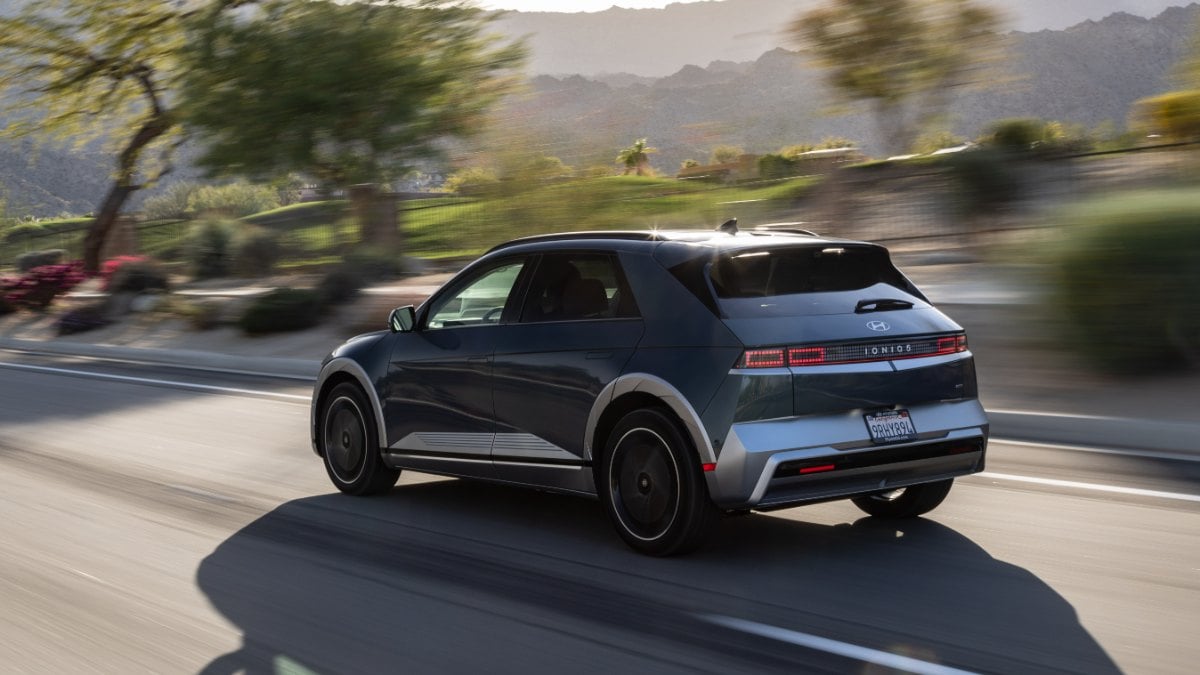
The dramatic arrival with only 8 miles remaining on the guess-o-meter illustrates the range anxiety that even experienced EV drivers face when pushing the limits of their vehicle's capabilities in areas with limited charging infrastructure.
The Economics of Free Charging Programs
The financial impact of promotional free charging programs becomes starkly apparent when examining the experiences of drivers who have maximized these benefits. Alan Peterson Sr.'s cross-country adventure demonstrates the extraordinary value proposition that these programs have provided to early electric vehicle adopters, fundamentally altering the economics of long-distance travel.
Advertising
Made my "last EA" run this summer: 6,940 miles. The drive from Tampa, FL to Sacramento, CA cost me $4.
Peterson's nearly 7,000-mile journey across the continental United States for just $4 in charging costs represents the kind of promotional value that has been instrumental in driving early EV adoption. This experience highlights the dramatic difference between promotional pricing and standard charging rates, providing a glimpse into how operating costs will change as these programs conclude. The willingness to undertake such an extensive journey specifically to maximize free charging benefits demonstrates the significant financial value these programs have provided.
The context provided about the Ioniq 6 ownership benefits helps explain how manufacturers have structured these programs to support early adoption and build customer loyalty during the critical initial ownership period.
My Ioniq 6 includes two years of free charging at Electrify America.
This two-year promotional period represents a substantial financial incentive that has helped offset the higher purchase prices of electric vehicles while allowing owners to experience the convenience and cost benefits of electric driving. As these programs expire, the true long-term operating costs of electric vehicles become more apparent, potentially influencing future purchasing decisions and charging behavior patterns.
Infrastructure Quality and Regional Variations
Clizbe's observations about charging location quality reveal the nuanced factors that influence the EV road trip experience beyond simple availability and pricing. Her detailed assessment of the Love's Travel Stop demonstrates how experienced EV drivers evaluate charging locations based on multiple criteria that affect overall travel comfort and convenience.
Free Charging Program Transitions
- Programs like Hyundai's two-year Electrify America partnership have provided thousands of dollars in value to early adopters.
- Free charging has been crucial in overcoming initial hesitation about EV ownership by demonstrating cost benefits during early ownership.
- The conclusion of these programs represents natural evolution toward sustainable long-term pricing models.
- Post-promotional charging costs will significantly impact operating expense calculations for potential EV buyers.
The mention of amenities like dog runs and food options, combined with technical details about charging speeds and equipment quality, shows how charging stops have evolved from simple refueling points to comprehensive travel centers designed to accommodate the longer dwell times required for EV charging. Her appreciation for clear signage about handicapped accessibility and anti-icing policies reflects the operational challenges that charging networks face in maintaining reliable service across diverse weather conditions and user needs.
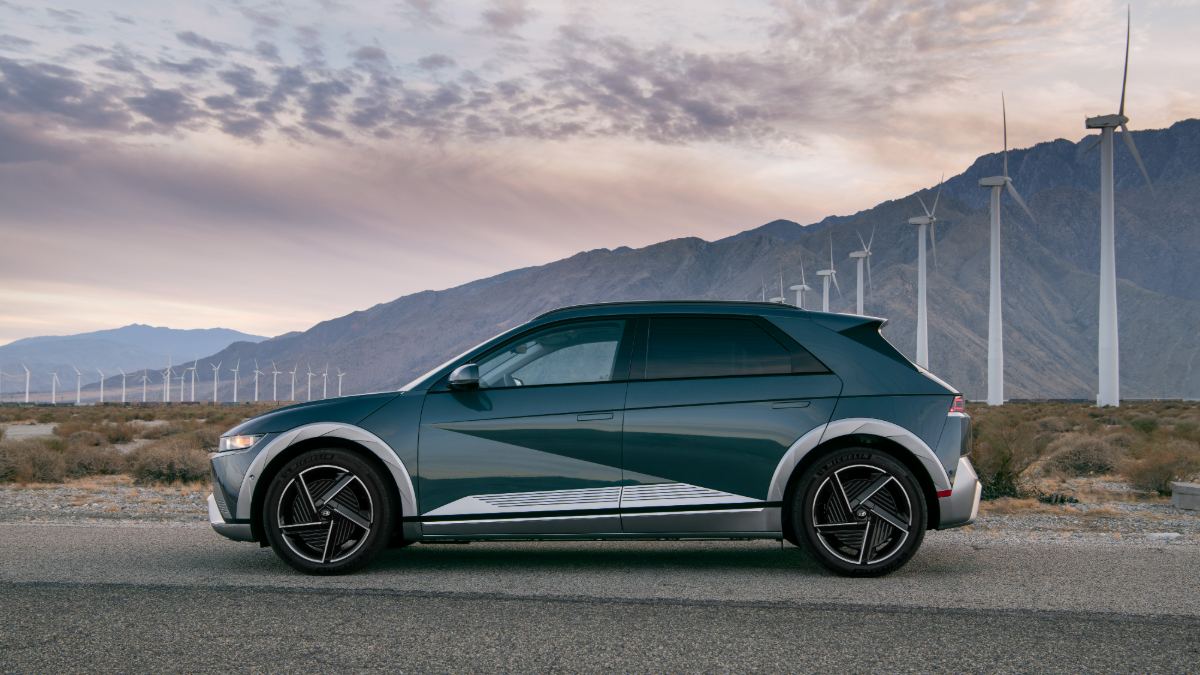
However, her criticism of the pull-in charging configuration highlights ongoing design challenges in charging infrastructure. Pull-in charging layouts can create difficulties for vehicles with trailers or those requiring specific positioning for optimal cable reach, demonstrating how infrastructure design details significantly impact user experience.
EV Road Trip Infrastructure Realities
- Areas like West Virginia continue to present significant challenges for EV travel, requiring careful route planning and conservative range estimates.
- Facilities vary dramatically in amenities, equipment reliability, and layout design, affecting overall travel experience beyond simple charging capability.
- Even experienced drivers face anxiety when pushing range limits, particularly in areas with sparse charging infrastructure.
- Charging speeds and reliability can vary significantly between locations and equipment types, requiring flexibility in travel planning.
The West Virginia Challenge
The reference to West Virginia as a "charging desert" highlights ongoing regional disparities in EV infrastructure development that continue to affect travel planning and route selection. Russ Richardson's response provides a local perspective on infrastructure improvements that may not be reflected in major charging network maps or planning applications.
WV doesn't have EA, but if you use PlugShare, you'll see that we actually have quite a few new chargers and will have no trouble getting around!!
Richardson's comment illustrates the importance of comprehensive charging network databases like PlugShare in revealing charging options beyond the major networks that receive most attention in EV discussions. His optimistic assessment of West Virginia's charging situation suggests that infrastructure development may be progressing more rapidly than commonly perceived, though the gap between major network coverage and local charging options remains significant for long-distance travelers.
This disconnect between perception and reality in charging infrastructure highlights the challenges facing EV adoption in regions that lack comprehensive coverage from major charging networks. While local and regional charging options may be adequate for residents and short-distance travel, long-distance travelers often rely on major networks for trip planning and payment convenience.
The evolution of charging infrastructure continues to accelerate, with new installations and network expansions occurring regularly across previously underserved regions. However, the transition from sparse coverage to comprehensive networks remains uneven, creating ongoing challenges for EV road trip planning and execution.
Clizbe's experience represents a broader transition occurring across the EV community as early adoption incentives give way to market-based pricing and infrastructure development reaches a more mature phase. Her detailed documentation of charging experiences provides valuable insights for other EV drivers planning similar journeys and highlights both the progress made and challenges remaining in America's charging infrastructure development.
The conclusion of free charging programs marks a significant milestone in EV market evolution, shifting focus from adoption incentives to sustainable long-term business models. For drivers like Clizbe and Peterson, these final free charging adventures represent both the end of an era and a testament to how far electric vehicle technology and infrastructure have progressed since the early days of limited range and sparse charging options.
As the EV market continues to mature, the experiences and insights shared by early adopters will remain valuable for understanding both the capabilities and limitations of current technology and infrastructure. The detailed observations about charging quality, regional variations, and operational challenges provide important feedback for continued infrastructure development and improvement. The transition from promotional to standard pricing will likely influence charging behavior and travel patterns, potentially driving demand for more competitive pricing and improved service quality across charging networks. For the broader automotive industry, these experiences demonstrate both the success of early adoption incentive programs and the ongoing need for continued infrastructure investment and improvement to support mainstream EV adoption.
The legacy of programs like Hyundai's partnership with Electrify America extends beyond simple cost savings to include the development of experienced EV drivers who serve as technology ambassadors and knowledge sources for future adopters. Their willingness to share detailed experiences and insights helps build the community expertise necessary for successful EV adoption and optimal utilization of available infrastructure. As charging networks continue to expand and pricing models evolve, the experiences documented by drivers like Clizbe will provide valuable guidance for both infrastructure developers and future EV owners navigating the transition to electric mobility.
Have you taken advantage of free charging programs for long-distance EV travel? How do you think the end of these promotional programs will affect EV adoption rates, and what strategies have you developed for managing range anxiety in areas with limited charging infrastructure? Share your EV road trip experiences and charging network observations in the comments below.
Image Sources: Hyundai Media Center
Noah Washington is an automotive journalist based in Atlanta, Georgia. He enjoys covering the latest news in the automotive industry and conducting reviews on the latest cars. He has been in the automotive industry since 15 years old and has been featured in prominent automotive news sites. You can reach him on X and LinkedIn for tips and to follow his automotive coverage.
Set Torque News as Preferred Source on Google
Follow us today...