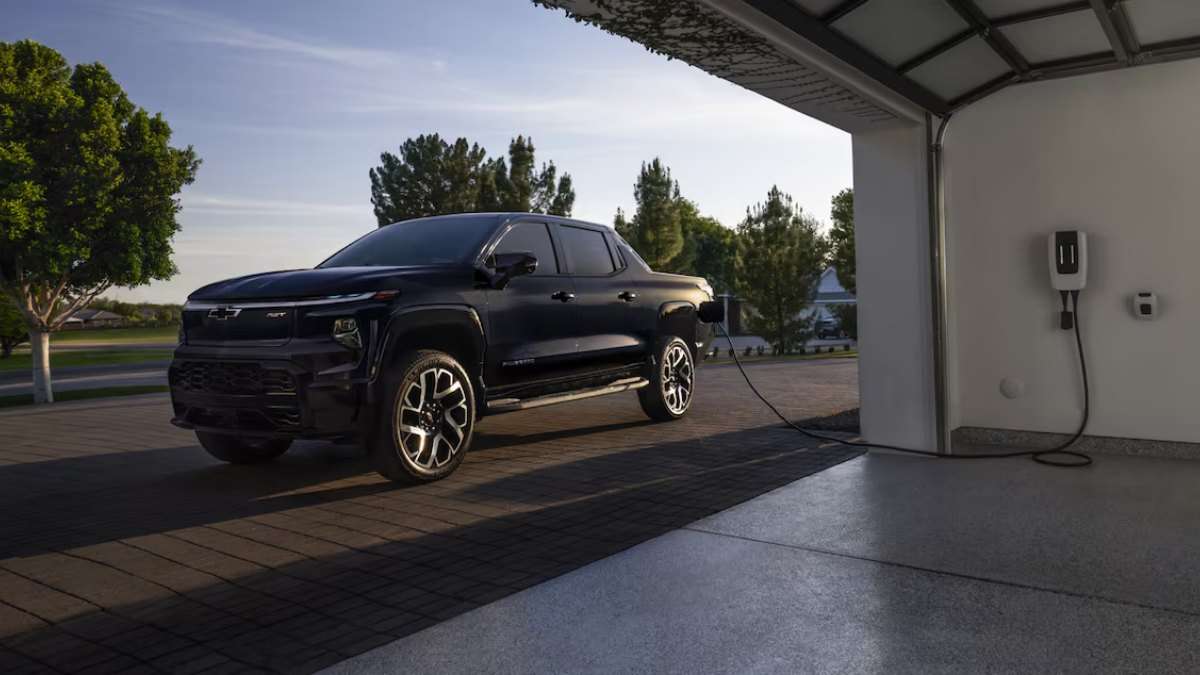

The electric vehicle charging landscape has reached a tipping point where the infrastructure that enabled early adoption is being overwhelmed by the capabilities of newer vehicles. Tesla's Supercharger network built its reputation on consistent performance and seamless integration, but that success was achieved with vehicles designed around the charging limitations of the early 2010s. Today's electric trucks arrive with battery packs three times larger and charging systems capable of power levels that didn't exist when Tesla established its charging curves. The result is a growing performance gap that reveals how quickly the electric vehicle market has outgrown its foundational infrastructure.
This technological evolution becomes starkly apparent when owners directly compare charging performance between different vehicles at the same station. Jatuporn Nutamarn discovered this reality during a cross-border trip with his Silverado EV 4WT, where his truck's charging capabilities exposed the limitations of both Tesla's network design and older vehicle architectures. His experience illustrates how the electric vehicle market is fragmenting into distinct performance tiers that require different infrastructure approaches:
"I would like to share my experience with our Silverado EV 4WT from a short trip last week, starting from Pemberton, BC, to Seattle, WA, and back. I started our trip with 60% and stopped at 37% to try their new 400kw On the Run Hyper charger at King George Blvd for the first time! The station is free for a limited time and really quiet, the best place for topping up more juice before entering the States, which is quite a lot more expensive. Very impressive with the station and my truck! It was charged so fast, starting at 373 kW peak and dropping down to 124 kW when it reached 80% adding 94.441 kWh (43%) in 26:24 minutes! It's 3 times faster than my MYLR, which got the same SOC but 3 times smaller battery packs. Tesla's charging curve is not that great. We came back home with 47% and didn't pay anything for charging during our trip, we can't be happier! Our hotel and B&B have free chargers, but got new experiences from Tesla destination that sent power only 2-3 kw instead of 10 kw or more, but there are 2 more ChargePoint beside that provided full 6 kw even Tesla owners plugged their car here! Even though this truck is not as smart as my Model Y, but this truck made me feel like it more and more. Standard adaptive cruise and lane assist worked great on the freeway, though. Can't wait for our next road trip!"
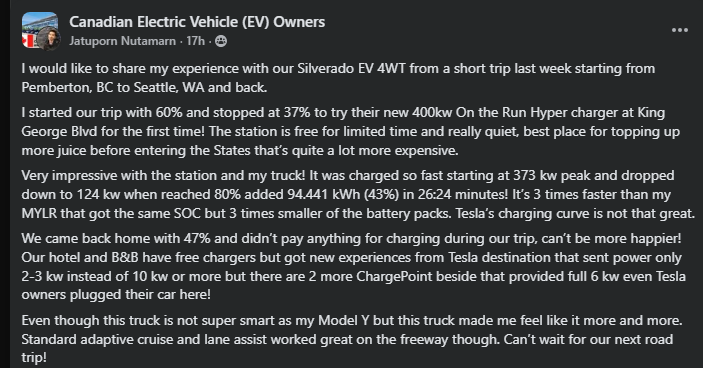
The 400kW On the Run Hyper charger that Nutamarn tested represents the next generation of charging infrastructure designed specifically for high-capacity electric vehicles. His peak charging rate of 373kW demonstrates power delivery levels that transform electric truck viability from theoretical to practical. The ability to add nearly 95kWh in just over 26 minutes approaches the refueling speed of diesel trucks, eliminating the time penalty that has prevented electric vehicles from competing in commercial applications. This performance level shows how Silverado EV owners report superior charging experiences compared to Tesla vehicles when matched with appropriate infrastructure.
Direct comparisons between the Silverado EV and Tesla Model Y charging performance reveal the fundamental shift occurring in the electric vehicle market. The Silverado's ability to charge three times faster than the Model Y, despite having three times the battery capacity, exposes how Tesla's charging curves, optimized for infrastructure available during their development, now limit performance when newer, more capable charging stations become available. This technological progression creates situations where newer vehicles from traditional manufacturers can significantly outperform Tesla's designs, despite Tesla's reputation for charging innovation.
How Electric Truck Owners Benefit From Charging Infrastructure
- Electric truck owners benefit significantly from next-generation charging infrastructure that can deliver power levels matching their vehicles' capabilities, while older charging networks may not fully utilize newer vehicles' charging potential, creating performance gaps between different charging locations.
- Charging infrastructure designed for specific vehicle types may not perform optimally with other vehicles, requiring owners to identify networks and stations that work best with their particular vehicle's charging characteristics and connector requirements through trial and error.
- Long-distance electric vehicle travel requires strategic planning around charging network availability, pricing, and performance characteristics, creating more complex route planning than traditional vehicle travel but potentially offering cost advantages through free charging opportunities and strategic timing.
- Electric vehicle owners increasingly expect seamless charging experiences similar to Tesla's integrated approach, with automatic authentication, billing, and charging initiation rather than manual app-based processes for each charging session across multiple incompatible networks.
The cost advantage that Nutamarn achieved, completing his entire cross-border trip without paying for charging, demonstrates how strategic use of free charging networks can dramatically reduce electric vehicle operating costs.
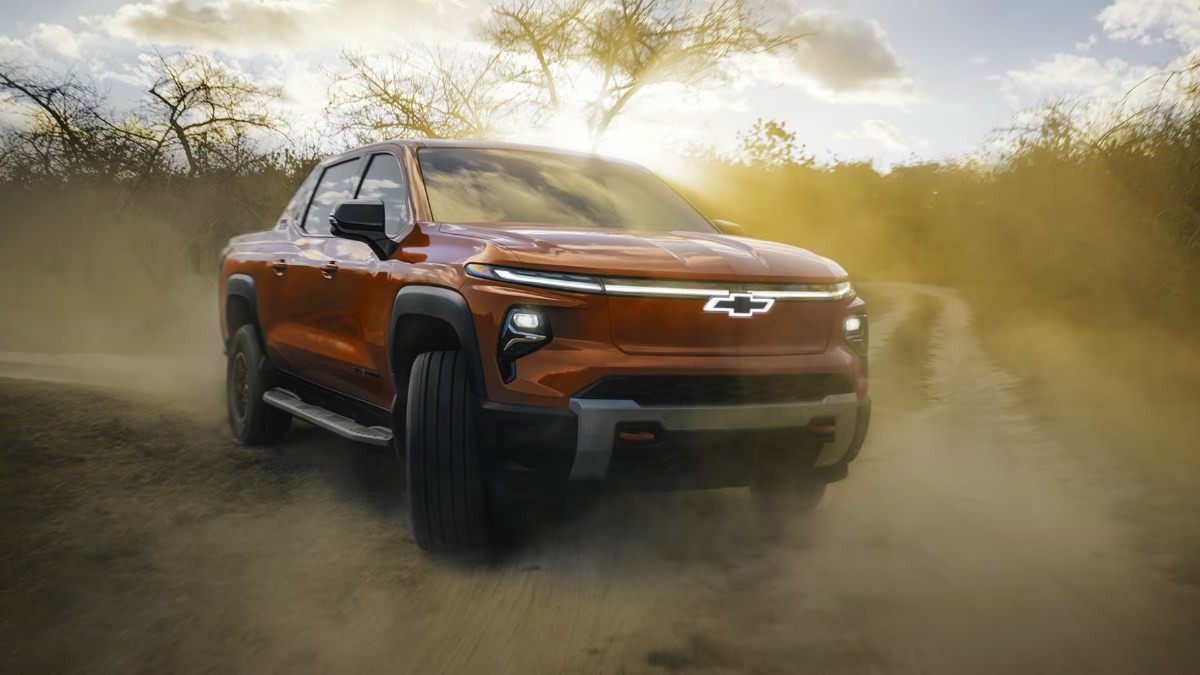
The significant price difference between U.S. and Canadian charging rates creates economic incentives for strategic charging behavior that doesn't exist with traditional fuel pricing. These cost disparities have become significant enough that cross-border EV travel requires strategic charging planning to minimize expenses and maximize range.
Destination charging disappointments reveal how charging infrastructure designed for specific vehicle types may not work optimally with others. Tesla destination chargers delivering only 2-3kW instead of the expected 10kW or more illustrate the compatibility challenges that arise when different vehicle architectures encounter proprietary charging systems. The discovery that ChargePoint stations provided full 6kW power even for Tesla owners suggests that some charging networks prioritize cross-platform compatibility over proprietary optimization, creating better experiences for mixed-fleet scenarios.
The Authentication and Payment Challenge
Infrastructure variability creates complexity that goes beyond simple performance differences. Questions about Tesla Supercharger versions highlight how charging performance depends not just on vehicle capability but also on the specific generation and configuration of charging equipment. The suggestion that certain charging experiences might result from using older V2 stations rather than newer V3 or V4 equipment reflects how infrastructure age affects performance in ways that aren't immediately obvious to users. This variability creates inconsistent experiences that complicate trip planning and force owners to research infrastructure specifications rather than simply relying on network branding.
Charging network authentication processes represent one of the most significant barriers to widespread electric vehicle adoption beyond Tesla's ecosystem. The frustration with downloading apps, creating accounts, and managing multiple payment methods for different charging networks creates friction that traditional fuel stations never imposed on drivers. Comparisons to Tesla's "plug and go" experience demonstrate how seamless integration between vehicle and charging network creates superior user experiences that other networks struggle to match, making electric vehicle ownership more complex than necessary for non-Tesla owners.
The seamless experience that Tesla provides, where drivers simply grab the plug and the vehicle automatically handles authentication and billing, illustrates how integrated systems can eliminate the complexity that plagues multi-network charging. Even physical interface differences, such as the weight and difficulty of CCS plugs compared to Tesla's connector design, affect user experience in ways that accumulate to create significantly different ownership experiences between different electric vehicle ecosystems. These seemingly minor details influence purchase decisions and brand loyalty in ways that manufacturers are only beginning to understand.
Technical explanations about charging network partnerships and plug-and-charge capabilities provide important context about the evolving charging landscape. The observation that plug-and-charge technology is commonly used in Europe but lacks adoption in North America reveals how regulatory and market differences affect technology deployment. The slower adoption of plug-and-charge technology in North America creates the app-based authentication problems that frustrate users, reflecting broader challenges in North American EV charging infrastructure development compared to European standards.
Practical reminders about payment processing acknowledge that seamless experiences require initial configuration regardless of the network. The difference lies not in whether configuration is required, but in whether users configure once for a comprehensive network or repeatedly for multiple incompatible systems. This distinction becomes crucial as electric vehicle adoption accelerates and charging network fragmentation increases, forcing consumers to choose between convenience and vehicle selection.
The performance comparison between Nutamarn's Silverado EV and Tesla Model Y extends beyond charging to include vehicle intelligence and driver assistance features. The acknowledgment that the truck isn't "super smart" compared to the Model Y, while still providing satisfactory basic driver assistance features, suggests that Tesla maintains advantages in software sophistication even as other manufacturers close the gap in charging performance. The success of standard adaptive cruise and lane assist shows how essential safety and convenience technologies have become commoditized across the electric vehicle market.
Broader implications of charging experiences like Nutamarn's reveal how the electric vehicle market is fragmenting into different performance tiers and use cases that require different infrastructure approaches. The Silverado EV's ability to charge at 373kW peak power represents capabilities that most current electric vehicles cannot match, creating a new category of high-performance electric vehicles that can take advantage of next-generation charging infrastructure. This development aligns with industry trends showing how electric trucks are pushing charging technology forward with 400kW stations becoming the new standard for commercial and fleet applications.
For commercial and fleet applications, the charging speeds documented in experiences like Nutamarn's could make electric trucks viable for applications that previously required diesel vehicles due to refueling time constraints. The ability to add significant range in under 30 minutes approaches the operational flexibility that commercial users require, particularly when combined with the lower operating costs and reduced maintenance requirements of electric drivetrains. This capability transformation suggests that electric trucks may achieve commercial viability faster than passenger electric vehicles achieved consumer acceptance.
The charging network diversity that owners encounter, from 400kW hyperchargers to slow destination chargers, reflects the current state of charging infrastructure development where different networks serve different use cases with varying levels of performance and reliability. This diversity creates both opportunities and challenges for electric vehicle owners who must navigate multiple systems with different capabilities, pricing, and user interfaces. The situation forces owners to become infrastructure experts rather than simply vehicle operators, adding complexity that traditional vehicle ownership never required.
How Modern Electric Trucks Charge
- Modern electric trucks can achieve peak charging rates exceeding 370kW, enabling addition of nearly 95kWh in under 27 minutes and demonstrating charging speeds that approach traditional vehicle refueling convenience for appropriately equipped vehicles with matching infrastructure capabilities.
- Charging performance varies significantly between networks and station generations, with newer hyperchargers delivering substantially better performance than older infrastructure designed for earlier generation electric vehicles with lower charging capabilities and smaller battery packs.
- Multi-network charging requires managing multiple apps, accounts, and payment methods, creating user experience friction that integrated systems like Tesla's network avoid through seamless vehicle-to-charger communication and pre-configured billing relationships.
- Charging costs vary dramatically between regions and countries, with some areas offering free charging promotions while others charge premium rates, creating economic incentives for strategic charging behavior during long-distance travel that doesn't exist with traditional fuel pricing.
Technical performance achievements like maintaining highway speeds with adaptive cruise control and lane assistance while achieving efficient charging at multiple stops demonstrate how electric vehicles are reaching the maturity level necessary for mainstream adoption. The enthusiasm for future road trips that follows successful charging experiences suggests that the electric vehicle experience has crossed the threshold from experimental to practical for long-distance travel, at least for owners with access to appropriate charging infrastructure and the knowledge to use it effectively.
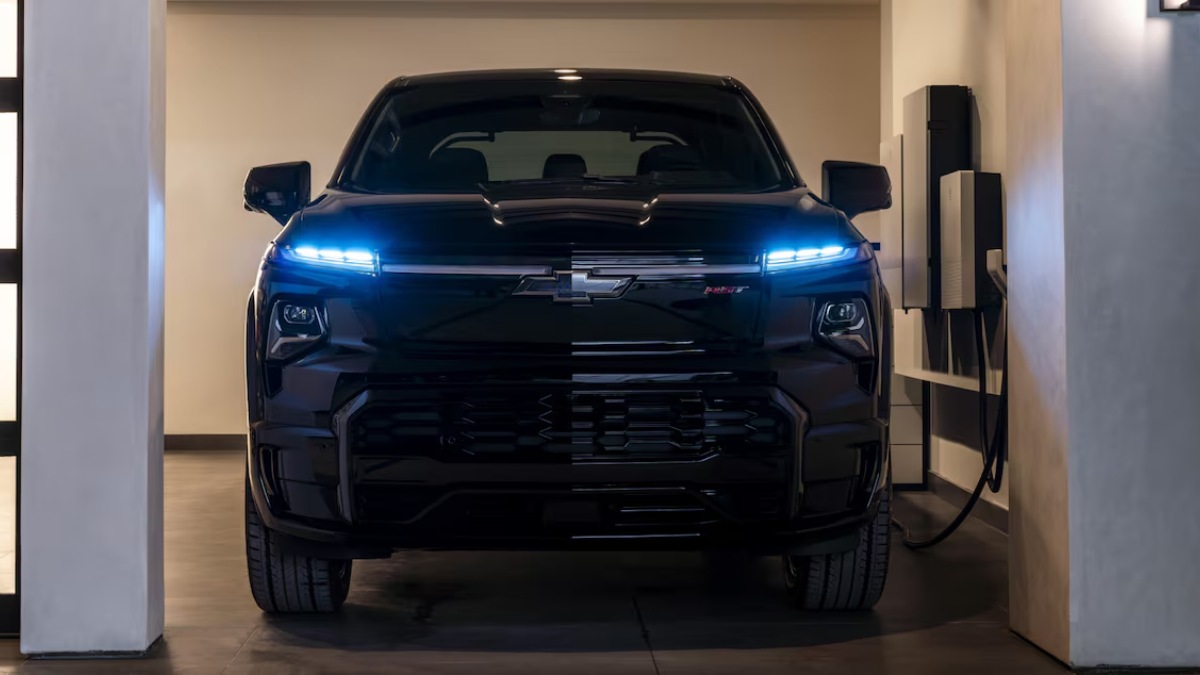
Cross-border charging experiences also highlight how electric vehicle travel requires different planning considerations than traditional vehicle travel. Significant cost differences between national charging networks, combined with the availability of free charging options, create incentives for strategic charging behavior that doesn't exist with traditional fuel stations. These economic factors are beginning to influence travel patterns and route planning in ways that could affect tourism and commerce in border regions as electric vehicle adoption accelerates and charging infrastructure continues to fragment along national and regional lines.
Have you experienced significant differences in charging performance between different networks when using the same electric vehicle? What strategies do you use to minimize charging costs and maximize convenience during long-distance electric vehicle travel?
Let us know in the comments.
Image Sources: Chevrolet Media Center
Noah Washington is an automotive journalist based in Atlanta, Georgia. He enjoys covering the latest news in the automotive industry and conducting reviews on the latest cars. He has been in the automotive industry since 15 years old and has been featured in prominent automotive news sites. You can reach him on X and LinkedIn for tips and to follow his automotive coverage.
Set Torque News as Preferred Source on Google
Follow us today...