
IIHS updated its moderate overlap front test in 2022 for a reason that sounds counterintuitive: after decades of improving front-seat safety, the back seat had become the more dangerous place to be in a frontal crash. Institute data showed that in newer vehicles, a belted rear-seat passenger was now 46% more likely to suffer a fatal injury than someone in the front. The test added a dummy representing a small woman or 12-year-old child in the second row behind the driver, and for the first time, automakers had to prove their rear restraint systems, not just their frames, could protect the people sitting in them.
In September 2025, IIHS released results for seven electric vehicles.
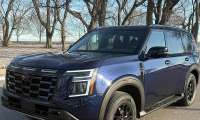
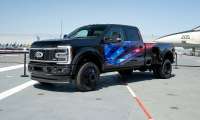
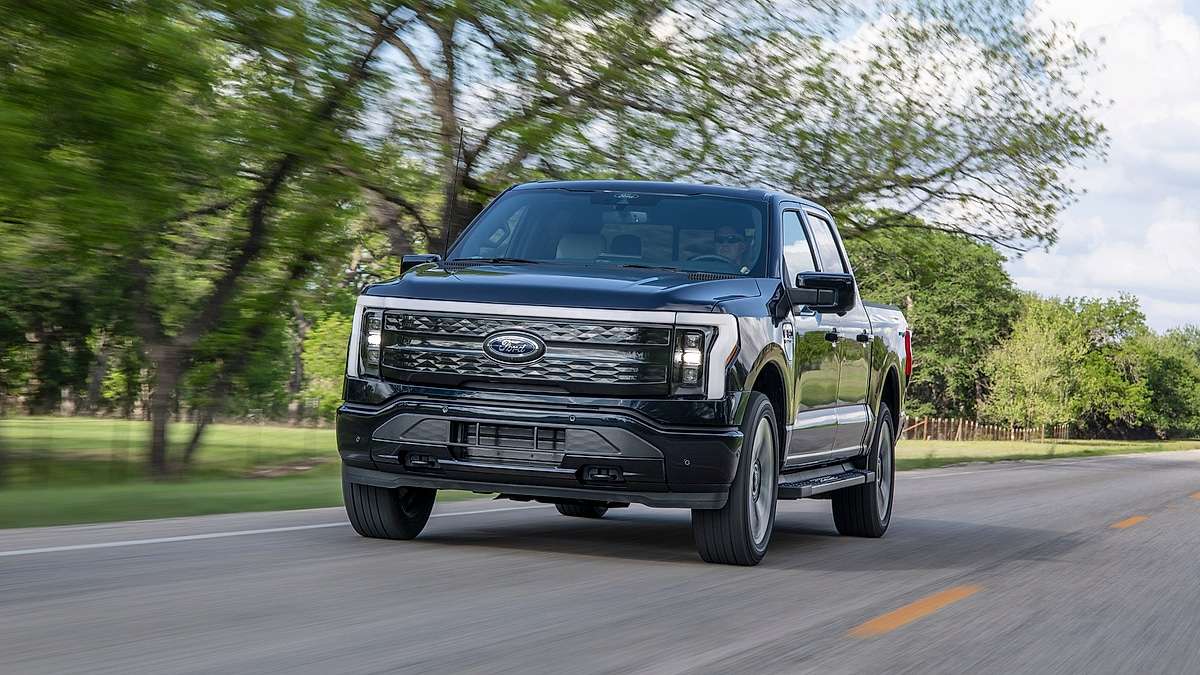
Four earned "Good": the BMW i4, Chevrolet Blazer EV, Tesla Cybertruck (build dates after April 2025), and Volkswagen ID.Buzz. The Tesla Model 3 earned "Acceptable" with elevated chest injury risk from belt forces. The Nissan Ariya earned "Marginal" with high chest injury risk. And the Ford F-150 Lightning earned "Poor", the only vehicle where the rear dummy showed high risk of chest, head, and neck injuries simultaneously, with the lap belt sliding from the pelvis onto the abdomen.

The Lightning's cab structure performed well. The frame held. The failure was in the restraint system, the geometry of the belts, the timing of the airbags, and the interaction between seat design and occupant size. This distinction matters because it changes what kind of problem this is and what kind of fix it requires.
What Torque News Checked
We read the full IIHS test documentation for all seven vehicles.
- We compared the Lightning's results to the gasoline F-150's updated moderate overlap score (the gas model earned "Acceptable" after late-2024 running changes).
- We reviewed NHTSA's test protocols to confirm what the federal 5-star rating does and does not measure for rear passengers.
A company spokesperson previously told CBS News,
"We are always working to continuously improve, and we consider IIHS and other third-party feedback in vehicle development."
This is not a recall and does not mean every Lightning is unsafe, but it does expose a specific rear-seat crash-test weakness.
Why Belt Geometry Failed While the Frame Succeeded
The Lightning is built on Ford's T3 platform, shared with the gasoline F-150. That platform was designed and engineered before the updated IIHS test existed. The rear-seat restraint geometry, belt anchor points, seat contour, and airbag deployment timing were optimized for the test that was in place when the engineering was finalized.
When IIHS added the rear dummy in 2022, it exposed a gap that exists across the industry: automakers had spent 30 years perfecting front-seat protection while rear-seat restraints remained largely unchanged. The Lightning didn't fail because Ford built a weak truck. It failed because the rear-seat restraint system was designed for an older, less demanding test, and the updated test revealed the mismatch.
This pattern isn't unique to Ford. Across 139 vehicles tested under the updated protocol, roughly 42% scored less than "Good." IIHS's own research found that SUVs and pickups account for the bulk of models that struggle with the updated test, precisely the vehicle types marketed as family haulers.
What 'Poor' Actually Means for a Real Occupant
The IIHS rating is based on dummy injury metrics: chest compression, head acceleration, neck forces, and belt position. A "Poor" rating indicates that in a 40 mph moderate overlap frontal crash, simulating a head-on collision with a vehicle of equal size, the rear occupant faces an elevated risk of specific injuries.
In the Lightning's case, the specific failures were:
- Chest: High injury risk from chest compression and belt forces
- Head/Neck: Moderate-to-high risk from head trajectory and neck loading
- Abdomen: The lap belt migrated from the pelvis (where bones can withstand force) to the abdomen (where soft tissue and organs cannot). This condition, known in trauma medicine as "submarining," is associated with internal organ injuries that may not be immediately visible after a crash.
IIHS test data shows the Lightning's lap belt migrated from the pelvis to the abdomen during the moderate overlap test, the exact failure mode that makes booster seats and child restraints dangerous when belt geometry doesn't match occupant size. IIHS noted that the dummy showed high risk of chest, head, and neck injuries simultaneously, with the lap belt "moving to the abdomen" in a condition trauma medicine calls "submarining." The abdomen is soft tissue and organs with no structural anchor. When a lap belt rides up, the force that should be distributed across the pelvic girdle instead concentrates on internal organs.
The NHTSA Context Every Buyer Should Understand
The F-150 Lightning carries a 5-star overall NHTSA rating. That rating is accurate for what it measures: frontal crash protection for front-seat occupants, side-impact protection, and rollover resistance. It does not measure rear passenger injury risk in frontal crashes. NHTSA's frontal test uses a full-width rigid barrier with male dummies in the front seats only. The rating offers no information about whether a child in a booster seat behind the driver would be safe in a head-on collision.
This isn't a flaw in NHTSA's testing; it's a limitation buyers should understand. IIHS and NHTSA measure different things. A vehicle can excel at one and struggle at the other. The 5-star sticker on the window tells you nothing about rear passenger frontal crash safety.
What Current Owners and Prospective Buyers Should Know
For current Lightning owners: IIHS continues to recommend that children under 13 ride in the back seat, as frontal airbags present unique risks to younger children. The rear seat remains safer than the front for that age group, regardless of moderate overlap test performance. If you regularly transport booster-seat-aged children (typically 8-12 years old), consider having a certified child passenger safety technician evaluate your specific car seat or booster fit in the Lightning's rear seat. Belt geometry varies by seating position, and the technician can assess whether your restraint system positions the lap belt correctly.
For prospective buyers: Ford has a documented pattern of addressing IIHS findings through running production changes. The gasoline F-150 earned "Acceptable" in the updated moderate overlap test after late-2024 production changes. Ford has not announced specific timing for similar changes to the Lightning, but the precedent suggests the company is aware of the issue and has engineering resources allocated. If rear-seat passenger safety is a primary purchase consideration and your timeline is flexible, monitoring for a running change announcement before purchase may be prudent.
The Broader Pattern
Seven EVs were tested. Zero qualified for Top Safety Pick or Top Safety Pick+. Five of seven had headlight ratings of "Acceptable" or worse. The BMW i4 and Tesla Cybertruck got "Poor" for headlight glare. The Chevy Blazer EV earned "Acceptable" in small overlap but not "Good."
The story isn't that the Lightning is uniquely unsafe. The story is that the EV category, as a whole, is still catching up to IIHS's updated safety expectations, particularly for rear passengers, particularly in trucks and SUVs marketed to families. The Lightning's "Poor" rating is the most severe data point in a broader pattern of rear-seat protection lagging behind front-seat engineering across the industry.
What to Watch For
Ford's response timeline will be telling. Ford has addressed some IIHS findings through running changes before. Buyers and owners should monitor:
- Ford's technical service bulletins for restraint system updates
- IIHS retest results if Ford requests them after running changes
- Build date information for any 2026 model year changes
The "Poor" rating is not a recall. It does not indicate a defect. It indicates that the rear-seat restraint system, as designed and tested, does not meet IIHS's criteria for optimal rear passenger protection in a specific crash scenario. For families evaluating a $62,000+ electric pickup, that distinction matters less than the practical question: Is the back seat as safe as the front? On this specific test, for this specific vehicle, the answer is no.
According to IIHS, the 2025 Ford F-150 Lightning earned a Poor rating in the updated moderate overlap front test, even though its structure and safety cage were rated Good. The weak point was rear-passenger protection: IIHS recorded Poor ratings for rear passenger chest injury measures and rear passenger restraints/dummy kinematics.
Do you own an F-150 Lightning or regularly carry kids in the back seat? Tell us whether this IIHS result changes how you feel about the truck in the comments below
About The Author
Noah Washington is an automotive journalist based in Atlanta, Georgia, covering sports cars, luxury vehicles, and performance culture. His reporting focuses on explaining the engineering, design philosophy, and real-world ownership experience behind modern vehicles.
Noah has been immersed in the automotive world since his early teens, attending industry events and following the enthusiast communities that shape how cars are built and driven today. His work blends industry insight with enthusiastic storytelling, helping readers understand not just what a car is, but why it matters.
Noah is also a member of the Southeast Automotive Media Association (SAMA), a professional organization for automotive journalists and industry media in the Southeast.
His coverage regularly explores sports cars, luxury vehicles, and performance-driven segments of the automotive industry, including the evolving culture surrounding Formula Drift and enthusiast builds.
Read more of Noah's work on his author profile page.
You can also follow Noah here:
Set Torque News as Preferred Source on Google
Follow us today...