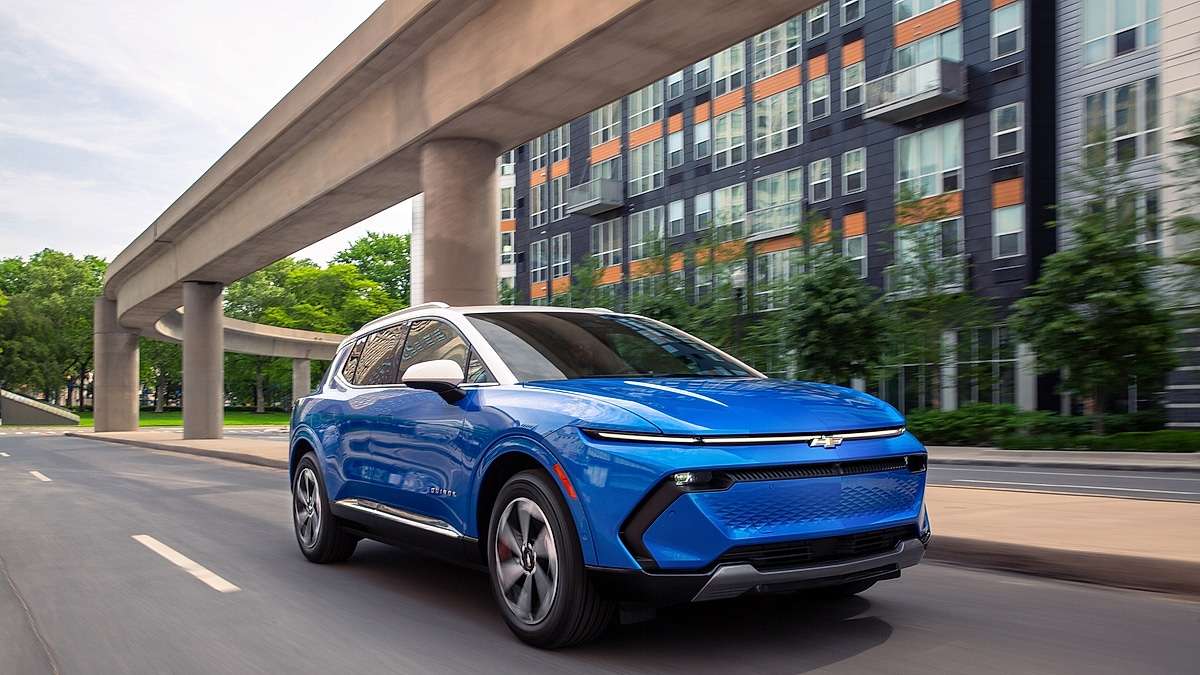

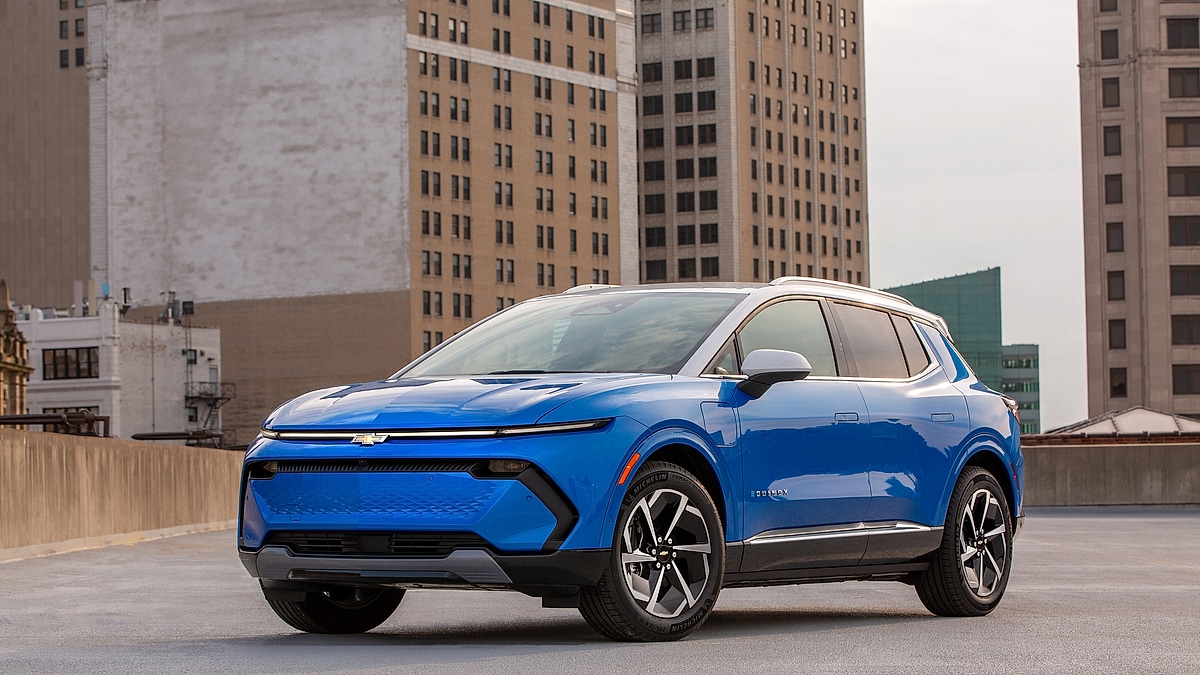
After nearly a year and roughly 15,000 miles behind the wheel of a 2025 Chevrolet Equinox EV RS AWD, one owner says the crossover's range estimates are not just accurate, they are predictable to within a handful of miles, provided you know where to look. The secret, he insists, is not in the large dashboard display or the navigation app's optimistic projections, but in a single efficiency figure that most drivers scroll past without a second thought.
Jason Dowdle, an active member of the Facebook Chevy Equinox EV Group, has spent the better part of a year compiling real-world data on his all-electric compact SUV. His verdict after 15,000 miles is straightforward: the Equinox EV delivers exactly what it promises, as long as you understand the relationship between your driving behavior and the car's energy consumption. That relationship, he argues, is summarized in one place, the current trip efficiency readout found under Vehicle Status > Energy Info > Energy Efficiency.
The EPA rates the Equinox EV RS AWD at 3.5 miles per kilowatt-hour, and Dowdle found that when his current trip efficiency matches that figure, the estimated range is effectively dead-on. During a 200-mile trip where his real-time efficiency held steady at the rated 3.5 mi/kWh, the actual range matched the estimate within five miles, a margin of error small enough to eliminate any meaningful range anxiety. The number is not a gimmick; it is a live translation of how hard the vehicle is working versus how far it still has to go.
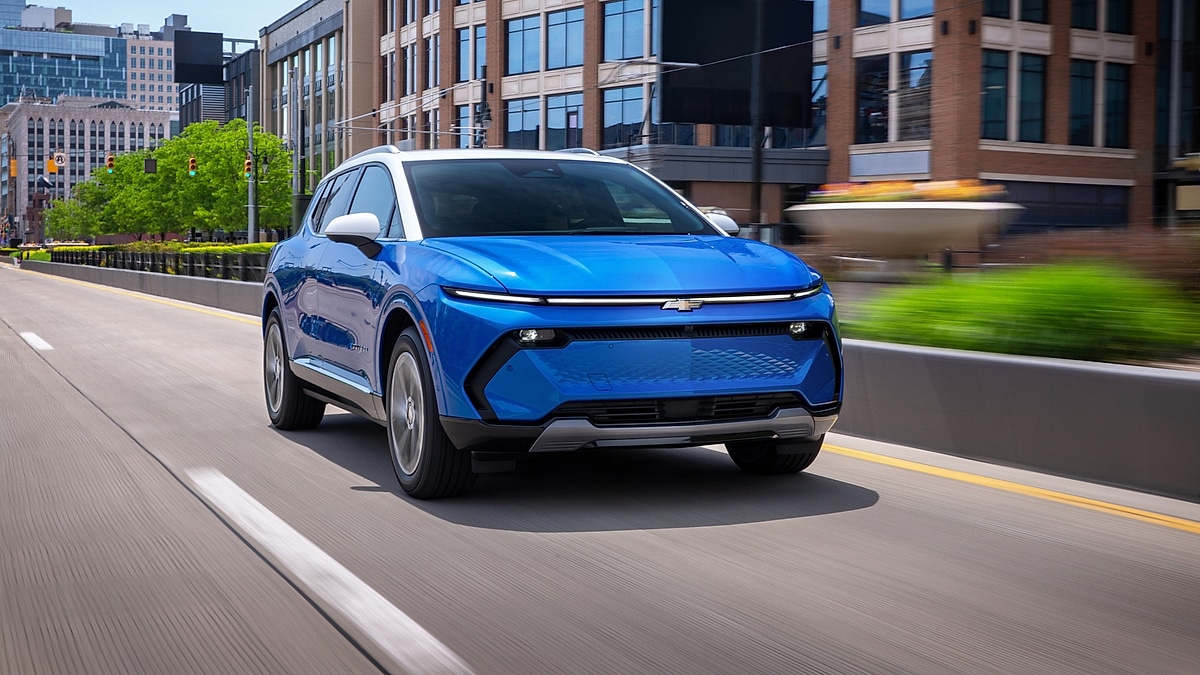
Where the story gets more nuanced is in how driving conditions pull that efficiency number up or down. On interstate runs at 70 to 75 mph with the air conditioning blasting in summer heat, Dowdle observed efficiency drop to approximately 3.2 mi/kWh, which translated to actual range roughly 10 percent below the initial estimate. Flip the scenario to country roads blended with suburban and in-town driving, and the number climbed as high as 4.0 to 4.2 mi/kWh, pushing real-world range about 10 percent above what the dashboard had predicted. The vehicle was not guessing wrong; it was calculating based on a snapshot of conditions that changed as the route did.
Dowdle's highway strategy adds another layer of practical insight. He uses adaptive cruise control set to his target speed plus two mph, then tucks in behind semi-trucks to benefit from reduced aerodynamic drag while maintaining a steady, efficient velocity. The technique is subtle, no aggressive drafting, just a disciplined use of the cruise system to let the truck punch a hole in the air ahead. Fellow owner Vince Adelman, whose 2026 Equinox EV is his second Chevrolet EV after putting more than 100,000 miles on a 2017 Bolt, echoed the mindset with a lighter-touch tactic. On 55-mph routes, Adelman said, feathering the accelerator extends mileage significantly, adding that it is "kinda fun to watch the little needle and try to keep it in the green rather than the orange."
Of course, not every condition cooperates. Winter remains the most stubborn variable for EV range, and Dowdle's data-rich optimism sits alongside colder realities shared by other owners. In a separate discussion, one owner reported getting as little as 102 miles of range in subzero temperatures after three months of winter driving, underscoring how dramatically extreme cold can compress usable distance. Group member Matt Harwood offered a similarly sobering data point: at 32°F, with heated seats on low, eco heating engaged, the fan at speed 2, cabin temperature set to 68°F, and cruise locked at 60 mph, his RS AWD could manage a maximum of 167 miles on a full charge.
Against a suggested range of 306 miles, that is a 45 percent reduction. Harwood went further, calling out GM directly for what he described as a lack of answers for owners facing such steep seasonal losses. The frustration is understandable, and another driver discovered that multiplying mi/kWh by battery percentage delivered surprisingly accurate cold-weather range estimates, suggesting that even in freezing temperatures, the efficiency readout remains the most honest metric available.
Context from the broader Equinox EV community reinforces the pattern. One owner managed to hit 4.1 miles per kWh during a 2,200-mile road trip by drafting semis and riding 20-mph tailwinds, stretching a single charge well beyond its EPA rating through deliberate, efficiency-first driving. Meanwhile, the 2026 Equinox EV RS earned praise for its real-world range holding up across mixed highway and city driving during a seven-day test, suggesting that the platform's efficiency potential is not limited to hypermilers. Dowdle himself maintains a simple charging routine: he never worries about range in normal driving and simply plugs in whenever the estimate drops below 75 miles. For perspective, his wife's 2023 Bolt EUV has averaged a lifetime efficiency of 4.0 mi/kWh over its own 15,000-mile tenure, proving that the habit of watching the number works across Chevrolet's electric lineup.
The bottom line is that range anxiety in the Equinox EV is less about the car and more about the driver paying attention to the right data point. If you are running with a lead foot, high speeds, the AC pounding, and regenerative braking disabled, the estimate will miss, but that is not the vehicle's fault. Watch the current trip efficiency, understand what moves it, and the range becomes as predictable as the fuel gauge in a gasoline car. In an EV market still crowded with inflated promises and confusing metrics, that is a genuinely useful discovery.
Image Sources: Chevrolet Media Center
About The Author
Noah Washington is an automotive journalist based in Atlanta, Georgia, covering sports cars, luxury vehicles, and performance culture. His reporting focuses on explaining the engineering, design philosophy, and real-world ownership experience behind modern vehicles.
Noah has been immersed in the automotive world since his early teens, attending industry events and following the enthusiast communities that shape how cars are built and driven today. His work blends industry insight with enthusiastic storytelling, helping readers understand not just what a car is, but why it matters.
Noah is also a member of the Southeast Automotive Media Association (SAMA), a professional organization for automotive journalists and industry media in the Southeast.
His coverage regularly explores sports cars, luxury vehicles, and performance-driven segments of the automotive industry, including the evolving culture surrounding Formula Drift and enthusiast builds.
Read more of Noah's work on his author profile page.
You can also follow Noah here:
Set Torque News as Preferred Source on Google
Follow us today...