
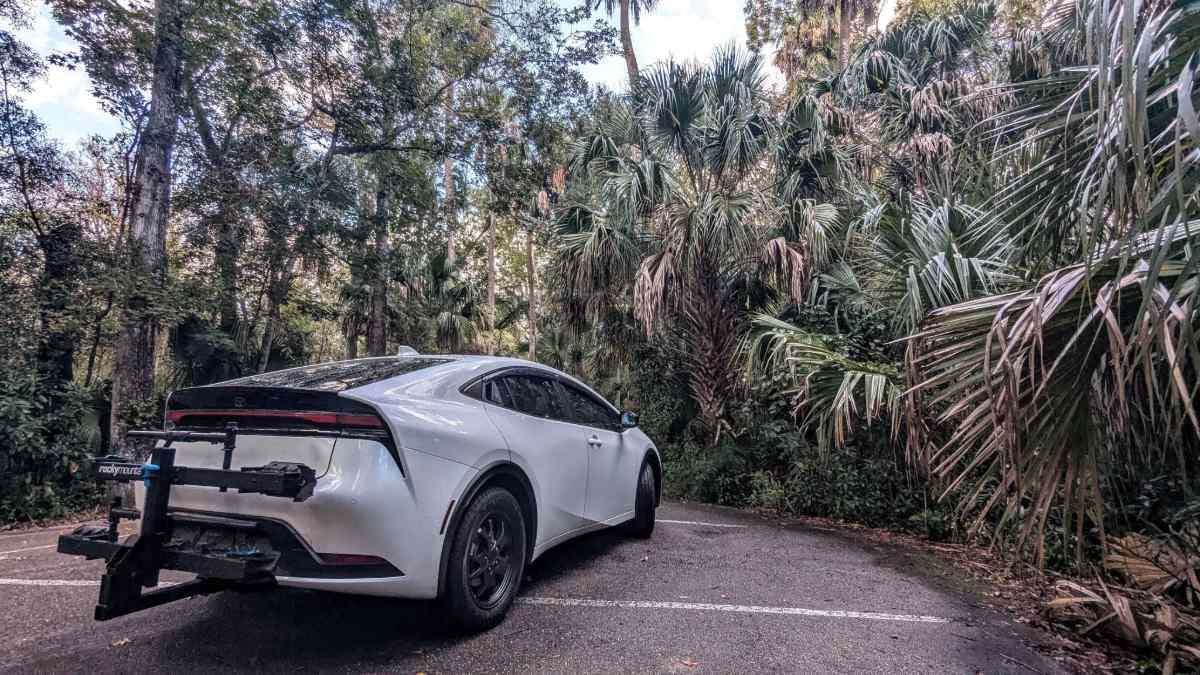

For much of its life, the Toyota Prius has been trapped under the weight of tired stereotypes. Sensible. Efficient. Predictable. If history shows us anything, it is that assumptions in the automotive world rarely survive contact with reality. The fifth-generation Prius is beginning to reveal a far broader range of talents than its reputation suggests, and nowhere is this more evident than in the online owner communities where experimentation thrives. The story of one such owner, Brandon Marlow, reads as follows:
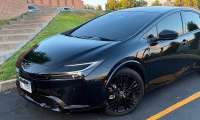
“Purchased this 2023 Toyota Prius about a month ago. Purchased the hitch and Prius off-road lift with HD springs the same day. Put Firestone Destination LE3 in 215/60R17 on the OEM wheels, which originally had the stock size tires on them.
MPG per the dash has increased slightly, which seems counterintuitive, going with the minimally larger diameter, but I'll take it. Mostly around town and just over 50mpg average.
I wanted to do 215/65r17 in an AT, but held off since I wasn't sure if it would ding the mpg a bunch or mess with the hybrid system, or have enough room. But there appears to be plenty of room to put them in there for those thinking about it. Had I not had a headache of an experience with the local Discount Tire with these, I would've asked to swap up.
The lift is nice, not having to worry about parking stops and curbs. I haven't had a car as a primary vehicle in over a decade, but I like it.”
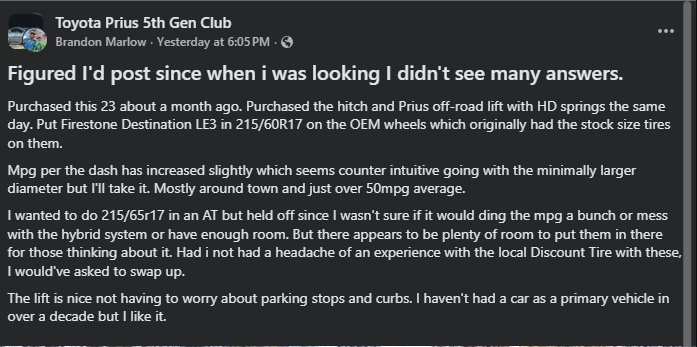
What makes Marlow’s report stand out is its contradiction of long-held assumptions about hybrid efficiency. Larger tires usually mean more rotational mass and more rolling resistance. A lift increases frontal area and changes airflow. Yet his experience shows the Prius hybrid system working with remarkable composure, delivering just over 50 miles per gallon despite the changes. Here is a modern example. A lightly modified Prius behaves not like a fragile lab instrument but as a resilient and flexible platform.
Toyota Prius: Tire & Wheel Size Effects on Range
- Larger wheels and wider tires increase rolling resistance, which makes the Prius’ hybrid system work harder and reduces overall fuel efficiency.
- Smaller-diameter wheels with lower-resistance tires generally improve range because they require less energy to keep moving.
- Heavier wheel assemblies add rotational mass, which especially impacts efficiency during start-stop city driving.
- Low-rolling-resistance tires help maximize electric-assist efficiency, but often trade away a bit of cornering performance.
As with any good enthusiast story, curiosity followed quickly. One commenter, Mat RU, asked about the hitch and rack setup. Marlow responded that he chose a Torklift 2-inch hitch and a RockyMounts Monorail rack. Source: Facebook comments by Mat RU and Brandon Marlow. It is a configuration chosen for capability rather than appearance. The hitch allows for real-world gear hauling, and the rack is built for frequent use. For someone who spent the last decade driving trucks, these additions transform the Prius into a practical tool rather than a compromise.
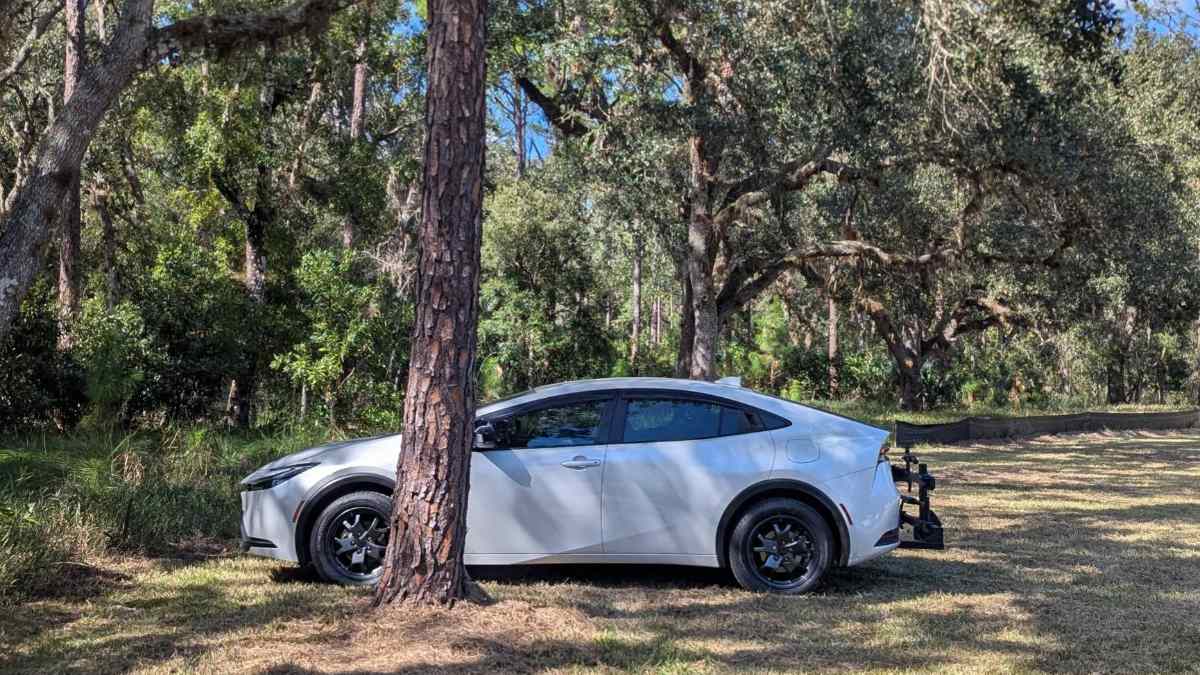
The discussion turned technical when Gary Van Meter weighed in on the tire choice, noting that the 215 section width is wider while the overall height remains similar. He wondered how the car would handle at higher speeds. Source: Facebook comment by Gary Van Meter. This is exactly the type of balanced curiosity that reveals the quiet sophistication of hybrid owners. Marlow replied that South Florida roads do not offer much in the way of curves, though he plans to autocross the car and even take it along the Tail of the Dragon. Source: Facebook reply by Brandon Marlow. His willingness to explore its limits speaks to the confidence inspired by the modifications.
The lift itself is perhaps the most unexpected transformation. A Prius sitting higher on heavy-duty springs is free of the usual worries that plague low-slung commuter cars. Parking blocks, steep driveways, and rough trailhead approaches lose their threat. For anyone accustomed to trucks or SUVs, this added clearance reduces day-to-day irritation and expands the range of places the car can go. When paired with modestly upsized tires, the result is a hybrid that feels prepared for more than pavement without sacrificing efficiency.
What emerges from Marlow’s experience is a Prius that is no longer defined solely by its fuel economy, yet manages to keep that defining strength intact. It remains a commuter capable of delivering exceptional mileage, but it also becomes a practical hauler with the hitch and rack. It gains the ability to explore light trails and campgrounds with the lift. It is even poised for recreational driving through locations as storied as the Tail of the Dragon. None of these traits is forced. The car seems to accept them naturally.
The larger truth is that the modern Prius is proving itself to be one of the most adaptable vehicles of its generation. It can perform the daily tasks expected of a hybrid, yet it accommodates the ambitions of owners who want a little more freedom and capability. Marlow’s build shows that choosing efficiency does not require giving up utility or enjoyment. In a market full of specialized machines, the fifth-generation Prius is quietly becoming a rare generalist. It is versatile, efficient, and willing to be shaped into something more, which may be the most compelling combination of strengths any modern car can offer.
Image Sources: Toyota Media Center
Noah Washington is an automotive journalist based in Atlanta, Georgia. He enjoys covering the latest news in the automotive industry and conducting reviews on the latest cars. He has been in the automotive industry since 15 years old and has been featured in prominent automotive news sites. You can reach him on X and LinkedIn for tips and to follow his automotive coverage.
Set Torque News as Preferred Source on Google
Follow us today...



Comments
Bigger tires mean that the…
Permalink
Bigger tires mean that the odometer is no longer in calibration and its reading higher values than actual speed. Hence the mpg readings are higher.
Around town he might report…
Permalink
In reply to Bigger tires mean that the… by John Smith (not verified)
Around town he might report 50mpg, but once he gets on a long road trip, he will notice his low fuel light coming on sooner than expected. The computer might get thrown off by the tire size, but the fuel tank sensor won't.
I have never understood why people take a car built to purpose and change them to undo all of the purpose.
It's like the guys who were putting tow hitches on their Corvette's. The car was designed to accelerate and handle, not tow. But yet here they are towing a trailer behind it like a truck.
I think you got that…
Permalink
In reply to Bigger tires mean that the… by John Smith (not verified)
I think you got that backwards. Vehicles with larger tires go FASTER than the odometer reading (and hence farther), because the odometer uses RPMs to calculate speed, and a larger diameter tire goes farther per rotation. I definitely see this in my truck and van - both of which have oversized wheels/tires.
You keep saying that…
Permalink
You keep saying that increased tire size increases rolling resistance. I don't think you understand rolling resistance.
I get over 50mpg with a…
Permalink
I get over 50mpg with a stock setup....2016
this is beyond comical…
Permalink
this is beyond comical.. what about the easy $2k it cost for the tractor tires/wheels . what ever miniscule fuel saving are instantly negated.. maybe in 50 years the cost will break even.
Author has been in the…
Permalink
Author has been in the industry since 15 years old, enjoys covering new technology and reviews, and has been featured on prominent news sites. Yet doesn't know the most basic side effect of the first modification most people do to their cars? Changing the tire size without reprogramming the computer (or recalibrating / re gearing the odometer/speedometer back in the day) makes the entire gauge cluster inaccurate. Anything distance based or calculated via tire rotations is now incorrectly reported and displayed. Odometer, trip, speedometer etc. Mpg is simply an internal computer calculation based on distance, which is now an incorrect number in the computer... None of the dash info is correct. Also, the article goes over rotational resistance numerous times but barely even mentions rotational mass? And only attributes that to wheel / rim weight? According to the article this author wrote, the new tires used are still predominantly road tires. The resistance hardly changed. However the new tires in their larger size are just about 30% heavier, per tire, than the OEM Bridgestone. 30% rotational mass increase certainly seems worth of mentioning. Far more so than a paragraph about resistance from a highway tire to a road tire. Not even a chunkier all terrain or more aggressive tread pattern. Sigh. This is why AI is taking over.