
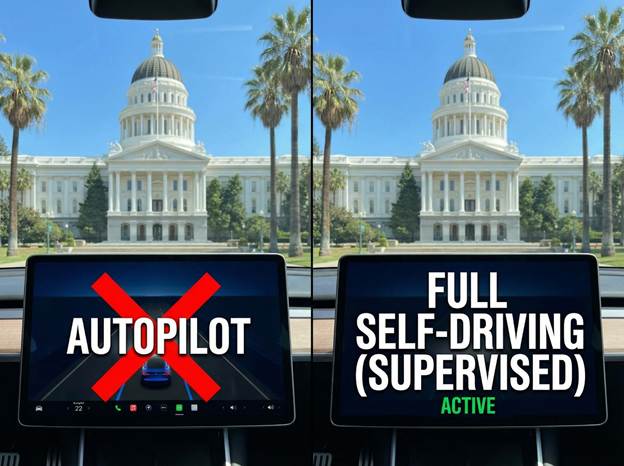
In a move that sent ripples through the automotive industry today, Tesla reached a definitive settlement with the California Department of Motor Vehicles (DMV), narrowly averting a catastrophic 30-day suspension of its manufacturer and dealer licenses. The settlement concludes a years-long legal battle centered on "misleading" marketing practices. Regulators argued that Tesla’s use of the terms "Autopilot" and "Full Self-Driving" (FSD) created a dangerous illusion of full autonomy in vehicles that still require active human supervision.
Under the terms of the agreement, Tesla has committed to purging these terms from its marketing materials—or significantly qualifying them—to reflect their reality as Level 2 driver-assistance systems. While the administrative law judge initially proposed a "draconian" 30-day suspension that would have shuttered Tesla’s ability to sell or build cars in its most critical U.S. market, the DMV opted for a permanent stay on the manufacturing suspension, provided Tesla met a strict February 14 compliance deadline to overhaul its branding.
The Semantic Trap: Why "Autopilot" Failed the Safety Test
For years, the word "Autopilot" served as the crown jewel of Tesla’s brand identity, but it was also its most controversial asset. Critics, led by Consumer Reports, have long argued that the name is fundamentally deceptive. In aviation, an autopilot handles specific tasks under the watchful eye of a pilot, but in the consumer mind, the term implies a "set it and forget it" capability.
Consumer Reports began calling for a name change as early as 2016, following several high-profile crashes. Their research suggested that names like "Autopilot" encourage "mode confusion," where drivers overestimate the system's ability to handle complex edge cases—like sudden construction zones or faded lane markings. By using a term that implies a higher level of automation than the car actually possesses, Tesla essentially invited its customers to be less attentive, creating a "pile of promises" that the hardware simply couldn't keep.
The Dangerous Cost of Over-Promising
The danger of over-promising on autonomous driving is measured in lives, not just lawsuits. When a manufacturer markets a feature as "Full Self-Driving," they are competing for a share of the "freedom" market—the idea that a car can be a mobile office or lounge. However, when the technology is actually a Level 2 system, the driver must remain "in the loop."
Over-hyping these systems leads to "automation complacency," where the human brain disengages because it trusts the machine too much. This creates a lethal lag time when the system inevitably encounters a situation it cannot handle and hands control back to the human. The California DMV's stance reinforces that marketing is not just sales fluff; it is a safety component. If the marketing tells the driver the car can drive itself, the driver will eventually believe it—often with fatal consequences.
A Blueprint for the Industry: Lessons for Rival Automakers
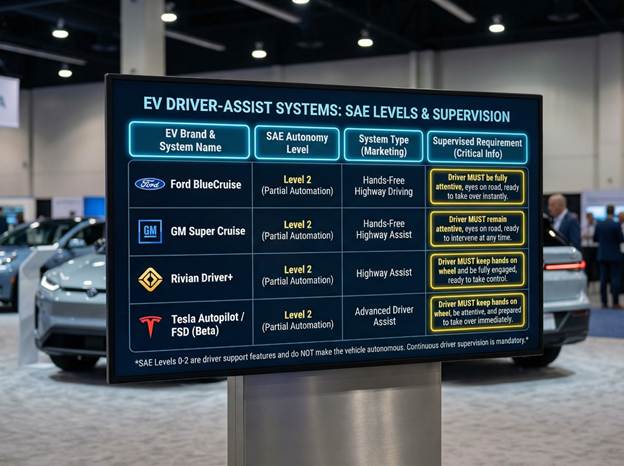
Tesla's forced retreat provides a stark lesson for competitors like Rivian, Lucid, and legacy giants like Ford and GM. The "Wild West" era of autonomous marketing is over.
- Transparency is a Safety Feature: Future ADAS (Advanced Driver Assistance Systems) must be marketed with clinical precision. Terms like "BlueCruise" or "Super Cruise" are better, but even they must be paired with constant reminders of human responsibility.
- Regulatory Proactivity: The DMV's decision to move against Tesla’s licenses—not just issue a fine—shows that regulators are willing to hit companies where it hurts: their ability to do business.
- The "Beta" Shield is Gone: Calling a feature "Beta" no longer absolves a company of liability if the name of the product contradicts the "Beta" warning.
Road to Recovery: Rebuilding the Tesla Brand
To recover from this blow, Tesla must pivot from "visionary hype" to "grounded reliability." This settlement isn't just a legal loss; it's a brand identity crisis. For years, Tesla was the "company that solved self-driving." Now, it is the company that was legally ordered to stop saying it solved self-driving.
Tesla needs to lean into its new "Supervised" branding with the same fervor it once used for Autopilot. By highlighting the synergy between human and machine rather than the replacement of the human, Tesla can rebuild trust. Furthermore, Tesla should consider a "Goodwill Upgrade" program for long-time FSD purchasers who feel they were sold a product that never arrived, potentially offering hardware credits or free supercharging to soften the blow of the renamed software.
The Competitive Pivot: How Rivals Can Seize the Moment
Competing EV companies now have a golden opportunity to "de-risk" the autonomous conversation. While Tesla is on the defensive, rivals should:
- Market "Honest Autonomy": Launch campaigns centered on the reliability of their systems without the "misleading" jargon.
- Focus on Utility, Not Sci-Fi: Highlight features that make driving easier today—like better lane centering in heavy rain—rather than promising robotaxis "next year."
- Leverage Third-Party Validations: Companies that have historically scored well with Consumer Reports or the IIHS should emphasize these safety accolades to contrast with Tesla's regulatory scolding.
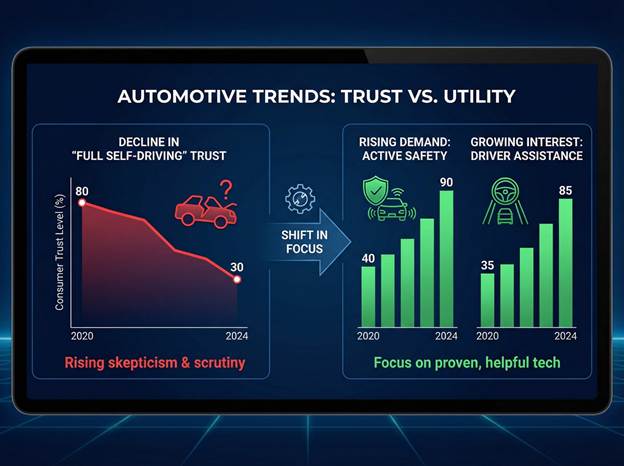
Wrapping Up
The California DMV’s settlement with Tesla is a watershed moment for the auto industry. By forcing the world’s most valuable car company to drop its most iconic—and misleading—branding, regulators have declared that safety must outpace marketing. Tesla may have saved its licenses, but it has lost the "Autopilot" mystique. The path forward for Elon Musk’s firm requires a humble return to reality, while the rest of the industry must take note: the road to the future is paved with transparency, not just code.
Disclosure: Images rendered by Artlist.io
Rob Enderle is a technology analyst at Torque News who covers automotive technology and battery developments. You can learn more about Rob on Wikipedia and follow his articles on TechNewsWord, TGDaily, and TechSpective.
Set Torque News as Preferred Source on Google
Follow us today...