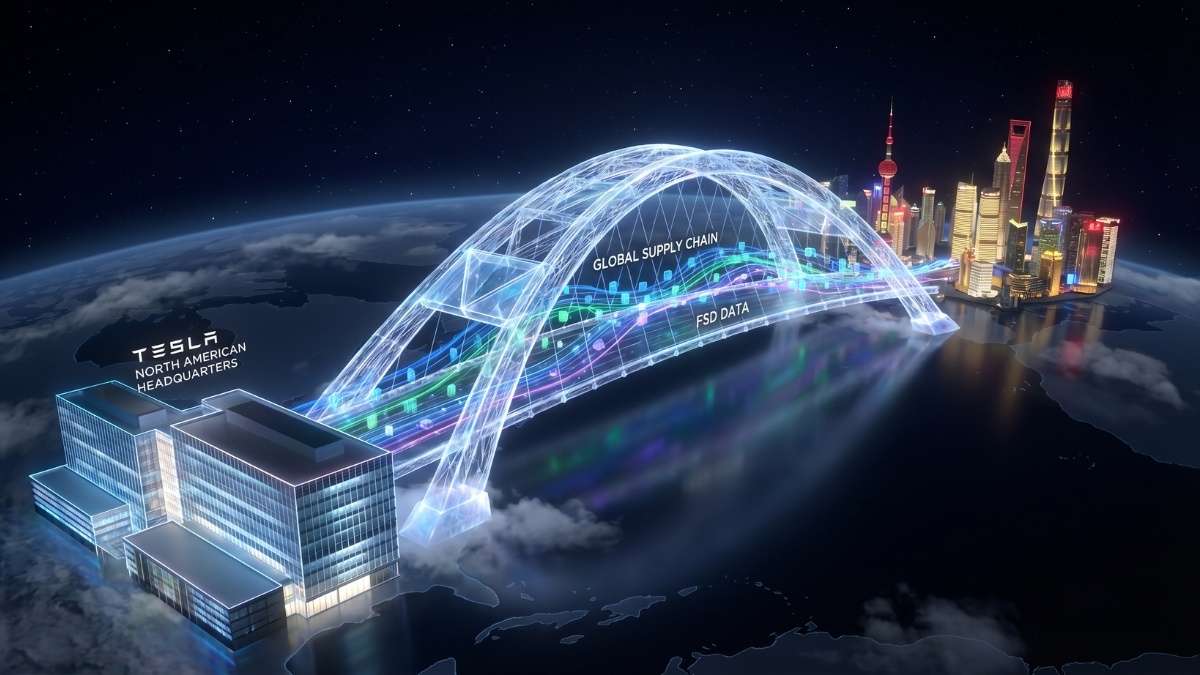

In the world of technology and automotive analysis, we often look for patterns that follow logical, predictable trajectories. Usually, when a CEO becomes a polarizing figure in the West, when trade wars between superpowers escalate to the brink of decoupling, and when local domestic champions rise with state-backed subsidies, a foreign entity should be in retreat.
Yet, Tesla is currently flipping the script in a way that defies conventional wisdom. Recent data confirms that Tesla’s China-made vehicle sales surged 91% year-over-year in early 2026, fueled by the relentless efficiency of Giga Shanghai. This is happening despite the fact that the U.S. market is cooling and the political rhetoric between Washington and Beijing is at a generational high.
To understand how Tesla is pulling this off—and whether it is sustainable—we have to look past the headlines and into the structural realities of the Chinese market.
The Defiance of Conventional Wisdom
The "standard" view among analysts was that Tesla’s "Goldilocks" period in China was over. The narrative was simple: BYD, Xiaomi, and Huawei-backed ventures would use their home-field advantage to squeeze Musk out. Furthermore, Elon Musk’s own persona—often viewed as erratic or politically misaligned with various global factions—was supposed to be a liability.
Instead, we are seeing a massive surge. As noted in the April 26 Market Pulse from ASPIRE, the electrification of transportation is not a linear path, but one dictated by infrastructure and manufacturing scale. Tesla’s ability to hit record highs in exports from Shanghai suggests that the Chinese consumer, and the Chinese government, still view Tesla not as a "foreign interloper," but as a foundational element of their own industrial ecosystem.
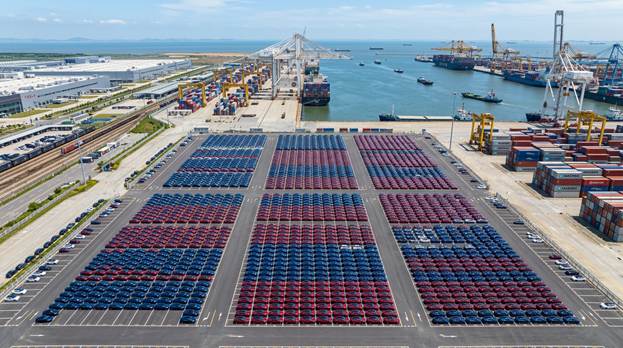
How Tesla Achieved the Impossible: The "In-China, For-Global" Strategy
Tesla’s success isn't magic; it’s a masterclass in supply chain integration. While other Western automakers treated China as a secondary market, Musk treated Shanghai as the heart of his global empire.
- Hyper-Localization: Tesla’s product localization rate in China now exceeds 95%. This means they aren't just "assembling" cars; they are building them with Chinese parts, sensors, and batteries. This insulates them from the tariffs that plague other Western brands.
- The "Apple" Effect: Much like the iPhone, the Tesla brand carries a "prestige" weight that domestic brands like Chery or Geely are still fighting to match. In China, owning a Tesla is a status symbol of technophilia that transcends the nationality of the CEO.
- Manufacturing Velocity: Giga Shanghai is arguably the most efficient auto plant on the planet. The ability to pivot production from domestic fulfillment to international export allows Tesla to maintain 91% growth figures while U.S. inventory sits idle.
Can the Momentum Last?
The sustainability of this growth depends on two factors: the Full Self-Driving (FSD) rollout in China and the grace of the Chinese Communist Party (CCP).
Musk’s recent visits to Beijing to discuss data security and FSD mapping were pivotal. While Chinese state media has remained cautious about immediate regulatory approval, the integration of Tesla's AI stack remains a massive potential revenue pillar. For now, the Chinese government seems to value Tesla as a "catfish"—a predator introduced into a pond to keep the local fish (Chinese EV startups) healthy and competitive.
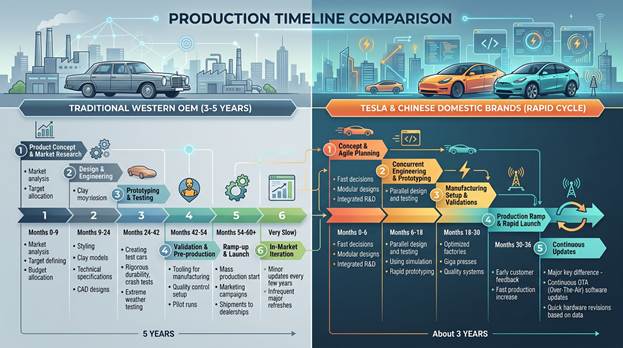
What Western Automakers Must Replicate
If Ford, GM, or Volkswagen want to stop their "managed decline" in the Chinese market, they must abandon the "Expat Model" of business.
- Speed of Iteration: Chinese consumers demand new tech features every six months. Tesla’s "software first" approach allows it to keep up.
- Vertical Integration: You cannot win in China by outsourcing your core tech to third-party suppliers who are also selling to your competitors.
- Neutrality in Conflict: Despite Musk’s vocal nature in the U.S., his China operations remain strictly focused on the mission of "Sustainable Energy."
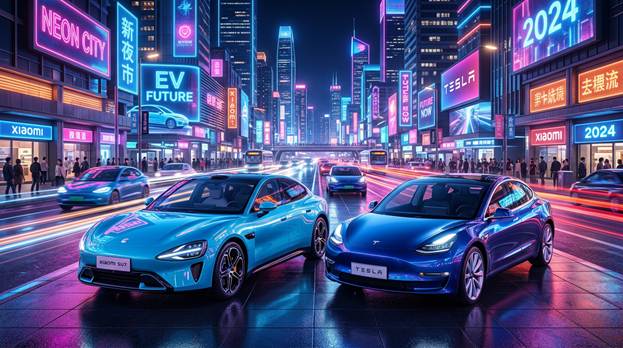
The Winners and Losers: The Battle for the Streets of Shanghai
Tesla’s 91% growth is not happening in a vacuum; it is taking oxygen away from specific players while being challenged by others.
The Casualties: Nio and XPeng The companies most hurt by Tesla’s aggressive pricing are premium startups like XPeng, which has seen deliveries fall sharply as it struggles to compete with Tesla's manufacturing scale. While Nio has shown resilience in specific quarters, the constant price wars initiated by Tesla put immense pressure on their higher-overhead models.
The Survivors: BYD and Xiaomi Conversely, BYD continues to dominate the lower-to-mid-tier segments with a 22.8% NEV market share. Meanwhile, the Xiaomi SU7 has proven that "Big Tech" can challenge Tesla’s "cool factor," with reports showing it has already begun outselling the Model 3 in certain premium sedan categories.
Wrapping Up
Tesla’s 91% growth in China is a loud wake-up call to the global automotive industry. It proves that the "China-centric" manufacturing model is currently the only way to achieve massive scale in the EV era. By treating Shanghai as a global export hub rather than just a local sales office, Tesla has insulated itself from the slowing U.S. market.
However, the road ahead is treacherous. As BYD moves upscale and Xiaomi captures the hearts of the youth, Tesla cannot rely on its brand legacy alone. To continue this growth, they must successfully launch FSD in China and navigate an increasingly volatile geopolitical landscape. For Western automakers, the lesson is clear: localize or leave.
Disclosure: Images rendered by Artlist.io
Rob Enderle is a technology analyst at Torque News who covers automotive technology and battery developments. You can learn more about Rob on Wikipedia and follow his articles on TechNewsWord, TGDaily, and TechSpective.
Set Torque News as Preferred Source on Google
Follow us today...