
Subaru are generally considered one of the most dependable cars you can buy, but that doesn't mean they can't cause issues. I am always curious about the quirky Japanese brand since it's one of the few companies out there that likes to do things differently.
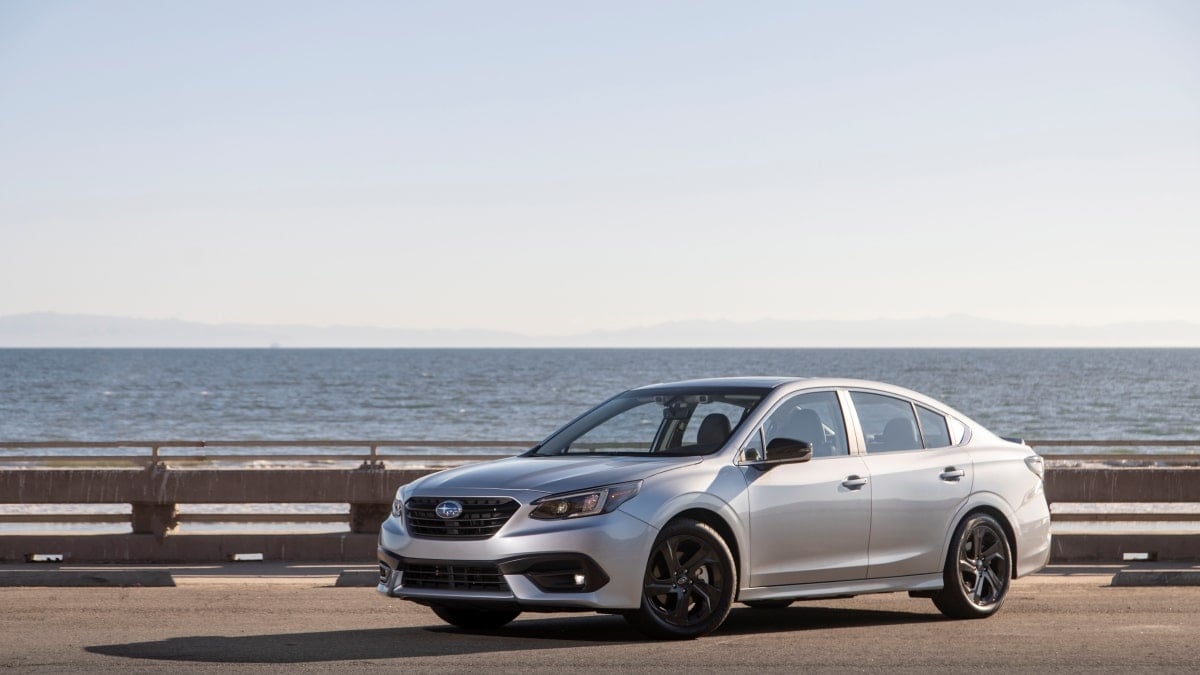
While browsing through the Subaru Forums, I stumbled upon an interesting case concerning a 2020 Subaru Legacy with a fairly low mileage. The owner was initially puzzled by the car's weird behavior and was later shocked when he was quoted a hefty price figure from a dealer to get the issue sorted. Here's what the owner says:
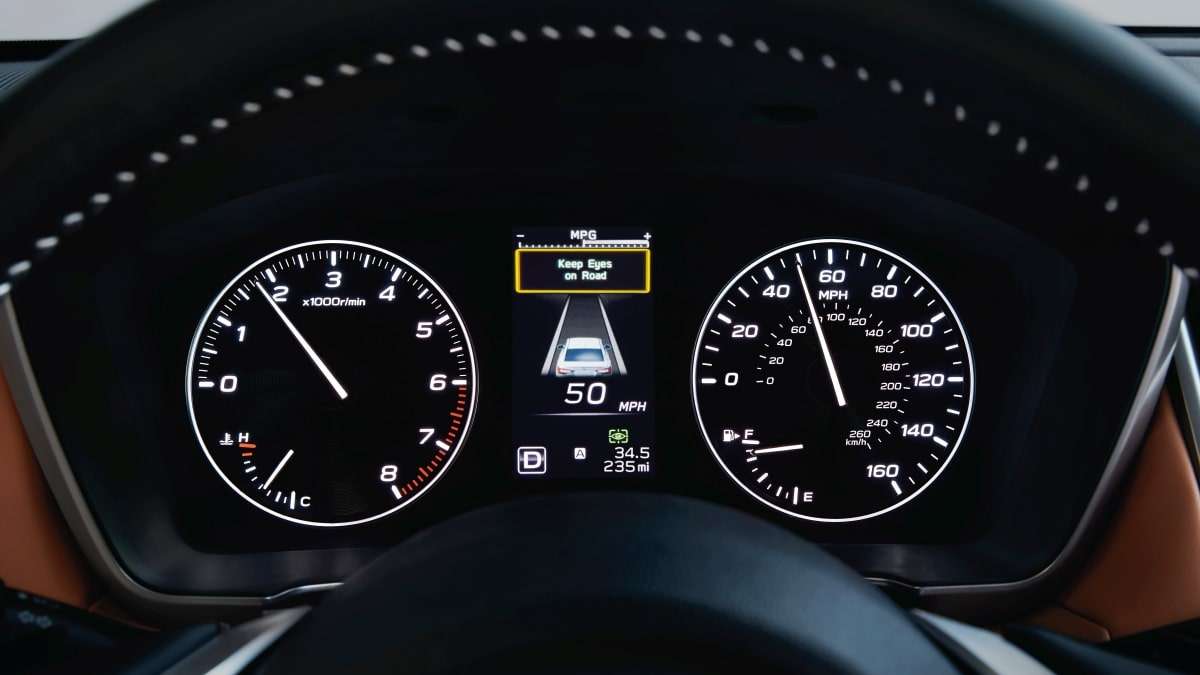
“I have a 2020 Subaru Legacy, 2.5L, and after coming to a stop and then accelerating, my rpms won't go past 2000, then it'll drop and slow down, then go all the way up to like 6000rpms and just straight up launch itself even after taking my foot of the gas. It has 67k miles. I bought it used with about 62k. i just changed my spark plugs, just changed my transmission and brake fluid, just got my ECU reprogrammed, and I'm at a loss for what to do.
I've taken it to the dealership four times this month, and they can't seem to find the issue either. They told me my transmission looks fine as well. I notice this only happens after driving for about an hour or so, but even then, it doesn't happen after every single stop. also, would like to note that it happens more frequently when the auto start/stop is on, so I turn it off, and it happens less when, instead of going straight to the gas once my foot is off the brake, I wait a second.”
Later, the Subaru owner added, “It ended up being my transmission slipping. The dealership wants 12k to fix it. I'm pissed they sold it to me this way and told me it was fine multiple times.”
Naturally, I was curious what this problem could be, for the dealer to charge $12,000 to fix. They never mentioned transmission replacement, and with such a figure being quoted, it really should have been. While some fellow forum members chimed in with plausible solutions, I decided to dig around, based on the owner's complaint, and see how the issue could be remedied without spending a ridiculous amount of money for what could be a relatively minor issue.
Moreover, the owner claims that the dealership does not handle the situation adequately and is considering approaching the issue with a lawyer.
Some forum members chimed in with plausible causes, based on the owner's description of the problem, and it's worth looking into those, if you ever experience something similar.
The seventh-generation Subaru Legacy does not have a ton of issues reported, but more knowledgeable owners hint at potential problems.
Dick Foster says: “Maybe a TPS (throttle position sensor) starting to act up. It's just a potentiometer (variable resistor) and those often get erratic.”
While the discussion is still new, there are other known issues with Subaru's CVTs. These include the following:
- Shuddering and/or jerking, particularly on acceleration from standstill
- Hesitation and/or delayed acceleration
- Stalling
- Fluid leaks due to bad seals or a bad oil-pump chain cover
- Slipping and/or broken chain
- Knocking sounds, sometimes accompanied by jerking, due to failing transmission internals
Things go a bit deeper with the Subaru Legacy's CVT
Subaru's Lineartronic CVT transmissions are a bit different than most other continuous variable transmissions as they utilize a chain instead of a belt, which connects to hydraulically adjustable pulleys.
CVTs also feature a clutch, a torque converter, or sometimes both, to disconnect the engine from the transmission. In the case of Subaru's Lineartronic CVT, the system utilizes a torque converter and a lock-up clutch. Moreover, Subaru's continuous variable transmissions are manufactured by a Toyota subsidiary, Aisin, although Subaru designed the Lineartronic transmission in-house designed. Toyota is using a different type of CVT in its models, most of which utilize a metal push-belt (technically, a type of chain).
In the case of this 2020 Subaru Legacy, the model of transmission is TR580, which is usually paired with the FB20 and FB25 normally aspirated Subaru boxer engines.
On a personal note, I wish Subaru would use traditional automatics instead of a CVT, at least bring back the option of a manual transmission for more models. As it stands, only the Subaru BRZ and some variants of the Subaru Impreza WRX feature a stick shift.
What's the solution to the issue?
- There is plenty of information on Subaru CVTs and their weak spots. From my research, I managed to narrow down a few potential issues.
- Torque-converter and/ or lock-up clutch – early Subaru CVTs were notorious for their problematic torque converters and clutches. Those are symptomsized by shuddering (especially between 40-50 mph), rough shifting (some CVTs have a manual mode),
- Input speed sensor - a faulty speed sensor can cause transmission jerks and rough power delivery (or gear changes). Typically, this is accompanied by an error code that corresponds to one of the transmission's speed sensors.
- Valve body – not the valve body itself, but one of the solenoids tends to go bad with age and use. The torque-converter clutch solenoid is most active and prone to failure. However, this issue typically manifests itself between 150,000 and 200,000 miles.
- Chain slippage and/or breakage – typically a rare occurrence in CVT transmissions, but nevertheless possible.
- CVT main bearings - bad transmission bearings can also cause vibrations and rough power delivery. That said, grinding noises and a burning smell are also common symptoms, and those are exempt from this owner's Legacy.
Final thoughts
While there are multiple potential culprits for the Subaru Legacy's erratic behavior, it may turn out to be a number of things that are wrong. Refusal to accelerate upon pressing the throttle may be associated with engine or fuel-delivery issues, but it may also be caused by the transmission. The owner does not report anything unusual from the engine.
It is worth noting that these transmission issues, while well-known, are not as common as you may think on newer models. Subaru still has a good track record for reliability and longevity, and having owners who take care of their cars helps that quite a bit. Perhaps, the recently announced partnership between Toyota, Subaru, and Mazda will improve things further.
The bigger issue is the dealership's practice of throwing customers' money at the problem, for which there still isn't a clear explanation. I am eager for any updates on the matter, but in the meantime, feel free to share any similar experiences in the comment section below and tell me what you think.
Dimitar Angelov's automotive interests made him an expert in a wide variety of vehicles. Japanese brands like Toyota are closest to his heart, although performance cars in general are his favorite segment, which is why he is constantly on the lookout for the best deals on the market. Dimitar Angelov's car passion and knack for the written word led him to complete a Master of Arts in Media and Communications, and classic car restoration. Dim is happy to get behind the wheel of any car and share his impressions. You can follow Dimitar on X, Linked-in, Instagram, and Facebook.
Image source: 2020 Subaru Legacy press kit
Set Torque News as Preferred Source on Google
Follow us today...