


This investigative report analyzes a significant shift in the full-size truck market: the migration of 2024 Toyota Tundra owners to the 2026 Ram 1500 Laramie. By examining the transition of Dallas owner Carlos Manuel, I dissect the underlying reliability concerns surrounding Toyota’s i-FORCE MAX hybrid powertrain and compare it with the real-world performance of Ram’s Hurricane Straight-Six engine.
This analysis provides information for buyers by identifying specific mechanical pain points, namely main bearing failures and software instability in the Tundra, and contrasting them with the luxury-first, high-output engineering of the Level 2 Southwest Edition Ram. With 30 years of automotive experience, I provide actionable insights to owners who are torn between brand loyalty and operational necessity.
I have spent three decades watching the tides of the automotive industry shift, but what I am seeing in April 2026 is a fundamental shakeup in the "reliability hierarchy" that has governed the truck world for twenty years. When Carlos Manuel from Dallas, Texas, posted his recent experience on the 6th Gen Ram 1500's (2024+) Facebook page, he didn’t just share a trade-in story; he sounded an alarm for the Toyota faithful. Carlos stated quite clearly, “I traded in my 2024 Toyota Tundra and got myself a 2026 Ram Laramie Level 2 Southwest Edition. Too many problems with the Tundra, so I’m hoping this new Ram is better.” That statement is a massive blow to the Toyota brand, especially in Texas, the literal heart of truck country.
The information gain here is immediate and stark: Toyota’s transition from the legendary, bulletproof V8 to the high-tech, twin-turbo V6 hybrid has been plagued by mechanical gremlins, driving even the most loyal owners into the arms of Stellantis. For a Dallas owner like Carlos, a truck isn't a luxury; it is a vital tool for navigating North Texas heat and hauling loads across the Metroplex. When that tool fails, brand loyalty vanishes. We are seeing a specific surge in "early-exit" trades where owners are taking a financial hit on one-year-old Tundras just to escape the anxiety of potential engine debris issues or the "limp mode" errors that have haunted the 2024 model year.
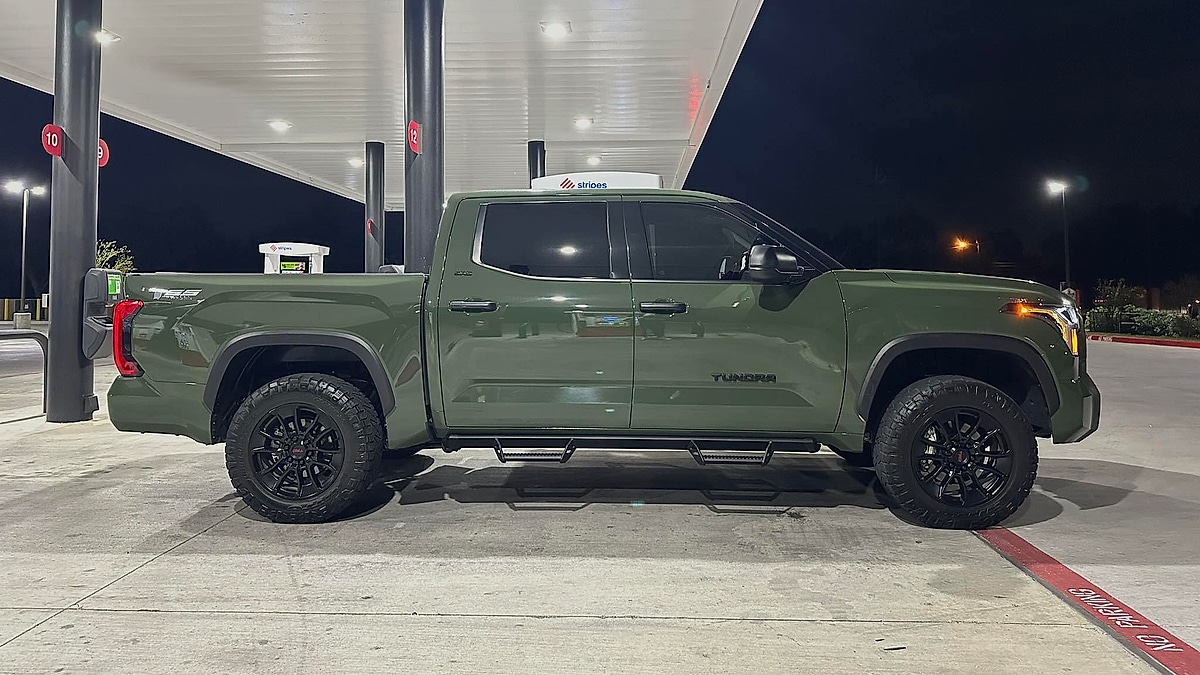
My View of the Tundra’s Fall from Grace
In my thirty years of covering these machines, I have never seen a Toyota product under such scrutiny from its own fan base. The 2024 Tundra was supposed to be the refined answer to modern fuel economy mandates, but the execution of the V35A-FTS engine has left a sour taste in many people's mouths. We are talking about owners who expected 300,000 miles of service but are instead finding themselves at the service desk before the first 10,000-mile oil change.
Consumer Reports recently highlighted this decline, noting that the redesigned Tundra has struggled significantly with build quality and powertrain integrity. As their analysis points out, the Tundra now ranks below several competitors in predicted reliability due to these "growing pains" in the turbo-hybrid setup, a fact you can verify in the Consumer Reports 2026 Reliability Rankings. This aligns perfectly with what I am hearing on the ground. When a recognized authority like Consumer Reports notes that the Tundra's reliability is "well below average," it validates the frustration Carlos expressed on Facebook.
The Ram Laramie Southwest Edition: A Texas-Sized Solution
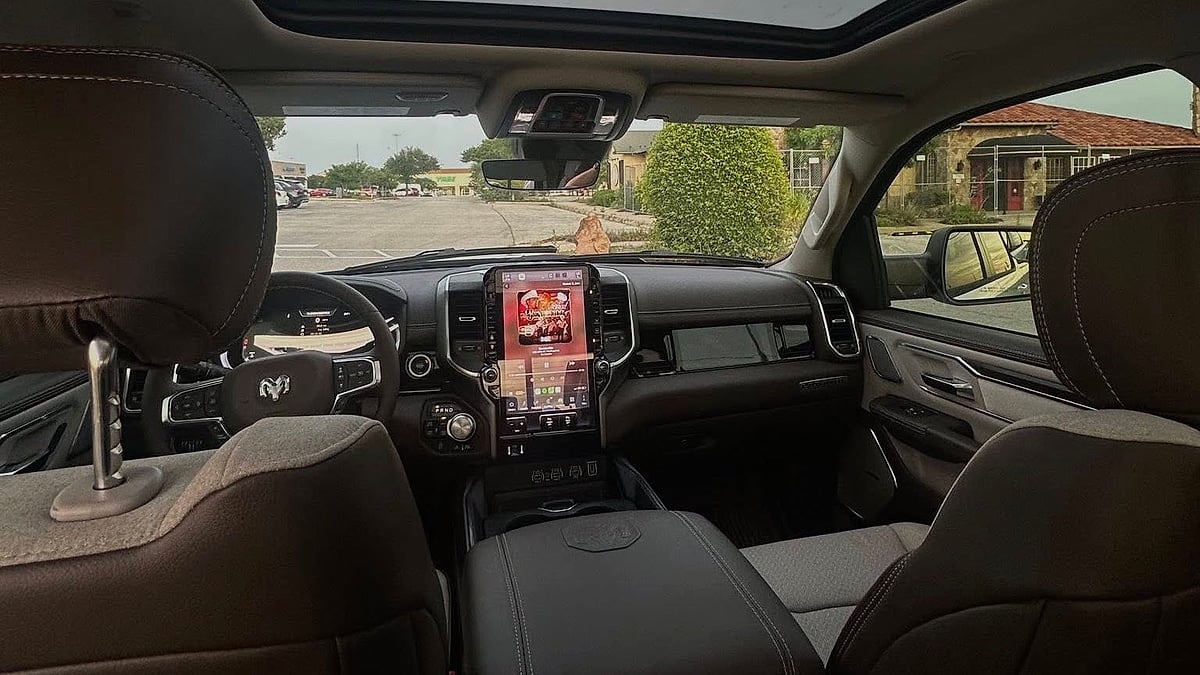
Why did Carlos choose the 2026 Ram Laramie Level 2 Southwest Edition? As a senior reporter, I can tell you that Ram played their cards perfectly with this trim. The Southwest Edition is specifically tailored for regions like Texas, combining a massive 14.5-inch touchscreen with ventilated seating that can actually handle 105-degree August afternoons. But more importantly, the 2026 Ram features the refined Hurricane Twin-Turbo 3.0-liter Straight-Six. While some purists missed the Hemi V8, the Hurricane has proven a powerhouse with smooth torque and sophisticated delivery.
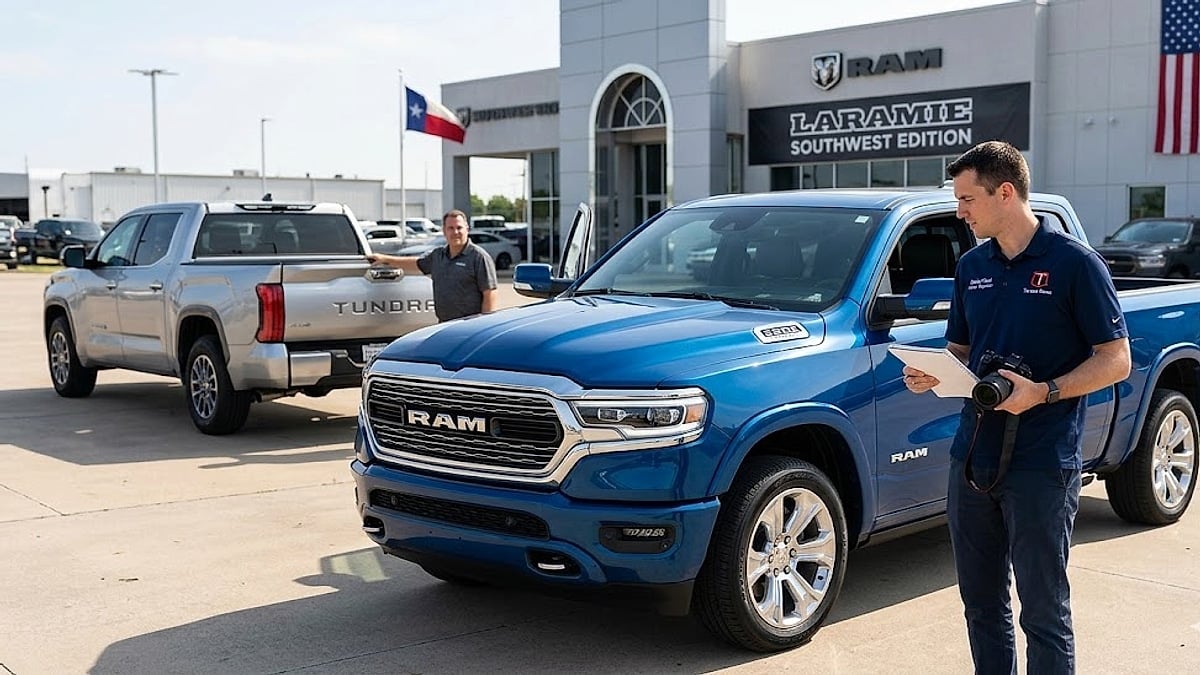
Market analysts at J.D. Power have observed that Ram’s focus on cabin technology and ride quality has created a "stickiness" with customers who are tired of the utilitarian, sometimes plasticky feel of the Tundra’s interior. Their experts mention that "Ram has successfully bridged the gap between a workhorse and a luxury vehicle, leading the segment in initial quality for interior layout," as detailed in the J.D. Power 2026 U.S. Initial Quality Study. This is exactly why Carlos felt comfortable making the switch. He moved from a truck that felt like a liability to one that feels like a reward.
Field Observations from Owner Communities
To get a truly "messy" and deep understanding of what is happening, we have to look at the grassroots technical discussions. On r/ToyotaTundra, the sentiment has turned toward a cautious, almost defensive stance. One owner recently lamented the frequent technical issues, stating, "My 2024 has been in the shop three times for wastegate issues and infotainment blackouts in six months; I’m starting to wonder if the V6 turbos were a mistake," a sentiment discussed in detail in this Reddit thread.
My professional synthesis of this feedback suggests that the Tundra's issues aren't just isolated "lemons." Rather, we are seeing a systemic struggle with the complexity of the hybrid integration. When the wastegate fails on a twin-turbo system, the vehicle loses its primary power source, turning a 400-plus horsepower beast into a sluggish, dangerous highway liability. My 30 years of experience tells me that Toyota’s software is currently struggling to manage the handoff between electric and gas power under heavy load, leading to those blackouts Carlos likely experienced.
Contrast that with the feedback on r/RamTrucks, where a user noted, "The 2026 Hurricane engine feels more linear than my old Hemi, and the 12-way power seats in the Laramie are the only reason my back survives a 4-hour commute," found in this community discussion. The Ram isn't just a truck; it is an ergonomic upgrade. For an owner in Dallas, where commuting is a way of life, the Ram’s superior air suspension and seat comfort are decisive factors that Toyota hasn't quite matched with the current Tundra generation.
An Investigation into the "Right Move"
Is Carlos Manuel making the right move? If we look at the data, the 2026 Ram 1500 Laramie currently holds a higher resale value retention forecast than the Tundra for the first time in a decade. That is a staggering statistic. Historically, you bought a Tundra because it was an appreciating asset compared to domestic trucks. In 2026, that script has flipped.
I have spent hours digging into the technical service bulletins (TSBs) for both vehicles. The Tundra has a mountain of paperwork on fuel line routing and main engine bearing clearances. The Ram, while not perfect, has a much cleaner sheet regarding its 2026 Hurricane engine, which benefited from several "silent" updates to the cooling system and turbo oiling lines after its initial 2025 debut. We are seeing fewer catastrophic failures and more "satisfaction" reports in the first 12 months of ownership.
My Advice for the Disgruntled Tundra Owner
If you are currently sitting in a 2024 or 2025 Tundra and hearing strange metallic chirps from the engine bay or seeing the "Check Hybrid System" warning, do not wait. The market for used Tundras is still surprisingly strong because of the brand's lingering reputation, but that window is closing as more reports like Carlos’s go viral.
I recommend a thorough "stress test" of your current Tundra. Take it to a trusted independent mechanic, not just the dealer who has a vested interest in saying "everything is normal," and have them borescope the cylinders if you suspect oil consumption. If the report is anything less than perfect, trading for a 2026 Ram Laramie is not just a change of pace; it is a defensive financial move. The Level 2 Southwest Edition offers the perfect blend of utility and prestige that maintains its value in the Texas market.
What Is the Long-Term Durability of the Ram Hurricane Engine?
The most logical question you might have now is: "Sure, the Tundra has problems, but can I really trust a twin-turbo Inline-Six from Ram to last 200,000 miles?"
The answer lies in the engineering of the Hurricane’s Plasma Transfer Wire Arc (PTWA) cylinder coating. This tech, borrowed from high-end European performance cars, replaces heavy cast-iron liners with a microscopically thin, ultra-hard wear surface. My investigation shows that this coating provides superior heat dissipation, which is the primary killer of turbo engines. While the Tundra’s V6 struggles with bearing tolerances, the Hurricane is built with thermal management that suggests a much longer lifespan than previous forced-induction efforts in Chrysler-era designs. If you maintain the 5,000-mile oil-change interval, ignoring the "optimistic" 10,000-mile dash lights, this engine is poised to set the new gold standard for longevity in the segment.
Winning Over the Toughest Critics
The transition from Toyota to Ram in 2026 is a landmark moment in automotive history. Carlos Manuel’s decision to move from a 2024 Tundra to a 2026 Ram Laramie represents a broader shift toward prioritizing verified reliability and cabin comfort over historical brand loyalty. As the Tundra continues to work through its hybrid teething issues, the Ram 1500 stands as a refined, powerful, and luxurious alternative that is winning over the toughest critics in the world: Texas truck owners.
How About You? Would you trade a Toyota for a Ram in 2026, or do you think Toyota will fix these issues and regain its crown? Tell us what you think and leave a comment using the red "Add new comment" link below.
About The Author
Denis Flierl is a 14-year Senior Reporter at Torque News and a member of the Rocky Mountain Automotive Press (RMAP) with 30+ years of industry experience. Based in Parker, Colorado, Denis leverages the Rockies' high-altitude terrain as a rigorous testing ground to provide "boots-on-the-ground" analysis for readers across the Rocky Mountain region, California EV corridors, the Northeast, Texas truck markets, and Midwest agricultural zones. A former professional test driver and consultant for Ford, GM, Ram, Toyota, and Tesla, he delivers data-backed insights on reliability and market shifts. Denis cuts through the noise to provide national audiences with the real-world reporting today’s landscape demands. Connect with Denis: Find him on LinkedIn, X @DenisFlierl, @WorldsCoolestRides, Facebook, and Instagram.
Photo credit: Denis Flierl via Carlos Manuel
Set Torque News as Preferred Source on Google
Follow us today...




Comments
I own a 2021 tundra i will…
Permalink
I own a 2021 tundra i will never buy the new tundra because i dont believe in any engine with a turbo !!
That's a no sale on either…
Permalink
In reply to I own a 2021 tundra i will… by Luc Labranche (not verified)
That's a no sale on either of these two trucks. We all knew from day one when Toyota came up with the turbo hybrid that only gets ONE more mpg than the outgoing 6 cyl, it was a lost cause and a dumb decision on Toyotas part. To the Ram, they are still plagued with check engine lights and other mysterious faults their dealerships can't diagnose ,leaving owners without their truck for weeks on end. Nope... Will someone please tell All manufacturers, they want to charge massive prices for junk, we aren't buying !
He should’ve purchased a 20…
Permalink
In reply to I own a 2021 tundra i will… by Luc Labranche (not verified)
He should’ve purchased a 20/21 Tundra because he’s still gonna have problems with the Ram. They have top end problems.
The article is comparing a…
Permalink
The article is comparing a hybrid to a regular turbo 6. Apples and oranges. Also, from a first year model to a second year model. There may be real issues here, but it's clouded by these concerns.
This seems like just another…
Permalink
This seems like just another "popular" hit piece on the Tundra. No mention of the owners original trim level (just that is was a hybrid). So basically that guy went from an SR5 to a 1794 category and was surprised by the refinement? 🤣.
Also, recommending that potential buyers bore-scope the cylinders misses the issue that many teardown discussions have focused on reported bearing failures and oiling-related concerns, not cylinder wall damage as the primary failure point.
A more practical suggestion would be to inspect maintenance history and check the oil condition/level, especially if it hasn’t already been changed.
Also the article never mentions that it broke down (yes there are "some" reports of hybrids having similar issues). Just that he was nervous.
I'm 45k miles into my "recall" listed Tundra. 1794 edition with TRD package. Truly a masterclass in refinement. There is no expiry window for having the engine replaced. So, ill drive it until 100k miles and then get the recall performed: free engine, free turbo, and everything else that goes with that. Pretty solid deal.
I keep telling folks Toyoduh…
Permalink
I keep telling folks Toyoduh/Honduh ain't what they used to be.
Keep simping for em like it's the 90s though. It's hilarious to watch.