
The Strategic "Debt-Wash" Trade-In
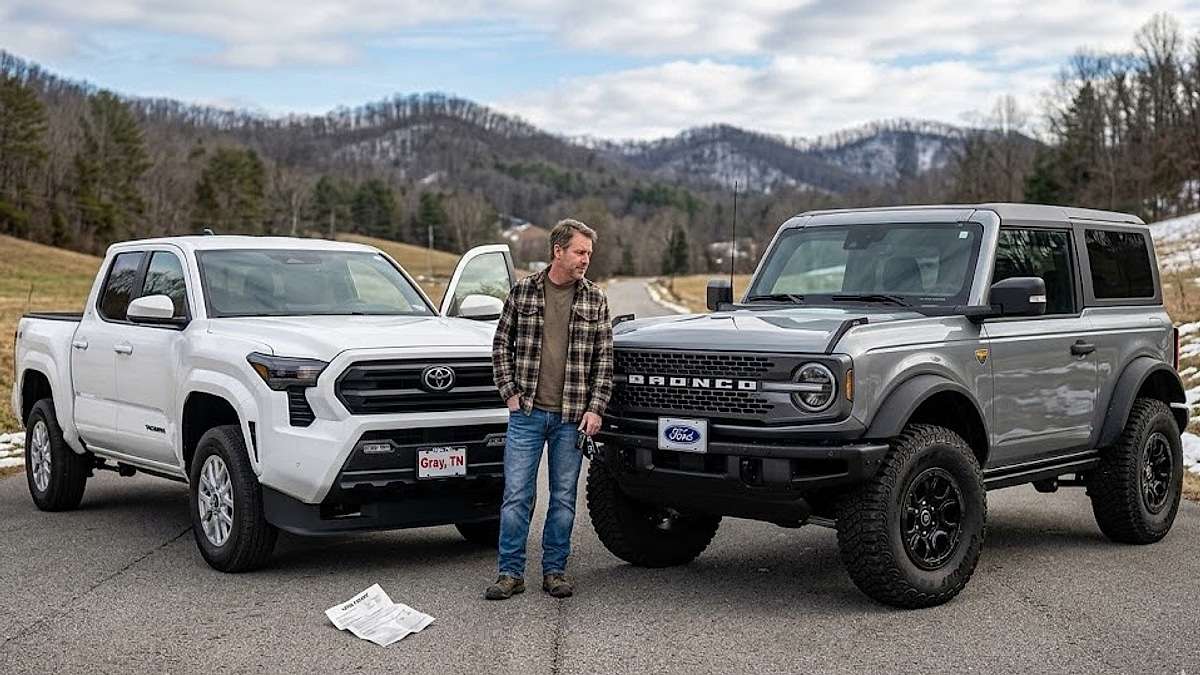
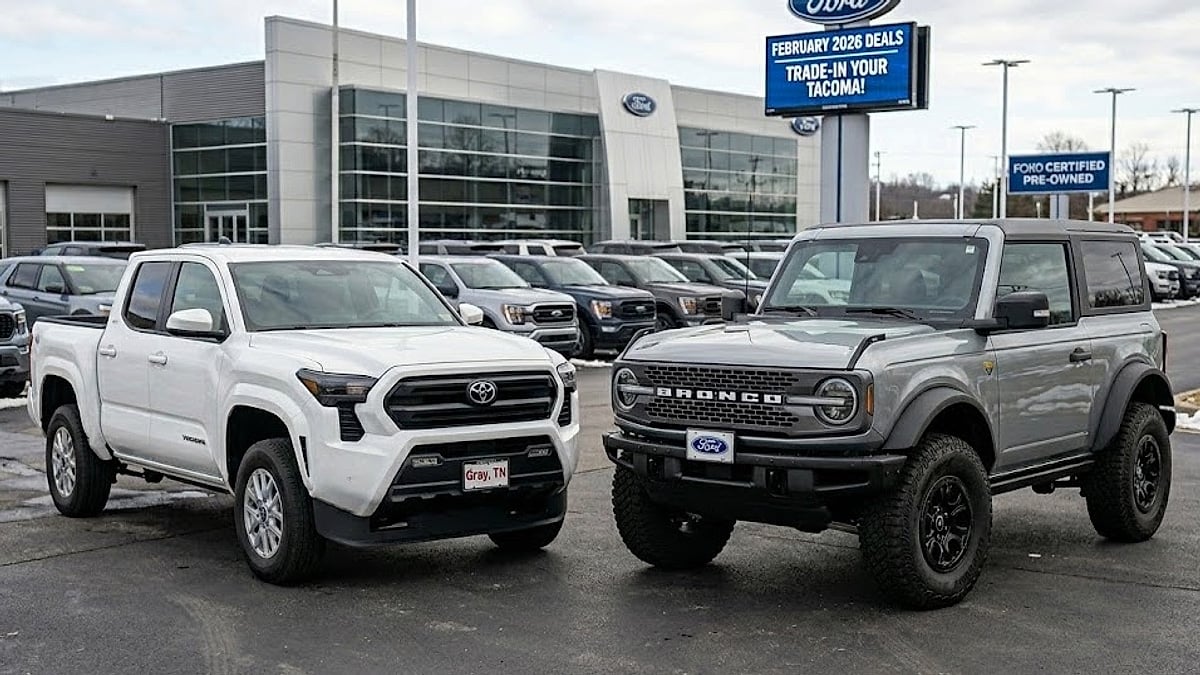
In the 2026 automotive market, the best information for buyers lies in the nuances of the deal. This investigation examines why Taylor Lynch traded his 4th-gen Toyota Tacoma for a 2026 Ford Bronco Badlands Sasquatch while keeping his monthly payment the same. By leveraging a high-value trade-in, Lynch successfully executed a "Debt-Wash," in which the Ford dealership's payout cleared his existing Tacoma loan, allowing him to reallocate his monthly capital to a significantly more capable 4x4 platform.
This report draws on 30 years of industry experience to explain why moving from a 2WD "lifestyle" truck to a Sasquatch-equipped off-roader can be a sound financial decision, even with debt remaining, provided the utility-to-payment ratio improves. We explore the mechanical advantages of the Bronco's suspension, the shifting loyalty in the Toyota community.
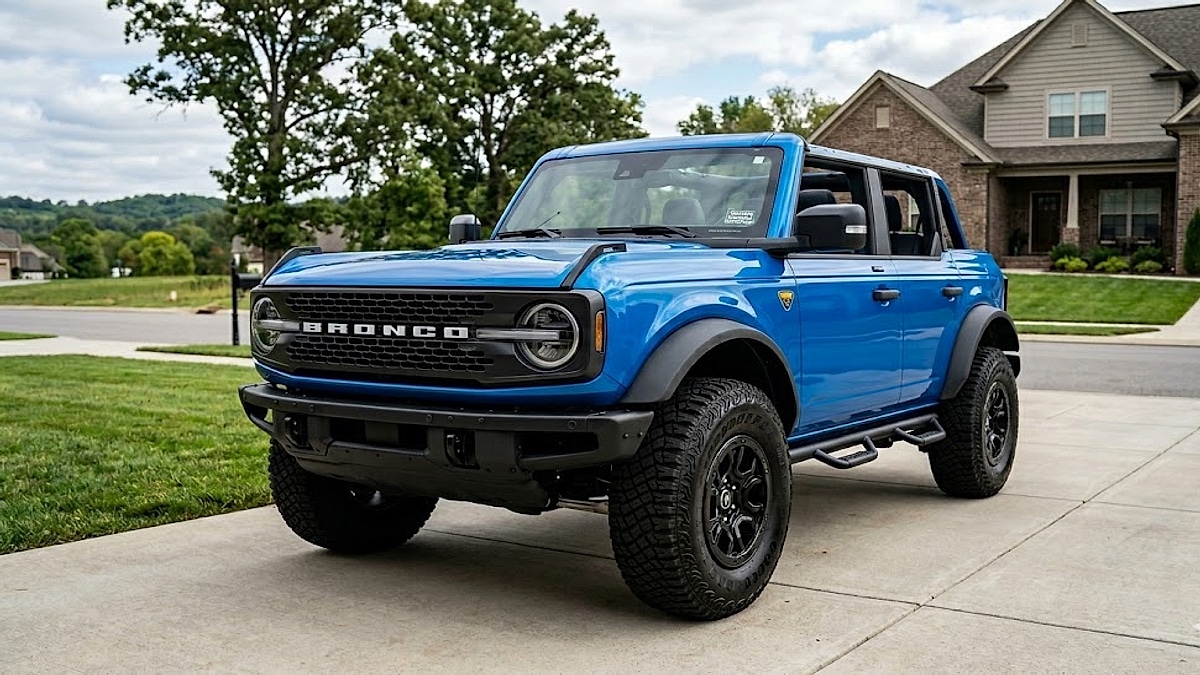
I have spent over 30 years as a professional test driver and industry consultant, and I can tell you that the most powerful tool a consumer has is the "clean slate." Taylor Lynch, a dedicated enthusiast from Gray, Tennessee, recently demonstrated how to use that tool with surgical precision. Taylor wasn't just looking for a new car smell; he was looking to exit a 2WD 4th-Gen Toyota Tacoma that no longer fit his needs. By finding a specific deal on a 2026 Ford Bronco Badlands Sasquatch Edition, Taylor managed to get the Ford dealer to pay off his entire Tacoma loan, effectively "washing" his previous debt so he could start making payments on a far more capable machine.
Taylor shared this strategic move on the 4th Gen 2024+ Toyota Tacoma Owners Facebook page, noting, “Well, tomorrow might be my last day with my Toyota Tacoma. I found a deal I couldn’t pass up on a 2026 Ford Bronco Badlands Sasquatch Edition. I worked out an even better deal and got to pay off my 2WD Tacoma, but if you wouldn’t mind if I stick around in the group to see your builds because I’m definitely going to miss the Tacoma family.”
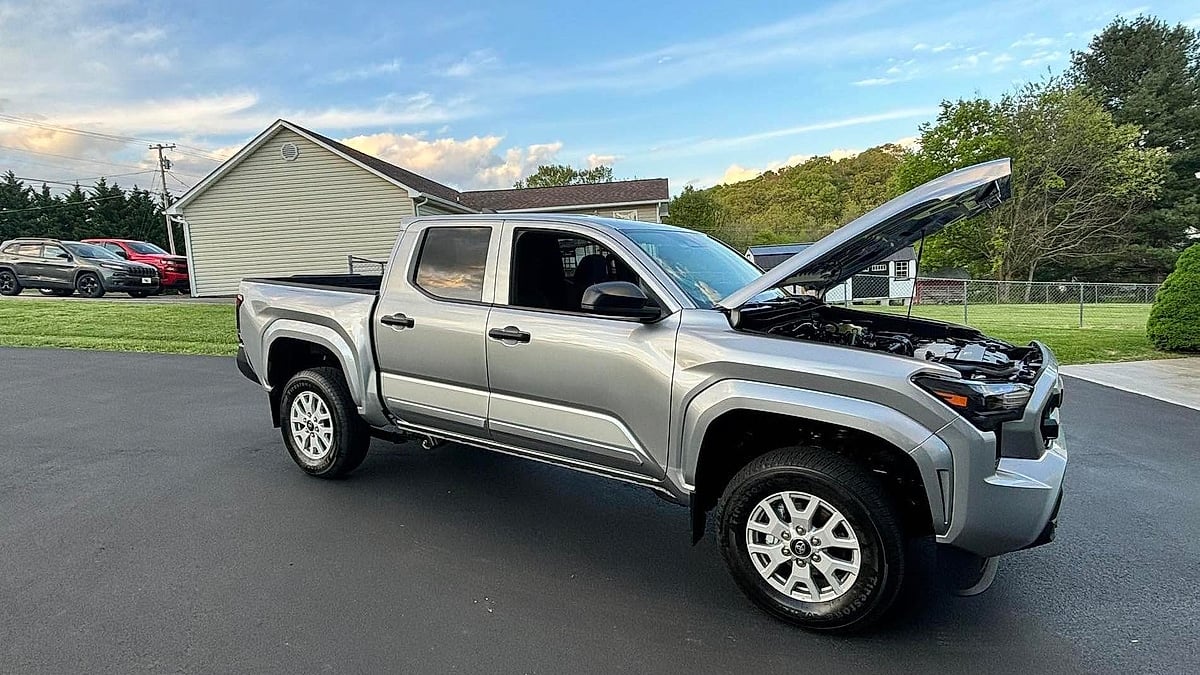
When we look at this through the lens of my three decades in the industry, Taylor’s move is a masterclass in "Utility Pivot." While he still has a vehicle payment, the quality of what that payment buys has changed drastically. He transitioned from a 2WD truck, which often struggles with the steep, slick terrain of eastern Tennessee, to a Sasquatch-equipped Bronco with 35-inch tires and front- and rear-locking differentials. In the 2026 market, where interest rates have stabilized, but vehicle prices remain high, clearing a "negative" or "break-even" loan on a limited-utility vehicle to secure a high-demand 4x4 is a strategic win. We are seeing more Toyota loyalists consider this path because the Bronco’s aggressive 2026 incentives are designed specifically to "buy" customers out of their current Toyota or Jeep contracts.
The Mechanical Delta: Upgrading the Drivetrain While Keeping the Payment
We need to dive into the technical reality of what Taylor gained in this trade. The 4th-Gen Tacoma is a marvel of reliability, but a 2WD model lacks the mechanical "Information Gain" that off-roaders crave. The Bronco Badlands with the Sasquatch package isn't just an appearance group; it is a fundamental shift in chassis dynamics. David Tracy, a respected automotive engineer, points out that the Bronco's HOSS (High-Performance Off-Road Stability Suspension) system offers a level of high-speed desert-running capability that requires thousands of dollars in aftermarket parts to achieve on a Tacoma, which you can read in the full technical comparison.
I have personally tested these rigs in the Colorado backcountry, and the difference between a 2WD Tacoma and a Sasquatch Bronco is night and day. Taylor moved from a truck that was essentially a daily commuter to a vehicle capable of conquering the Rubicon Trail. Consumer Reports notes that the 2026 Bronco has finally refined its 10-speed automatic transmission to eliminate the "hunting" behavior seen in earlier models, making the new payment feel more justified for the owner, as reported here.
Field Observations from Owner Communities
To see if this "Debt-Wash" strategy is becoming a trend, we looked at the latest owner discussions. In a recent technical discussion on r/FordBronco, several owners noted that Ford dealerships have been aggressive with "trade-in over-allowance" to pull owners from Toyota. One owner explained the logic, mentioning, "The dealer gave me $4,000 over KBB for my Tacoma just to get me into a Bronco payment. Even with the new loan, I have a vehicle that actually handles the snow," which you can read in the full discussion here.
From my 30 years of experience, this is a classic "Market Share Grab." Ford is willing to take a hit on the trade-in to ensure the long-term service revenue of a new Bronco owner. Another owner on r/ToyotaTacoma shared a counterpoint about the transition, stating, "The 4th-Gen Tacoma feels more 'truck-like' in its steering, while the Bronco feels like a very fast tractor. You really have to want the 4x4 capability to justify the switch," found in this Reddit thread.
Why the "New Payment" Logic Holds Up
When you are paying $500 a month for a 2WD truck that leaves you stranded in a Tennessee snowstorm, that payment is "bad money." If you can clear that loan and pay $550 a month for a 2026 Bronco Sasquatch, which provides safety, utility, and a significantly higher resale value, that is "good money." My experience suggests that the 4th-Gen Tacoma 2WD will suffer steeper depreciation than its 4WD counterparts as the used market becomes saturated. By trading now, Taylor captured the peak value of his Tacoma to settle his debt.
We also have to look at the "Emotional Equity" of the "Tacoma Family." Toyota has built a community that is hard to leave. However, the 2026 Ford Bronco has created its own "Bronco Nation" that offers a similar level of camaraderie and aftermarket support. When Taylor says he wants to "stick around to see the builds," he acknowledges that while the machine has changed, the passion for the lifestyle remains. As a senior reporter, I see this as a sign that the automotive "tribalism" of the past is being replaced by "Utility-First" consumerism.
What to Watch Out For in the 2026 Bronco Transition
If you are thinking about following Taylor's lead and letting a dealer pay off your Tacoma, there are specific 2026-specific issues I want you to monitor. The 2026 Bronco has moved to a more complex infotainment system that requires frequent over-the-air updates. I recommend ensuring your home Wi-Fi reaches your driveway, or you will find yourself with a drained battery during a failed update cycle. Also, the Sasquatch tires are magnificent off-road, but they will increase your braking distance on wet pavement, something to keep in mind on those winding Tennessee roads.
I also want to mention the "Hidden Costs" of the switch. While the Tacoma 2WD is a low-maintenance machine, the Bronco Badlands has more moving parts, including disconnectable sway bars and lockers that require periodic exercise to remain functional. In my 30 years in the auto industry, I have seen too many owners buy the "ultimate" off-roader and then never engage the 4WD system, leading to seized actuators. If you are going to pay for the Sasquatch, you need to use the Sasquatch.
Navigating the Next Logical Step: Will Ford’s Reliability Outlast the New Loan?
The next question most readers will have is: "Now that he has a new payment, will the Ford Bronco’s long-term reliability hold up long enough for him to reach equity again?" Based on my analysis of Ford’s 2026 powertrain updates, the answer is a cautious yes. Ford has reinforced the 2.7L EcoBoost's cooling system and updated the turbocharger seals. While it may not reach the 300,000-mile legendary status of a Toyota naturally aspirated engine, it is more than capable of lasting the 60 to 72 months of a standard modern loan. Taylor has traded "Infinite Reliability" for "High-Performance Utility," and in today’s market, that is a trade many are willing to make to get the vehicle they actually want to drive.
The Investigative Conclusion: A Calculated Pivot in a Shifting Market
Taylor Lynch’s trade is a perfect example of how modern consumers navigate the high-stakes automotive market in 2026. He didn't just accept a trade-in value; he worked a deal in which the dealer assumed the burden of his 2WD Tacoma debt, allowing him to refocus his financial resources on a vehicle that better matches his aspirations. While he still carries a payment, he is no longer "stuck" in a vehicle that limits his adventures. As an investigator who has seen every market cycle since the 1990s, I believe Taylor made the right call. He prioritized "capability-per-dollar" over brand loyalty, and that is how you win in 2026.
It’s Your Turn
Would you be willing to start a new loan if it meant a dealer would pay off your current vehicle and put you in a significantly more capable 4x4? Is the "Debt-Wash" strategy something you have used to get out of a vehicle that didn't fit your life? Tell us what you think in the comments below! Please leave your comments in the red “Add new comment” link below.
About The Author
Denis Flierl is a 14-year Senior Reporter at Torque News and a member of the Rocky Mountain Automotive Press (RMAP) with 30+ years of industry experience. Based in Parker, Colorado, Denis leverages the Rockies' high-altitude terrain as a rigorous testing ground to provide "boots-on-the-ground" analysis for readers across the Rocky Mountain region, California EV corridors, the Northeast, Texas truck markets, and Midwest agricultural zones. A former professional test driver and consultant for Ford, GM, Ram, Toyota, and Tesla, he delivers data-backed insights on reliability and market shifts. Denis cuts through the noise to provide national audiences with the real-world reporting today’s landscape demands. Connect with Denis: Find him on LinkedIn, X @DenisFlierl, @WorldsCoolestRides, Facebook, and Instagram.
Photo credit: Denis Flierl via Taylor Lynch
Set Torque News as Preferred Source on Google
Follow us today...