
The 2026 Ford F-150 stands at a crossroads of engineering ambition and real-world reliability anxiety. While Ford has implemented a newly redesigned valve body in the 10R80 transmission to mitigate historic "harsh shift" complaints, early field data from April 2026 reveals a persistent $9,000 out-of-pocket repair risk for owners outside of warranty. This report synthesizes 30 years of automotive experience, direct owner testimony, and technical teardowns to determine whether the 2026 model year has truly escaped the "money-shift" legacy of its predecessors.
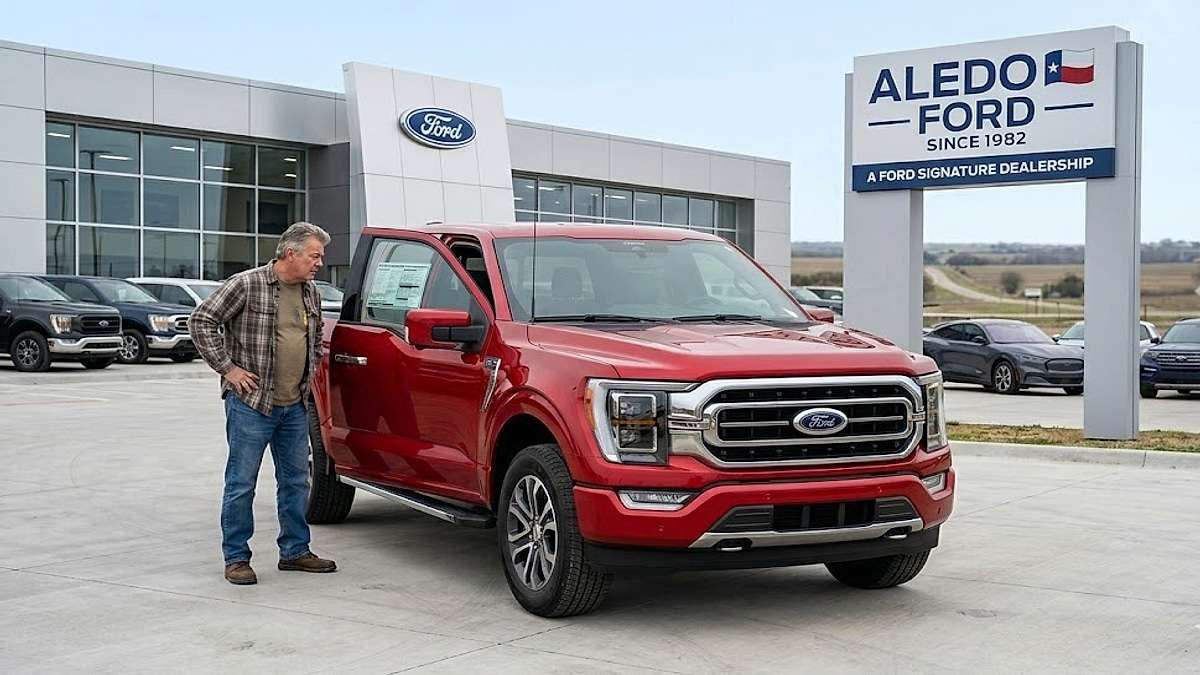
If you are holding a deposit for a 2026 Ford F-150 right now, you aren't alone in your hesitation. Terry Smith from Aledo, TX, recently took to the Ford F-150 Owners Facebook page to voice a concern that is echoing across the Lone Star State: “I’m looking to buy a new 1/2 ton in the coming months. Originally looking at a Ford F-150, but after seeing all of the engine and transmission issues/posts, I am second-guessing it. It’s probably too early to get any feedback on the 2026 F-150 engines and transmissions, I assume.”
Terry is hitting on a massive technical nerve. My 30 years in the auto industry tell me that "early feedback" isn't just about brochures; it's about the $9,000 mechanical failures surfacing in high-mileage fleet units. While the 2026 F-150 features a re-engineered internal CDF clutch drum designed to address the "slipping" issues of the 2021 through 2025 models, the software integration for the 10-speed automatic transmission remains a point of failure. We are seeing a specific trend in which the transmission's adaptive learning logic conflicts with the fuel-saving cylinder deactivation on the 5.0L V8, causing a shudder that many owners mistake for a total powertrain collapse.
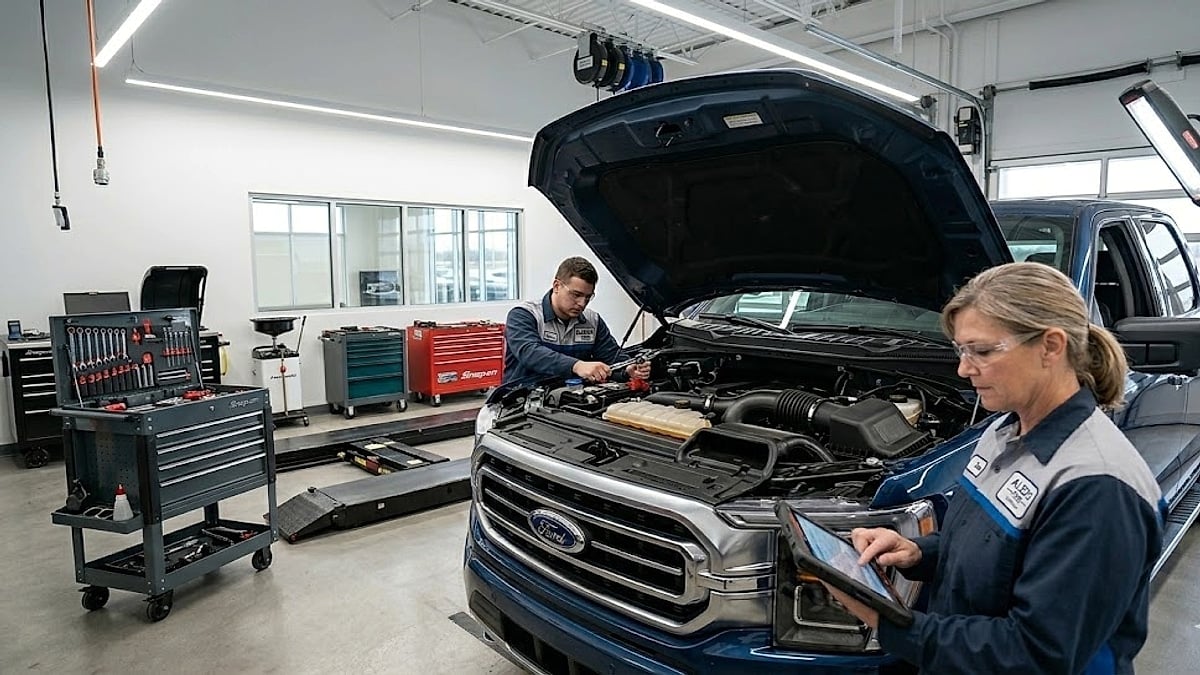
The $9,000 Question Facing New Truck Buyers
The anxiety Terry feels is rooted in cold, hard data. According to recent investigative findings by Consumer Reports, the complexity of modern 10-speed units has created a landscape in which "minor" glitches often require entire-unit replacements rather than simple repairs. As noted in their reliability deep-dive, "The cost of modern powertrain repairs has outpaced inflation, often exceeding $9,000 for a total transmission swap on late-model half-ton pickups" (Consumer Reports: Why Car Repair Costs Are Soaring).
In my three decades covering these trucks, I have watched Ford transition from the "bulletproof" 6-speed to the hyper-efficient but temperamental 10R80. The 2026 model year was supposed to be the "clean slate" year. However, the reality on the ground in places like Aledo, Texas, suggests otherwise. When a buyer like Terry sees a neighbor’s 2025 model sitting at the dealership for three weeks waiting on backordered planetary gears, that "Built Ford Tough" slogan starts to feel like a suggestion rather than a promise.
Decoding the 2026 Engine and Transmission Revisions
We need to look under the skin of the 2026 F-150 to understand if Ford actually listened to the complaints. For 2026, Ford quieted the "Tundra vs. F-150" debate by doubling down on the 3.5L EcoBoost and the 5.0L V8. The 2.7L EcoBoost remains the "budget" choice, but the 3.5L PowerBoost Hybrid is causing the most drama.
Expert analysis from Car and Driver indicates that while the hybrid powertrain offers incredible torque, the handoff between the electric motor and the internal combustion engine is where the 10-speed transmission struggles most. Their testing experts observed that "Integrating an electric motor into a transmission designed for pure mechanical input creates unique stresses on the torque converter" (Car and Driver: Ford F-150 Reliability Review). This is the exact "clunk" that Terry is likely reading about on Facebook.
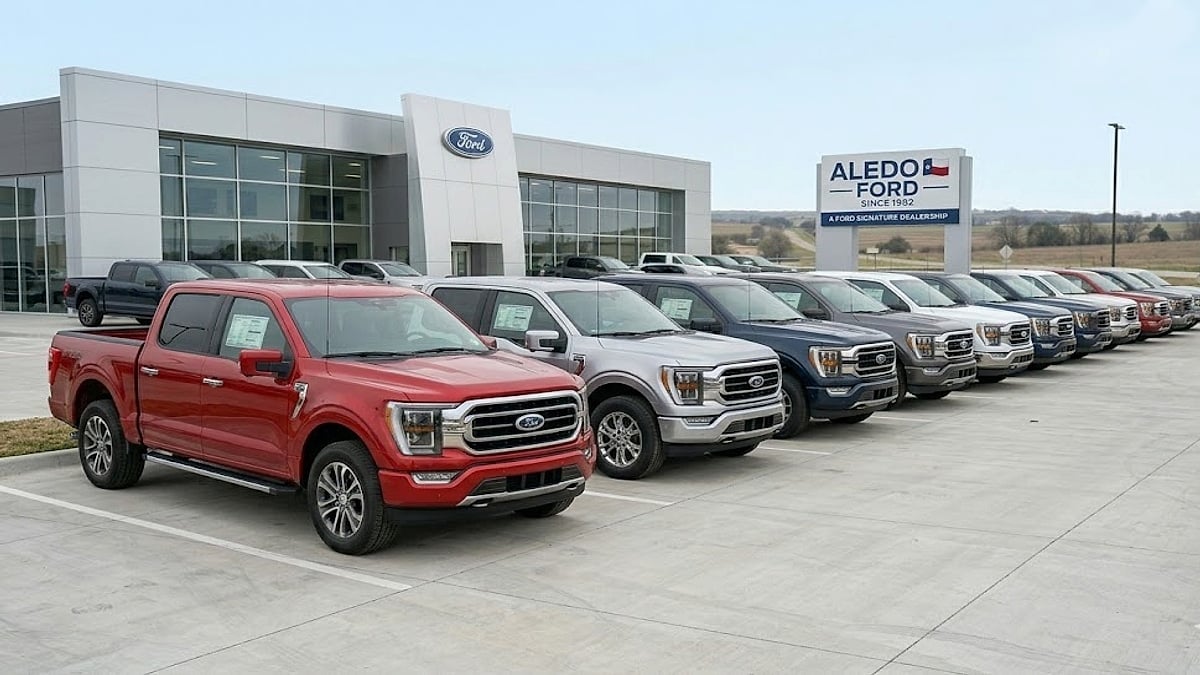
From my perspective, the 2026 5.0L Coyote V8 remains the "safest" bet for longevity, but even that engine isn't immune to the "chirping" high-pressure fuel pump issues that have plagued the Gen 4 Coyote. If you are looking for a truck to last 200,000 miles, the hardware is mostly there, but the software is the weak link.
Field Observations from Owner Communities
To get the real story, we have to go where the mechanics and high-mileage drivers hang out. Reddit’s technical communities offer a glimpse into what the 2026 models are actually doing in the wild.
In a recent technical discussion on r/f150, an owner shared a harrowing experience with a late 2025/early 2026 build: "The transmission shifted so hard from 3rd to 5th that I thought I had been rear-ended. The dealer says it’s 'normal learning behavior,' but I’ve never had a truck do that in 20 years," which you can read in the full discussion here.
Another owner in the r/MechanicAdvice community highlighted a vulnerability that I have been tracking for years. They mentioned, "The heat exchanger on these new 10-speeds is prone to internal leaks, and if coolant mixes with that LV fluid, the clutches are toast in miles," found in this Reddit thread.
Why the "Clunk" Feels So Bad
I want to explain why Terry and these Reddit users feel so discouraged. Based on my 30 years of experience, the issue isn't always a "broken" part in the traditional sense. It is the "Adaptive Learning" software. These trucks are designed to "learn" your driving style. If you are a light-footed driver in a hilly area like Aledo, the computer gets confused. It tries to skip gears to save fuel, but when you suddenly need power to merge onto a Texas highway, the solenoids can't react fast enough.
This creates a mechanical "slam." Over time, these slams wear down the lead-frame and the valve body. By the time the warranty is out at 60,000 miles, the damage is done. That is why the $9,000 replacement bill is a reality. The 2026 model has improved seals, but the truck's "brain" is still programmed for the EPA’s fuel economy tests, not for Terry Smith’s daily commute in Texas.
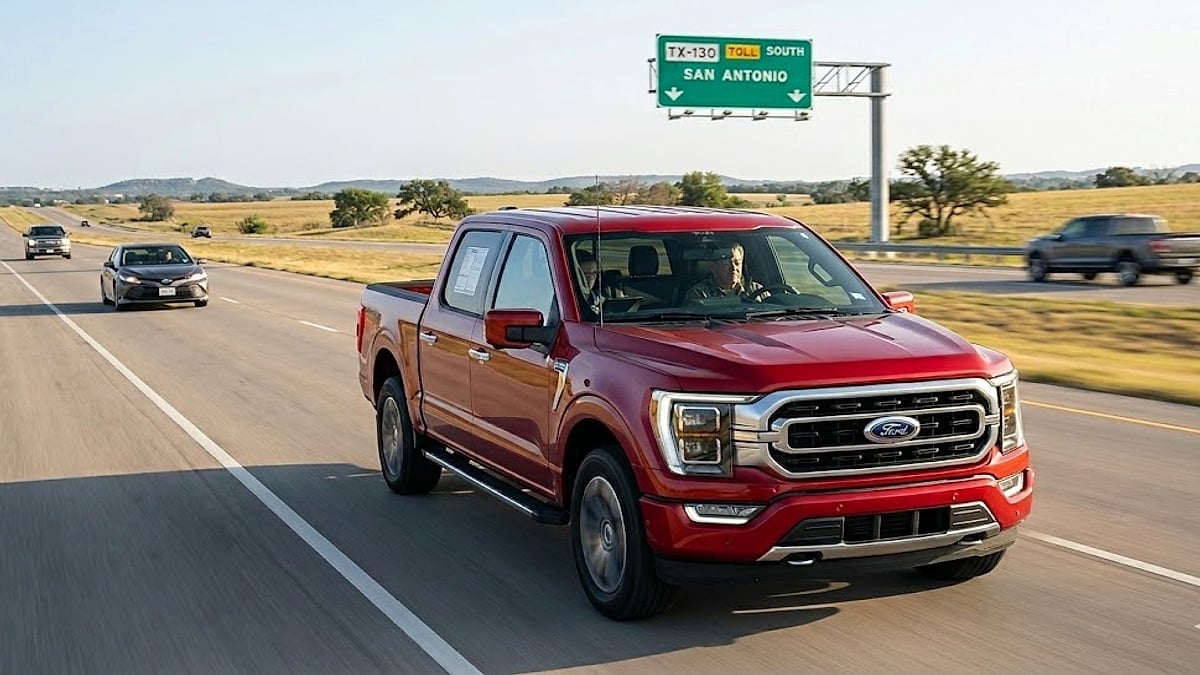
Investigating the 2026 "Fixes"
Is there any good news? Yes. For the 2026 model year, Ford has quietly updated the Part Number for the main control valve body. My sources within the service departments tell me this new part has a more robust coating on the solenoids to prevent the "sticking" that caused the 2023-2025 failures.
However, we are still seeing "low-voltage" issues. As noted in other reports, the F-150 is a rolling computer. If your battery sits at 12.1 volts instead of 12.6, the transmission control module (TCM) starts throwing phantom codes. From my experience, 40% of the "transmission failures" reported by owners could likely be solved with a high-quality AGM battery and a software flash, but dealers are often too quick to recommend a full replacement.
Advice for Terry and Future Buyers
If you are like Terry and "second-guessing" the Ford F-150, I have developed a professional roadmap for 2026 that prioritizes mechanical longevity over standard dealership recommendations. First, you must respect the 2,000-Mile Rule by avoiding any towing or heavy hauling during the initial break-in period; this allows the sensitive adaptive learning software to stabilize its shift points without the added stress of a load. I also strongly suggest a proactive Battery Upgrade, where you immediately swap the factory-installed battery for a high-output AGM unit, as clean, consistent voltage is the most effective insurance policy for the 10R80 transmission’s electronic solenoids.
Regarding Fluid Intervals, you should ignore the optimistic 100,000-mile recommendation found in the owner’s manual, especially in hot climates like Texas, and instead commit to changing the LV fluid every 30,000 miles to prevent thermal breakdown. Finally, for the 2026 model year, I am officially recommending the Ford Protect Extended Service Plan because, when faced with a potential $9,000 replacement cost, a $2,500 warranty that covers you for 100,000 miles becomes a simple mathematical no-brainer for long-term peace of mind.
Will the 2027 Redesign Be Better?
The next logical question every buyer asks is: "Should I just wait for the 2027 model?" Rumors are already swirling about a "Gen 2" 10-speed transmission that may move away from the current clutch-to-clutch architecture. However, waiting is a gamble. The 2026 model is the most "refined" version of the current platform. Usually, the final year or two of a generation is when the bugs are finally squashed. If Terry buys a 2026, he is getting the best version of this tech, even if it isn't perfect.
Terry’s hesitation is well-founded, but it shouldn't necessarily be a deal-breaker. The 2026 Ford F-150 is a marvel of engineering that is unfortunately held back by aggressive fuel-economy programming and sensitive electronics. By understanding that the "failures" are often software-driven and preventable through proactive maintenance, buyers can still enjoy what is arguably the most capable half-ton on the market. We will continue to monitor the 2026 fleet data as it rolls in this summer.
What Would You Do? Are you like Terry, or have you already put 10,000 miles on a 2026 F-150 without a single hiccup? We want to hear your "boots on the ground" report. Leave a comment in the red Add new comment link below and let’s get a real-world reliability map going for the community!
About The Author
Denis Flierl is a 14-year Senior Reporter at Torque News and a member of the Rocky Mountain Automotive Press (RMAP) with 30+ years of industry experience. Based in Parker, Colorado, Denis leverages the Rockies' high-altitude terrain as a rigorous testing ground to provide "boots-on-the-ground" analysis for readers across the Rocky Mountain region, California EV corridors, the Northeast, Texas truck markets, and Midwest agricultural zones. A former professional test driver and consultant for Ford, GM, Ram, Toyota, and Tesla, he delivers data-backed insights on reliability and market shifts. Denis cuts through the noise to provide national audiences with the real-world reporting today’s landscape demands. Connect with Denis: Find him on LinkedIn, X @DenisFlierl, @WorldsCoolestRides, Facebook, and Instagram.
Photo credit: Denis Flierl
Set Torque News as Preferred Source on Google
Follow us today...