
This investigative report addresses a critical pivot point for 2026 Ford F-150 buyers: the technical divergence between the 2.7L EcoBoost and 3.5L/5.0L powerplants in terms of long-term mechanical durability. Drawing on 30 years of automotive consulting experience, I analyze owner feedback from the Ford F-150 Owners Facebook group and r/f150 technical threads, using verified engineering data. The core finding identifies the 2.7L’s Compacted Graphite Iron (CGI) block as the primary factor for reliability-focused buyers who do not tow. Furthermore, the report provides a professional diagnostic synthesis of the 10R80 10-speed transmission’s "highway clunk," distinguishing between software-induced adaptive learning behaviors and mechanical solenoid failure, and offering actionable advice for 2026 model-year consumers.
The CGI Secret: Why Ford’s "Little" 2.7L Engine is Actually the Heavy-Duty Choice for 2026 F-150 Buyers
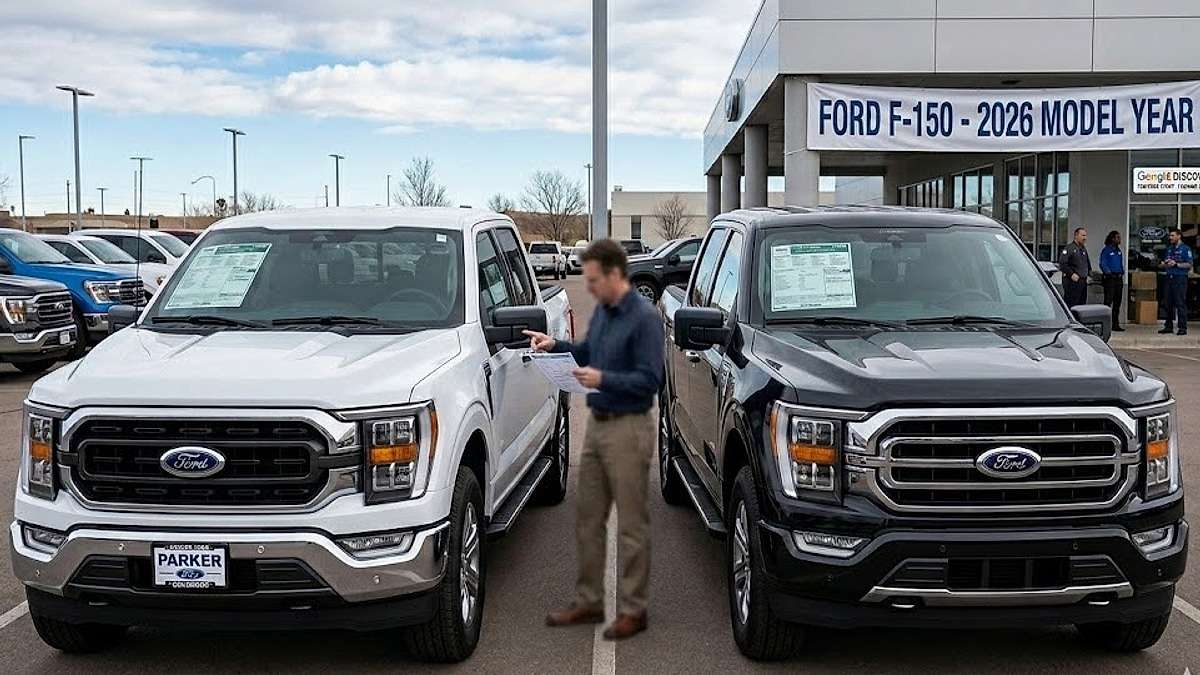
If you are standing on a dealership lot in Parker, Colorado, or anywhere across the country looking at a shiny new 2026 Ford F-150, you are likely facing the same dilemma as Nathan Riggle from California. Nathan reached out on the Ford F-150 Owners Facebook page, noting that he is a long-time fan ready to pull the trigger on a new truck. Nathan isn't planning to tow heavy loads, but he’s caught between the 2.7L and 3.5L engines.
Most importantly, he’s worried about the 10-speed transmission after feeling a "clunk" at highway speeds during a test drive. After 30 years in this industry as a test driver and consultant, I can tell you that Nathan’s intuition is sharper than most. He specifically asked if the 2.7L block is "graphite iron" and if that makes it a "super tough engine." The short answer is a resounding yes, but the "why" behind it is what will save you thousands of dollars in repairs over the next decade.

The 2.7L EcoBoost is the industry's best-kept secret because it is over-engineered for its size. While the larger 3.5L EcoBoost and the 5.0L V8 use traditional aluminum blocks, the 2.7L is constructed from Compacted Graphite Iron (CGI). This is the exact same material Ford uses in the 6.7L PowerStroke diesel engine found in Super Duty trucks to handle massive cylinder pressures.
Because CGI is significantly stronger and stiffer than gray iron or aluminum, Ford can build a lighter block that handles heat and stress with much higher fatigue resistance. For a buyer like Nathan who does not tow, the 2.7L isn't the "budget" choice; it is the reliability choice. You are essentially getting a diesel-spec bottom end in a light-duty gasoline engine.
When we look at technical validation from industry leaders, the consensus on CGI technology is clear. According to metallurgy experts at SinterCast, a primary provider of CGI technology for high-performance engines, the material enables a 75 percent increase in tensile strength compared to traditional gray iron. As noted in their technical report on the evolution of high-efficiency engines, "the higher strength of CGI allows the engine to be designed with thinner walls, which reduces weight while actually increasing the durability under high thermal loads." This technical reality flows perfectly into my own observations from three decades of consulting. When an engine block is stiffer, the cylinder bores stay rounder under stress, which means better ring seal and less oil consumption as the truck hits 100,000 miles.

Deconstructing the 10-Speed Highway Clunk: Software vs. Metal
Nathan’s second concern is the one that keeps F-150 owners up at night: the 10R80 10-speed transmission. During his test drive of a 2026 model, he felt a "clunk" at highway speeds. My professional synthesis of this issue begins with an understanding of the "Adaptive Learning Strategy." These transmissions are designed to learn your driving style, but during the first few hundred miles, the computer is still mapping out the shift points. If you are light on the throttle, the transmission might "hunt" or "skip-shift" from 8th directly to 10th gear. That thud you feel is often a solenoid timing mismatch that the computer hasn't smoothed out yet. However, we cannot ignore the history of the 10R80.
A verified report by Brian Makuloco of FordTechMakuloco, a recognized Ford master technician, notes that while the 10-speed has undergone numerous internal revisions by 2026, the CDF clutch drum remains under scrutiny. Makuloco has argued that "misalignment of the internal bushing in the clutch drum can lead to erratic shifting and eventual gear slippage," as detailed in his technical breakdown of Ford 10-speed failures. For a 2026 buyer, this means the clunk Nathan felt could be a harmless software quirk or a sign of a factory calibration issue. In my experience, if the clunk happens consistently while the cruise control is engaged at 70 mph, it is almost certainly a software "hunting" issue rather than a mechanical failure of the gear teeth.
Field Observations from Owner Communities
To get a real sense of how these 2026 units are behaving, we have to look at the "messy" data from the trenches. In a recent technical discussion on r/f150, several owners noted that the 10-speed’s behavior is highly dependent on the selected "Drive Mode". One owner shared their frustration with the highway shift logic, stating, "My 2026 was clunking into 10th gear every time I hit a slight incline on the highway until the dealer reflashed the PCM with the newest April 2026 update," which you can read in the full Reddit discussion here.
From my 30 years of experience, this aligns with how sensitive the Ford 10R80 is to software versions. The hardware is largely "settled" by the 2026 model year, but the programming is constantly being tweaked to meet fuel economy standards. Another owner highlighted the vulnerability of the transmission cooling system, mentioning, "The thermal bypass valve on these new units is supposed to keep the fluid at 190 degrees, but if it sticks, you get some really harsh shifts once the truck is heat-soaked," found in this Reddit thread.
My professional analysis of these community reports is simple: The "clunk" is often a thermal or software issue rather than a "broken" transmission. If you feel it on a test drive, I recommend asking the dealer to perform a "transmission adaptive reset" before you sign the paperwork. If the clunk disappears, you are in the clear. If it persists, that specific unit may have a solenoid body that was out of spec from the factory.

The Non-Towers Guide to 2026 Trim Selection
Nathan mentioned he won’t be towing. This changes the game for trim selection. Most people think they need the Max Trailer Tow Package just "to have it," but that package adds stiffer rear springs and a different steering gear that can actually make the truck feel more jittery as a daily driver. For a California driver like Nathan, or someone here in Colorado dealing with highway commutes, I suggest looking at the XLT or Lariat with the 2.7L EcoBoost and the 3.55 electronic-locking rear axle. This gives you the best balance of fuel economy and off-the-line "pep" without the harshness of the heavy-duty towing suspension.
The 2.7L engine is lighter than the 5.0L V8, which means less weight over the front wheels. This improves turn-in and braking performance. Because the 2.7L uses two small, fast-spooling turbos, it delivers its peak torque much lower in the RPM range than the V8. For a non-tower, this means the truck feels "snappier" in city traffic. You aren't waiting for the transmission to downshift three gears to find power; the torque is just there.
The Reliability Verdict: Is the 2026 Ford F-150 a Safe Bet?
We have to be honest about the state of the automotive industry in 2026. Every manufacturer is pushing the limits of technology to meet emissions goals. This means more sensors, more complex transmission logic, and tighter tolerances. However, Ford has had a decade to refine the EcoBoost and the 10-speed. While the 10-speed transmission was a nightmare for some in the 2018 through 2021 model years, the 2026 version has benefited from redesigned planetary carriers and updated clutch materials.
If you choose the 2.7L, you are choosing an engine that has stayed remarkably consistent. Unlike the 3.5L, which has undergone multiple cam phaser redesigns, the 2.7L’s simplified internal architecture has made it the "reliability king" of the Ford lineup. My advice to Nathan, and to all of you, is to trust the CGI block. It is a premium material hidden in an entry-level engine.
Should I Buy an Extended Warranty for the 10-Speed?
The very next logical question a buyer will have is: "If the transmission clunks even a little, is a 100,000-mile extended warranty a requirement?" The answer for the 2026 model year is a cautious yes, but with a caveat. You should only purchase a Ford Protect ESP (Extended Service Plan), not a third-party warranty. Because the 10R80 transmission is so software-dependent, third-party shops often lack the proprietary Ford diagnostic tools to properly reflash or recalibrate the system. A Ford ESP ensures that if that "highway clunk" ever turns into a "highway failure," you are covered at any dealership with genuine parts. Given the complexity of the 2026 electronics, the peace of mind is worth the $2,000 investment.
A Final Word on the 2026 F-150 Decision
Selecting the right truck is about matching the mechanical hardware to your actual daily reality. For the majority of F-150 buyers who use their trucks for commuting, light hauling, and family trips, the 2.7L EcoBoost with its "diesel-spec" CGI block is the most robust and technically sound choice available. The 10-speed transmission "clunk" is a known characteristic that is usually solved with a software handshake, but it requires a vigilant owner who isn't afraid to demand a PCM update from their dealer. Trust the engineering, but verify the calibration.
Tell Us What You Think
How about you? Have you felt the "highway clunk" in a new Ford 10-speed, or are you a 2.7L CGI block convert? We want to hear your real-world experience with the 2026 models. Please leave a comment in the red "Add new comment" link below.
About The Author
Denis Flierl is a 14-year Senior Reporter at Torque News and a member of the Rocky Mountain Automotive Press (RMAP) with 30+ years of industry experience. Based in Parker, Colorado, Denis leverages the Rockies' high-altitude terrain as a rigorous testing ground to provide "boots-on-the-ground" analysis for readers across the Rocky Mountain region, California EV corridors, the Northeast, Texas truck markets, and Midwest agricultural zones. A former professional test driver and consultant for Ford, GM, Ram, Toyota, and Tesla, he delivers data-backed insights on reliability and market shifts. Denis cuts through the noise to provide national audiences with the real-world reporting today’s landscape demands. Connect with Denis: Find him on LinkedIn, X @DenisFlierl, @WorldsCoolestRides, Facebook, and Instagram.
Photo credit: Denis Flierl
Set Torque News as Preferred Source on Google
Follow us today...