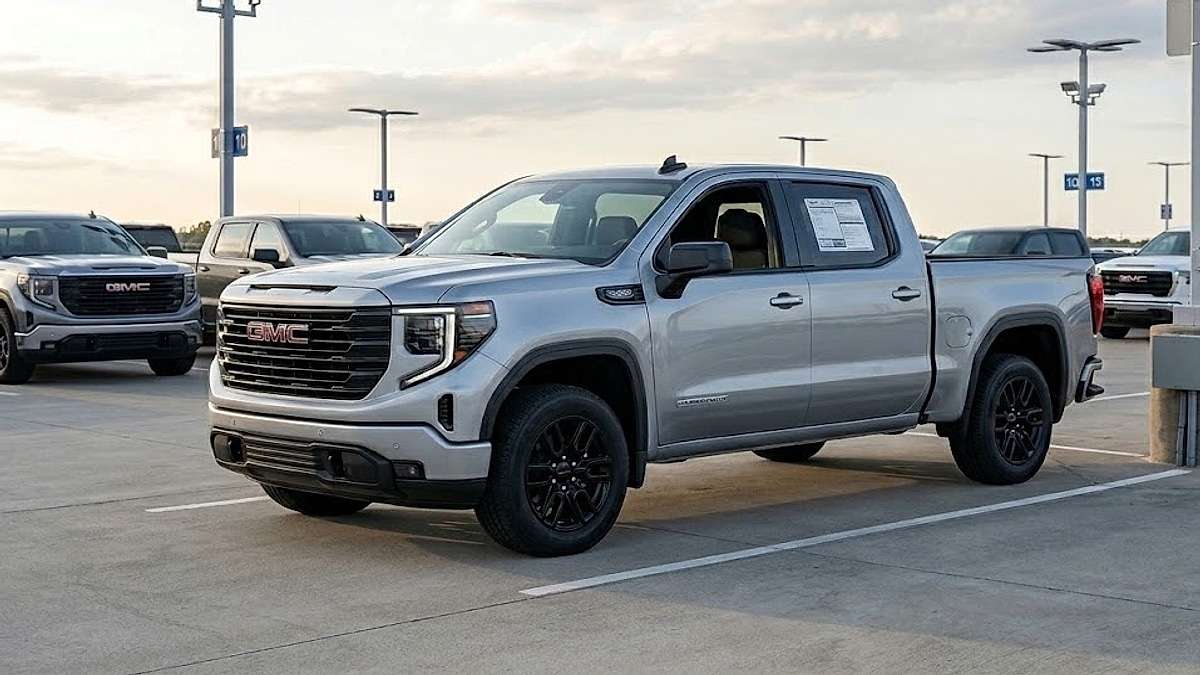

If you just dropped sixty or seventy thousand dollars on a brand new 2026 GMC Sierra Elevation, the last thing you expect to hear is the rhythmic, metallic clatter of a collapsing lifter before you even finish the first tank of gas. I am seeing a disturbing trend in the second quarter of 2026, where the tried-and-true 5.3L EcoTec3 V8 is stumbling right out of the gate. For one Pennsylvania owner, the honeymoon lasted exactly two weeks before the dreaded "lifter tap" surfaced at a mere 200 miles.
By the time the odometer hit 500, the noise was persistent, audible inside the cabin with the AC off, and notably, it did not disappear once the engine reached operating temperature. This is the smoking gun pointing to a physical mechanical failure in the Dynamic Fuel Management (DFM) architecture rather than a simple lubrication delay. We are witnessing a high-stakes reliability gap in which the 2026 models are failing to match the legendary durability of their 2021 predecessors, leaving loyal truck buyers questioning whether General Motors has finally pushed these complex valvetrain systems past their breaking point.
The Mechanical Reality Of A 500 Mile Engine Ticking Clock
I have spent over 30 years under hoods and behind the wheel of every generation of GM truck, and let me tell you, this is not just "normal injector noise." When an owner like Mark Muckey from Macungie, Pennsylvania, reports this on the 2019 - 2026 Chevy Silverado & GMC Sierra Owners Facebook page, we need to listen.
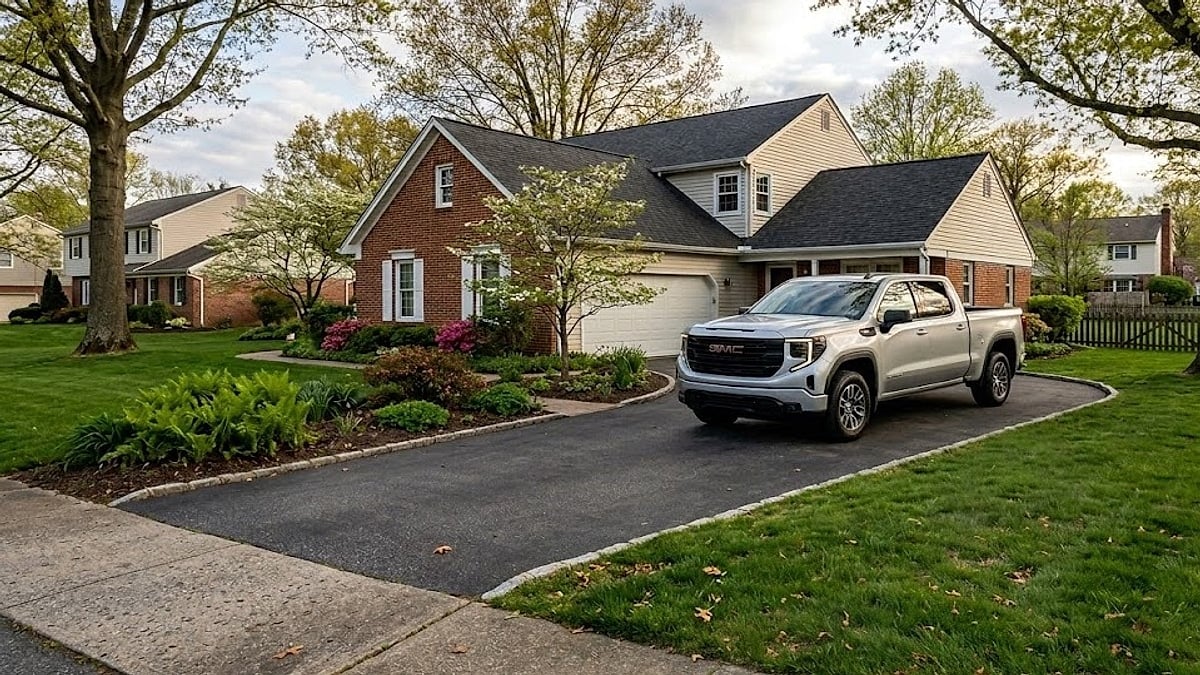
Mark posted: “I just traded in my 2021 GMC Sierra 5.3L Elevation for a 2026 Sierra two weeks ago. I've got about 500 miles on it right now. I never had any lifter tap on my 2021 truck, ran it to 71,000 miles with no issues. With this new one, I started noticing a lifter tap on the driver's side at around 200 miles. The messed-up part is that it doesn't go away after it warms up. I can drive 25 miles, and when I stop, you can still hear it. If you turn the fan off, you can hear it inside the truck during acceleration. I'm going to take a break from oil changes at 750-1000 miles, then take it back to the GMC dealer. What will the dealer do if it has a lifter tap that never stops? I'm also 100% positive it's not fuel injector noise.”
Why The 2026 Valvetrain Is Scrutinized More Than Ever
General Motors has been fighting lifter issues for years, but the 2026 model year was supposed to be the one in which these kinks were finally ironed out. Instead, we are seeing premature failures that suggest a regression in quality control or a flaw in the latest batch of hardened steel components. Expert analysis from CarComplaints confirms that "the 5.3L engine continues to face scrutiny for its valvetrain longevity despite numerous software updates intended to mitigate the stress of cylinder deactivation," a sentiment you can explore further in their detailed GM engine reliability breakdown.
This aligns with my own investigations, where I have previously reported that owners are finding themselves in a "reliability lottery" when they opt for the V8 over the newer turbocharged four-cylinder options. In my previous report on the unseen costs of GM engine repairs, I noted that even minor ticks can quickly escalate into a complete camshaft failure if the lifter needle bearings seize and score the lobes.
Investigating The Regression From 2021 To 2026 Standards
It is incredibly telling that Mark’s 2021 Sierra went 71,000 miles without a single hiccup. That 2021 era was the sweet spot for the T1 platform. As a journalist who has tracked these trucks for decades, I can see the frustration when a consumer upgrades to a newer, more expensive vehicle only to receive a product that feels less robust. Consumer Reports has frequently highlighted that "new vehicle reliability often dips during the first year of a major refresh or when manufacturing shifts impact component sourcing," as noted in their 2026 reliability outlook. We are seeing exactly that here.

The 5.3L V8 is a masterpiece of engineering when it works, but the complexity of the DFM system means there are dozens of points of failure that just did not exist in the simpler, smaller blocks of twenty years ago. In my earlier work on why some V8 engines are failing early, I explained that the precision required for the oil control valves to actuate these lifters is so high that even microscopic debris from the manufacturing process can cause a hang-up in the first 500 miles.
Summary For GMC Sierra Buyers
This investigative report identifies a critical early-life failure in the 2026 GMC Sierra 5.3L engine, specifically regarding the Dynamic Fuel Management lifters. Based on owner testimony and industry data, the 5.3L V8 is exhibiting mechanical "lifter tap" at sub-1,000-mile intervals. This failure is distinct from high-pressure fuel injector noise because it persists after the engine is warm and is audible under load inside the cabin. My 30 years of experience suggest this is a manufacturing defect rather than an oil viscosity or maintenance issue. Owners are advised to document the noise via video and request a "cold start" and "hot idle" inspection at the dealership to prevent the service department from dismissing the issue as normal operation.

Field Observations From Owner Communities
The online truck community is often the first place these patterns emerge before the manufacturer issues a Technical Service Bulletin (TSB). In a recent technical discussion on r/GMC, an owner shared a similar nightmare scenario, stating, "My 2026 started ticking at 400 miles, and the dealer told me it was 'normal,' but after I insisted on a teardown, they found a collapsed lifter on cylinder 7," which you can read in the full Reddit discussion here.
From my professional perspective, this confirms that dealerships are often instructed to defer these complaints until a formal TSB is issued to avoid large warranty payouts.
Another owner in a Silverado thread highlighted the specific frustration with the 2026 batch, noting, "The quality control on these new lifter trays seems to be non-existent compared to my old 2020 truck," as found in this Reddit thread. This sentiment reflects a growing distrust of manufacturing consistency at the plant level, something I have seen when a manufacturer tries to ramp up production too quickly to meet post-recession demand.
My Analysis Of The 5.3L V8 Defect
When you hear a tap that increases with engine RPM and stays loud after a 25-mile drive, you are likely dealing with a "soft" lifter that isn't holding oil pressure or a mechanical failure of the locking pin within the lifter body. I suspect that a specific batch of lifters used in the early 2026 production run has a tolerance issue. If the lifter does not "pump up," it creates excessive lash between the pushrod and the rocker arm. That is the metallic clicking you hear. Mark is smart to do a break-in oil change at 750 miles. We always recommend this to our readers because it lets you inspect the oil filter for "glitter," tiny metal shavings that indicate the engine is eating itself. If that filter comes out clean but the noise persists, the dealer has no choice but to open up the engine's top end.

Key Takeaways For 2026 GMC Owners
- Document every instance of engine noise with high-quality video, specifically showing the odometer and the engine bay while the truck is at operating temperature.
- Request an oil analysis from a laboratory like Blackstone if you suspect internal wear, as this provides "Expert" evidence the dealer cannot ignore.
- Compare your current experience directly against previous model years to establish a baseline of what "normal" operation should sound like for your specific driving conditions.
- Insist on a "Stethoscope Test" by a senior lead technician to differentiate between a harmless injector pulse and a catastrophic lifter failure.
Will GM Issue A Recall Or TSB For 2026 Lifter Failures?
The very next thing every 2026 owner wants to know is whether they will be left holding the bag once the bumper-to-bumper warranty expires. Based on current trends, we expect GM to issue a "Preliminary Information" (PI) document to dealers by mid-2026. This is the stage before a full TSB, where they acknowledge the problem but are still investigating the root cause. If you are experiencing this noise, you must ensure your service advisor records it as a "mechanical engine knock" rather than "top-end tick" to ensure it is flagged for corporate review. We are keeping a close eye on the National Highway Traffic Safety Administration (NHTSA) database to see whether these engine stalls prompt a safety-related recall.
The Road Ahead For The 2026 Sierra
The 2026 GMC Sierra remains a flagship of American capability, but these early engine stumbles are a reminder that even the most proven platforms are vulnerable to supply chain and manufacturing inconsistencies. We will continue to track Mark’s story and those of the hundreds of other owners currently navigating the warranty process. My advice remains firm: do not accept "they all do that" as an answer from your dealer. A brand new truck should be silent and smooth, and as an active investigator in this space, I will keep pushing for the transparency you deserve from General Motors.
It’s Your Turn
Are you hearing a mysterious tick in your 2025 or 2026 GMC or Chevy truck? Did your dealer fix the issue, or are they giving you the run-around? Tell us what you think in the comments below, and share your mileage and engine type.
About The Author
Denis Flierl is a 14-year Senior Reporter at Torque News and a member of the Rocky Mountain Automotive Press (RMAP) with 30+ years of industry experience. Explore his full investigative reporting archives and technical guides at DenisFlierl.com. Based in Parker, Colorado, Denis leverages the Rockies' high-altitude terrain as a rigorous testing ground to provide "boots-on-the-ground" analysis for readers across the Rocky Mountain region, California EV corridors, the Northeast, Texas truck markets, and Midwest agricultural zones. A former professional test driver and consultant for Ford, GM, Ram, Toyota, and Tesla, he delivers data-backed insights on reliability and market shifts. Denis cuts through the noise to provide national audiences with the real-world reporting today’s landscape demands. Connect with Denis: Find him on LinkedIn, X @DenisFlierl, @WorldsCoolestRides, Facebook, and Instagram.
Photo credit: Denis Flierl
Set Torque News as Preferred Source on Google
Follow us today...