
Underpromise and overdeliver is what car dealers should do to keep customers happy, but they don't always do it.
Check out this 2025 Mazda XC-50's story and see why people don't like taking their cars to new car dealers for service after the sale.
Michelle's husband on the Facebook post says,
"And this is why I HATE taking my car to the Stealership! I scheduled my CX-50, with 5,500 miles on it, for its first "complimentary" oil change. When I booked the service, I also requested a tire rotation. At the last minute, something came up, and my wife had to take the car in instead."
"The service writer told her that the tire rotation wasn't normally included in the complimentary service, but he'd "throw it in." I even told her ahead of time to just pay for the rotation if necessary."
"The night before, I marked both front tires with a yellow paint pen. And when we got the car back? The invoice claimed the tires were rotated front to back—but guess what? The yellow dots were still right there on both front tires. Unmoved. They didn't rotate a damn thing!"
"If I had been there, I would've raised absolute hell on the spot. Now it feels too late—but I'm furious. This is basic, routine service, and they either flat-out lied or just didn't bother doing the work. Thank God I didn't have to pay for it!"
"And now I have to ask the obvious: How the hell do I know they even changed the oil?"
It's not that hard to give good service, so why do some new car dealers fail to deliver? The relationship between a car owner and their service department is built on a foundation of trust. We hand over our expensive, essential vehicles, often with blind faith, expecting professional, honest, and competent care.
But what happens when that trust is not just eroded, but outright betrayed? A recent Facebook post from a frustrated Mazda CX-50 owner named Michelle encapsulates a nightmare scenario that far too many consumers can sadly relate to, raising critical questions about accountability in automotive service.
Michelle's ordeal began innocently enough. With her brand-new 2025 Mazda CX-50 hitting the 5,500-mile mark, it was time for its first "complimentary" oil change, a standard perk offered by many dealerships to new car buyers.
Proactive and detail-oriented, she requested a tire rotation when booking the appointment. However, as often happens in life, plans changed. A last-minute complication meant her husband had to take the CX-50 in for service instead. This seemingly minor shift in responsibility would, unfortunately, set the stage for a classic tale of dealership deception.
Upon arrival, the service writer informed Michelle's husband that the tire rotation wasn't typically included in the complimentary service package. A common tactic, perhaps, to hint at an extra charge or create a sense of goodwill, as the writer then added he would "throw it in."
Her husband, having anticipated this possibility, had already instructed his wife to pay for the rotation if necessary, underscoring his commitment to proper vehicle maintenance. However, the actual test of the dealership's integrity was yet to come.
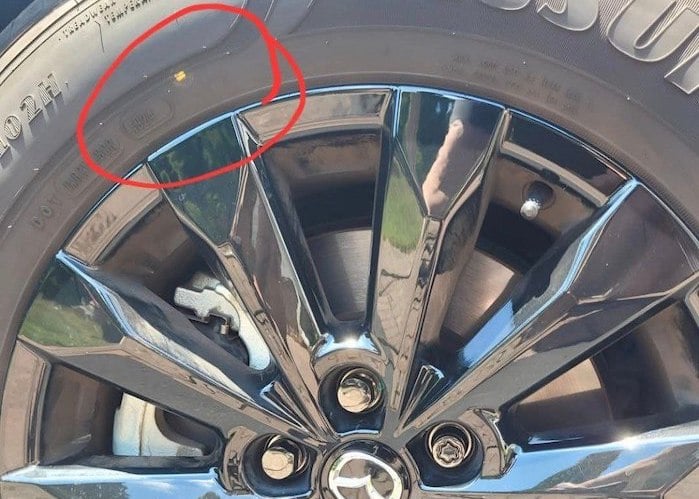
The night before, her husband, with a brilliant stroke of consumer vigilance, had marked both front tires with a yellow paint pen—a simple, yet effective, method to verify the work. When the CX-50 returned, the invoice clearly stated that the tires had been rotated front to back. Yet, the incriminating yellow dots remained precisely where he had placed them – on the front tires, unmoved. The tires weren't rotated.
"They didn't rotate a damn thing!" he says disgustedly.
This isn't just a minor oversight; it's a clear instance where a dealership lied about tire rotation. The brazenness of the deception, documented on an official invoice, is what truly sparks outrage. For Michelle's husband, the fury was palpable. "If I had been there, I would've raised absolute hell on the spot," he wrote.
The feeling of being powerless after the fact is a common thread for consumers who discover such malpractices. It shouldn't feel too late to demand honesty from a service provider. This was a basic, routine service, a fundamental aspect of vehicle maintenance. The dealership either flat-out lied or simply couldn't be bothered to do the work, yet still billed for it (even if "complimentary" to the customer, it costs the dealership).
The incident forces us to confront the uncomfortable question Michelle's husband posed: "And now I have to ask the obvious: How the hell do I know they even changed the oil?"
This is the insidious consequence of such dishonesty. If a Mazda dealership falsifies a tire rotation that can be easily verified, what other, less visible services are they cutting corners on or skipping entirely?
For the average car owner, determining whether a dealership has rotated tires is straightforward, thanks to a simple paint mark. However, verifying an oil change or other internal engine work requires specialized knowledge and tools that most consumers lack. This lack of transparency undermines the entire service industry.
The promise of a "complimentary" service often lures customers in, but as Michelle's experience highlights, these "freebies" can sometimes be anything but.
The broader cost is the psychological damage of distrust.
While it saved her from directly paying for the tire rotation, the broader cost is the psychological damage of distrust. The term "complimentary oil change hidden fees" might not apply in a direct monetary sense here. Still, the hidden cost is the erosion of faith and the subsequent anxiety about future service.
Are these free services merely a gateway for less scrupulous practices, banking on the customer's assumption of goodwill?
Michelle's story is a stark reminder of the challenges consumers face when it comes to trusting the car dealership service department. For many, the dealership is the default choice, offering specialized knowledge, genuine parts, and often, the only option for warranty work. Yet, the widespread perception of dealerships as places to be wary of persists, fueled by stories like Michelle's and her husband's.
This damages the reputation not just of one specific dealership, but potentially the entire brand. Building trust takes years, but destroying it can happen in a single, dishonest transaction.
What steps can customers take to protect themselves?
- For most automotive services, it's about being informed.
- Ask to see the old parts that were replaced.
- Request a multi-point inspection sheet and ask questions about every item.
While it's not always feasible to verify every single task, understanding common dealership practices and knowing what to look for can empower consumers.
Addressing customer service complaints at a car dealership effectively often starts with clear documentation and a firm stance on accountability.
The first complimentary service Mazda CX-50 owners receive sets the tone for their relationship with the brand and the dealership. It's an opportunity for the service center to demonstrate competence and honesty, fostering long-term loyalty.
Instead, for Michelle and her husband, it became a source of profound disappointment and anger, potentially souring their entire ownership experience. This is a critical missed opportunity for the dealership to build a lasting customer relationship.
Conclusion: Accountability must become paramount.
Ultimately, this incident highlights a fundamental ethical failing within specific segments of the automotive service industry. The dealer's honesty in car repair should be non-negotiable. Customers rely on service centers not just for repairs but for safety.
Cutting corners, fabricating work, or outright lying jeopardizes not only customer finances but their well-being on the road. For new car dealers, the short-term gain of skipping a tire rotation pales in comparison to the long-term damage of a lost customer and a tarnished reputation in the age of viral social media posts.
It's Your Turn
Have you had a similar new car dealer experience like Michelle and her husband with their 2025 Mazda CX-50? If so, click the red Add New Comment link below and let us know.
Check out my Mazda story: I Really Appreciate This, Mazda, But You Are An Hour Too Late, I’ve Upgraded To a 2025 Subaru Outback
I am Denis Flierl, a Senior Torque News Reporter since 2012. My 30+ year tenure in the automotive industry, initially in a consulting role with every major car brand and later as a freelance journalist test-driving new vehicles, has equipped me with a wealth of knowledge. I specialize in reporting the latest automotive news, covering owner stories, and providing expert analysis, ensuring that you are always well-informed and up-to-date. Follow me on X @DenisFlierl, @WorldsCoolestRides, Facebook, and Instagram
Photo credit: Denis Flierl via Michelle
Set Torque News as Preferred Source on Google
Follow us today...