
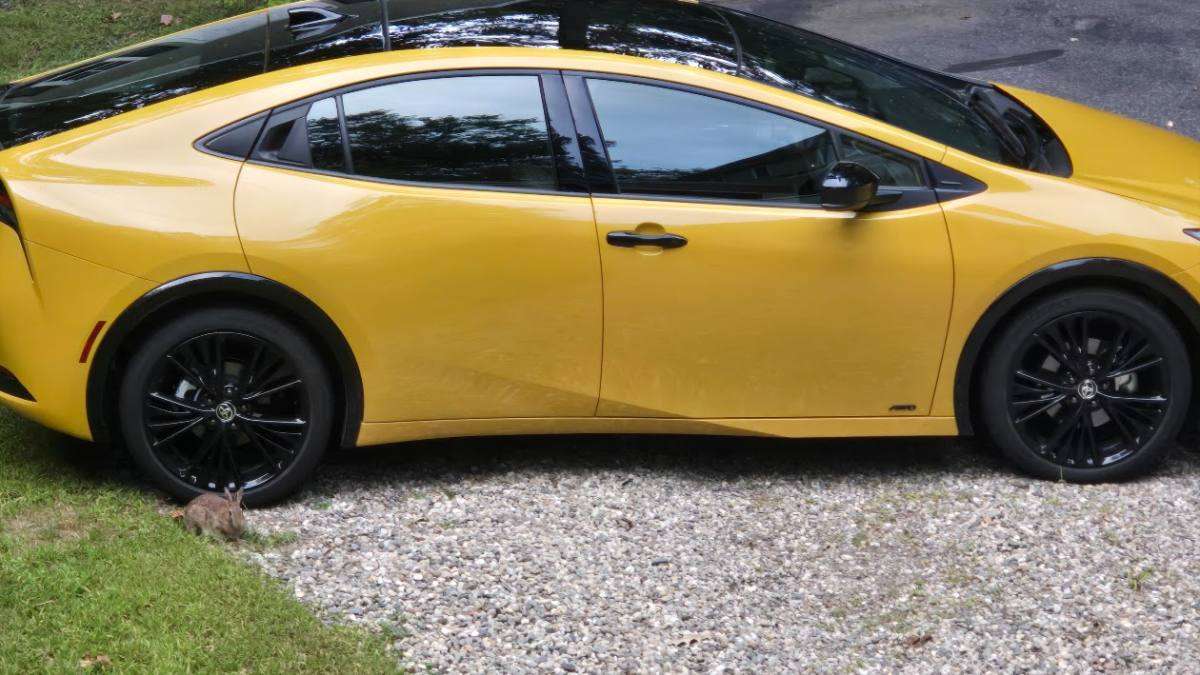

EV advocates love to call hybrids a “bridge.” They imply that the bridge has an endpoint, and that someday hybrids will magically disappear, leaving us with only battery-electric cars. Well, the bridge theory has had its ups and downs. With EV subsidies in America about to end for at least three years, it sure looks like EVs may drive straight off a bridge.
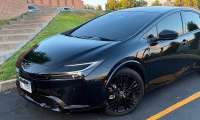
Toyota has delivered 42,964 Prius cars of various trims this year to American owners. That’s 86% more than last year. Call it a “hockey stick sales graph,” or pretend it’s an “exponential rise.” It’s neither, but EV proponents have been saying both about flat EV sales for decades. It’s precisely an 85.5% increase. Nearly double the rate of 2024. No subsidies, no crazy lease deals, no piles of cash on the dash. Just purchases from folks who want a proven, green vehicle that is a Top Safety Pick + and the model Consumer Reports ranks as one of the most highly rated cars for reliability in the history of automobiles. Oh, and the Prius is quicker than a vintage Corvette, which helps.
The Tesla Model 3 outsells the Prius. It earns every sale. It’s a great car, fairly priced, and now proven. Will it still outsell the Prius after its $7,500 consumer-facing subsidy and its approximately $3,500 behind-the-scenes ZEV credit go away? We will start to find out the answer on October 1st.
Now, you might be thinking, “There are EVs that outsell the Prius!” This is true, but none of them are cars. The Chevy Equinox EV is neck and neck with the Prius. They both have about 43,000 units delivered this year as of the end of August. And the Tesla Model Y outsells the Prius. Its deliveries are harder to pin down, but it’s way higher than 43,000. The thing is, these are not cars, they are SUVs. Toyota has an SUV called the RAV4 that outsells them both, and starting this fall, all of RAV4s will be hybrids. Toyota sells them right off the truck. They never even get rained on at the dealership because they are so popular. In the auto industry, vehicle inventory is measured in "days on the lot." Some models average actual years on the lot before they are sold. The RAV4 Hybrid’s time on the lot could be measured in hours and not have three digits.
While nobody was looking, the Prius quietly began selling again. Now, if you are thinking it is just a one-off and that it’s just luck that a hybrid car is outselling virtually all EVs, think again. The Camry is 100% hybrid now. And it outsells the Prius by 6 to 1. Starting in October, it will very likely be America’s number one-selling green car, side by side with the RAV4, which will be the number one-selling green SUV.
What’s your prediction for hybrids vs. battery-electric vehicles for 2026? Tell us in the comments below.
John Goreham is the Vice President of the New England Motor Press Association and an expert vehicle tester. John completed an engineering program with a focus on electric vehicles, followed by two decades of work in high-tech, biopharma, and the automotive supply chain before becoming a news contributor. He is a member of the Society of Automotive Engineers (SAE int). In addition to his eleven years of work at Torque News, John has published thousands of articles and reviews at American news outlets. He is known for offering unfiltered opinions on vehicle topics. You can connect with John on LinkedIn and follow his work on his personal X channel or on our X channel. Please note that stories carrying John's by-line are never AI-generated, but he does employ grammar and punctuation software when proofreading and he also uses image generation tools.
John Goreham is the Vice President of the New England Motor Press Association and an expert vehicle tester. John completed an engineering program with a focus on electric vehicles, followed by two decades of work in high-tech, biopharma, and the automotive supply chain before becoming a news contributor. He is a member of the Society of Automotive Engineers (SAE int). In addition to his eleven years of work at Torque News, John has published thousands of articles and reviews at American news outlets. He is known for offering unfiltered opinions on vehicle topics. You can connect with John on LinkedIn and follow his work on his personal X channel or on our X channel. Please note that stories carrying John's by-line are never AI-generated, but he does employ grammar and punctuation software when proofreading and he also uses image generation tools.
Set Torque News as Preferred Source on Google
Follow us today...


Comments
The longterm solution is…
Permalink
The longterm solution is clearly going to be hybrid, not BEV. Who can't see that, right?
It’s surprising that a more…
Permalink
It’s surprising that a more complex car, having an engine as well as a motor, is so economical and durable, but it is. Lighter, it uses less energy than a long-range BEV.
I will make the claim that…
Permalink
I will make the claim that sales of said vehicle could have been considerably higher if the first 25 years the car had ANY style. It was and remains an ugly door wedge. This new version is light years ahead in style.
The last generations were…
Permalink
The last generations were purely functional, optimizing interior space and efficiency, with little regard for styling😅
Also, the 86% jump need context:
It didnt get a full year of sale last year since it was released in the middle of the year. And the moment it was released, it was put on stopsale for a good 2 months to deal with a recall involving its rear door locks.
So the real indicator is this year’s sale vs next year’s sale.
That being said, the fact that it already sold that many with 3 months till end of the year, and the fact that every toyota/lexus lineup today in the US has a hybrid offer, with some models like the Camry arguably being the better car price-for-price… yeap, the Prius is here to stay.
Great summary, Arsyad. Thank…
Permalink
In reply to The last generations were… by Arsyad Idris (not verified)
Great summary, Arsyad. Thank you for adding this perspective on the recent delivery history.