

If you own or are a fan of EVs you know that range is always at the top of any discussion, and that managing range anxiety is an important goal for everyone in the EV space, particularly for manufacturers. We recently found a touching story offered by Ford we want to share.
An important aspect of managing range anxiety is using your infotainment system to locate and plot a route to your next EV charger. Sure, we lucky ones with home charging don't have to suffer the indignity of public charging very often, but we do on long trips. And those EV owners among us who don’t enjoy the luxury of having their own home charger need to rely on public charging day in and day out. Therefore, all great EVs have a kick-butt infotainment system ready to help them manage charging on the go.
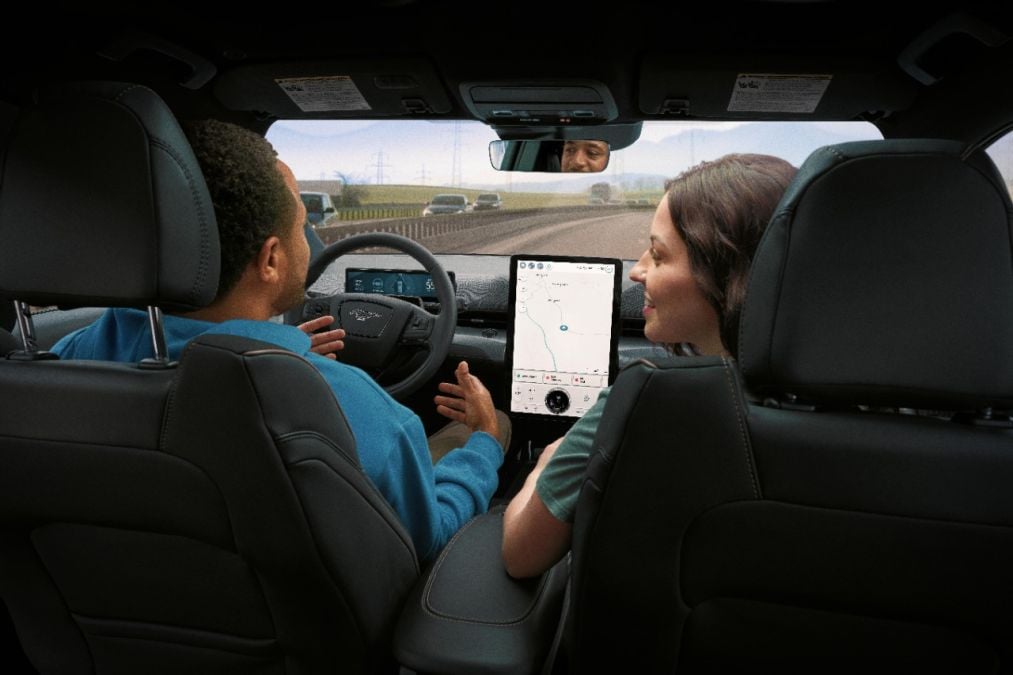
These systems can use voice commands or touch inputs to help a driver find the best charging solution for their needs. The algorithm will consider the state of charge of the EV, the next destination, and traffic conditions to find an open charger and put it into the route as a stop. The systems are even smart enough to precondition batteries and will plan for 15-minute stops at DC chargers to 80% state of charge. All very important aspects of successfully charging in public.
Related Story: Ford’s Blue Oval Network of Chargers Is Fantastic - Our Real-World Test Results
Tesla is often considered the gold standard for such systems, but in my personal back-to-back testing, I’ve found that Ford’s system is more intuitive and very helpful. Best of all, I can still use wireless Android Auto and Apple CarPlay, something you can’t do in an Elonmobile.
Using the Ford system, I wondered, “Who came up with all of this range management stuff, anyway?” This week, Ford published a personal interest story that answered that question for me. The person’s name is Clayton. An early adopter, Clayton owned a string of five plug-in vehicles and epitomized the EV early adoption model. He tried all the early EVs by buying them with his own money. Clayton was the kind of guy who owned a plug-in hybrid and took meticulous care to drive it on electric power alone as often a possible. That’s a great way to learn the ins and outs of managing range anxiety. Trust me, I’ve done it.
Early EV infotainment sort of stunk, if we’re being honest, and Clayton ended up being among those tasked with designing the modern system now found in the Mustang Mach-E. Clayton wasn’t a Ford employee, but rather, he worked for a technology company that collaborated with Ford on a five-year project to develop the newest SYNC Navigation System before the initial launch of the Mustang Mach-E. He was part of the team that designed Ford’s route planner that lets you execute a multi-stop EV journey seamlessly.
After the Mach-E launched, Clayton was among the very first buyer/owners. He even had a vanity plate that read “MODEL E.” Clayton wasn’t just an owner and designer of EVs, he was known as a passionate advocate for them and would talk to anyone who would listen about the Mach-E. Folks close to Clayton say that his enthusiasm was so infectious that a number of his friends bought one shortly after he did.
Sadly, we must report that Clayton has now passed on. You can read a better-written and much more personal story than mine at Ford’s page on the topic. We hope you’ll give it a read, and if you own a Mustang Mach-E, maybe think of Clayton when you plan your next road trip.
The images used in this story were provided by Ford media support.
John Goreham is the Vice President of the New England Motor Press Association and an expert vehicle tester. John completed an engineering program with a focus on electric vehicles, followed by two decades of work in high-tech, biopharma, and the automotive supply chain before becoming a news contributor. He is a member of the Society of Automotive Engineers (SAE int). In addition to his fourteen years of work at Torque News, John has published thousands of articles and reviews at American news outlets. He is known for offering unfiltered opinions on vehicle topics. You can connect with John on LinkedIn and follow his work on his personal X channel or on our X channel. John employs grammar and punctuation software when proofreading, and he sometimes uses image generation tools.
Set Torque News as Preferred Source on Google
Follow us today...