
A commonly perpetuated myth is that battery-electric vehicles are more reliable because they are “simpler designs” and have “fewer moving parts.” While this is an interesting theory, there is ample data on vehicle reliability available to simply answer the question: “Which vehicles are the most reliable? “
For the most part, the technology is not the most important factor. The brand is. Toyota is again at the very top of the list, and Lexus is third. Subaru takes the number two spot, and Honda is fourth. Although these four brands did what they were told by the state of California and the U.S. federal government and made some EVs, they are a minuscule percentage of their total vehicle deliveries. Toyota makes everything but diesels in America. You want a hydrogen-electric car? Toyota is the only answer. You want an EV? Toyota has one. A plug-in hybrid? Toyota has a few. A Hybrid? Nobody has more than Toyota. Want a gas-powered car, you Luddite? Sure, Toyota can find you one. Setting aside the outlier, Toyota’s fleet is mainly gas and plug-less hybrids, and Toyota's cars are the most reliable ones in the industry.
Down at the bottom of the list is a handy control group. Rivian only makes “simple design, fewer moving parts” battery electric vehicles, and it scores dead last in reliability. As you can see, it is not just the type of powertrain that dictates reliability. If that were the case, Rivian and Tesla would be numbers one and two in reliability instead of twenty-sixth and ninth.
Consumer Reports Summary
Let’s jump to how Consumer Reports summed up this new list published on December 4th. We don’t want to give you the idea that it is just our reading of the tea leaves that busts the EV reliability myth. Here’s what the author, John Linkov, said:
Advertising
The latest survey results show that all-electric (EV) and plug-in hybrid electric (PHEV) vehicles continue to be troublesome for their owners. However, hybrid models, which don’t require plugging in, continue to shine as reliable choices that also typically deliver excellent fuel economy.
Exceptional Plug-In Models Do Exist
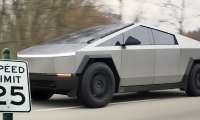
Like all good myths, there is some glint of truth behind the myth that EVs are reliable. The Model Y, America's top-selling EV, is now a very reliable model. Tesla has put a lot of work into the model, since it is basically what keeps the company afloat, and the results are that it has a very good reliability score now. If the reason for the high score was simply its powertrain, then all Tesla models would be high scorers as well. But the Tesla Cybertruck is a horror show with a terrible reliability score.
Exceptional Plug-In Hybrids Do Exist
There is a related myth to the battery-electric myth is often put forth by those fanatical green vehicle advocates for whom only full-electric is the answer. We’re still not sure what the question is, but they somehow see plug-in hybrids as a terrible threat. They often say that PHEVs have “double the powertrain, so double the problems.” This myth is easy to dispel. Toyota’s plug-in hybrid RAV4 has been on the market for many years now. The 2024 model earned a 79 score on the CR reliability rankings system. That’s higher than the 2024 Tesla Model Y, which earned a 56. These are final reliability results from owner surveys, not predicted reliability of current model year vehicles, which can be higher or lower in some cases.
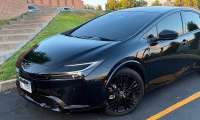
As you can see, the plug-in hybrid didn’t have “double the problems.” It had a lot fewer. Why? Mostly because Toyota’s culture of reliability is what makes its cars unusually reliable. Not the specific powertrain design. We’ll prove that to you another way. Toyota’s own EV, the 2024 bZ4X scored a relatively poor 47 on the reliability rankings. There is almost no way to lay out a factual case that battery-electric vehicles are somehow more reliable than plug-in hybrids. One last example. The Toyota Prius Prime plug-in hybrid from 2024 earned a reliability score of 72. Tesla’s Model 3 scored 69. Both are good scores, but the simpler BEV is not twice as good by any stretch. In fact, it scores a bit lower on relaibility.
Few Shoppers and Pundits Actually Understand Modern Hybrids
Many who are on the other end of the auto spectrum and resist the change from gas-only cars often point to the added complexity of hybrids, be they plug-in or not, as a reason they will prove less reliable. The fact is, many modern hybrids, such as the RAV4 and Camry from Toyota, are not more complicated than conventional models, but actually less. There is no timing belt to fail because there is no timing belt. No alternator to fail because there is no alternator. No starter to fail because there is no starter. No CVT belt to fail in the transmission because Toyota’s eCVT has no belt. When Toyota advanced its powertrain design via hybridization, it removed most of the common failure points.
We Can’t Convince You That Your Favorite Design Is Not the Most Reliable
We can’t convince you that whatever design you feel is best isn’t. It’s pretty likely that you’ve dug your heels in mentally and are not really interested in data showing what the truth is. That’s fine. If you want a gasser only, buy one. If you want an electric vehicle, buy one. What Consumer Reports can help you understand is how individual models in any given style rank against other options.
If you want a reliable BEV, buy a Tesla Model Y or Model 3. There is ample data to show that those two top sellers are the most reliable BEVs. If you want a PHEV, buy a Toyota. The data is very clear that they make very reliable PHEVs. If you want a hybrid, buy one of many that is listed among the best. Toyota makes some, but Ford, Hyundai, Kia, and others also have reliable hybrids. If you want a gas-powered car, there are plenty of very reliable ones in every segment from virtually every brand. But be forewarned. Every type of powertrain has some real lousy models out there. If the data prove anything, it’s that any car company can screw up a vehicle of any powertrain choice if they are not committed to putting reliability first.
John Goreham is the Vice President of the New England Motor Press Association and an expert vehicle tester. John completed an engineering program with a focus on electric vehicles, followed by two decades of work in high-tech, biopharma, and the automotive supply chain before becoming a news contributor. He is a member of the Society of Automotive Engineers (SAE int). In addition to his fourteen years of work at Torque News, John has published thousands of articles and reviews at American news outlets. He is known for offering unfiltered opinions on vehicle topics. You can connect with John on LinkedIn and follow his work on his personal X channel or on our X channel. John employs grammar and punctuation software when proofreading, and he sometimes uses image generation tools.
Set Torque News as Preferred Source on Google
Follow us today...