
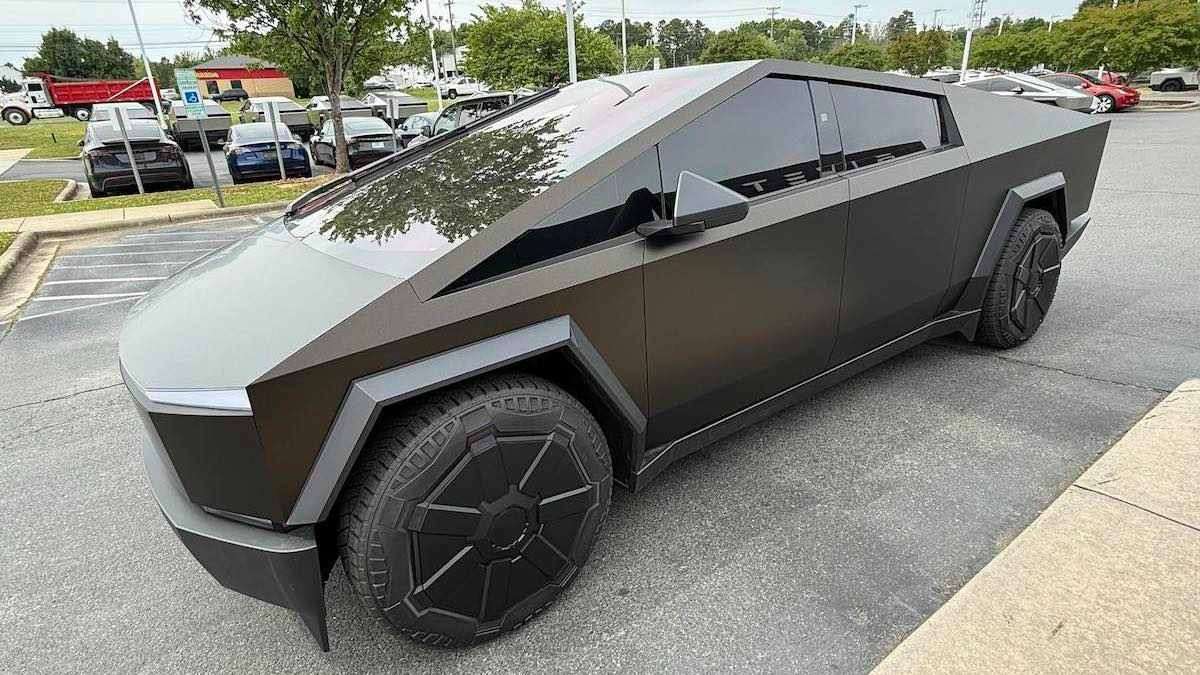

Elon Musk has said for years that the Cybertruck would be one of the safest trucks ever built. This week, we finally got the first hard federal data to examine that claim.
The National Highway Traffic Safety Administration, through its New Car Assessment Program, has officially crash tested the Tesla Cybertruck. The truck earned a 5-star overall safety rating. That is the headline you are seeing everywhere.
But that is not the number I think matters most.
The more interesting figure is the Cybertruck’s estimated rollover risk: 12.4 percent, earning a 4-star rollover resistance rating.
If you own a Cybertruck, are waiting on one, or are cross-shopping it against a Ford F-150 Lightning, Rivian R1T, or even a traditional half-ton pickup, this is the metric you should understand.
Let’s break down what happened, what the ratings mean, and why the rollover estimate deserves more attention than the marketing-friendly 5 stars.
What NHTSA Actually Tested
The results come from NHTSA’s New Car Assessment Program. This is the federal government’s crash testing authority. It conducts standardized tests so consumers can compare vehicles objectively.
The Cybertruck was subjected to three main categories:
- Frontal crash test at 35 mph into a fixed barrier
- Side crash testing, including a side barrier and pole test
- Rollover resistance evaluation, including a dynamic tip test
According to federal data summarized by outlets like Yahoo Autos and EV-focused publications, the Cybertruck earned:
- 5 stars overall
- 5 stars in side crash protection
- 5 stars for the driver in the frontal test
- 4 stars for the front passenger in the frontal test
- 4 stars in rollover resistance, with a 12.4 percent estimated rollover risk
Five stars overall sounds excellent. And objectively, it is. A 5-star NHTSA rating places the Cybertruck among the top tier of vehicles tested under current federal standards.
But that overall number blends several categories together. It smooths out the details. And details matter.
Why the Rollover Risk Estimate Is So Important
Pickup trucks historically have higher rollover risk than sedans. They sit higher. They weigh more. Their center of gravity is elevated.
Electric pickups change that equation slightly. The heavy battery pack sits low in the chassis. That lowers the center of gravity. In theory, that should improve stability.
The Cybertruck’s 12.4 percent rollover risk estimate reflects that design advantage.
For context, NHTSA calculates rollover risk using a formula that factors in track width, center of gravity height, and vehicle weight distribution. It then confirms stability with a dynamic maneuver test. The result is expressed as a percentage probability of rollover in a single-vehicle crash.
A 12.4 percent risk is relatively low for a large pickup truck. That is a positive story.
But here is why I think it matters more than the 5-star badge.
Rollover crashes are disproportionately deadly. According to NHTSA data, rollovers account for a small percentage of crashes overall but a much larger percentage of fatal crashes. When a vehicle tips, the forces involved are severe. Roof strength, restraint systems, and occupant positioning all become critical.
So when you are buying a truck that weighs over 6,000 pounds and sits tall, stability is not a minor footnote. It is central to real-world safety.
If you live in a rural area.
If you tow.
If you drive in snow or rain.
If you occasionally make sudden avoidance maneuvers.
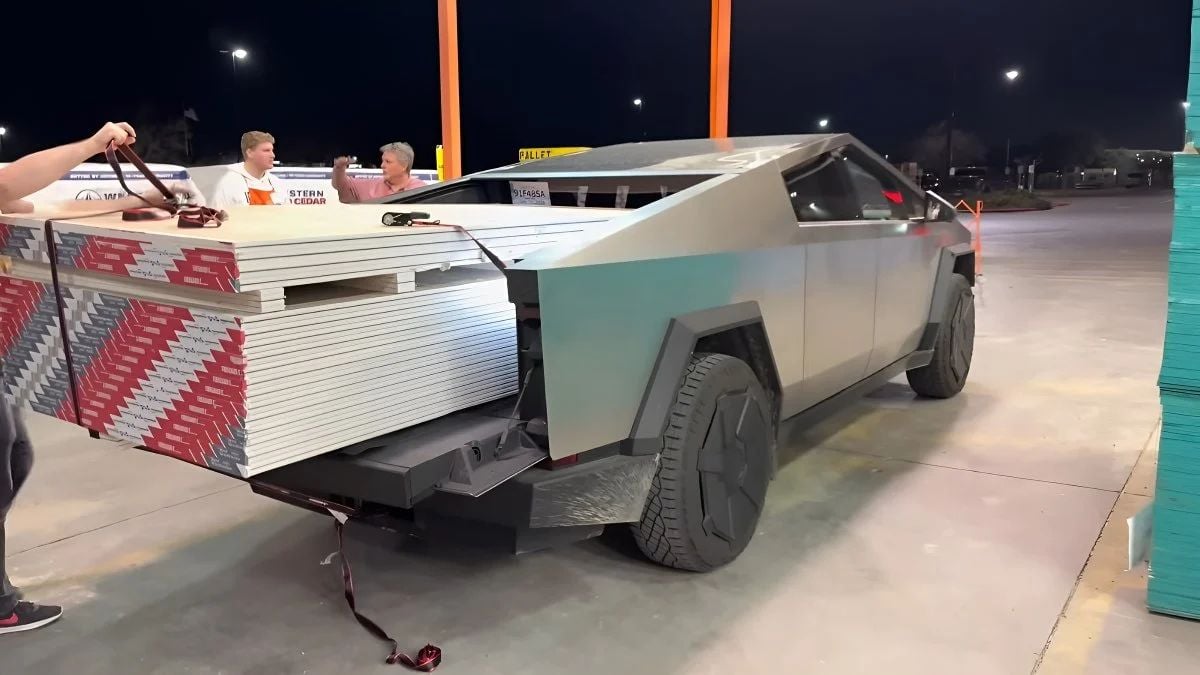
Rollover resistance is not abstract. It is practical.
What This Means for Tesla Owners
If you already own a Cybertruck, this crash test result should give you confidence.
The 5-star overall rating confirms that Tesla engineered strong occupant protection in frontal and side impacts. The stainless steel exoskeleton design raised questions when the truck debuted. Critics wondered how it would perform in energy absorption and crumple management.
The federal data suggests Tesla got the fundamentals right.
The low rollover percentage reinforces something many EV engineers have argued for years. A skateboard battery platform can improve stability. Heavy battery mass down low acts like ballast.
But here is my opinion, and I say this as someone who has covered crash data and automotive safety for years.
Do not let a 5-star rating make you complacent.
Crash ratings are based on controlled tests. Real-world crashes are messy. Speeds vary. Angles vary. Secondary impacts happen. And driver behavior still plays the biggest role in safety outcomes.
Tesla owners often trust technology deeply. Autopilot. Full Self-Driving. Active safety systems. These features can reduce crash likelihood. But physics always wins in the end.
The Cybertruck may be stable for its size. It is still heavy. It still carries enormous kinetic energy at highway speeds.
What Potential Buyers Should Think About
If you are deciding between the Cybertruck and a traditional truck like the F-150, Silverado, or Ram, this crash data matters.
The Cybertruck’s 12.4 percent rollover estimate is competitive and arguably impressive for a vehicle of this size. That supports Tesla’s claim that its EV architecture contributes to safety.
But compare carefully.
Look at:
- Rollover risk percentage
- Side crash scores
- Frontal passenger ratings
- Insurance Institute for Highway Safety results when available
Do not focus only on the star count. Focus on the breakdown.
Also consider your usage.
If you tow heavy loads frequently, center of gravity shifts. If you install aftermarket lift kits or larger wheels, stability changes. If you overload cargo, handling changes.
No crash rating compensates for improper setup or aggressive driving.
Why This Story Matters Beyond Tesla
This is not just about one truck.
This is about whether electric truck platforms deliver measurable safety advantages over traditional body-on-frame designs.
If EV trucks consistently show lower rollover risk because of battery placement, that becomes a structural advantage. It influences insurance rates. It influences fleet purchases. It influences regulatory discussions.
It also shapes public perception.
The Cybertruck’s unusual design triggered intense debate. Some critics argued its rigidity could create problems in crashes. Others worried about pedestrian safety. Federal crash testing focuses on occupant protection, not pedestrian impact severity.
So this result narrows the conversation. It gives us real data instead of speculation.
That is good for consumers.
My Bottom Line
The Cybertruck earning 5 stars overall is good news. It validates Tesla’s safety engineering in major crash categories.
But the more meaningful data point, in my view, is the 12.4 percent rollover risk estimate and the 4-star rollover rating.
That number tells us how stable this large electric pickup is likely to be in a loss-of-control scenario. And stability often determines whether a bad situation becomes catastrophic.
If you are a Tesla fan, this is encouraging.
If you are a skeptic, this is real federal data worth acknowledging.
If you are a buyer, this is information you should weigh carefully.
Safety is not about brand loyalty. It is about physics, engineering, and risk management.
The Cybertruck just passed its first federal crash test. That matters. But the deeper story is not the badge. It is the balance.
And for a truck this large and unconventional, balance may be the most important safety feature of all.
Armen Hareyan is the founder and Editor-in-Chief of Torque News. He founded TorqueNews.com in 2010, which since then has been publishing expert news and analysis about the automotive industry. He can be reached at Torque News Twitter, Linkedin, and Youtube. He has more than a decade of expertise in the automotive industry with a special interest in Tesla and electric vehicles.
Set Torque News as Preferred Source on Google
Follow us today...




Comments
All EVs have a low lying…
Permalink
All EVs have a low lying massive battery weight that keeps it on the ground.
The issue is that they ALL are like getting hit by a Mac truck if you are in a gas powered car!