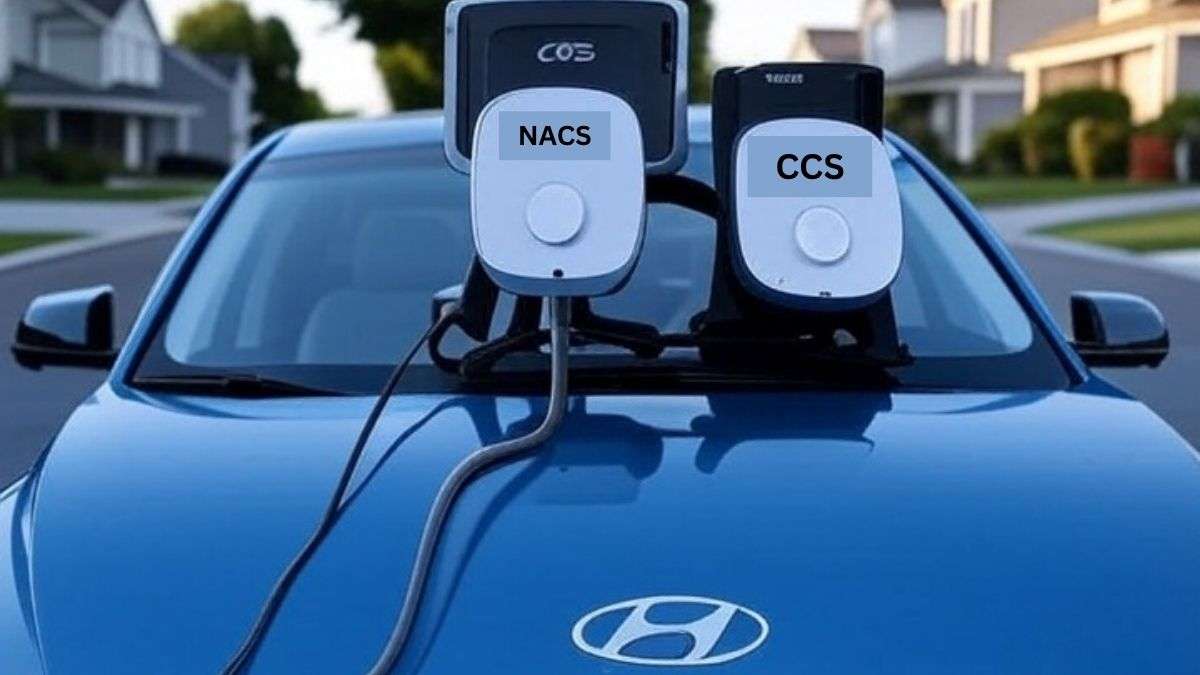

There’s a lot of excitement around the 2025 Hyundai Ioniq 5, and rightfully so. With its sleek design, responsive powertrain, and growing access to Tesla’s Supercharger network, the Ioniq 5 has become a go-to EV for drivers making the jump from gas to electric. But sometimes, reality bumps into expectations in the most unexpected ways. That’s exactly what happened to one new owner who thought he was getting everything Hyundai promised—or so he assumed.
“Hey guys. I just leased a 2025 Ioniq 5, but it did not come with a NACS (Tesla) to CCS adapter. When I asked the dealer about it they were not aware of it coming with a NACS adapter. I pushed back a little, and they combed over the window sticker and found no mention of it on there either. I then reached out to Hyundai, and in an email statement, they informed me that I could purchase one at my leisure, but the car did in fact come with one. I am still new to all this, so I could be confused, but I thought I read on this group and in Reddit that it came with that. I also searched the entire car just in case the NACS adapter was left somewhere out of sight. No success,” wrote John Maisonet in a post that’s been making waves in the Ioniq Guy Facebook group.
That post stopped me in my scroll. Why? Because I’ve been seeing a lot of Ioniq 5 owners proudly sharing how their cars came with the Tesla Supercharger-compatible CCS-to-NACS adapters. But here was someone who didn’t get one, and even more puzzling, the dealer had no clue about it. Now, we’ve seen many “dealer didn’t know” stories before, especially with newer EV tech, but this one raised a fair question. Is Hyundai quietly shifting its adapter policy without clearly letting buyers know?
Turns out, John did some digging, and even received a direct email from Hyundai. Their reply confirmed the cutoff date: “Based on the purchase date of your vehicle, your vehicle does not qualify for the complimentary NACS adapter offer. Hyundai EV owners who purchased or leased after January 31, 2025 can purchase an adapter through an authorized Hyundai dealership.” In other words, that “free Tesla adapter” perk had an expiration date, and John’s lease fell just outside of it.
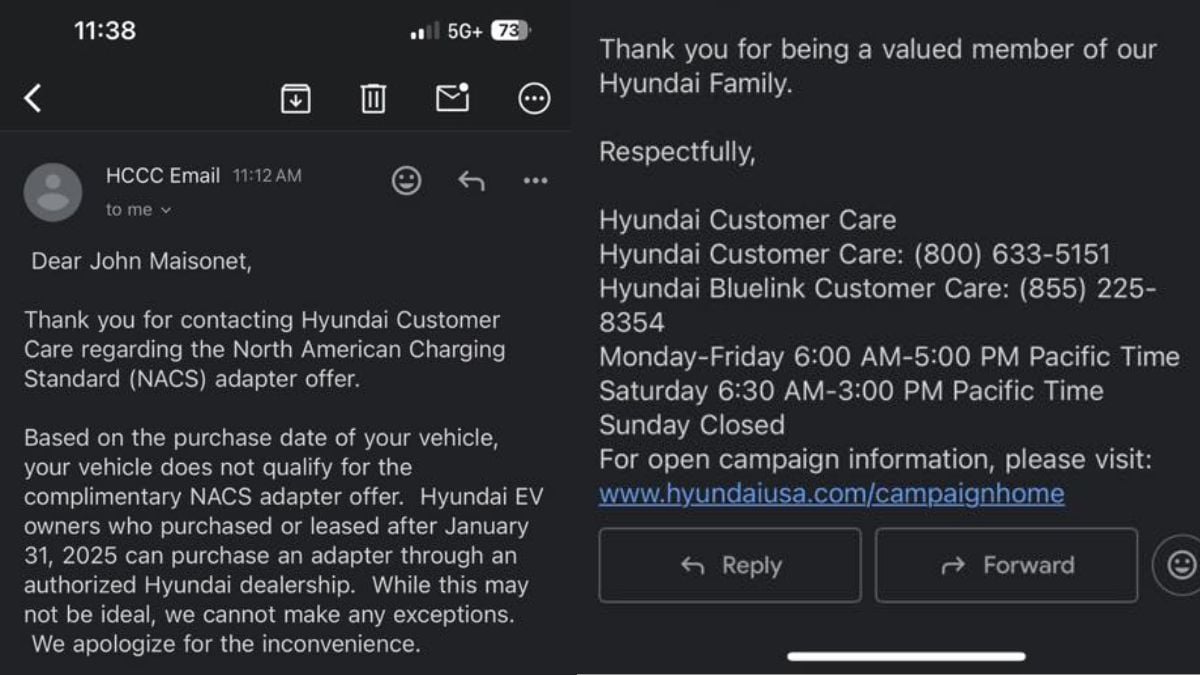
So now we know. Hyundai’s complimentary adapter program for CCS-based EVs ended on January 31, 2025. But here’s the catch. Nowhere on the vehicle sticker does it say whether the adapter is included or not. And in a space as sensitive as EV charging, this is the kind of missing information that can really frustrate first-time electric vehicle owners.
You might think this is just a small misunderstanding, but for new EV drivers, charging infrastructure is everything. Without that CCS-to-NACS adapter, Ioniq 5 drivers lose access to many Tesla Superchargers, which are not yet universally available to all EVs. Some charging apps can help find open ones, as shared in this detailed workaround by a Kia EV9 owner using the Ioniq app, but that shouldn’t be the user’s burden right after leasing a new EV.
Other group members chimed in with helpful advice. Richard Sakelik shared, “I just leased my 2025 Ioniq 5 Limited in early June, and it came with both adapters. I'd strongly push back on the dealer. Just out of curiosity, did you look under the rear mat where the Level 1 Charger should be? Both mine were in bubble wrap next to the first aid kit.” That sparked some new theories—maybe the adapters are hiding in one of the rear compartments, tucked away in a hard-to-see nook?
Roderick Winfield Smith offered another angle, clarifying adapter types, “My USA 2025 Ioniq 5 came with both CCS-to-NACS and J1772-to-NACS adapters. It’s conceivable that Hyundai has dropped these adapters, but I doubt it. I’d push back on this.” And he’s right. Hyundai did previously offer the adapters as part of a transition incentive, but that’s over now, and unless your dealership explains this upfront, you might walk away confused and unprepared.
This is exactly what happened to John. And as Rich Remedios pointed out, there might even be a technical mix-up, “It sounds like you asked about NACS to CCS but you need CCS to NACS. This may be where the confusion lies.” The phrasing here matters. CCS-to-NACS is what most Ioniq 5 drivers need to use Tesla Superchargers, but many new EV owners may understandably flip the terminology.
Another useful reminder came from Donald Cammel, who noted, “I just purchased a 2025 Ioniq5 and it came with both adapters, both were in a bag in the rear with the front license plate bracket.” Don Hilton added his voice to the chorus, saying his May-leased 2025 Limited trim included the adapters, as well as the Level 1 charger.
So now the mystery deepens. If multiple buyers across different states received the adapters even recently, why did John’s car not include them? Could it be a dealer oversight, a mistake in packaging, or even worse, someone quietly removing them before delivery? Barry Bryson made an unsettling but fair point, “Another possibility is that the car was lent, leased or sold to another customer for a very short period of time… Has to be a logical explanation.”
This whole episode reminds me of the increasingly blurred lines between software and hardware in modern EVs. And how easily a small missing component like an adapter can impact the real-world usability of a vehicle. That’s why some EV drivers are now holding onto third-party universal charging adapters or even mobile apps that scan all available networks. It’s a quiet but growing trend.
Take, for example, one recent charging mishap that cost an Ioniq 5 owner $2,400 after their car got stuck on an EA charger. The learning curve is real, and it highlights how every little component—from a cable to an app—has ripple effects.
There’s also an ethical question to be asked here. If Hyundai knew the free adapter program was ending, wouldn’t it be fair to clearly communicate that to buyers and dealers in writing, especially on the car’s window sticker or during the sales process? This is not a luxury accessory. This adapter determines where and how you charge your car. Leaving that detail vague creates unnecessary confusion for new adopters.
On a broader scale, it’s worth looking at how loyalty is being built among EV owners. Some like John are still figuring things out, while others have gone so far as to buy a second Ioniq 5 two days after the first because of how much they liked the car. But both groups deserve clarity and support. It’s the small things that make ownership feel seamless, or a hassle.
That’s why the lesson here isn’t just about whether or not the adapter is included. It’s about becoming a sharper, more prepared EV owner. One who reads the fine print, asks the extra question at the dealership, and shares their story so others can learn. Because in the end, every shared experience makes the EV community smarter.
If you’re in a similar spot as John, it may be worth digging through every inch of your cargo space. One group member mentioned that one of their adapters was hiding behind a removable panel in the back, stuck in a nook. And if it’s not there, push back politely but firmly with your dealership. Transparency in EV sales still has some growing up to do.
And if you’re curious how far some Ioniq 5 drivers are going to optimize their charging experience, you’ll want to read this creative charging strategy where an owner hasn’t paid for charging in months. It’s a surprisingly pleasant reminder that EV ownership can still be rewarding, even when the journey isn’t perfect.
The takeaway here is simple. Never assume the box is checked just because it feels like it should be. Double check. Then check again. And always help the next driver by sharing what you learn. That’s how the community grows stronger, one honest story at a time.
1. What Every New Ioniq 5 Owner Should Check Immediately After Delivery
The story about John’s missing Tesla adapter highlights a broader issue: not all EV deliveries are the same. Whether it's due to regional dealership differences, missed inspections, or unclear communication from the manufacturer, some new owners find surprises after they drive off the lot. Some are good, but others are not.
Here’s a checklist every new Ioniq 5 or Ioniq 6 owner should go through in the first 24 hours:
- Check the rear cargo area thoroughly, including under the floor mat, behind removable panels, and inside side compartments.
- Look for the Level 1 charger, which should come standard and often shares packaging space with other accessories.
- Verify the presence of charging adapters, especially the CCS-to-NACS and J1772-to-NACS, if applicable to your model and delivery date.
- Confirm your software version and connected services, since Hyundai is continuously pushing updates via OTA or dealer-installed firmware.
This step is especially useful if you're preparing to rely on public charging. One misplaced item can change your charging strategy, or worse, delay a trip.
To see how an unexpected charging hiccup can escalate, read about how one Ioniq 5 owner ended up dealing with a charging port failure that led to a $2,400 bill. Small oversights matter.
2. The Real Impact of Hyundai's Transition to NACS and What It Means for Your EV Charging Routine
Hyundai’s adoption of the NACS (North American Charging Standard) has been largely celebrated, but for current Ioniq 5 owners with CCS ports, the transition is more complicated than it first seems. Access to Tesla’s Supercharger network isn't universal just yet, and not all stations are retrofitted with Magic Docks that accept CCS.
Here’s how this shift affects your day-to-day charging routine:
- You’ll need the CCS-to-NACS adapter if your Ioniq 5 has a CCS port. Without it, Supercharger access is limited or completely unavailable.
- Not all Tesla Superchargers are open to non-Tesla vehicles, so you’ll have to check through the Tesla app to find supported locations.
- Charging speeds can vary based on the adapter quality and Supercharger version.
Some EV owners have discovered clever workarounds and charging hacks to deal with these changes. In fact, one Kia EV9 owner found a trick using the Ioniq app to make Tesla chargers work. These tricks are part of a growing grassroots knowledge base among EV owners.
If you’re driving an Ioniq now, the time to learn about these systems isn’t when you’re already at a near-empty battery on the roadside. It’s now, before you need them.
3. The Bigger Picture: Why EV Accessory Inclusion Needs Standardization Across Dealerships
John’s experience is not unique, and that’s the problem. One buyer gets adapters, chargers, and accessories clearly labeled and properly delivered. Another buyer at a dealership across the state - or across the street - gets nothing, and no explanation. It begs the question: should EV accessory inclusion be standardized across all dealerships?
Here’s why this matters:
- Uneven accessory inclusion creates buyer confusion, especially for first-time EV owners who may not know what to expect.
- It can affect resale value, since future buyers will be looking for original equipment like the factory charger and adapters.
- It creates support bottlenecks, forcing customers to chase answers from customer support, dealerships, and online forums.
The inconsistency also creates an ethical concern. If a key piece of equipment like a Supercharger adapter is excluded without notice, it undermines the promise of a fully electric, accessible experience. It’s not just an oversight, it’s a trust issue.
Some Ioniq 5 owners say this was exactly what pushed them to leave Tesla behind, as seen in this insightful story about why a 2025 Ioniq 5 buyer ditched their Model Y. Transparency and reliability in delivery matter just as much as battery range.
Now I want to hear from you.
Did your Ioniq 5 or Ioniq 6 come with the Tesla Supercharger adapter, or did you have to buy it yourself? Was your dealership clear about what was included at delivery? Share your story in the comments below.
Armen Hareyan is the founder and Editor-in-Chief of Torque News. He founded TorqueNews.com in 2010, which since then has been publishing expert news and analysis about the automotive industry. He can be reached at Torque News Twitter, Facebook, Linkedin, and Youtube. He has more than a decade of expertise in the automotive industry with a special interest in Tesla and electric vehicles.
Set Torque News as Preferred Source on Google
Follow us today...