
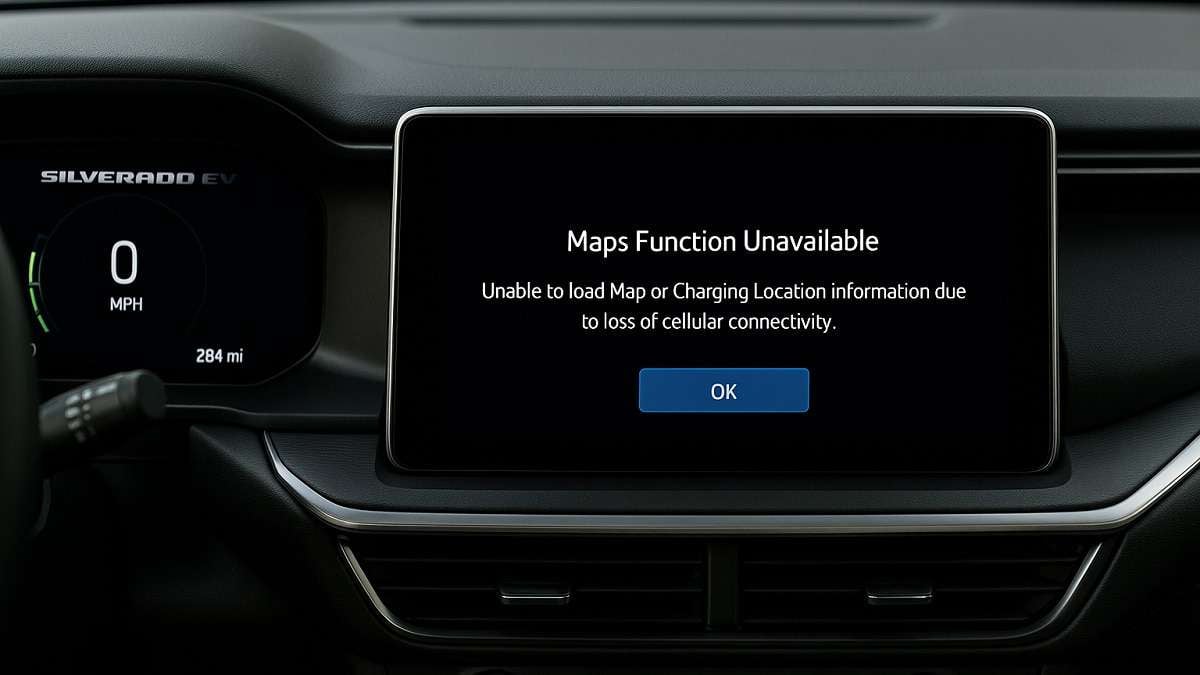

As our cars become increasingly more complex and capable with amazing features like real-time traffic updates, the more we feel the impact when there is a failure. This is especially true for EVs which rely more on connectivity than gas powered cars to find and navigate to chargers, monitor charge status, and for remote features like over-the-air updates. In this article, we delve into how to cope with common EV failures and how to avoid them.
Unexpected failures in EV systems have created a popular topic on automotive social media about the various options to cope when failure strikes on the road. Here’s a recent post by Steve Blackstock on the Facebook Chevy Silverado EV group:
“I was traveling 1,000 miles from home and SMS connectivity died. Onstar couldn’t fix it and they said that I needed to take it to a dealer. I had no Apps, maps, charging station locator, etc. I tried to power cycle, and resetting infotainment. I guess I’m driving old school?”
Facebook Groups came to the rescue and Francis Mathieu responded with a helpful MacGyver tip:
“Share the connection from your phone and connect the infotainment to it. Google Maps should show up connected after a couple of minutes. It does in mine.”
Jack Lukens added:
“I had this happen and they needed to replace a module.”
Planning Ahead for Road Trips
EV road trips work best when drivers plan ahead. Batteries can’t be topped off instantly like a gasoline tank, so it helps to map out charging stops in advance and identify backup stations along the route. Weather conditions, steep terrain, and heavy loads can reduce range, so leaving with a full charge and preparing for extra charging stops is smart. It is also useful to download charging network apps and create accounts before leaving home so charging sessions go smoothly. Although it shouldn’t be done on a daily basis, you can charge your EV above 80% on occasion. The night before your road trip, consider setting your EV charge limit to 95% and then set it back to 80% when you return from your trip.
The 80% Fast Charging Rule
EVs charge fastest between ten and eighty percent. Charging beyond that range slows down significantly. Stopping a fast charge at eighty percent saves time and allows you to get back on the road more quickly. In most cases it is much more efficient to drive to the next charger than to wait for the final twenty percent to trickle in. Charging all the way to one hundred percent should only be done when necessary or when chargers are scarce.
When To Avoid DC Fast Charging
DC fast charging is essential for long distance travel, however it creates more battery stress and costs much more than home charging. It is a helpful tool when needed, although it should not become a daily habit. Relying on a home level two charger greatly reduces the amount of fast charging required and helps maximize long term battery health.
Preparing for Flat Tires in an EV
EVs usually come without a spare tire because automakers are trying to save weight, increase range, and create more room for batteries and cargo. Every pound matters in an EV since extra weight reduces efficiency, so dropping the spare tire helps the vehicle travel farther on a charge. Many EVs also come with larger battery packs that take up space where a spare would normally fit.
Drivers can prepare for a successful road trip without a spare by packing a quality tire repair kit, a portable inflator, and sealant that can fix small punctures long enough to reach a service location. It helps to check tire pressure before leaving and inspect the tread for any issues. Some owners choose to carry a full size or compact spare in the trunk when traveling long distances, even if the automaker did not include one. A little planning can keep an unexpected flat tire from interrupting an otherwise enjoyable EV trip.
Home Charging Basics
The most important step for a smooth EV ownership experience is installing a level 2 home charger. This type of charger consistently replenishes the battery overnight so the vehicle is ready to go each morning. Some drivers with short commutes can survive on a level one 110-volt outlet, although they are the exception. A level 2 charger is the most practical and convenient option, even if electrical upgrades may add to the cost.
Choosing Enough Range
Selecting an EV with more range than you think you will need can make travel much easier. Real world factors such as winter weather, headwinds, or extra cargo can reduce an EV’s advertised range. A model with a larger battery provides more flexibility and reduces the chance of inconvenient charging stops. Many owners are happier in the long run when they choose the longer range version of an EV.
Bottom Line
Electric vehicles offer a great driving experience, although they require a slightly different mindset than gas powered cars. Installing a home charger, limiting unnecessary DC fast charging, planning road trips, buying enough range, and following the eighty percent fast charging rule all help new owners get the most value and convenience from their EV. Once these habits become familiar, the overall ownership experience becomes easier, smoother, and more enjoyable.
The Chevy Silverado EV
The Chevy Silverado EV arrived in early 2023 as one of the most anticipated electric pickups in the U.S. market. It stands out because it combines the familiarity of a full-size pickup truck with the benefits of a modern electric platform. Drivers appreciate its smooth power delivery, long range options, and impressive towing capability. The wide open “midgate” feature adds real flexibility for hauling gear, while the large battery pack provides strong performance for daily use and long trips. The Silverado EV brings traditional truck usefulness into the electric era in a way that feels comfortable for long time truck owners and exciting for newcomers to EVs.
What Do You Think?
Do you trust tech heavy trucks like the Chevy Silverado EV on long trips, or do failures like this make you nervous?
Do you think EVs should still come with spare tires, even if it reduces range?
Chris Johnston is the author of SAE’s comprehensive book on electric vehicles, "The Arrival of The Electric Car." His coverage on Torque News focuses on electric vehicles. Chris has decades of product management experience in telematics, mobile computing, and wireless communications. Chris has a B.S. in electrical engineering from Purdue University and an MBA. He lives in Seattle. When not working, Chris enjoys restoring classic wooden boats, open water swimming, cycling and flying (as a private pilot). You can connect with Chris on LinkedIn and follow his work on X at ChrisJohnstonEV.
Photo credit: Provided by author
Set Torque News as Preferred Source on Google
Follow us today...







Comments
You can just use your phone.
Permalink
You can just use your phone.