
Creating fear by making statements that don’t match real world data is a tactic as old as time. EV critics like oil companies and automotive dealers, have been pushing the bogus claim that EV batteries degrade quickly and cost a fortune to replace.
Long-term ownership data from high mileage EVs continues to show slower than expected battery degradation and far lower replacement rates than many still assume. As more electric vehicles rack up hundreds of thousands of miles, the gap between perception and reality is becoming harder to ignore, especially for drivers who are actually living with these cars every day.
We love to see the truth poke through on engaging social media posts. Today we saw a nice one on the r/electricvehicles subreddit, where EaglesPDX posted:
“What is the typical EV's "service life"? The motors will go 30,000 hours. That's about 30 years of average driving. There is no engine, and no transmission. Maybe wheel bearings which have about 20 years of expected life and are cheap to repair.
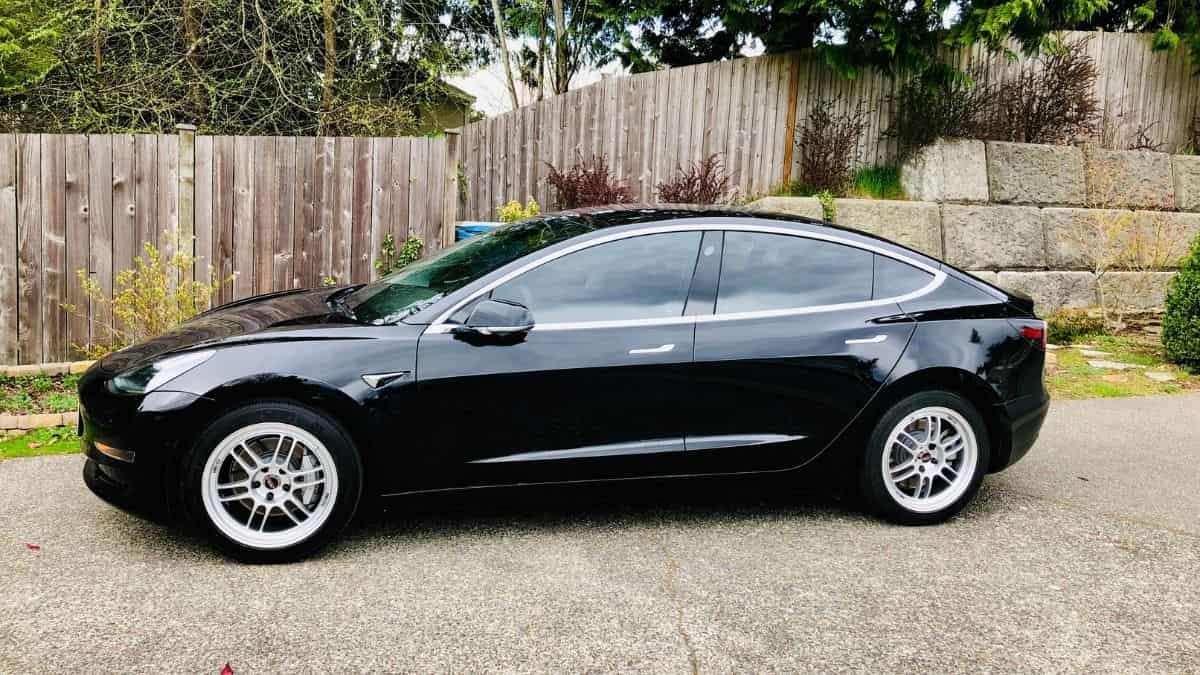
My Tesla is at 200,000 miles and has 30% battery degradation. It led a hard life with two years of only DC fast charging which is worst thing you can do to an EV battery. Still, it can take long trips at 230 miles of range, and is still super fun to drive.
I would certainly pay to drop in new battery at $10k.
You have to look at EV life differently compared to gas cars with so many failure points.”
Sinister_Crayon added some color:
“I definitely don't disagree. Thing is non-EV drivers also aren't asking themselves about the risks of a road trip with an ICE vehicle. There are things like fuel leaks, injector failures, transmission failures etc.
But yeah, trying to explain that to them is pointless. When people ask me how much range I get in my car before I have to stop to charge, I have taken to just replying, "Far enough to get to the next place I need to pee and then some."
j33v3z responded with a suspected bad actor:
“Seems like someone has lied to the public for years, or maybe decades. Who might it be? Perhaps someone who's afraid for their oil profits.”
Can an EV Motor Last 30 Years
The popular misinformation target is about EV batteries degrading, but what about the mechanical drivetrain? How long can we expect motors and gear boxes to last? As it turns out, a really long time, especially when compared to gas-powered drivetrains.
Electric vehicle drivetrains, including motors and gearboxes, tend to last far longer than their gas-powered counterparts because they are dramatically simpler and experience much less mechanical stress. An EV motor has only a handful of moving parts, no combustion heat, no oil changes, and no complex multi speed transmission constantly shifting under load.
EV mechanical drivetrains are commonly expected to last 500,000 miles or more, while many gasoline engines and transmissions begin requiring major repairs or replacement between 150,000 and 250,000 miles. That durability advantage comes from smoother power delivery, fewer wear components, and the absence of vibration and thermal cycling that slowly destroy internal combustion drivetrains over time.
Ultra-High Mileage EVs Are Already Here
A 2014 Tesla Model S recently surpassed more than 1.2 million miles. That distance is hard to visualize, roughly equivalent to multiple trips to the moon and back. While a handful of gasoline cars have reached similar extremes, this milestone highlights something important, ultra-high mileage is becoming more achievable for everyday drivers with electric vehicles.
The journey was not free of repairs. The car has gone through multiple batteries and motors, which is not surprising at such mileage. Even so, the broader takeaway is that electric vehicles are increasingly capable of staying on the road far longer than most gas-powered cars. Advances in technology suggest that million-mile electric vehicles may soon feel unremarkable, assuming manufacturers do not create artificial limits.
Why EV Drivetrains Age More Gracefully
Electric vehicles benefit from mechanical simplicity. A gas engine contains thousands of moving parts that grind, heat up, and wear against each other. An electric drivetrain relies on far fewer components, which reduces maintenance and long-term damage. This simplicity helps explain why EVs can realistically exceed the roughly 200,000 mile lifespan often associated with gas powered vehicles. Engineers expect continued improvements that could make million-mile EVs common within a driver’s lifetime.
Gas Cars Can Last, but Economics Get in the Way
Gasoline cars are already durable machines, and many can be repaired indefinitely in theory. In practice, once a vehicle reaches 12 to 15 years of age, expensive engine or transmission failures often make repairs financially unreasonable. Newer gas cars also offer better fuel efficiency, which encourages replacement. Electric vehicles are still relatively young as a category, but early examples already show impressive longevity, with some Teslas and Nissan Leafs exceeding 300,000 miles.
The Battery Is the Key Variable
Battery health is the single biggest factor in how long an EV remains practical. Like phone batteries, EV batteries slowly lose capacity over time. Typical degradation is around one to two percent per year, meaning a 300-mile range might fall to about 210 miles after 15 years. While battery replacement can be costly, warranties usually cover eight years or 100,000 miles and trigger replacement only after capacity drops below 70 percent. Current data suggests many batteries may last 300,000 miles or more before reaching that threshold.
Battery Technology Keeps Getting Better
Battery development is one of the most active areas in electric vehicle innovation. Costs continue to fall, making replacements more feasible in the future. Larger battery packs and improved chemistry also help extend usable life. Some modern batteries are already expected to last around 500,000 miles, while manufacturers in China have announced warranties approaching one million miles. Experimental batteries tested in laboratories suggest lifespans measured in decades rather than years.
Driver Preference Still Matters
Longevity does not automatically mean people will want to keep a car forever. Electric vehicles evolve like technology products, with better range, faster charging, improved software, and upgraded driver assistance features. Over time, however, these improvements will likely become incremental rather than transformative. A decade old EV capable of 400 miles per charge will meet the needs of most drivers, reducing the incentive to upgrade purely for performance.
Longevity Helps Solve the Price Problem
Long lasting EVs address one of the biggest criticisms of electric vehicles, their upfront cost. Vehicles that remain reliable for decades naturally feed a healthier used car market. Used electric vehicles already offer strong value, with some selling around $20,000. Designing EVs for multiple owners rather than just the first buyer expands access and spreads environmental benefits across a wider population.
Automakers and the Software Question
Even if cars can last decades mechanically, manufacturers may still push consumers toward replacement. Automakers increasingly behave like technology companies, relying on software ecosystems, subscriptions, and hardware compatibility. New features may require updated sensors or processors, leaving older vehicles behind. This approach resembles planned improvement rather than planned obsolescence, but it still nudges drivers toward newer models.
Right to Repair and Control Concerns
Another looming issue is repair access. Electric vehicles need fewer repairs, but when they do, specialized parts and training are often required. Independent repair options remain limited, raising concerns similar to those seen in consumer electronics. Legal challenges have already emerged around control of parts and service, and the outcome will influence whether EVs truly deliver on their long life potential.
Environmental Stakes of Longevity
Keeping vehicles on the road longer reduces emissions tied to manufacturing, mining, and disposal. High mileage EVs multiply these benefits as they move through several owners. If longevity is undermined by software lockouts or repair restrictions, much of this environmental promise could be lost.
Battery Replacements Are Rare So Far
Despite high profile recalls, battery replacements remain uncommon. Outside of major recall events, fewer than four percent of EVs tracked in large owner datasets have had battery replacements, including vehicles over ten years old. First generation EVs show higher replacement rates, while modern EVs show replacement rates well under one percent.
Battery replacements typically occur for one of three reasons. Manufacturing defects account for most early replacements and are covered by warranties. Normal aging takes far longer, often measured in decades. Physical damage from accidents or debris can also require replacement, usually handled through insurance.
What the Data Tells Us About Aging
Battery aging follows a predictable pattern. Early in life, some initial capacity loss occurs, followed by a long period of slow decline. Most EVs on the road today are still in this stable phase. Range estimates may remain constant due to software optimization, even as the battery ages beneath the surface.
Warranties Set Expectations
Battery warranties offer another clue to expected lifespan. Most manufacturers guarantee at least 70 percent capacity for eight to ten years. These commitments reflect confidence that modern batteries degrade slowly and remain useful well beyond typical ownership periods.
Second Life for Old Batteries
Even when a battery no longer meets automotive needs, it can still serve other purposes. Degraded packs are increasingly reused for stationary energy storage, extending their usefulness and reducing waste.
Bottom Line
Electric vehicles are proving to be far more durable than many expected. Motors and drivetrains show remarkable longevity, while battery degradation has been slower and more manageable than early critics predicted. The biggest threats to long term EV value may come less from physics and more from policy, software, and repair access. If manufacturers embrace longevity rather than resist it, electric vehicles could remain in service for decades, delivering both economic and environmental benefits that extend far beyond the first owner.
What Do You Think?
If your EV hit 200,000 miles, would you replace the battery or buy a new car?
Have you ever had a gas engine or transmission fail before 200,000 miles?
Chris Johnston is the author of SAE’s comprehensive book on electric vehicles, "The Arrival of The Electric Car." His coverage on Torque News focuses on electric vehicles. Chris has decades of product management experience in telematics, mobile computing, and wireless communications. Chris has a B.S. in electrical engineering from Purdue University and an MBA. He lives in Seattle. When not working, Chris enjoys restoring classic wooden boats, open water swimming, cycling and flying (as a private pilot). You can connect with Chris on LinkedIn and follow his work on X at ChrisJohnstonEV.
Photo credit: Facebook (with permission)
Set Torque News as Preferred Source on Google
Follow us today...