

It’s no secret that EVs are much cheaper to own than gas-powered cars. What’s not always clear is that most car dealerships make about 80% of their profit from maintenance and repair, not new car sales. It creates an incentive for dealerships to sell gas-powered vehicles and not electric. This can be seen all the way down to the behavior of salesmen on the floor. Frustration can be seen across social media car communities. Here’s a recent comment from Reddit:
“I test drove a Subaru Solterra and asked the dude if it had one pedal driving. I was pretty sure it did but didn't know how to enable it. The salesman who tagged along for the test drive acted like I was a moron and was like "the car has two pedals".
Also, one thing I like about Tesla and Rivian is that nobody tags along for your test drive. I don't need some salesman who reeks of cigarettes and knows nothing about the car telling me where I am and am not allowed to take the car.”
One of the helpful responses was:
“Bottom line is that you should really do all your research BEFORE going to a dealership, since the dealer's primary motivation is to extract the maximum amount of profit from you. Dealers can provide useful information but it comes with that huge asterisk.”
Dealer Behavior and Consumer Frustration
Car shoppers are running into familiar problems that feel increasingly anti-consumer. Markups, forced add ons, and inconsistent sales experiences have become common. EV shoppers feel this even more intensely because many dealers seem uninterested in selling electric cars at all. Some buyers say they are pushed back toward gas models while others experience sales staff who do not understand basic EV features. These issues are creating a gap between what shoppers expect and what many dealerships are willing to provide.
Why Some Dealers Resist EV Adoption
Dealers worry that EVs will hurt their profits, which drives a lot of hesitation and unhelpful behavior. Many fear lower profit margins on EV sales, and some automakers have openly discussed reducing dealer margins to balance research and development costs. Other brands, such as Volvo in the United States, insist that margins will stay stable. That mixed messaging leaves dealers uneasy, which keeps incentives to sell EVs low.
Loss of Service Revenue
Service departments generate a major share of a dealership’s total profit. EVs require far less routine maintenance because they do not need oil changes or transmission service. This creates fear inside many dealerships because their service revenue helps keep the entire business profitable. The idea of selling cars that need significantly less maintenance feels like a direct threat to their most reliable income stream.
Required Investments and Uncertain Payoffs
Dealerships also face large upfront costs when they agree to sell EVs. Many stores have already spent fifty thousand to two hundred thousand dollars on chargers and electrical upgrades. These investments are required before they can even offer certain EV models. Dealers worry that they are spending substantial amounts with no clear guarantee of future profit. That tension makes EV commitments feel risky rather than exciting.
Growing Push Toward Direct to Consumer Sales
Traditional automakers are watching the success of Tesla, Rivian, and Lucid, which rely on the direct to consumer model that buyers increasingly prefer. Some car companies have hinted that they may follow a similar path. Ford created its Model E division for future EV sales, and several European brands are planning agency style sales models. Dealers fear that a shift to direct sales could eventually leave them out of the process entirely. These worries have led to pushback from dealer associations that warn they are prepared to fight to protect their traditional role.
Impact on Pricing and the EV Market
The conflict between automakers and dealers influences EV affordability. Many shoppers have seen steep markups that push vehicles like the F 150 Lightning or Ioniq 5 far beyond their original sticker price. The current dealership model creates uncertainty around future EV pricing, including high profile vehicles like the Chevy Equinox EV and the return of the Chevy Bolt. The tension makes it difficult to predict whether companies will be able to deliver on their promised affordable EV options.
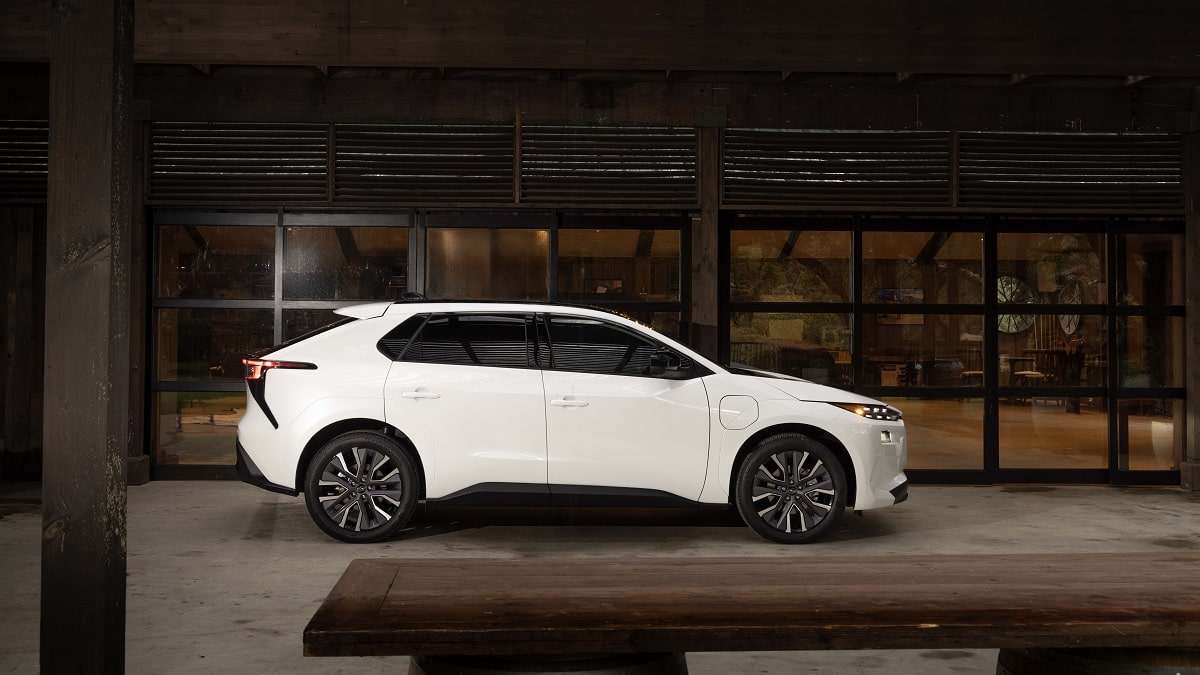
The Subaru Solterra
The Subaru Solterra is Subaru’s first fully electric SUV and it launched in 2022 with a focus on all weather performance and everyday practicality. Like all Subaru’s, it delivers standard all-wheel drive and has the familiar Subaru feel that many longtime owners appreciate. This gives it a reassuring personality on rough roads and in snowy climates. The Solterra stands out because it blends EV efficiency with Subaru’s outdoorsy identity, offering good ground clearance, a spacious cabin, and a calm, predictable driving experience. It is one of the few electric SUVs that feels purpose built for people who enjoy weekend adventures while still wanting something easy to live with during the week.
Bottom Line
The EV transition is creating pressure across the entire auto industry. Dealers worry about shrinking margins, reduced service revenue, and enormous investment requirements, while automakers are exploring new sales models that may bypass dealerships entirely. These forces are shaping how easily consumers can adopt EVs and how affordable the next generation of electric cars will be. The decisions made today will influence both the cost and experience of buying and owning an EV in the future.
What Do You Think?
Have you had a moment that made you realize a dealership was not interested in selling you an EV?
Have you ever had a salesperson misunderstand a basic EV feature the way this Subaru Solterra rep did?
Chris Johnston is the author of SAE’s comprehensive book on electric vehicles, "The Arrival of The Electric Car." His coverage on Torque News focuses on electric vehicles. Chris has decades of product management experience in telematics, mobile computing, and wireless communications. Chris has a B.S. in electrical engineering from Purdue University and an MBA. He lives in Seattle. When not working, Chris enjoys restoring classic wooden boats, open water swimming, cycling and flying (as a private pilot). You can connect with Chris on LinkedIn and follow his work on X at ChrisJohnstonEV.
Photo credit: Subaru media site
Set Torque News as Preferred Source on Google
Follow us today...



Comments
You have to be a frigging r…
Permalink
You have to be a frigging r*ta*d to ask if a car has 1 or 2 pedals. Duhhhh
Got what you deserved....
That is the most…
Permalink
In reply to You have to be a frigging r… by Byte Me (not verified)
That is the most entertaining comments I have read in a long time. We have a keyboard flunky who also doesn't know the difference between one pedal driving and the number of pedals in a vehicle.
One pedal driving is a mode…
Permalink
In reply to You have to be a frigging r… by Byte Me (not verified)
One pedal driving is a mode with very strong regen breaking, strong enough to completely stop the car in a very short distance. All EVs still have two physical pedals and the driver can enable or disable one pedal drive mode (there are also varying levels of strength, at least on my Prologue). One pedal drive mode simply allows you to stop the car by taking your foot off of the accelerator. Takes some getting used to, but it’s one of my favorite features on my Prologue. When I switch driving between my PHEV Clarity and EV Prologue it can take a minute to get reused to, same with when I drive the Prologue a lot and then switch to my PHEV or ICE Tundra.
He asked if it had one pedal…
Permalink
In reply to You have to be a frigging r… by Byte Me (not verified)
He asked if it had one pedal driving, not if it had one pedal. One pedal driving is a common feature for EVs and a salesman should know that.
He didn't ask how many…
Permalink
In reply to You have to be a frigging r… by Byte Me (not verified)
He didn't ask how many peddles it has. The question was did it have the FEATURE called one peddle driving. Read the article. Try to keep up.
You apparently don't…
Permalink
In reply to You have to be a frigging r… by Byte Me (not verified)
You apparently don't understand the question either. "1-Pedal Driving" as a drive mode engages full regenerative braking upon release of the accelerator pedal. You still have a brake pedal like every other car, but there is no "coasting" like you would have with an ICE vehicle. This feature is handy for stop and go traffic as it maximizes energy recovery while minimizing brake pad usage.
The question wasn't "Does…
Permalink
In reply to You have to be a frigging r… by Byte Me (not verified)
The question wasn't "Does the car have 1 or 2 pedals" if was "Does the car have the ability to drive in a 1 pedal mode". Way to show off what an ignorant tw*t waffle you are.
Duh, she didn't ask if it…
Permalink
In reply to You have to be a frigging r… by Byte Me (not verified)
Duh, she didn't ask if it had one pedal, she asked if it had one pedal driving. This is a feature unique to EVs, wherein you can lift your foot off the accelerator pedal and the car uses regenerative braking to slow the
car, even to a full stop. Meaning, you don't need to use the 2nd pedal(brake pedal) unless you need to stop extremely quickly.
Hence, "one pedal driving", duh!
One pedal driving means the…
Permalink
In reply to You have to be a frigging r… by Byte Me (not verified)
One pedal driving means the car regenerates as soon as you let off the accelerator, effectively braking by charging the batteries instead of using the brake pads. There are times when the batteries can't take enough charge to slow the car very fast so "one pedal driving" mode means the car will intelligently use the physical brakes to make up any difference between its normal stopping speed. Also the physical brakes can apply more force if you need to stop faster than normal, of course the car has 2 pedals (or 3).
But a salesman should know at least the basics of what they are selling and they (along with you) obviously don't know what they're talking about and are confident in being incorrect.
Kudos to being the first…
Permalink
In reply to You have to be a frigging r… by Byte Me (not verified)
Kudos to being the first comment and immediately proving this article's point with a room temperature IQ.
Not what he asked. Went over…
Permalink
In reply to You have to be a frigging r… by Byte Me (not verified)
Not what he asked. Went over your head.
That's not what the customer…
Permalink
In reply to You have to be a frigging r… by Byte Me (not verified)
That's not what the customer asked.
Clearly you have no idea…
Permalink
In reply to You have to be a frigging r… by Byte Me (not verified)
Clearly you have no idea what one peddle driving is in an EV. It doesn't mean that the car only has one peddle, dumb*ss, it means that when you let off the accelerator the vehicle brakes, or slows, using regenerative braking. It's an efficient means to drive by not having to switch between "gas" and brake peddles. And since it uses the motor to brake, your brake pads last much longer than a normal ICE vehicle.
You need to be a retard to…
Permalink
In reply to You have to be a frigging r… by Byte Me (not verified)
You need to be a retard to not understand the question. EVs brake themselves if more intelligent than the average care salesperson. Which means having a measurable IQ.
😂 Please don't buy an EV.
Permalink
In reply to You have to be a frigging r… by Byte Me (not verified)
😂 Please don't buy an EV.
Another reason to buy Tesla…
Permalink
Another reason to buy Tesla. The sales experience was far and away better than any other manufacturer. Every time I have visited a dealership, I have known more about the car than the salesman. They have one job and they always fail me.
Well researched article. I…
Permalink
Well researched article. I hadn't given much thought to maintenance on gas powered vehicles accounting for most of the profit for the dealership. The Subaru dealer closest to me doesn't even bother to carry the Solterra. I've also looked for EV Konas at the Hyundai dealership; looked in vain. They don't carry them.
Tell them to look up a…
Permalink
In reply to Well researched article. I… by Jay (not verified)
Tell them to look up a dealer trade. Better yet look up inventory on Subaru's website.
If they refuse to do a look up, move on.
It’s not researched at all…
Permalink
In reply to Well researched article. I… by Jay (not verified)
It’s not researched at all. The salespeople don’t push the EV’s because they have PROBLEMS. The salesperson makes nothing on service, just deals with the headaches from unhappy customers.
Hybrids or plug in hybrids…
Permalink
Hybrids or plug in hybrids seem the way to go to me. Plug in hybrids especially, as the best ones provide enough all electric range for most day to day driving, but still provide ICE power to eliminate range anxiety on medium or longer trips.
I can understand dealerships being concerned about service revenue, and it is also difficult because regulations and govt EV support can vary widely depending on who is controlling the government.
With a bit of experience, it…
Permalink
In reply to Hybrids or plug in hybrids… by Bob (not verified)
With a bit of experience, it's possible to get over range anxiety.
PHEV sounds like the best of…
Permalink
In reply to Hybrids or plug in hybrids… by Bob (not verified)
PHEV sounds like the best of both worlds, but in fact it's the worst of them. You still have to do all the maintenance of an ICE vehicle, and if you don't regularly drive enough to use up all of your gas, you risk damaging the engine because the gas can go bad. This wasn't a problem in earlier PHEVs because the range was so low and the electric motors were so weak that the motor kicked on all the time, but modern ones with 50+ miles of range and motors that mostly act as range extenders it happens.
You really want to do your research of your driving habits before you buy one. If you don't drive enough to make it use the gas motor on a regular basis, then get a full EV instead.
Where is the link for the…
Permalink
Where is the link for the text exactly?
Honestly, I have some trouble with this article. Reading someones comment
somewhere and making it an article to hammer. Sorry.
Why would you think every…
Permalink
Why would you think every car dealership would allow a complete stranger test to drive a vehicle without someone!? Baby, the color of your skin got you waaaaay to entitled.
Go to CarMax, they’ll let…
Permalink
In reply to Why would you think every… by Trey (not verified)
Go to CarMax, they’ll let you take any car on a 24hr test drive. Traditional stealerships need to wake up!
I haven't had a salesperson…
Permalink
In reply to Why would you think every… by Trey (not verified)
I haven't had a salesperson ride with me on a test drive in about 23 years. Multiple dealerships in multiple states.
In Ireland, it's no problem,…
Permalink
In reply to Why would you think every… by Trey (not verified)
In Ireland, it's no problem, don't even know your name, just send you off wherever you want to go.
I think your article misses…
Permalink
I think your article misses the fact that consumers don't want EVs. I don't have one friend who wants one. My brother has a Tesla but he is NOT the norm. Hybrids should have been where all cars were made to go first until battery tech catches up. I just bought a new Mazda and I wanted a PHEV but it was $20k more than comparable ICE engines. And I have a home that I can plug in and charge to. Most love in apartments or homes where charging is impractical. There is a reason all of the big car manufacturers are taking a step back from EVs.
You left out an important…
Permalink
You left out an important fact. Ev's tend to be more expensive to buy up front..
Not if you buy used.
Permalink
In reply to You left out an important… by A Stubbs (not verified)
Not if you buy used.