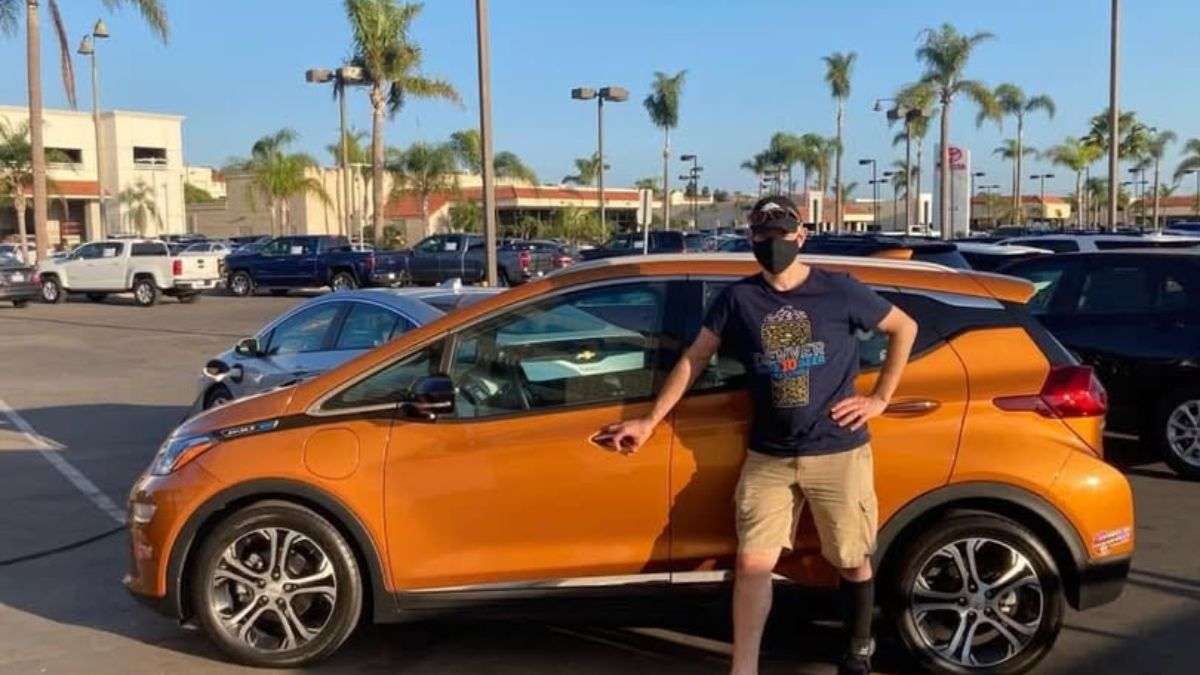

People usually judge EVs based on headlines and range charts, but the truest verdict comes years later when the miles are high and the shine has worn off. That is when an electric car either proves itself or collapses under the weight of real life. And that is why posts from long‑term owners are so valuable, because they show whether the car still earns confidence after years of charging, commuting, weather cycles, and cost of ownership realities. This morning, I was scrolling through the “Chevy Bolt EV and EUV Owners Group” on Facebook and came across a post by Scott Karlin marking the five‑year anniversary with his 2017 Orange Burst Metallic Chevy Bolt EV Premier, which has now crossed 135,000 miles while still being what he calls one of the best purchases he has ever made. To make the story even sharper, he said he just renewed the registration for another five years for only $34 or about $6.80 per year.
Here’s exactly how he put it:“Today is the 5 year anniversary of one of the best purchases I’ve ever made. My ‘17 Orange Burst Metallic Bolt EV Premier. 135K and I still absolutely love it! And having just renewed my registration for 5 years for $34 doesn’t suck (yes, that’s $6.80 per year)!”
Anyone who has followed Bolt ownership stories knows this isn’t an isolated anomaly. We’ve repeatedly seen long‑term owners say they would never go back to gas after living with a Bolt for years. One driver even said that they knew after buying their 2020 Chevy Bolt as a first EV that they would never return to gasoline. Scott’s story follows the same pattern: satisfaction doesn’t fade with time, it just compounds.
Where You Live Changes the Entire Cost Story
Not everyone reading Scott’s post experienced the same financial upside. FJ Forest commented with a completely different reality: “Here in Hawaii it's now up to $450 (2022 EUV) as they now penalize what they once incentivized. The more miles you drive, the more you pay.”
That single comment captures one of the biggest discussions in the EV world right now. Shifting policies in states like Arizona once made EV registration extremely cheap to push adoption, and then later clawed back those incentives once electric vehicles became common. This is the exact opposite of what happened to Scott.
Steve Metz even asked the obvious question: “5 years for $34... where do you live?” Scott answered: “Arizona. EV registration was crazy cheap until a few years ago. As long as I don’t change the vehicle ownership, I’m grandfathered into those old rates. I thought my first 5 years for about $95 was great, but this time it’s even better!”
Scott’s situation is basically a reward for buying early. He locked in a rare era of ultra‑cheap ownership that newer EV owners might never see again. And yet, what makes his post compelling is that registration cost wasn’t even the main value driver. The savings came from fuel and maintenance.
Clarinda Harvey highlighted that contrast clearly: “Even though registration is nuts, having a transmission fluid change for a 6 cylinder truck in my town is over $400. And oil changes are $99. Not to mention $3 a gallon gas. My electric 2023 Bolt EUV is far better than any gas car. I’ll plug up my cars from now on.” Scott responded right beneath that: “Yes, this Bolt has saved me a TON on no gas and practically no maintenance.”
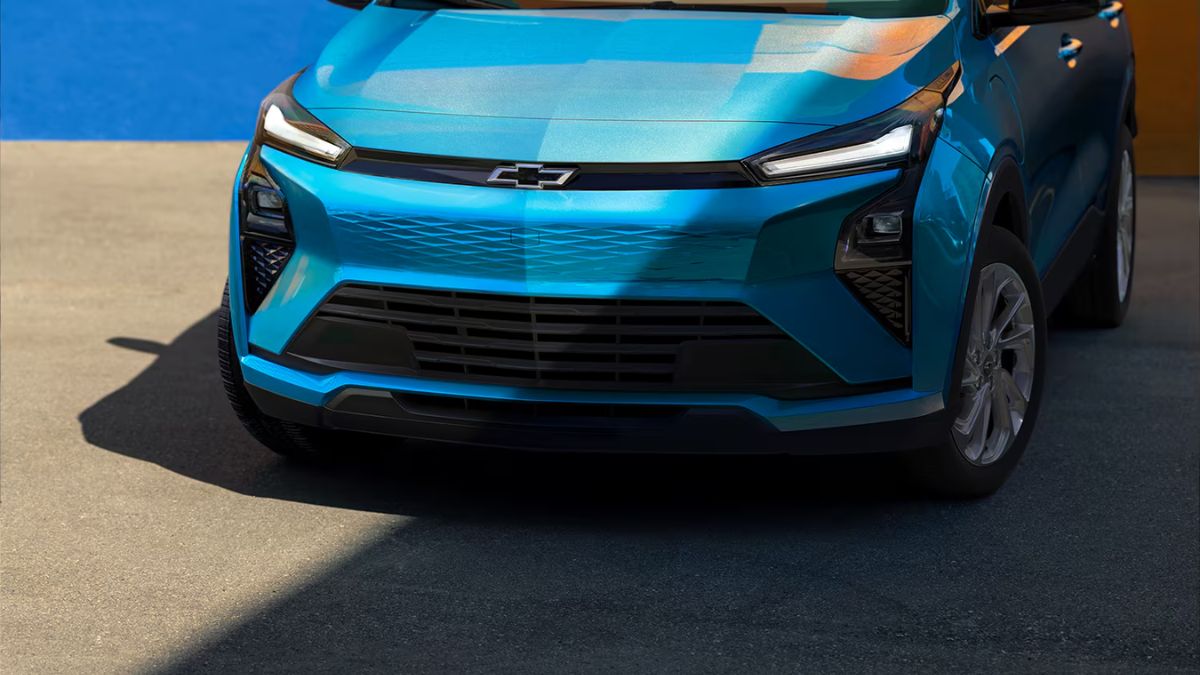
Stories like Scott’s explain why Chevy is bringing the Bolt nameplate back for a new production run in 2027. The once‑top selling Bolt is coming back after earning an unusually strong reputation for real‑world cost stability and loyalty. You don’t revive a nameplate unless owners have validated it in the field.
Why High‑Mileage Proof Matters More Than Specs
High‑mileage EVs like Scott’s are valuable because they answer questions that brochures and first‑drive reviews cannot. A car with 135,000 electric miles has already endured calendar aging, climate variation, repeated fast‑charging cycles, policy changes, and the slow wearing down of the novelty phase. If range anxiety, battery degradation, or hidden costs were going to make ownership unbearable, they would have by now.
Yet Scott’s tone is not defensive, it is confident and relaxed which signals that satisfaction has survived the phase when excitement normally dies. That kind of ownership testimony carries more weight than marketing because it is produced by years of lived evidence rather than a weekend impression.
The Bolt’s Reputation Was Not Guaranteed
It’s easy to forget now, but not everyone’s first contact with a Bolt went as smoothly as Scott’s. There were drivers whose first EV experience was stressful, like the renter who described their first time driving an EV after renting a Bolt as a nightmare experience of confusion and range fear. The difference is that Scott learned the car through ownership and not a rushed rental interaction.
That context matters. Long‑term ownership tends to replace early fear with predictability. And predictability is the foundation of satisfaction in any vehicle.
That's why I think what makes Scott’s story interesting isn’t the $34 or even the 135,000 miles, it’s the fact that this satisfaction didn’t fade with time like it often does with cars in this price bracket. When a sub‑$40K compact EV delivers five years of use, crosses six figures on the odometer, avoids repair bills, keeps a driver loyal, and still has the owner calling it one of the best purchases of their life, that is the kind of quiet outcome that moves markets even more than advertising does.
Key Lessons from Scott’s Story
- Long‑term Bolt ownership continues to validate EV economics even after incentives and early‑adopter discounts fall away.
- Policy can flip the math in either direction, making location as important as the car itself for cost of ownership.
- Maintenance, not just fuel, is a silent advantage in EV ownership and often ignored by skeptics.
- Real loyalty forms only after the warranty years, and the Bolt seems to pass that test more than most expected.
Now We Want to Hear from You
Have you kept an EV long enough to know whether you would still make that same purchase again today?
Or do you think EV ownership still depends too heavily on where you live and what policies are in place?
Let us know your thoughts in the comments below.
Aram Krajekian is a young automotive journalist bringing a fresh perspective to his coverage of the evolving automotive landscape. Follow Aram on X and LinkedIn for daily news coverage about cars.
Image Sources: The “Chevy Bolt EV and EUV Owners Group” and Chevrolet’s gallery, respectively.
Set Torque News as Preferred Source on Google
Follow us today...