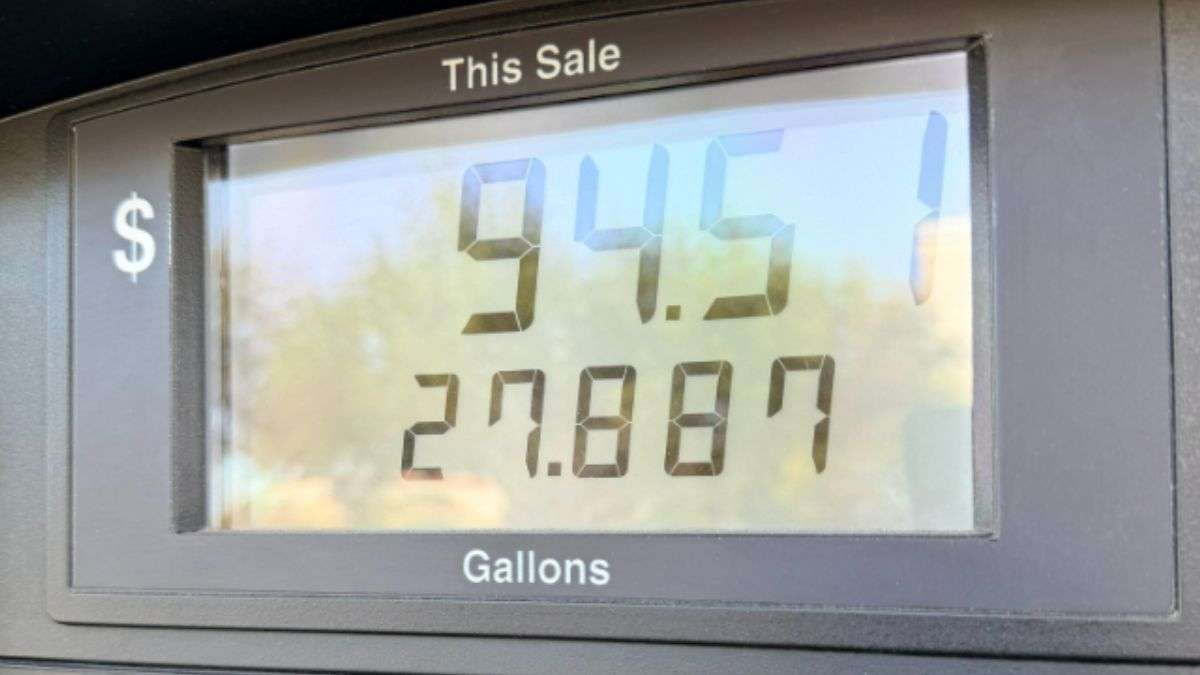

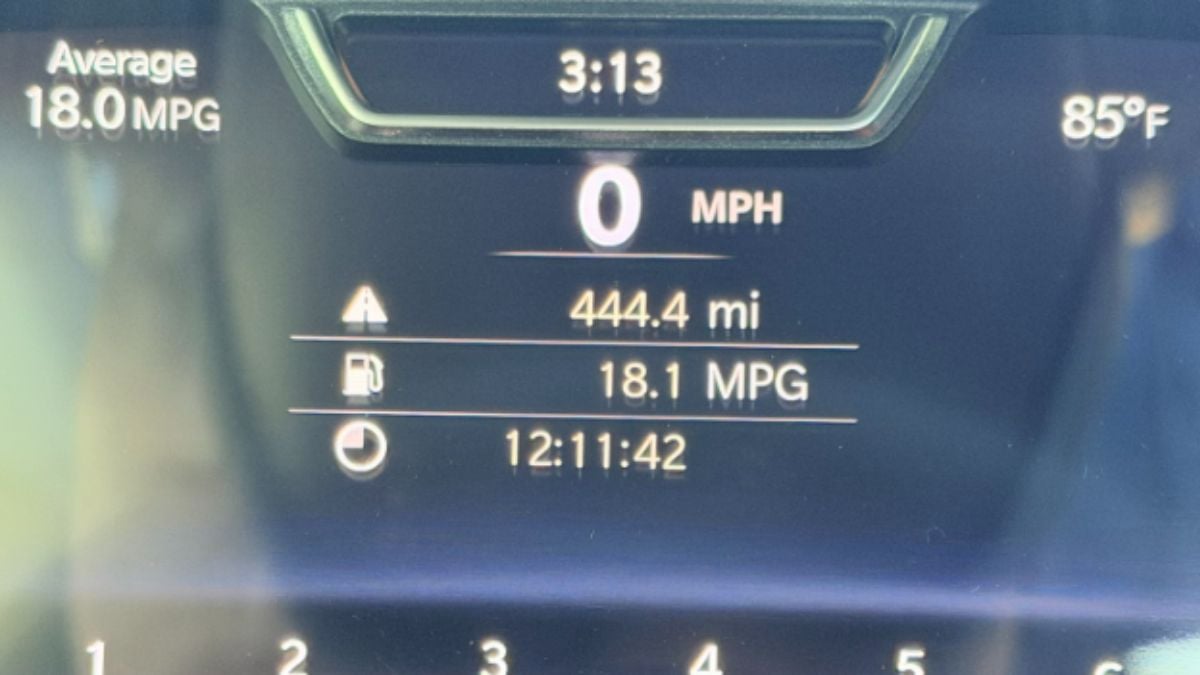
Every driver trusts their dashboard until the numbers stop making sense. For most owners, that little MPG display feels like a dependable guide to how efficiently their truck is running, but as one new Ram 1500 owner just learned, it can be misleading. Earlier this evening, while browsing through the “Hurricane 3.0 TT Rams” Facebook group, I came across a post by Ron Leon that caught my attention because it perfectly summed up a problem many new truck owners overlook. After driving 444 miles in his 2025 Ram 1500 with the Hurricane 3.0L twin-turbo engine, Ron decided to test the accuracy of his fuel economy display, and what he found was eye-opening:
“This is why you never believe your mpg lie-o-meter. I clock my mileage by hand. I reset the trip meter when I filled up and drove 444 miles, but the meter says I got 18.1 mpg. Ha! It took 27.88 gallons to fill, so that is 15.9 mpg. I've been getting 15.5–17 mpg consistently with a 50/50 city/hwy mix. The point is not whether that mpg is good or bad. It's a truck and I personally don't care, but much of the time the meters are wildely inaccurate.”
Ron’s post is simple, but it resonates deeply with anyone who’s ever questioned whether their truck’s digital estimates actually match reality. He isn’t criticizing the 2025 Ram 1500 or its new twin-turbo Hurricane engine, because in fact, he says he doesn’t even care about the number itself. What he’s pointing out is how misleading that in-dash fuel economy figure can be, and how much variation there really is once you break it down by hand.
Why the “MPG Lie-O-Meter” Exists
It’s easy to assume that modern vehicles, with all their sensors and computer controls, would nail the accuracy of something as straightforward as miles per gallon. But even today, many drivers find that their onboard computers overestimate real-world MPG by 5–15%. It’s not that the truck is “lying,” it’s that it’s estimating. Onboard systems calculate mileage using air-fuel ratios, injector pulse width, and driving time. But what they can’t measure precisely is how much fuel actually enters the tank, or how different environmental conditions can alter that math.
In the case of the new Hurricane 3.0L twin-turbo inline-six, some owners have reported excellent real-world results, especially on highway trips. Several discussions across Ram communities highlight how consistent throttle use and moderate cruising speeds can yield impressive numbers, as seen in real-world reports praising the 2025 Ram 1500 RHO’s fuel efficiency on long trips. This illustrates how driving style and terrain can all influence what your truck reports versus what you actually achieve at the pump.
Community Reactions
As expected, Ron’s post sparked a wave of relatable comments from fellow Ram owners who’ve had similar experiences with their trucks’ digital readouts. After the initial post, he later mentioned in the comments that his truck indeed is the 2025 Ram 1500, confirming it’s powered by the new straight-six Hurricane turbo engine.
Kevin Yow chimed in first, saying, “Exactly right. That's what I keep telling people about the oil life gauge too. All it is is algorithms based on how you drive. Fill up with gas when near empty, and change the oil around 5,000 miles. Same as it's been for practically ever.”
Kevin’s point perfectly complements Ron’s. Just because technology gives you a number doesn’t mean that number replaces common sense. Oil life monitors, like fuel economy meters, depend on predictive algorithms. Sure, they might be helpful, but certainly not definitive. This advice echoes across brands and generations: trust your tools but verify the results.
Then Brian Chaffee added his own story, and it’s one that would make any truck shopper double-check the range estimate before test-driving: “I test drove a Ram 2500 a couple of years ago. The tank was low but the salesman looked at the range and it said 33 miles ‘til empty. Good to go. I pulled out of the dealership, went about 4 blocks and ran out of fuel.”
His experience underlines how overconfidence in onboard systems can lead to real-world inconvenience or even embarrassment. It’s a humorous anecdote, but it drives home the same idea that numbers on a screen are not always reality.
Finally, Bryon Sherburne asked an important question: “Do you have factory sized tires?”
It’s a small detail, but Bryon’s comment highlights something critical, as both of these things can dramatically impact both real and reported fuel economy. When you swap out factory tires for larger or more aggressive ones, you’re altering rotational mass and speedometer calibration, which in turn can throw off the MPG calculations. It’s one of those often-overlooked variables that explain why two identical trucks can report completely different numbers.
What Affects Real-World MPG Accuracy
Bryon’s comment opens the door to a broader conversation about why trip computers tend to miscalculate. Here are some of the biggest culprits:
- Tire Size and Rolling Resistance: As I just mentioned, larger or heavier tires create more drag and change your wheel speed readings.
- Fuel Composition: Ethanol blends (E10, E15) have less energy per gallon, meaning less range per fill.
- Temperature and Elevation: Colder or higher-altitude conditions can alter air density and combustion efficiency.
- Driving Style: Hard acceleration and frequent stops skew short-term MPG data.
- Calibration Drift: Over time, sensors can become less precise leading to readings that deviate from reality.
Even among those who’ve switched brands, this isn’t a new story. A former GM owner who moved to Ram ownership said something similar after switching to a 2025 Ram 1500 RHO from nearly two decades of GM trucks, noting that while performance felt better, their trip computer MPG still tended to read high. It seems that no matter the manufacturer, technology still can’t account for every variable in the real world.
Understanding the Bigger Picture
I think Ron’s post captures something refreshingly grounded about being a truck owner today. We live in an era of digital dashboards, AI assistants, and over-the-air updates, yet the most accurate way to measure fuel economy still comes down to the basic math formula of miles divided by gallons. Computers can assist us, but they can’t replace understanding your vehicle firsthand.
This story also reveals how driving culture continues to evolve. Many newer drivers tend to rely on technology for guidance, while experienced owners like Ron show that mechanical awareness and attention to detail never go out of style. That lesson applies to far more than just MPG calculations, as understanding the fundamentals behind the tech is equally important for things like maintenance and knowing when something feels off.
Key Takeaways
- Trip computers can overestimate fuel economy by 5–15%, especially with tire or calibration changes.
- Hand calculations remain the gold standard for tracking accurate mileage over time.
- Factors like tire size, ethanol fuel, and driving style play major roles in MPG accuracy.
- Trust the tech, but verify manually. It’s the simplest way to know your truck’s true performance.
For those curious how the Hurricane engine compares to earlier Ram powertrains, check out this report on a prior 2021 Ram 1500 EcoDiesel owner’s experience with the all-new 2025 Ram 1500. It offers great insight into how far Ram’s technology and quality control have come.
Your Turn to Share
Have you ever checked your car's fuel economy manually and discovered the trip computer was off by a few MPG?
Or have you found your vehicle’s readouts surprisingly accurate compared to what you calculate at the pump?
Don't hesitate to share your experience in the comments below. We'd love to see what other owners are seeing from their own real-world numbers.
Aram Krajekian is a young automotive journalist bringing a fresh perspective to his coverage of the evolving automotive landscape. Follow Aram on X and LinkedIn for daily news coverage about cars.
Image Sources: The “Hurricane 3.0 TT Rams” public Facebook group.
Set Torque News as Preferred Source on Google
Follow us today...