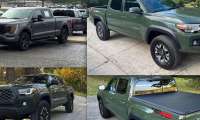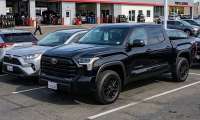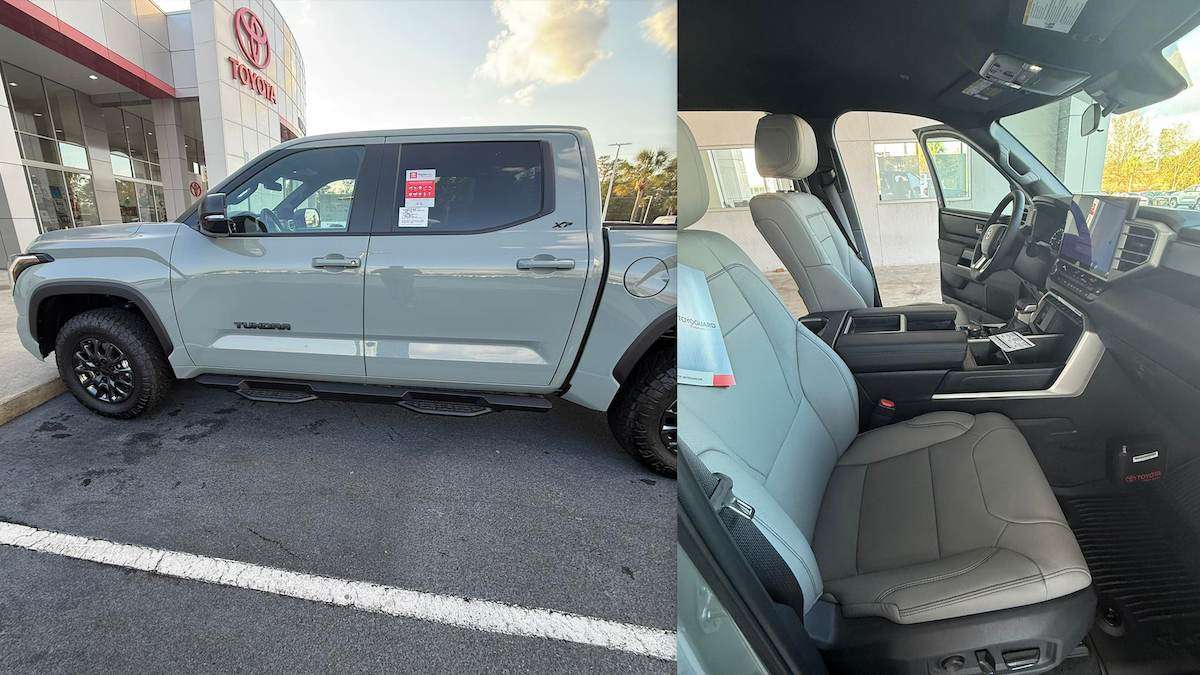

He went in ready to buy, but after experiencing the interior layout and missing tech features, here is why he says Toyota "missed the mark" on the 2026 Tundra.
Imagine This
Imagine you have driven heavy-duty Ram trucks for years. Your current rig has 210,000 miles on the odometer, and while it's still running strong, you are ready for something new. You join the online forums, do your homework, and decide the 2026 Toyota Tundra is the contender. You head to the dealership, fully expecting to trade up.
But when you climb into the $65,000 truck, the excitement instantly fades. The interior feels cramped by a massive console. You shift into reverse, expecting a crisp, high-definition view, but the camera feed looks like it's from 2015. You realize that despite the high price tag, this "modern" truck is missing features you consider standard. Instead of signing the papers, you hand back the keys and drive home in your old, reliable diesel.
For truck owners, brand loyalty often runs deep, but it isn't unconditional. When it comes time to replace a high-mileage workhorse, many drivers are willing to cross the aisle to see what the competition offers, especially when a truck carries a premium price tag. That is exactly what happened with Scott Mauller, a long-time Ram owner who decided to give the 2026 Toyota Tundra a fair shot.
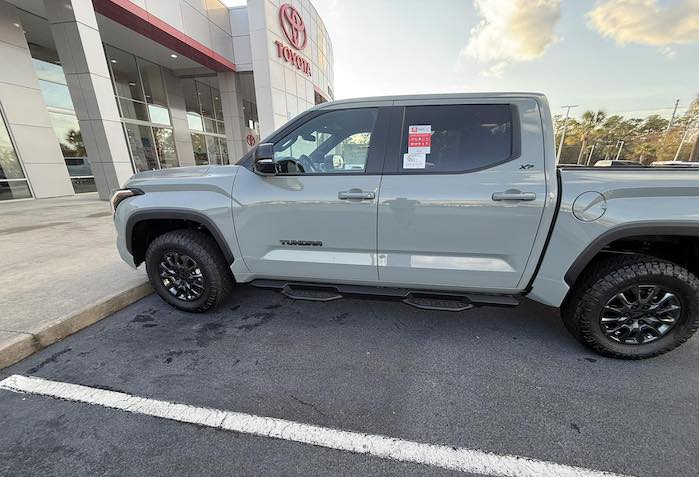
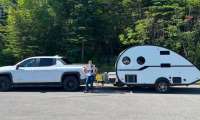
Mauller, who currently drives a Ram 2500 Cummins with 210,000 miles, went into the dealership ready to buy. He joined the Toyota Tundra Owner Facebook group to research potential issues and prepared himself to switch brands.
However, after a test drive of a model priced at $65,000, he left the lot empty-handed. His experience highlights a growing sentiment among traditional truck buyers: as prices rise, so do expectations for interior quality and standard technology.
Toyota "Missed The Mark"
For Mauller, the deal-breakers weren't mechanical—they were experiential. While the Tundra's powertrain is often the headline, Mauller found the truck's daily touchpoints to be lacking compared to his older Ram.
"I wanted a Toyota Tundra, and I joined this group to get all the details on the issues, etc. Then I test drove one," Mauller says. His excitement quickly turned to disappointment once he was behind the wheel.
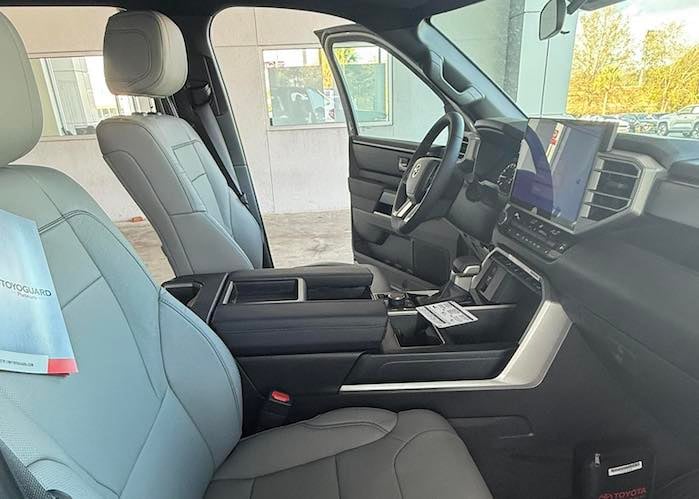
"The inside didn't even feel like I was driving a truck," he explains. "The center console felt clunky and enormous, and the backup camera looked like the quality of something from 2015. They missed the mark on this one, especially for something that has a $65k sticker price."
Mauller's critique addresses a specific frustration with value packaging. At that price point, he expected premium features to be standard, not missing.
"The fact that for $65k you don't get a button on the taillight for the tailgate or 360 camera with the updated tech package with the bigger screen is crazy," he says.
Mauller's frustration with the $65,000 price point highlights a quirk in Toyota's trim structure.
A $65,000 Tundra is likely a highly optioned Limited or a base Platinum model. The "bump switch" in the taillight—a convenient feature that opens the bed when your hands are full—is standard on the Platinum and 1794 trims but is not always included on a Limited, even when the price creeps up due to engine or off-road packages.
Similarly, the 360-degree Panoramic View Monitor (PVM) is often included in a separate "Tow Tech" or "PVM" package on lower trims, rather than as a standalone standard feature, for a buyer coming from the heavy-duty truck world, where features are often more utilitarian and robust, finding these tech gaps in a "luxury" priced half-ton can be a major deterrent.
Sticking With Ram
For Mauller, the decision ultimately came down to a comparison with his current ownership experience. He isn't just comparing the Tundra to a hypothetical ideal; he is comparing it to the durability he has experienced with his previous trucks. The Tundra's questionable value proposition made it impossible for him to justify leaving a platform he trusts.
"I have had 3 Rams, the first two I had no issues before I sold them at 70k miles," Mauller notes.
His current setup—a heavy-duty diesel—is proving difficult to replace, especially when the replacement costs significantly more but feels less robust.
"My current Ram 2500 is at 210k miles and is still going strong with no issues either," he says. "I'll keep my deleted and tuned 2500 Cummins instead."
It's a common hurdle for Toyota: converting heavy-duty truck owners who are looking to downsize to a half-ton. If the half-ton doesn't offer a significant upgrade in interior luxury or technology to offset the loss in towing capability, owners like Mauller will simply keep their paid-off, high-mileage trucks running.
Key Takeaways
- Price vs. Value Disconnect: Owners are struggling to justify a $65,000 price tag when basic premium features, such as a high-definition backup camera or a bed-release button on the taillight, are missing.
- Interior Ergonomics: The "clunky" center console design in the 3rd-generation Tundra remains a polarizing feature for buyers accustomed to competitors' open layouts.
- The Heavy-Duty Barrier: Owners coming from HD trucks (like the Ram 2500) expect "truck-like" durability. If a half-ton feels too plasticky or tech-deficient, they are less likely to make the switch.
Read More from Denis Flierl:
- 2025 Toyota Tundra Owner Says, "I've Already Had Backup Camera and Seat Reset Problems..."
- I'm Stuck Between Buying a Ram 1500 and a Ford F-150, But I'm Leaning Toward Ram
- As a GMC Sierra Guy, I'm Conflicted Between the Ford F-150, Ram 1500, and Toyota Tundra
We Want To Hear From You
If you were spending your own $65,000 today, would you choose the Ram 1500 for its superior luxury and tech features, or would you stick with the Toyota Tundra for its reputation of reliability, even if it means missing out on the latest gadgets? Let us know your choice in the comments below.
I'm Denis Flierl, a Senior Torque News Reporter since 2012, bringing over 30 years of automotive expertise to every story. My career began with a consulting role with every major car brand, followed by years as a freelance journalist, test-driving new vehicles, which equipped me with a wealth of insider knowledge. I specialize in delivering the latest auto news, sharing compelling owner stories, and providing expert, up-to-date analysis to keep you fully informed.
Follow me on X @DenisFlierl, @WorldsCoolestRides, Facebook, Instagram and LinkedIn
Photo credit: Denis Flierl via Scott Mauller
Set Torque News as Preferred Source on Google
Follow us today...