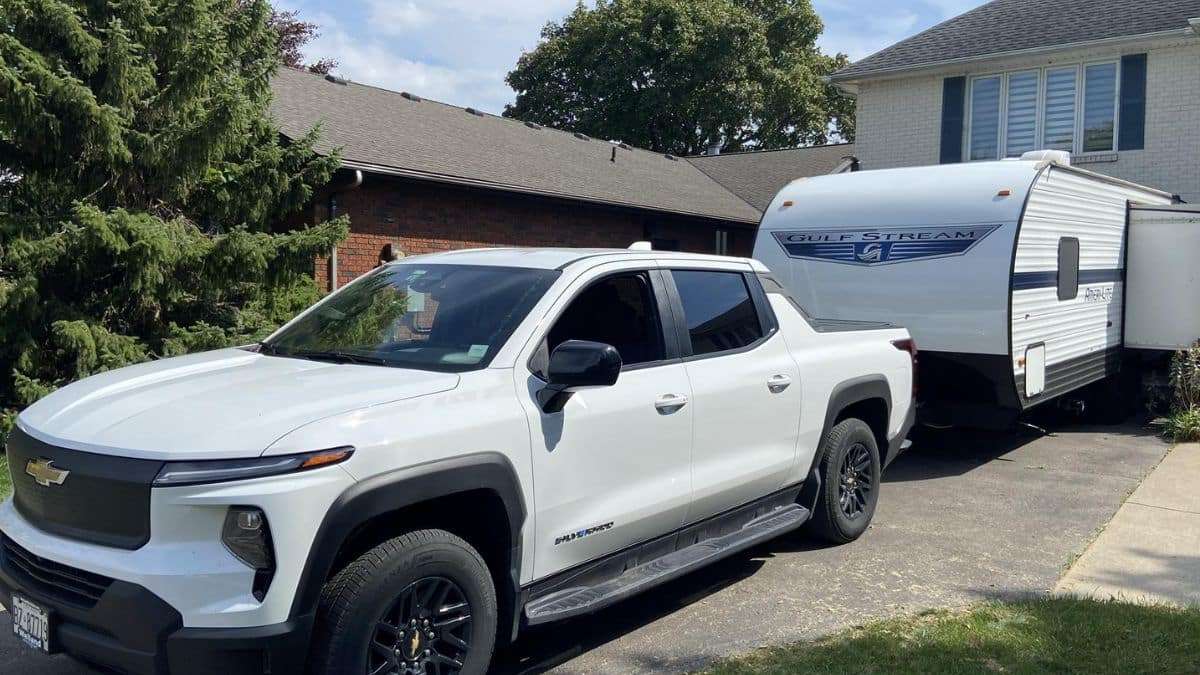

When it comes to electric trucks, the debate usually centers on two questions: can they handle real work, and can they do it without leaving their owners stranded with range anxiety? For many potential buyers, these doubts loom larger than flashy specs or marketing promises. That’s why stories from real-world owners matter so much, as they show us what life is actually like behind the wheel. That's why a recent post I came across in the “EV SILVERADO” group by Richard Hotte stuck with me. Richard explained that after just over a year of owning his 2024 Chevrolet Silverado 3WT, he has had no issues at all and remains highly impressed. He recently hauled a trailer weighing more than 3,200 kilograms on a 200-kilometer run to St. Thomas, Ontario, and said he hardly felt the load while experiencing no range anxiety.
Here’s how he put it: “I have a 2024 Chevy Silverado EV 3WT. It’s just over one year old and has had no issues! I’m about to pull out on HWY 3 along the north coast of Lake Erie for a run, just under a 200 KM run to St Thomas, Ontario. I have NO range anxiety. For your information, the trailer comes in at over 3200 KGs (a little over 7,000 pounds for my US friends) and I can hardly feel a thing. GM says it will pull way more. I highly recommend this model. It has all I need and more.”
Silverado EV Proves Real-World Strength
Richard’s words cut right to the heart of what many truck buyers want to know. Reliability after a full year of ownership is not something you can fake, especially given the recent reliability issues some Silverado models have faced in the news. Pulling over 7,000 pounds while maintaining confidence in range says a lot too. It shows that the Silverado EV is proving itself beyond spec sheets, making the transition to electric trucks feel far less intimidating.
Hearing owners describe their towing experiences with confidence is important because towing has been one of the toughest areas for EV trucks to prove themselves, as range often drops when a heavy load is hitched up. That’s why stories like Richard’s are significant, as they confirm that GM has built a truck that delivers where it matters most. We’ve already seen how the Silverado EV has impressed in long-haul testing, including a 1,000-mile run that set a new bar for electric pickups. It’s clear that Richard’s experience lines up with that, showing consistent performance whether you’re on a cross-country trip or a local towing job.
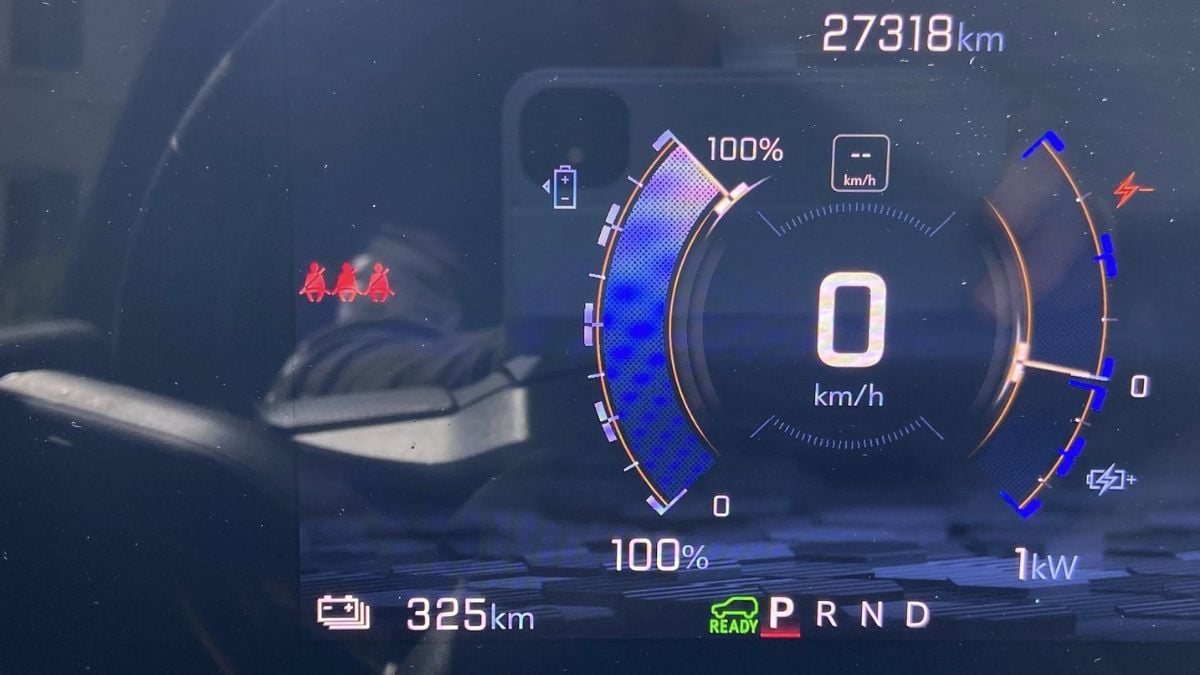
Community Weighs In
Richard’s post drew responses from other Silverado EV owners who shared their own experiences.
Joe Moulton said, “This truck just pulls and goes without hesitation or care. Hit a big hill and you can’t feel it!”
His comment echoes the confidence that Richard expressed, reinforcing the idea that the Silverado EV’s torque delivery and stability inspire trust even in situations where a gas or diesel truck might struggle.
Fred Beverage added his voice, noting, “Just pulled my 7,500 pound trailer across the American west this summer.”
His experience expands on Richard’s too, showing that these trucks aren’t just handling regional hauls but can take on long, demanding journeys with ease.
When you hear multiple owners describe towing heavy trailers over varied terrain with no complaints, it starts to paint a consistent picture. This is part of a growing chorus of owners saying that the Silverado EV is delivering on its promises. But of course, not everyone sees it the same way.
Jason Easton left a sharper comment: “It’s overpriced. I think it’s completely asinine to pay that much money for a WT.”
Jason raises a valid point that sparks another important discussion of value. The Silverado EV WT trim is marketed as the entry-level version, yet its price tag is still steep compared to traditional trucks. This is where debates really begin, because while some owners highlight performance and reliability, others focus on affordability and whether EV trucks can truly justify their costs.
How Pricing Stacks Up Against Rivals
Jason’s criticism leads us into one of the most competitive aspects of the EV truck market. While the Silverado EV WT appeals to fleets and work-focused buyers, it still carries a premium compared to what many expect from a “base model.” When compared to rivals like the Ford F-150 Lightning Pro or the Rivian R1T, the Silverado EV tends to fall somewhere in the middle depending on configurations and incentives. Still, GM is clearly betting that buyers will pay more for durability and capability, and real-world stories like Richard’s may strengthen that case.
But how does the price and power compare to others? Let's take a look below.
Chevrolet Silverado EV WT
- Price: $57,095 (Standard-Range WT), $69,495 (Extended-Range WT), around $77,795 (Max-Range)
- Horsepower: 510 hp (WT version)
- Torque: 615 lb-ft of instant torque
- Max Towing Capacity: Up to 10,000 lbs; real-world owners confirm over 7,000 lbs with confidence
Ford F‑150 Lightning Pro
- Price: Starts at about $51,975 for the 2025 Lightning
- Horsepower: 452 hp (Standard Range), about 580 hp with Extended Range
- Torque: 775 lb-ft
- Max Towing Capacity: 7,700 lbs with standard pack; up to 10,000 lbs with extended range
Rivian R1T
- Price: Starts around $69,300 depending on configuration
- Horsepower: 600 hp dual-motor, up to 835 hp quad-motor
- Torque: 600–908 lb-ft depending on configuration
- Max Towing Capacity: Up to 11,000 lbs
This breakdown makes it clear where the Silverado EV stands out (real-world towing, work-focused durability) and where it faces challenges (pricing compared to expectations).
What’s interesting is how the Silverado EV continues to evolve. GM isn’t just resting on current models, as they’re pushing upgrades that could appeal to even more buyers. For instance, future Silverado EV trims may receive off-road features like lift kits and larger tires. These additions will help the truck appeal not only to work fleets but also to adventure-seeking consumers who want capability beyond paved roads.
A Truck That Defies Expectations
If there’s one takeaway from Richard’s story and the comments that followed, it’s that the Silverado EV is steadily proving itself in real-world conditions. These aren’t carefully crafted marketing campaigns, but they’re genuine owners sharing experiences that highlight reliability, range, and capability. It’s the kind of feedback that matters when you’re trying to decide if an electric truck can replace the role of a traditional workhorse.
Chevy’s EV pickups have already been part of some unexpected electric trucking adventures, showing that it’s capable of much more than short commutes or light-duty tasks. The more these stories pile up, the harder it becomes to dismiss electric trucks as niche products.
So as someone who spends every day diving into stories like these, I think Richard’s experience highlights an important turning point. We’re hearing from multiple owners who not only trust these trucks but also rely on them without hesitation. From my perspective, this shows that while price and accessibility remain hurdles, the Silverado EV has already proven it can deliver the performance truck buyers demand. And when capability is no longer in question, the conversation naturally shifts to cost, charging infrastructure, and how quickly mainstream adoption can follow.
Key Takeaways for Readers
- Proven reliability: Real-world owners like Richard are reporting zero issues after a year of use, which is an encouraging sign for long-term durability.
- Serious towing capability: Multiple owners confirm that hauling 7,000+ pounds feels stable and confident, with no dramatic loss of range.
- Range confidence: Stories highlight a lack of range anxiety even under heavy loads, which challenges one of the biggest concerns about EV trucks.
- Price remains a sticking point: While performance earns praise, some buyers still question whether the cost of the Silverado EV WT is justified.
- Future improvements: GM continues to refine the Silverado EV with updates and potential new trims that could broaden its appeal further.
What Do You Think of The Silverado EV?
Do you think the Silverado EV’s higher price is justified by the capability it delivers? Or would you rather wait for more affordable options?
And if you’ve towed with an electric truck, how did it perform compared to your expectations?
I'd love to hear your opinion in our comments below.
Aram Krajekian is a young automotive journalist bringing a fresh perspective to his coverage of the evolving automotive landscape. Follow Aram on X and LinkedIn for daily news coverage about cars.
Image Sources: The “EV SILVERADO” public Facebook group.
Set Torque News as Preferred Source on Google
Follow us today...