

Aggressive lease deals are quickly becoming one of the biggest drivers behind EV adoption. For many shoppers, the idea of stepping into a brand-new electric SUV for just over $200 a month feels like a no-brainer, especially when the barrier to entry is practically zero. But as more drivers make that jump earlier than they might have otherwise, real-world ownership experiences are starting to reveal where things don’t always go as smoothly as expected.
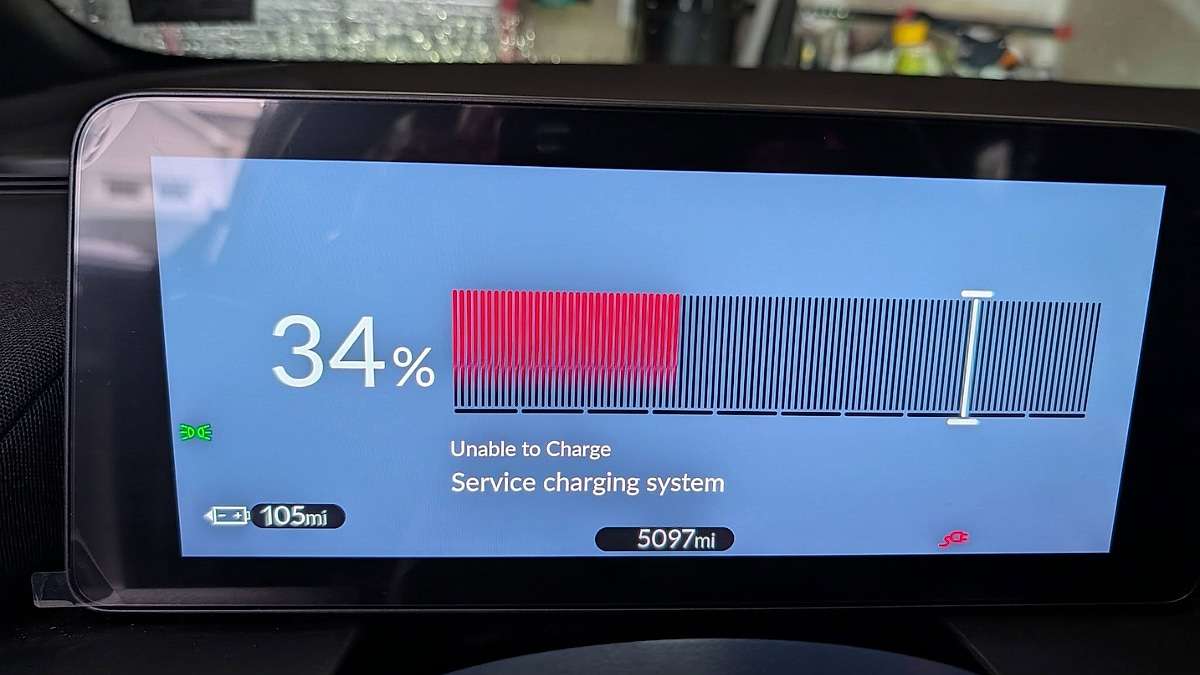
That reality came into focus through a post shared by Honda owner Charles Dodd, who described a frustrating early ownership experience with his nearly new 2025 Honda Prologue: “My ‘25 EX with just over 5k miles wouldn't charge and it slams on the brakes with nothing around it when in reverse. I took it to the dealership and they said it would be fixed in about a week. I asked why it would take so long, and they said it’s because they only have two people certified to work on Prologues with about 10 of them in front of me. This is the reason I shouldn't have chased the deal. A $219 per month lease with $0 down was hard to pass up. I wish I did.”
When a New EV Starts Showing Problems This Early
What is notable about this issue is not only the issues but also the timing of these problems. The mileage on this vehicle (approximately 5,000 miles) is during the honeymoon phase of driving for many. This is when confidence in the vehicle is generally at its highest level, as opposed to the time when issues related to reliability or unusual operation are beginning to occur.
A failure to charge represents an issue right in the core part of any electric vehicle. As the primary method of daily usage of an EV, without reliable access to charge, the vehicle can become inoperable and is realistically a dud. Combining this with an unusual brake application while reversing creates another safety-related issue that feels even more unsettling from a driver confidence standpoint.
I think what makes this particularly relatable is how quickly the ownership experience shifted. Instead of enjoying the benefits of a new EV, the owner is now dealing with service delays, uncertainty, and second-guessing the decision that got him there in the first place.

The Lease Deal That Made It Easy to Say Yes
The fact that you could get a new car for $219/month with no money down isn't an afterthought as it's pivotal to this experience. These types of offers are changing how consumers view purchasing vehicles (and EVs specifically), by providing reduced commitment levels on the latest technologies, dealers make newer technology feel more accessible.
While this may be an example of what has become "easy" or "affordable," there is also something else at work here. A consumer who finds an offer so good that it seems difficult to refuse may find themselves entering into ownership experiences that they have not completely considered. It doesn't necessarily mean the purchase was made with a bad deal, but the reality of owning is often equal to (if not greater than) the cost of the monthly payment in many cases.
We’ve seen a wide range of experiences from Prologue owners already. In one case, I wrote about how a driver detailed their long-term ownership experience after switching from a Toyota and lowering costs significantly, showing how the transition can feel great in everyday use for some.
At the same time, not every story has been positive, especially when it comes to real-world usability in tougher conditions. Cold weather in particular has exposed some of the challenges that come with EV ownership, something I explored more deeply in this experience explaining why one Honda Prologue owner said it may be their first and last EV due to winter charging challenges.
Where the Honda Prologue Actually Shines for Some Owners
In fact, I’ve seen cases where the Prologue has exceeded expectations, particularly when it comes to range and efficiency, like one owner who compared it against multiple EVs and found it delivered the best range in their garage.
That contrast is important because it shows this isn’t a one-dimensional story. The same vehicle can deliver a great experience for one owner and a frustrating one for another depending on conditions, usage, and even dealer support. That range of experiences is exactly what makes stories like Charles’s worth paying attention to.

The Bigger Issue: Lack of Qualified Technicians
There’s also a timing factor here that’s easy to overlook. Newer electric vehicles like the Honda Prologue are going to be delivered to dealerships at the same time that manufacturers will be building out their training programs for technicians. As such, more cars are being put onto the road than can be supported by the training and support systems.
In terms of the customer, this simply results in a delay. Behind the scenes, however, customers may find themselves unable to access the special tools required to fix their EVs (e.g. high voltage testers), have authorization to perform repairs on their vehicle restricted by the dealer, and have fewer options when it comes to finding certified technicians willing and able to work on the vehicle.
This creates a ripple effect where even minor issues can turn into multi-day or even multi-week wait times depending on the dealership’s workload. It could be argued that the key component of this story is not necessarily the car itself but rather what was stated by the dealership after they completed testing and evaluation of the car. The dealership indicated there were only two certified technicians capable of working on Prologues, with ten other Prologues already scheduled to receive service.
What we see in this example is a structural problem and not merely an isolated inconvenience. As EV technology advances rapidly and continues to advance rapidly, so too does the gap between the number of technicians qualified and authorized to work on EVs and those currently available. EV's do not use conventional powertrain technology, so most mechanics are not qualified to diagnose and repair electrical system issues in EVs. Specialized training, equipment, and in some cases, manufacturer specific certifications are typically required.
Chris Brotherton, who left a comment under Charles' post, reinforced this point clearly: “We only have like 3 certified at our place of work as well. They came out with technology faster than they sent us to training.”
That comment highlights a growing gap between how quickly vehicles are being introduced and how quickly the support system behind them is being built.
Ray Lewis, another commenter, added more perspective that makes this even more clear: “I’m the only tech (master) in my shop who works on the Prologues.”
When one person becomes the bottleneck for an entire dealership’s EV workload, delays like this become almost unavoidable.
Software Behavior Starts Affecting Trust
What makes the reverse braking behavior especially concerning is how out of place it feels in everyday driving. Backing out of a driveway or parking spot is something drivers do almost subconsciously, so when the car suddenly intervenes without a clear reason, it immediately breaks that rhythm and catches the driver off guard.
These types of systems were originally developed to provide confidence in their ability to assist drivers. However, when these systems begin to react erratically in lower speed situations, they create confusion in the minds of drivers. This results in drivers questioning whether their vehicle will respond as expected in critical times where trust is needed.
This type of confusion is very subtle yet extremely influential. As soon as a driver loses confidence in a system, regardless of how superior the technology may be on paper, the value of overall experience decreases.
I believe one of the primary differences between EV ownership and other types of vehicles is the fact that when inconsistencies such as braking occur in EV vehicles, it not only becomes a mechanical problem but also a software-based confidence issue. Drivers question whether the vehicle has properly read the environment around itself, which ultimately changes their thinking about much simpler actions than reversing out of a parking lot.
As time passes, the amount of uncertainty created by the unpredictable nature of these new technologies could overshadow the advantages associated with being able to purchase new technology if they are not well-refined and consistent enough to allow drivers to anticipate how the vehicle will react every single time.
A Possible Technical Explanation and Why It Matters
One of the more detailed responses came from Dave Trinh, who offered a potential explanation based on his own experience: “I had the same issue on a ‘24 touring at 3k miles. These cars come low on refrigerant which is needed to cool the battery down while charging or even regenerative braking. I had another ‘24 Elite with low refrigerant as well, but not low enough. I just couldn’t get the A/C to work. Both cars were instantly totaled from a rear end collision. I will not be getting another Honda.”
If this explanation holds true in some cases, it introduces an interesting angle. Battery thermal management is critical in EVs, and something as seemingly minor as refrigerant levels can have a direct impact on charging performance and system behavior. That’s a reminder that EVs, while mechanically simpler in some ways, still rely heavily on interconnected systems that need to function correctly together.
It also highlights how different EV ownership can feel compared to traditional gas vehicles. Instead of isolated mechanical failures, issues often show up as system-wide behavior changes. A cooling issue might affect charging, a sensor issue might affect braking behavior, and because these systems are so tightly integrated, diagnosing the root cause can take longer than expected when dealership resources are limited. That’s not necessarily a flaw in the concept of EVs, but it does show how important proper setup, calibration, and service readiness are during the early stages of ownership.
My Thoughts
I think what stands out most here isn’t just that something went wrong, it’s how quickly everything stacked together. A great lease deal, a brand-new vehicle, and a strong first impression can all be undone in a matter of days when reliability questions and service delays enter the picture.
From where I sit, this doesn’t feel like the case of a fundamentally bad vehicle, because it feels more like an industry that’s still catching up with itself. Automakers are pushing technology forward at a rapid pace, but the infrastructure behind ownership like technician training, service capacity, and real-world refinement are still developing. I believe that’s where a lot of early frustrations come from. Not necessarily the cars alone, but the ecosystem around them.
Key Takeaways for Drivers
- Low monthly payments don’t guarantee a smooth experience: A great lease deal can make a vehicle accessible, but it doesn’t eliminate potential ownership challenges.
- Service availability matters more than ever with EVs: Limited certified technicians can significantly impact repair timelines.
- Early issues can shift confidence quickly: Problems at low mileage tend to feel more concerning and harder to overlook.
- EV systems are highly interconnected: Something as small as refrigerant levels can influence multiple systems including charging.
- Ownership experience goes beyond the vehicle itself: Dealer support and service infrastructure play a major role in satisfaction.
What Do You Think?
Have you ever taken advantage of a lease deal that felt too good to pass up, only to question it later after running into issues?
And if you own an EV like the Honda Prologue, have you experienced service delays or unexpected behavior that changed how you feel about the car?
Don't hesitate to share your experiences in our comments below.
About The Author
Aram Krajekian is a young automotive journalist bringing a fresh and analytical perspective to the evolving automotive landscape by reporting on real-world ownership experiences and providing industry analysis. Based in North Carolina, he covers electric vehicles, trucks, and broader automotive trends with a focus on contributing a balanced evaluation. His reporting cuts through brand bias to provide readers with grounded insight into how vehicles perform for everyday drivers beyond marketing narratives.
Aram can be reached on X and LinkedIn for ongoing automotive coverage.
Image sources: The “Honda Prologue Owners Group” Facebook group and Honda’s gallery, respectively.
Set Torque News as Preferred Source on Google
Follow us today...







Comments
Unfortunately, this seems to…
Permalink
Unfortunately, this seems to be a common problem with the entire GM Ultium platform, which the Prologue uses. A shame, because the Prologue design could hit a lot of marks for a lot of people.
I agree. I have been seeing…
Permalink
In reply to Unfortunately, this seems to… by dpsk (not verified)
I agree. I have been seeing this a lot more on their platform too although many people are loving their Prologue besides their issues.
Here we go again. EVs are…
Permalink
Here we go again. EVs are cute, and all, but do you really want one in your garage, right?
So my freind literally told…
Permalink
So my freind literally told me about 7sloys like a month ago and I was skeptical at first but then I decided why not right and honestly been pretty impressed with how it runs smooth accross different devices and stuff