
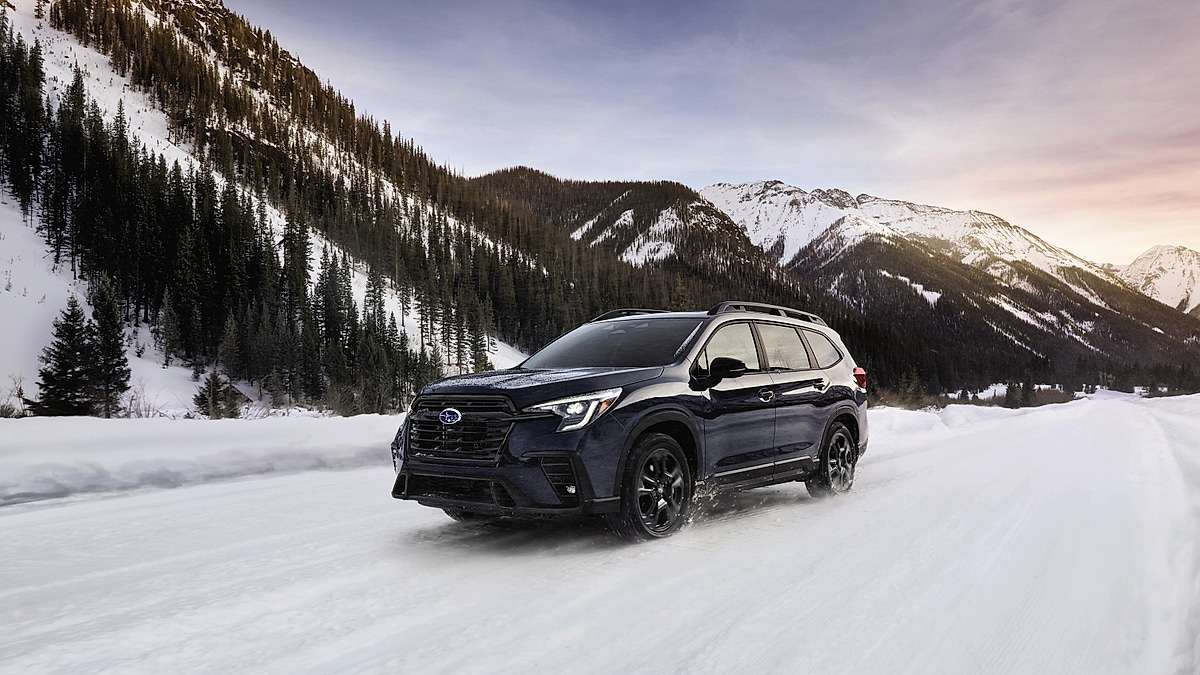

Alicia Northenscold bought what she thought was her dream car. Six days later, she was ready to drive it back to the dealership.
In a vivid post to the Subaru Ascent Facebook group, Northenscold laid out the spiral that had consumed her first week of ownership. She had traded her Mazda CX-7 for a used Subaru Ascent, dropped roughly $20,000, and expected excitement. Instead, she got dread. She was convinced the transmission was on the verge of failure. She was terrified the hood would fly up and shatter her windshield. She felt like she was forcing the SUV to move every time she pressed the accelerator. The maintenance schedule and projected costs had her so anxious that she was already comparing trade-in values for a Toyota Highlander or Mazda CX-9.
She expected excitement and instead felt dread, a mismatch that amplified every mechanical quirk into a potential defect.
The replies came fast, and they split into two camps that reveal something deeper about the Subaru Ascent than any spec sheet can capture.
The Fears Are Not Imaginary
Before dismissing Northenscold's anxiety as new-car jitters, it is worth acknowledging that every one of her specific fears has a documented basis in Subaru's own service history.
The hood flutter she described is real. Subaru issued Service Bulletin 12-281-20 in February 2020 for 2019-2020 Ascent models after owners reported the hood panel surface vibrating at speed. The bulletin traced the issue to the mastic adhesive separating between the inner hood reinforcing panel and the outer skin. A subsequent NHTSA recall (21V-932) in late 2021 addressed concerns that sustained air pressure through the hood gap could, over time, affect the latch area. The fix involved dealer repair of the hood bonding and latch reinforcement.

The transmission fear is even more grounded. In 2022, Subaru initiated Safety Recall WRK-21, covering 198,255 vehicles, including 2019-2020 Ascents, after discovering that an improper program in the Transmission Control Unit could allow the CVT chain to slip, break the chain guide, and eventually cause a complete loss of motive power. Subaru's remedy was TCU reprogramming, chain guide inspection, and, if damage was found, full CVT replacement. The company also extended the powertrain warranty on affected vehicles to 10 years or 100,000 miles for CVT chain slip specifically.
A separate 2019 recall (WUV-07) addressed a faulty transmission hydraulic pressure sensor harness that could cause inaccurate readings, leading to hesitation or unexpected slowing. That recall covered more than 75,000 Ascents.
So when Northenscold worried about the transmission and the hood, she was not inventing monsters. She was reacting to a vehicle with a legitimate, public history of defects in both areas.
But the Full Picture Is More Nuanced
The problem with internet-fueled buyer's remorse is that horror stories travel faster than resolution stories. What Northenscold may not have known is that Subaru has, in fact, addressed the Ascent's two most notorious issues through formal recalls and extended warranties. The question is not whether the problems existed. It is whether they still exist in the vehicle she just bought.

That depends entirely on which model year she purchased, whether the previous owner completed the recall work, and what the vehicle's service history shows. A 2021 or newer Ascent sits outside the CVT recall window. A used 2019-2020 with documented recall completion and no chain-slip symptoms is, statistically, a very different proposition than an unrepaired early build.
This is the first knowledge gap that separates panic from informed decision-making: the Ascent's recalls are searchable by VIN at subaru.com/recalls or NHTSA.gov. A ten-minute lookup would tell Northenscold whether her specific vehicle was affected and whether the remedy was performed.
The Hidden Story: Learning to Drive a CVT
The most revealing comment in Northenscold's thread did not come from the owner with 179,000 miles or the owner who had her transmission replaced. It came from Rizzo Davis, a 2020 Ascent owner who described something that no dealership brochure ever explains: the CVT driving technique.
"When I first got mine, I too felt like I had to really push on the gas pedal to go," Davis wrote. "But then I realized it's kind of a weird way to drive, like you put your foot on the gas pedal but then release for a little bit, and it goes just fine, much more smoothly."
Davis's observation points to a truth about the Ascent ownership experience that almost nobody talks about. The Ascent is powered by a 2.4-liter turbocharged horizontally opposed four-cylinder paired with Subaru's Lineartronic CVT. Unlike a traditional automatic transmission that shifts through discrete gears, a CVT holds the engine at an optimal RPM and varies pulley ratios to change speed. The result is a rubber band sensation where engine revs do not immediately correlate with vehicle acceleration in the way drivers intuitively expect.
Coming from a Mazda CX-7, which used either a conventional six-speed automatic or a five-speed depending on year, the Ascent's powertrain feels fundamentally different. The CX-7's torque converter locks and shifts; the Ascent's CVT simulates gear changes but primarily optimizes for efficiency. A driver accustomed to the Mazda's immediate mechanical connection will interpret the Subaru's CVT behavior as sluggishness or strain, even when the transmission is operating exactly as designed.
Davis's insight, the brief lift off the throttle, is a genuine technique. It allows the CVT to settle into a ratio that better matches the driver's intent, smoothing out the acceleration curve. It is not a workaround for a broken transmission. It is how the transmission is meant to be driven.
The High-Mileage Counterpoint
If Northenscold needed a single data point to counter her transmission anxiety, it arrived in the form of Joseph Zic, a 2021 Ascent owner who reported 179,000 miles on the odometer with the original transmission, original engine, and original turbocharger still in place.
"Hood has fluttered for all 179K," Zic wrote bluntly. "Transmission has been great. It's the best car I've ever owned."
Zic's comment is not a guarantee that every Ascent will reach 179,000 miles without major repair. It is, however, a powerful refutation of the idea that the Ascent is mechanically fragile. At roughly 45,000 miles per year, his Ascent has been driven harder than almost any family SUV on the road. The hood fluttered the entire time. The transmission never failed.
Jon Runde, a two-time Ascent owner waiting on a third, offered a different kind of reassurance: "You're letting the few negative reviews get to you, and it's all in your head. I will never buy anything other than an ascent for our family car."
And Bre'Onna Powell, who had her transmission replaced under warranty and still drives at 100,000 miles, summed up the split perfectly: "I had my transmission replaced, and it still feels as if I'm forcing my car to go. I had it checked again, and all is normal. Other than that, best car I've had."
The Psychology of Buyer's Remorse
What makes Northenscold's post so relatable is not the Subaru-specific fears. It is the universal anxiety of a large financial commitment that does not immediately feel right. She bought a used vehicle for $20,000, a significant sum, and expected the emotional payoff of a dream car. When the driving experience felt foreign, and the internet supplied a steady stream of defect reports, her brain filled the gap with catastrophe.
The seven-day return window offered by her dealership is both a safety net and a trap. It forces a decision before the owner has enough data to make an informed one. Northenscold has had six days with the Ascent. She has not yet had time to learn the CVT driving technique that Davis described. She has not checked her VIN against Subaru's recall database. And she has not driven past the initial adjustment period that every new powertrain requires.
Maintenance Reality Check
Northenscold's concern about maintenance costs is understandable but may be overstated relative to the alternatives she is considering. The Ascent's 2.4-liter turbocharged boxer engine requires synthetic oil and has a more complex horizontally opposed layout than an inline four, which can increase labor costs for certain repairs. However, Subaru's maintenance schedule is broadly comparable to the Toyota Highlander's and less demanding than the Mazda CX-9's turbocharged engine over the long term.

Where the Ascent diverges from the Highlander is in all-wheel-drive complexity. Every Ascent comes standard with Subaru's Symmetrical All-Wheel Drive, which adds driveline components that the front-wheel-drive Highlander base model does not have. The CX-9 also offers all-wheel drive, but its maintenance costs trend higher due to the more premium interior materials and the complexity of Mazda's turbocharging system.
For a $20,000 used Ascent, the most cost-effective strategy is not trading it for a different SUV. It is verifying that recall work is complete, budgeting for CVT fluid changes every 30,000 to 60,000 miles, and finding a Subaru specialist independent shop for routine service, which typically undercuts dealership labor rates by 30 to 40 percent.
What She Should Do
Northenscold has three options, and only one of them is driven by actual data rather than anxiety.
Option one: Return the vehicle. If the seven-day window is still open and the emotional toll is genuinely unbearable, a return is a valid choice. But it should be recognized for what it is, an emotional decision, not a mechanical one. She will lose time, potentially lose money on fees, and face the same uncertainty with the next vehicle.
Option two: Trade for a Highlander or CX-9. Both are competent three-row SUVs, but neither is immune to its own recall history or mechanical quirks. The Highlander has had transmission issues in certain model years. The CX-9's turbocharger and fuel system have generated owner complaints. Trading one set of anxieties for another is not a solution.
Option three: Verify, learn, and decide. This is the only option grounded in information. Check the VIN for open recalls. Confirm the CVT recall was completed. Learn the CVT driving technique that Davis described.
The Ascent is not a perfect SUV. It has real recalls, a CVT that demands a learning curve, and a hood that can flutter. It is also a vehicle that owners like Zic have driven to nearly 180,000 miles with original major components, and one that families like Runde's have chosen repeatedly over every competitor on the market.
Northenscold's specific Ascent, with its specific service history and its specific recall status, is either one of the good ones or it is not. That can be answered in ten minutes with a VIN lookup, not in a panic at the seven-day mark.
Images From Subaru Media Center
About The Author
Noah Washington is an automotive journalist based in Atlanta, Georgia, covering sports cars, luxury vehicles, and performance culture. His reporting focuses on explaining the engineering, design philosophy, and real-world ownership experience behind modern vehicles.
Noah has been immersed in the automotive world since his early teens, attending industry events and following the enthusiast communities that shape how cars are built and driven today. His work blends industry insight with enthusiastic storytelling, helping readers understand not just what a car is, but why it matters.
Noah is also a member of the Southeast Automotive Media Association (SAMA), a professional organization for automotive journalists and industry media in the Southeast.
His coverage regularly explores sports cars, luxury vehicles, and performance-driven segments of the automotive industry, including the evolving culture surrounding Formula Drift and enthusiast builds.
Read more of Noah's work on his author profile page.
You can also follow Noah here:
Set Torque News as Preferred Source on Google
Follow us today...




Comments
I purchased a new 2023…
Permalink
I purchased a new 2023 Subaru Ascent Premium (my 9th Subaru) and loved it for the first 6 months. I did like the CVT transmission and the awesome AWD system. At about the 6 month mark my oldest daughter told me she would no longer drive it, followed by my younger daughter complaining she didn't want to drive it either. The problem is the turbo lag and non-linear power delivery of the engine. You push the accelerator to 40% and the SUV won't get out of it's own way, you push the accelerator 45% and the Ascent feels like it's powering out of control on it's way to the moon. Shortly after this discussion my wife also confirmed she hates the way it accelerates, or sometimes, doesn't accelerate.
I traded the Ascent in for a Toyota around the 1 year mark.
That describes the Ascent…
Permalink
In reply to I purchased a new 2023… by John M. (not verified)
That describes the Ascent complaint better than most. It is not always “slow” or “fast”; it is the non-linear response that bothers people. Some owners adapt to the CVT/turbo behavior, but if the whole family hates the way it delivers power, trading out makes sense.
Best car I’ve ever owned…
Permalink
Best car I’ve ever owned. Love its reliability, space, and power. Touring model appears to be by far the best with auto windshield wipers and it feels really peppy. We had a limited and the touring feels quicker accelerating. I just step on the gas and it GOES. I can merge with any traffic without any worries. As a bonus, great selection of cup holders!
Some owners have the exact…
Permalink
In reply to Best car I’ve ever owned… by Philip Milliman (not verified)
Some owners have the exact opposite experience: space, AWD, power, and daily comfort all work for them. It really seems like the Ascent is a vehicle people need to drive for more than a quick test loop before deciding.