
There is a certain kind of American who cannot buy a vehicle without first consulting a spreadsheet that would make a tax auditor proud. These people are not joyless or obsessive. They simply carry the same instinct that has long driven truck owners to justify axle upgrades and oversized tires with long division scribbled on a napkin. It is the belief that thrift and horsepower can coexist if one is willing to do the math.
In the Ford F-150 Lightning community, that instinct is alive and well, expressed not through drag strip talk but through kilowatt-hour calculations and resale projections. It is a modern flavor of frugality where practicality sits comfortably beside enthusiasm. The appeal is simple. A dollar saved is a dollar earned, and these owners aim to earn every one of them.
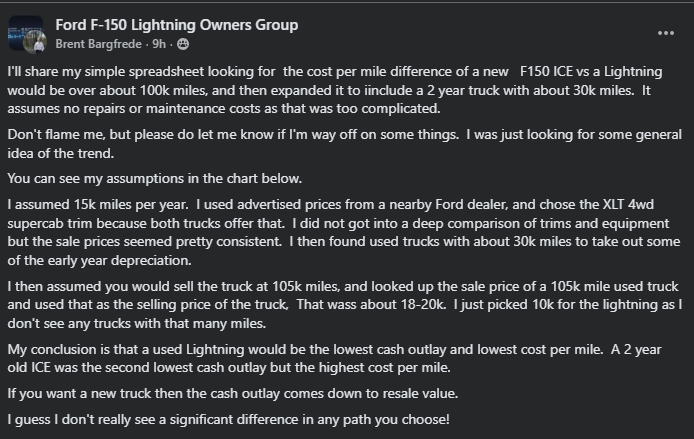
One such owner is Brent Bargfrede, who stepped into the Ford F-150 Lightning Owners Group with the digital equivalent of a shop manual under his arm and shared a full breakdown of ownership economics. He introduced it with every ounce of humility a person can muster before presenting numbers to the internet. He wrote:
“I'll share my simple spreadsheet looking for the cost per mile difference of a new F150 ICE vs a Lightning would be over about 100k miles, and then expanded it to include a 2-year truck with about 30k miles. It assumes no repairs or maintenance costs, as that was too complicated.
Don't flame me, but please do let me know if I'm way off on some things. I was just looking for some general idea of the trend.
You can see my assumptions in the chart below.
I assumed 15k miles per year. I used advertised prices from a nearby Ford dealer, and chose the XLT 4WD supercab trim because both trucks offer that. I did not get into a deep comparison of trims and equipment, but the sale prices seemed pretty consistent. I then found used trucks with about 30k miles to take out some of the early-year depreciation.
Advertising
I then assumed you would sell the truck at 105k miles, and looked up the sale price of a 105k-mile used truck and used that as the selling price of the truck. That was about 18-20k. I just picked 10k for the lightning as I don't see any trucks with that many miles.
My conclusion is that a used Lightning would be the lowest cash outlay and lowest cost per mile. A 2-year-old ICE was the second lowest cash outlay but the highest cost per mile.
If you want a new truck, then the cash outlay comes down to resale value.
I guess I don't really see a significant difference in any path you choose!”
The response was swift and positive. Instead of pouncing on his assumptions or nitpicking his formulas, the community chimed in with their own lived experiences. The first to weigh in was Scott Hildula, who bypassed fuel economy figures entirely and went straight for the daily conveniences that no spreadsheet truly captures. He said he no longer spends time at gas stations, simply plugging in at night and leaving fully charged each morning. That small change in routine reflects one of the most meaningful shifts for electric truck owners. They are not just saving dollars. They are saving hours. The practical aspects of ownership shape their satisfaction just as much as the math does.
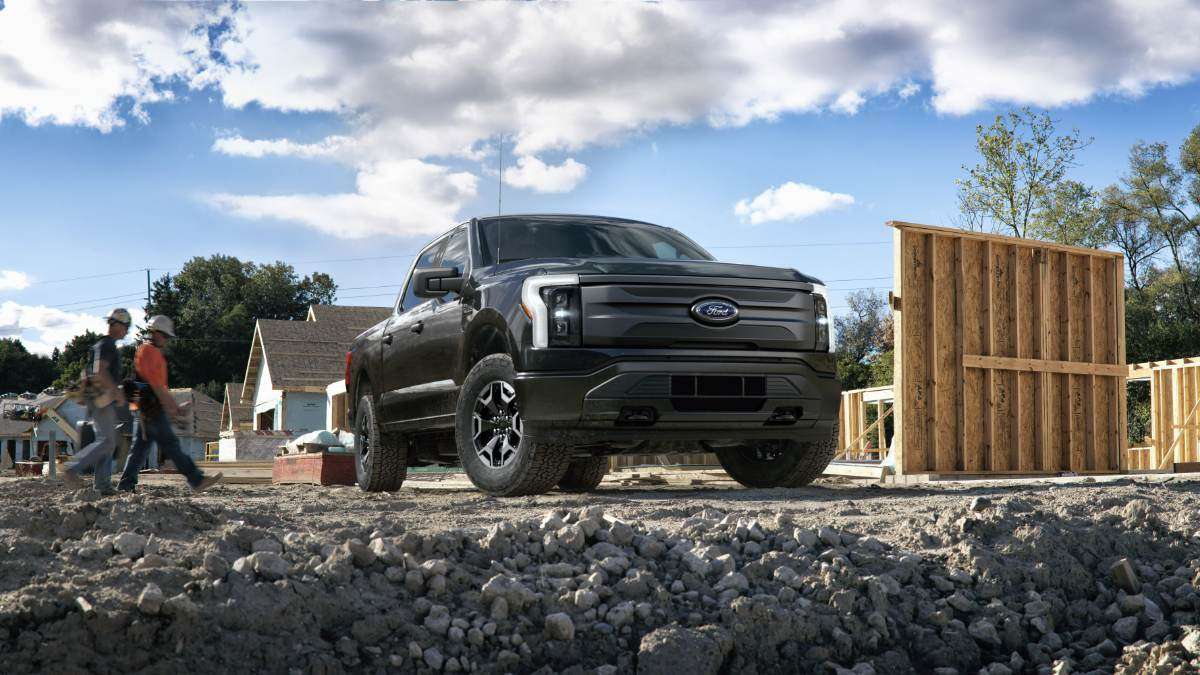
Ford F-150 Lightning (vs. Tesla Cybertruck)
- The F-150 Lightning comes only as a crew-cab pickup and features a bed length of about 5.5 feet, shorter than many long-bed trucks but practical for everyday hauling.
- It also includes a front trunk (“frunk”) in place of a conventional engine bay, giving extra cargo storage in addition to the bed, a nice plus in practicality for an EV pickup.
- In terms of overall size, the Lightning measures about 5,911 mm long, 2,031 mm wide, and 1,989 mm tall, which makes it a bit shorter in width and height compared to the longer and wider Cybertruck.
- While the bed is not the biggest among EV pickups, its lower bedsides and conventional layout make cargo loading and access easier, which some reviewers consider more practical than the more radical styling and bed layout of the Cybertruck.
Still, the numbers matter, and Brent’s calculation of roughly fifty-six cents per mile for a used Lightning versus sixty-six cents per mile for a new gasoline F-150 raised eyebrows in good ways. Owners quickly noted how much electricity rates influence the final tally. One detail that emerged from the comments is how widely electricity pricing varies across the country. Tim Wagenseller pays six cents per kilowatt hour, which would noticeably improve Brent’s electric side of the ledger. Neil Faber charges at ten cents per kilowatt hour and replaced a truck that returned eighteen miles per gallon. These differences illustrate why many Lightning owners build their own spreadsheets. The economics of electric trucks are not theoretical for them. They are personal.
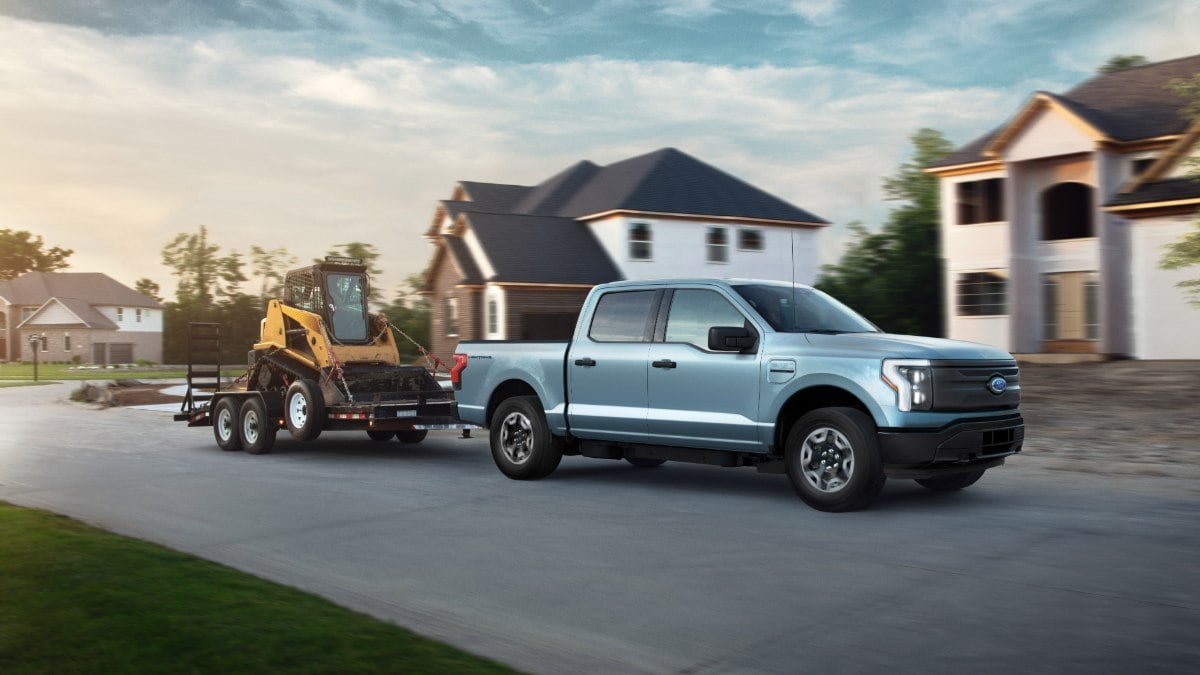
Personal experience also shaped the perspective of long-distance drivers like Chad Fawcett, who endured a winter road trip that stretched an eight-hour drive into ten and a half. Cold weather, strong headwinds, and range loss made the journey longer than planned, yet he still said he would not return to a gasoline truck unless absolutely required. That kind of clarity does not come from ideology. It comes from a day behind the wheel, weighing the tradeoffs honestly, and finding that the overall experience still leans in favor of electric ownership.
More nuance came from owners like Aric Donnelly, who said he compared a 2022 F-150 Lariat with around thirty thousand miles to a new 2024 Lightning Flash. His decision ultimately came down to zero percent financing and the appeal of a new vehicle under warranty. His six-year cost comparison slightly favored the Lightning. It was a reminder that the financial picture is shaped by more than energy costs. Longevity, warranty protection, and interest rates all play major roles in determining which truck makes the most sense.
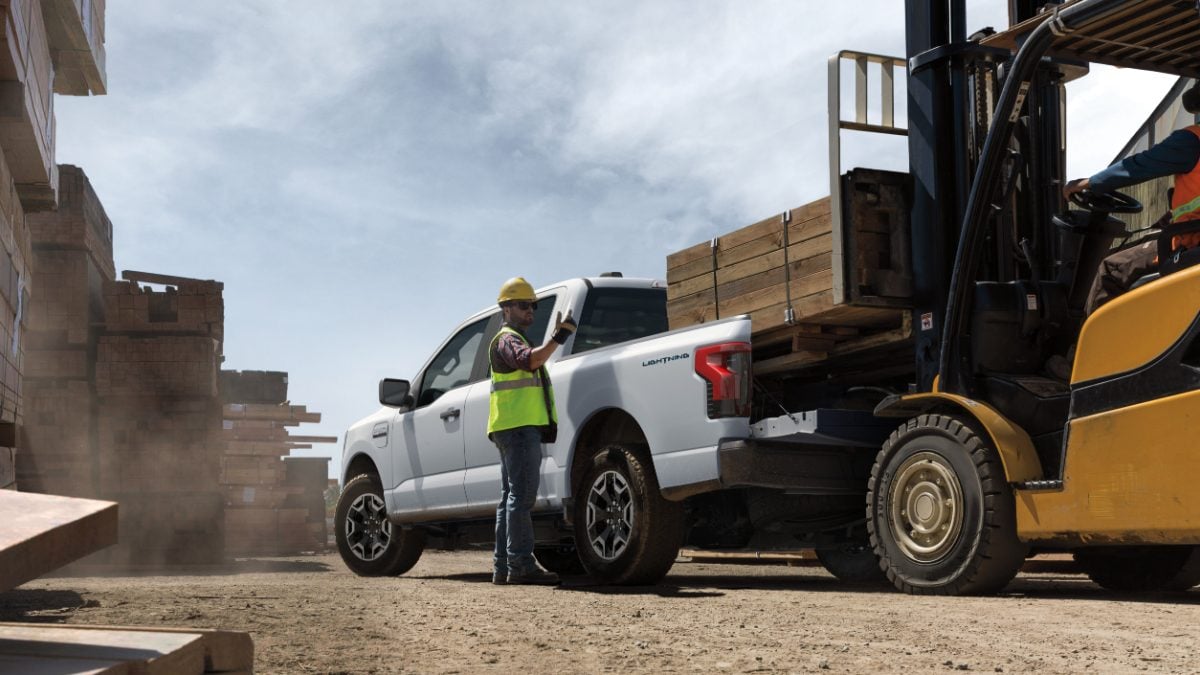
All these stories reveal something important. The electric truck conversation is far more grounded than outsiders may assume. Lightning owners are not trading towing charts for abstract ideals. They are focusing on real expenses, real electricity rates, real dealership prices, and real-life driving outcomes. Their conversations carry the same spirit that has animated American truck buying for generations. They are turning numbers into peace of mind and sharing their findings so others can make their own informed decisions.
Brent’s conclusion that no path is dramatically better than the others says more about the maturity of the electric truck market than any single cost-per-mile figure could. The Lightning is not asking buyers to sacrifice. The gasoline F-150 is not obsolete. Instead, the playing field is becoming level enough that personal preference and daily convenience now carry as much weight as long-term financial calculations. When a used Lightning can claim the lowest cash outlay while a two-year-old gasoline model can still appeal to traditional buyers, the market has reached a rare moment of balance. And for the penny pinchers who enjoy calculating every variable down to the decimal, that balance is reason enough to feel optimistic about the miles ahead.
Image Sources: Ford Media Center
Noah Washington is an automotive journalist based in Atlanta, Georgia. He enjoys covering the latest news in the automotive industry and conducting reviews on the latest cars. He has been in the automotive industry since 15 years old and has been featured in prominent automotive news sites. You can reach him on X and LinkedIn for tips and to follow his automotive coverage.
Set Torque News as Preferred Source on Google
Follow us today...