


The 2027 Chevy Bolt is supposed to answer the affordable-EV question with better charging, a native NACS port, and a price that starts under $30,000. But one early Bolt RS owner found a stranger lesson after three days: the missing Apple CarPlay may be easier to live with than expected, while the sound system may be the thing buyers notice every single drive. I checked the owner's first impressions, Chevrolet's official 2027 Bolt specs, and the wider Bolt owner discussion. The takeaway for shoppers is simple: test the infotainment workflow, but turn the stereo up before you sign.
That is not the complaint I expected to matter most.
GM removing Apple CarPlay and Android Auto from its new EVs has been one of the internet's favorite automotive arguments for years. Some buyers treat it as a hard stop. Others shrug and say built-in Google Maps is fine. The new Bolt was always going to become the most interesting test case because it is not a $90,000 tech statement. It is the affordable EV people actually buy when the math matters.
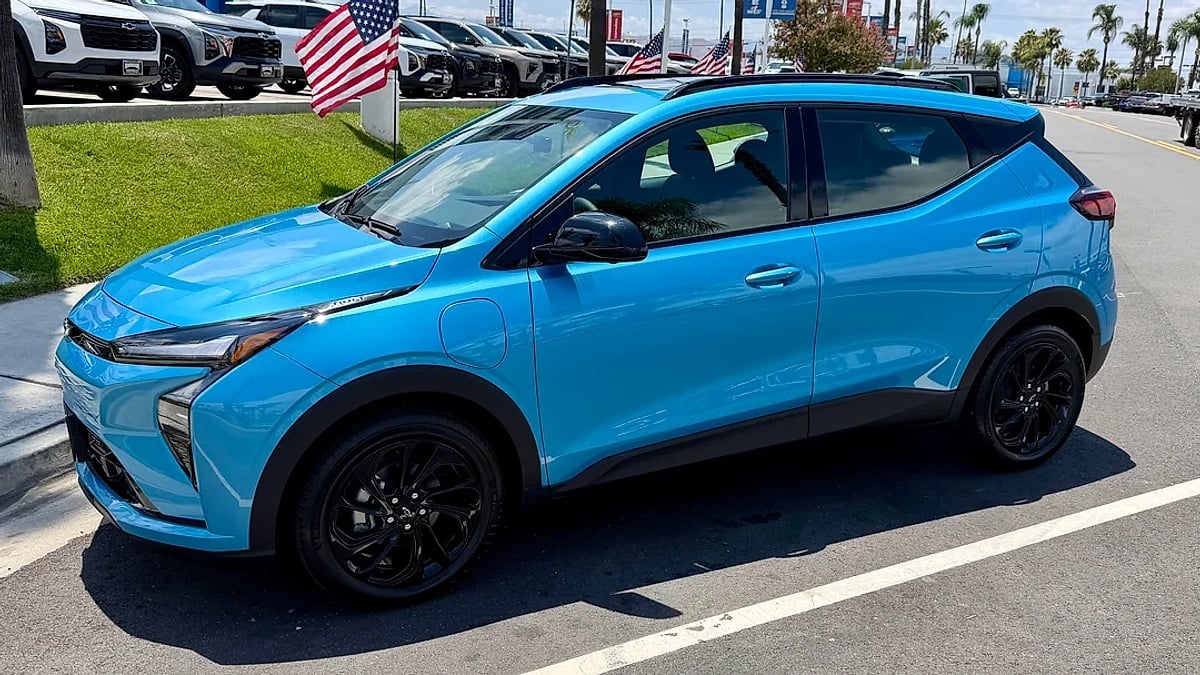
And according to one new owner on r/BoltEV, the math is strong.
The owner, posting as Zendroid1, says he bought a 2027 Bolt RS with the sunroof and Tech Package, put a few hundred miles on it in three days, and came from a Hyundai Ioniq 5 lease while also having previous Bolt experience. His out-the-door price in Southern California was about $32,500. His conclusion was not complicated: he loves the car and is happy he went back to a Bolt.
That matters because the Ioniq 5 is not a joke comparison. It charges faster, feels more premium, and generally plays in a larger, more expensive EV space. Yet this owner still preferred the Bolt because he could get a nearly loaded RS for less than he would spend on a basic Ioniq 5.
That is exactly where the Bolt has to win.
What Torque News Checked
- Owner experience: A new 2027 Bolt RS owner report from r/BoltEV, including price, Ioniq 5 comparison, no-CarPlay workaround, adapter use, tint, interior impressions, and audio complaint.
- Official Chevrolet specs: Chevrolet's 2027 Bolt launch materials and product page for EPA-estimated range, 150 kW+ DC fast charging, native NACS, Google built-in, RS features, starting MSRP, and battery warranty.
- Cross-source owner pattern: Other Bolt owners in the same discussion raised similar questions about audio quality, Apple Music availability, adapters, fast charging, accessories, and GM's no-CarPlay strategy.
The Bolt's Value Story Is Stronger Than the Spec Sheet Sounds
Chevrolet says the 2027 Bolt starts at $28,995, including destination, for the later LT, with an initial launch LT at $29,990. The official range number is 262 miles on a full charge. DC fast charging is rated at 150 kW+, and Chevy says the Bolt can charge from 10% to 80% in about 25 minutes when conditions are right. It also gets a native NACS port, making it the first Chevrolet with that charging port from the factory.
The previous Bolt's problem was never that people hated the idea. Owners loved the size, efficiency, low running costs, and one-pedal city driving. The old car's road-trip weakness was charging speed. The 2027 model does not turn into an Ioniq 5 or EV6, but going from old-Bolt slow to 150 kW+ changes the conversation.
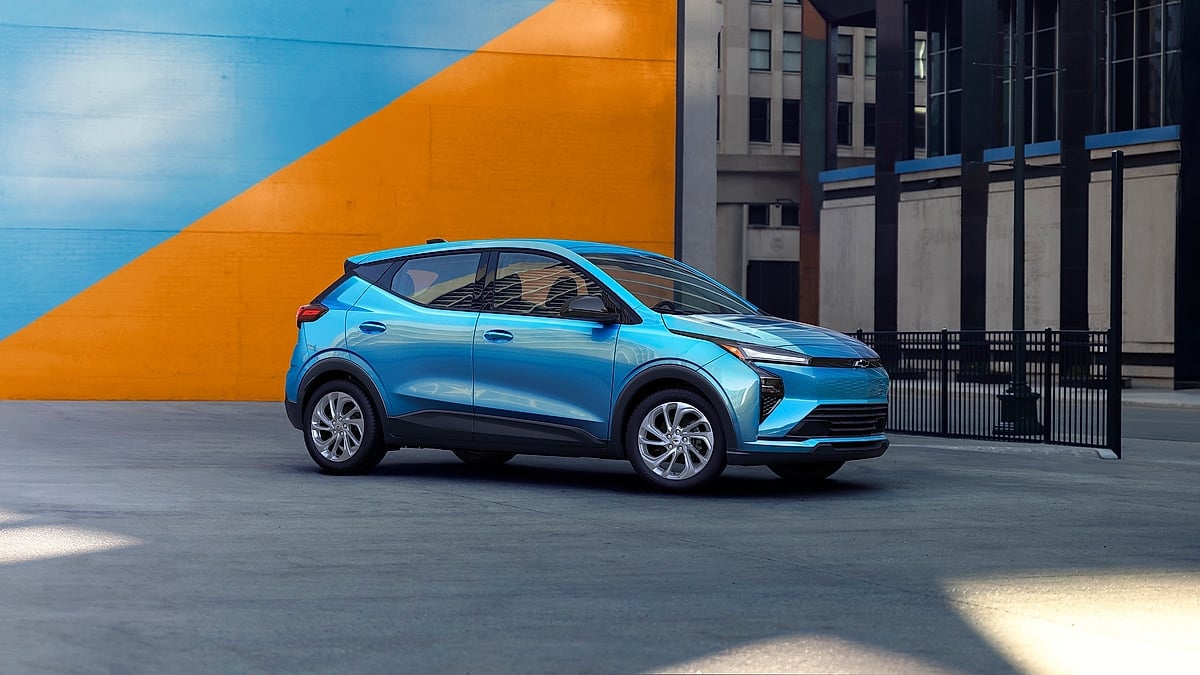
The Reddit thread already hints at that. One commenter reported seeing 130 kW at a Tesla Supercharger. Another said they hit 131 kW. Those are owner-reported numbers, not lab results, but they support the idea that the new Bolt is no longer trapped in the old Bolt's charging reputation. The original poster had not tried DC fast charging yet and correctly noted that speed depends on state of charge, preconditioning, heat, and other variables.
That kind of owner nuance is why the post is useful.
No CarPlay Was Supposed To Be the Dealbreaker
The owner was nervous about losing CarPlay in the Bolt. That is understandable. He is a long-time iPhone user, uses CarPlay for Apple Music and Apple Maps, and walked into GM's Google-built-in ecosystem with the same concern many buyers will have.
Then the surprise: he says he has gotten by fine.
His workaround is simple. For music, he connects the iPhone through Bluetooth and uses "Hey Siri" to play Apple Music. For navigation, he uses "Hey Google" and the built-in Google Maps system. He says the combination does everything he needs. He can still use Siri for messages, though he does not do that often.
That is not as elegant as CarPlay. Let's not pretend it is.
But it is good enough for some buyers, and that is the point. GM does not need every CarPlay critic to convert. It needs enough Bolt buyers to sit in the car, try the workflow, and realize the missing projection system is not fatal for their actual use. The owner's comments show that split clearly. Some people say they will never buy a GM vehicle without CarPlay. Others say the new system works, especially once Apple Music appears in the car's app store.
The more interesting detail is that Apple Music availability appears inconsistent among owners. Zendroid1 says his Bolt did not have the Apple Music app installed yet, and it was not available in the Play Store. Another owner replied that their 2027 Bolt RS did have Apple Music and that app switching worked well.
That is the kind of early software inconsistency GM cannot afford to leave vague. If GM wants buyers to give up phone projection, the built-in apps have to feel complete from day one.
The Real Weak Spot May Be the Sound System
The owner's biggest complaint was not range, charging, seating, visibility, maneuverability, or even no CarPlay. It was audio.
He called the sound system "downright dreadful" and said Bluetooth streaming gets the job done, but the speakers are bad. He also said the system sounds slightly better through built-in infotainment than through Bluetooth, which raises the exact question another commenter asked: is the problem the speakers, the digital-to-analog conversion, the Bluetooth path, the tuning, or all of the above?
A bad stereo in a cheap gas car used to feel annoying but normal. In a quiet EV, weak audio has nowhere to hide. There is less engine noise to mask thin speakers. More owners listen to podcasts, audiobooks, streaming music, and navigation prompts. The cabin becomes the product. If the stereo sounds cheap, the whole car risks feeling cheap even if the range, charging, and screen are competitive.
Other owners piled on. One commenter, coming from a Tesla Model 3, said the sound system concern could take the Bolt off the list. Another asked whether the audio is merely bad for audiophiles or bad enough that an ordinary driver listening to podcasts would notice. A new RS owner with custom-car-audio experience said the system was terrible and wondered if it was worth modifying. Another commenter said they did not really notice a major issue coming from a Subaru Harman Kardon system, except perhaps at the low end.
That range of reactions is important. This is not a universal verdict yet. It is an early warning.
But it is also exactly the sort of issue buyers can test in five minutes. Bring your phone. Pair it. Try Bluetooth. Try built-in apps if available. Play a podcast, a song with vocals, and something with bass. Sit in the driver's seat and the back seat. If you care about audio, do not assume the Tech Package means the stereo is techy enough.
The Small-Car Stuff Is Why the Owner Still Loves It
The rest of the owner's post reads like a reminder that affordable EVs do not have to win through drama.
He liked the ambient lighting more than expected. He liked the sunroof because it made the car feel more open. He said the Bolt is easy to maneuver and park in small spaces, especially compared with the Ioniq 5. He found the seats comfortable. He tinted the windows, including clear tint on the sunroof, and said that it helped with heat. He bought a J1772 adapter for about $40 and plans to buy a CCS adapter later.
None of that sounds revolutionary. That is why it matters.
The Bolt has always been at its best as a daily-life appliance with a little EV punch. It is easy to park. It is cheap to run. It makes errands feel better. It turns a hot parked cabin into a cool waiting room without idling an engine. One commenter described using the EV air conditioning for a few minutes in a hot garage without even taking 1% from the battery. That is not a drag-strip stat, but it is real ownership value.
The 2027 Bolt seems to understand that formula. Chevy kept the compact footprint, added modern charging, put in a bigger screen, added Google built-in, made RS styling available, and gave buyers features like available ventilated seats, Super Cruise, ambient lighting, wireless charging, and a panoramic sunroof. On paper, that sounds like the correct upgrade path.
The question is whether GM cut the wrong corner on sound.
Why This Matters
The 2027 Bolt is not just another EV launch. It is GM's affordable EV apology tour with better charging. Chevy says the Bolt offers the most range in an EV under $30,000, and the owner's story shows why that matters. A buyer can step out of a more expensive EV lease, buy a well-equipped Bolt, and still feel like the smaller car fits daily life better.
That is a win.
But affordable does not mean buyers stop caring about the touch points they use every day. CarPlay gets the headlines because it is political in car-nerd circles. The sound system may matter more once people actually own the car.
Practical Consequences
If you are shopping for a 2027 Bolt, do not reject it from your couch because it lacks CarPlay. Sit in one and try the actual workflow: Bluetooth with Siri, built-in Google Maps, available apps, voice commands, and route planning. But do not skip the stereo test. If music, podcasts, or audiobooks matter to you, the sound system deserves the same attention as range and charging speed.
The new Bolt may be one of the smartest affordable EV buys of 2027. Just make sure you can live with how it sounds on the drive home.
Would the lack of CarPlay stop you from buying the 2027 Bolt, or would weak audio bother you more after a week of ownership?
Let us know in the comments below.
Images by Zendroid1 on Reddit
About The Author
Noah Washington is an automotive journalist based in Atlanta, Georgia, covering sports cars, luxury vehicles, and performance culture. His reporting focuses on explaining the engineering, design philosophy, and real-world ownership experience behind modern vehicles.
Noah has been immersed in the automotive world since his early teens, attending industry events and following the enthusiast communities that shape how cars are built and driven today. His work blends industry insight with enthusiastic storytelling, helping readers understand not just what a car is, but why it matters.
Noah is also a member of the Southeast Automotive Media Association (SAMA), a professional organization for automotive journalists and industry media in the Southeast.
His coverage regularly explores sports cars, luxury vehicles, and performance-driven segments of the automotive industry, including the evolving culture surrounding Formula Drift and enthusiast builds.
Read more of Noah's work on his author profile page.
You can also follow Noah here:
Set Torque News as Preferred Source on Google
Follow us today...







Comments
I test drove one this week…
Permalink
I test drove one this week. No Android Auto was unknown to me until I asked the salesman it if had wired or wireless Android Auto. Hearing it had neither was astonishing. You may be able to work around it it but it just feels like a cheapskate move from GM to milk us for more money for data subscriptions.
Also, the ride was much harsher than the ionic 5 I drove an hour beforehand. What's the current rebates on the Hyundai, it's an easy hard pass on the bolt.
GM may be able to make the…
Permalink
In reply to I test drove one this week… by Bill (not verified)
GM may be able to make the Google built-in setup work for some buyers, but discovering the lack of Android Auto during the test drive would leave a bad taste.
The subscription concern is the bigger issue for me. If buyers think a feature was removed mainly to control the software/data relationship, that hurts trust before the car even leaves the lot.
I have to agree about the…
Permalink
I have to agree about the subscription. A removal of this big of a feature has accurately no benefit to the consumer.
Just because you can live with it doesn't mean it's a good thing.
I think the implimentation…
Permalink
In reply to I have to agree about the… by William (not verified)
I think the implimentation of it has to be perfect.