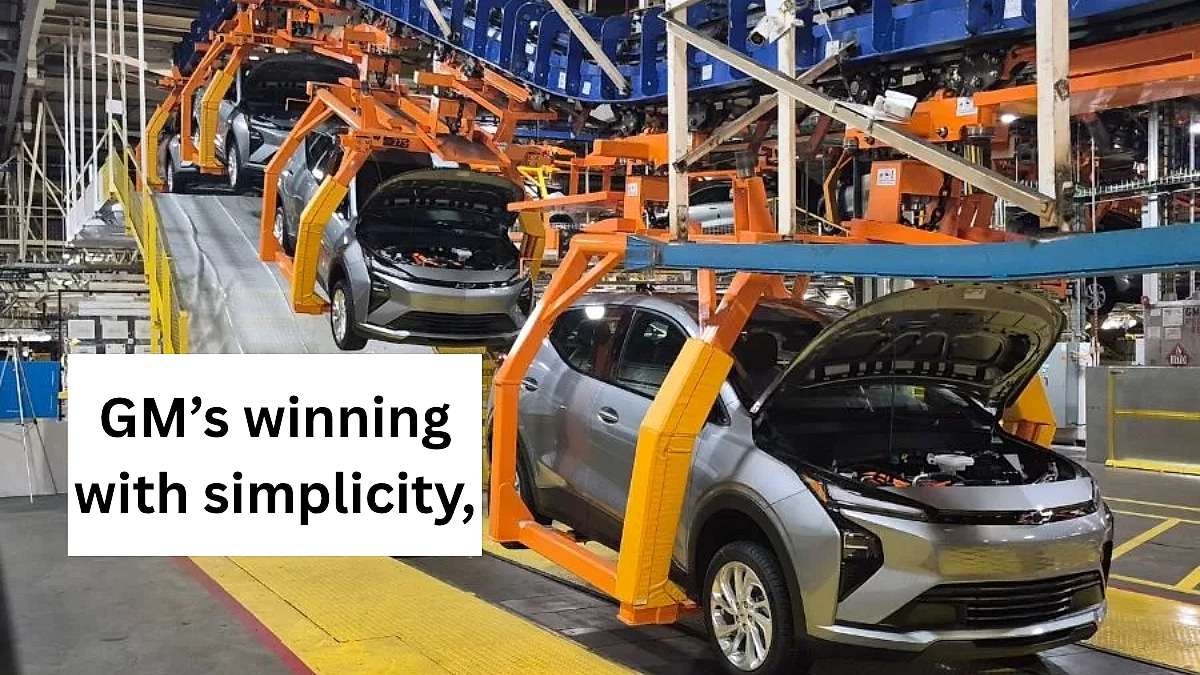

General Motors is trying something with the new Chevy Bolt that sounds deceptively simple: build nearly identical vehicles together instead of mixing every trim, color, and option combination randomly down the line. The company calls it "batch build," and it may be one of the smartest moves GM has quietly made in years. Our colleagues at Torque News have been following the return of the Chevrolet Bolt and how the $29,000 hatchback is positioned as GM's answer to the affordable EV market and the looming Chinese EV invasion, and the batch build story adds a manufacturing layer to that bigger picture worth understanding. Meanwhile, our reporters who drove the new 2027 Chevy Bolt RS and compared notes with a longtime Bolt owner found a car that gets a lot right, which makes the story of how it is built all the more relevant.
Instead of a Bolt LT in blue followed by an RS in red followed by another differently configured car, GM's Fairfax Assembly plant groups 30 similar Chevy Bolts together and sends them through production as a unit. GM says the approach improves quality, cuts complexity, and lowers costs. What makes this notable is that the strategy resembles an approach long associated with Tesla, something Tesla has been both criticized and praised for over the years. The difference is that Tesla simplified the product itself, while GM is simplifying the production process while keeping its traditional trim structure.
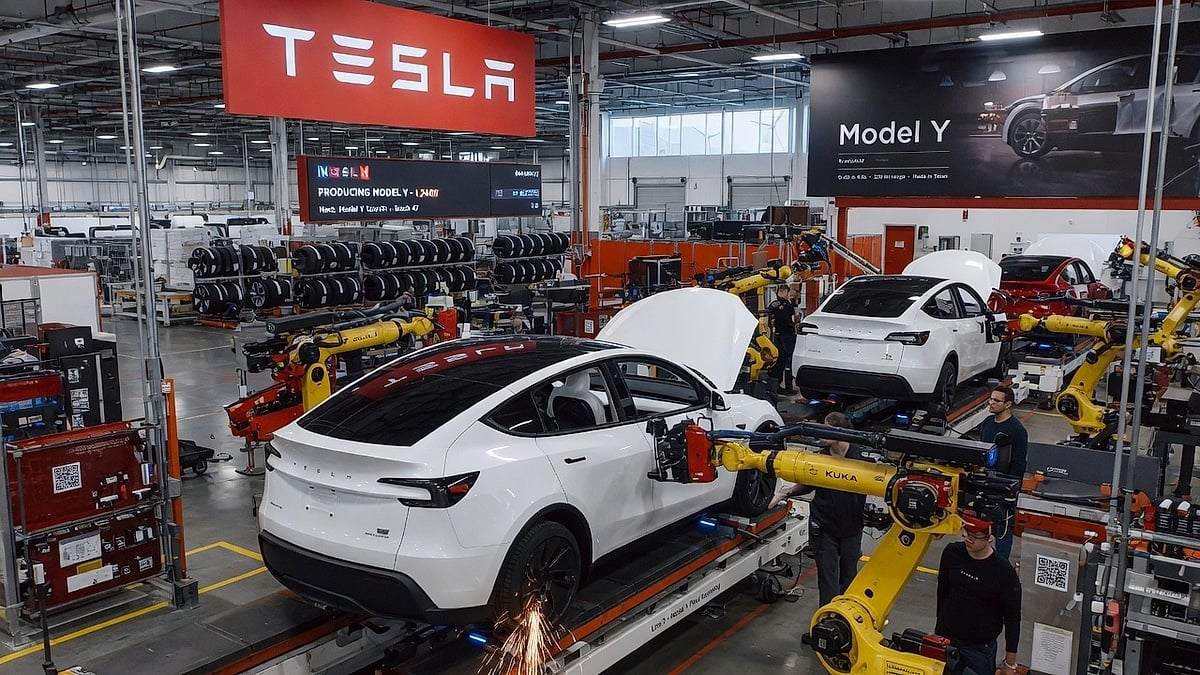
Torque News checked GM's production descriptions, supplier comments, and manufacturing details around Fairfax Assembly and found this may be one of the most important things happening to the Bolt that has little to do with batteries, range, or charging. The real story may be manufacturing discipline.
Why Is GM Building the Chevy Bolt in Batches of 30?
GM says Fairfax Assembly became the first North American GM plant to adopt the system. The plant groups about 30 nearly identical Bolts together, same trim level, same color, similar configurations, before switching to another batch. GM positions this under its broader "Winning With Simplicity" initiative aimed at lowering complexity and cost. Torque News has covered how GM's 1,700 job cuts at Fairfax set the stage for this exact retooling effort, a painful but necessary reset that cleared the factory floor for a more disciplined production model. Torque News also learned that the strategy extends beyond the assembly line itself. GM reportedly created a "clone" body inventory system: if one vehicle needs to leave the line for inspection, a matching body can replace it so production continues uninterrupted. That sounds small, but it addresses one of batch production's core weaknesses, which is interruptions.
What Are the 8 Benefits of GM's New Batch Build System?
GM lists several operational advantages, and taken together they form a larger picture. First, better quality control. Workers repeatedly perform the same operations on nearly identical vehicles rather than constantly adapting. GM says this reduces build variation and mistakes, and Fairfax reportedly met Electrical First-Time Quality targets shortly after launch. This aligns with how quality management principles work in high-output factories, something Tesla's Giga Shanghai made famous by building to Deming's quality management principles, reducing production costs while pushing quality upward simultaneously.
Second, lower manufacturing complexity. Instead of a constantly changing mix of trims and colors, production becomes more predictable, and less variation generally means fewer opportunities for assembly errors. Third, reduced costs, as GM directly ties batch build to lower production costs, since fewer transitions mean less waste, rework, and downtime.
Fourth, and perhaps most practically, less paint shop downtime. Building identical colors together means fewer paint purges and equipment cleanings between color changes. Fifth, better worker focus. Doing the same sequence repeatedly helps employees maintain rhythm and consistency, and GM specifically mentions workers staying focused on repeating identical tasks. Sixth, improved supplier coordination, as suppliers reportedly deliver in more predictable schedules because batches require matching parts sets together. Seventh, reduced floor space pressure, as batching lowers rack requirements and storage needs because component flow becomes more orderly. And eighth, faster production flow, since less switching means fewer interruptions and faster transitions between operations.
How Does This Compare With Tesla?
This is where things get interesting. Tesla has long been praised for simplifying manufacturing. With 15 years of covering the automotive industry, I have watched Tesla's approach go from outsider experiment to industry benchmark. Our reporting on how Tesla's model of 1.31 million delivered EVs shows how companies can double production highlighted a key insight: Tesla's manufacturing advantage was never just batteries or software, it was relentlessly reducing complexity at every level. Tesla adopted revolutionary aluminum die-casting for underbody production, for example, creating the Model Y's lower frame as a single component and eliminating 171 parts and over 1,600 weld seams.
Critics sometimes describe Tesla's lineup as limited, fewer trims, fewer options, fewer paint choices, fewer mechanical variants. Supporters argue that this simplicity is exactly why Tesla scaled so efficiently. Our deep dive into Tesla's next-generation "Unboxed" manufacturing technique for its compact car showed how far Tesla has pushed the principle, modular parallel assembly that improves operator density by 44% and space-time efficiency by 30%. Tesla often groups similar builds together and minimizes complexity at the vehicle level.
The key difference here is this: Tesla simplified the product. GM is simplifying the process. GM still keeps Bolt LT and RS variants and traditional option structures while reorganizing production around them. That may matter because legacy automakers historically thrive on offering many trims and configurations. Notably, even Volkswagen saw the writing on the wall and launched its Trinity Project specifically to follow Tesla production methods and improve EV manufacturing efficiency, including adopting a Giga-press system and targeting a 10-hour build time matching Tesla.
Could This Spread Beyond the Chevy Bolt?
Torque News checked GM's statements and found Fairfax may only be the beginning. The plant is expected to add future products including the next Chevrolet Equinox program and a Buick compact SUV, with GM indicating that lessons from batch production may transfer elsewhere. Our reporting on switching from a Chevrolet Bolt EUV to the 2025 Chevrolet Equinox EV with Super Cruise and fast charging shows that Equinox EV owners are already noticing improved build quality and fewer early defects, which may be an early signal that GM's manufacturing discipline is already spreading beyond just the Bolt line.
If batch build transfers across GM's EV portfolio, the Bolt may become more than an affordable EV comeback story. It could become GM's manufacturing pilot project. Motor Trend, in its first drive of the 2027 Bolt, described the car as "Cheap, Good, Flawed, and Nearly Dead," a headline that captured the product's contradictions but missed the bigger factory story happening behind the scenes at Fairfax.
Balanced Opinion: GM May Be Borrowing the Right Lesson From Tesla, Carefully
There is a temptation to frame this as GM copying Tesla. That framing feels incomplete. As we noted in our coverage of GM's great EV mulligan and the return of the Chevy Bolt as a mass-market play under $30,000, the real question is not whether GM can copy Tesla's philosophy, but whether GM can adapt it to a legacy structure that still has to serve millions of customers across dozens of models. Tesla's biggest manufacturing insight was arguably never batteries or software. It was reducing complexity. GM appears to have recognized the same principle, but instead of eliminating choices, it is trying to preserve customer variety while simplifying factory execution. That is harder. The risk is whether batching creates longer waits for unusual configurations or adds planning complexity upstream. GM's clone-body workaround suggests the company already sees that challenge.
Still, if the system improves quality while keeping costs down, this could become one of the Bolt's least visible but most important upgrades. Our readers who have followed the 2027 Bolt EV handling like a go-kart starting at $29,000 and what early buyers are finding in the real world may soon notice something simpler than any spec sheet: a better-built car, one where manufacturing discipline quietly shows up in the details. And unlike battery chemistry or charging speeds, that is something every driver can feel.
What do you think of GM's batch build approach for the Chevy Bolt? Do you believe GM can match Tesla's manufacturing efficiency while keeping its traditional trim variety? Let us know in the comments below.
About The Author
Armen Hareyan is the founder and Editor-in-Chief of Torque News and an automotive journalist with over 15 years of experience writing car reviews and industry news. Now based in the Charlotte region (Indian Land, SC, he founded Torque News in 2010, which since then has been publishing expert news and analysis about the automotive industry. He can be reached at Torque News on X, Linkedin, Facebook, and Youtube. Armen holds three Masters Degrees, including an MBA, and has become one of the known voices in the industry, specializing in the landscape of electric vehicles and real-world stories of actual car owners. Armen focuses on providing readers with transparent, data-backed analysis bridging the gap of complex engineering and car buyer practicality. Armen frequently participates in automotive events throughout the United States, national and local car reveals and personally test-drives new vehicles every week. Armen has also been published as an automotive expert in publications like the Transit Tomorrow, discussing how will autonomous vehicles reshape the supply chain, and emerging technologies in vehicle maintenance.
Set Torque News as Preferred Source on Google
Follow us today...